 Bellingham
 Exterior Work Built for Barkley's Corner of Bellingham
Barkley is one of the newer, more planned corners of Bellingham — a mix of single-family homes, townhomes, and multi-family buildings that have gone up over the past two to three decades near the retail core and the I-5 corridor. Newer construction doesn't mean the exterior is immune from what Whatcom County weather does to a house. It just means some of the damage hasn't shown up yet. We work on homes throughout Barkley and the surrounding neighborhoods, and the patterns we see here are consistent with what we see everywhere in Bellingham: siding that's held up fine for a decade and then starts failing all at once, roofs going mossy years before they should, and window seals giving out quietly behind trim that still looks fine from the driveway.
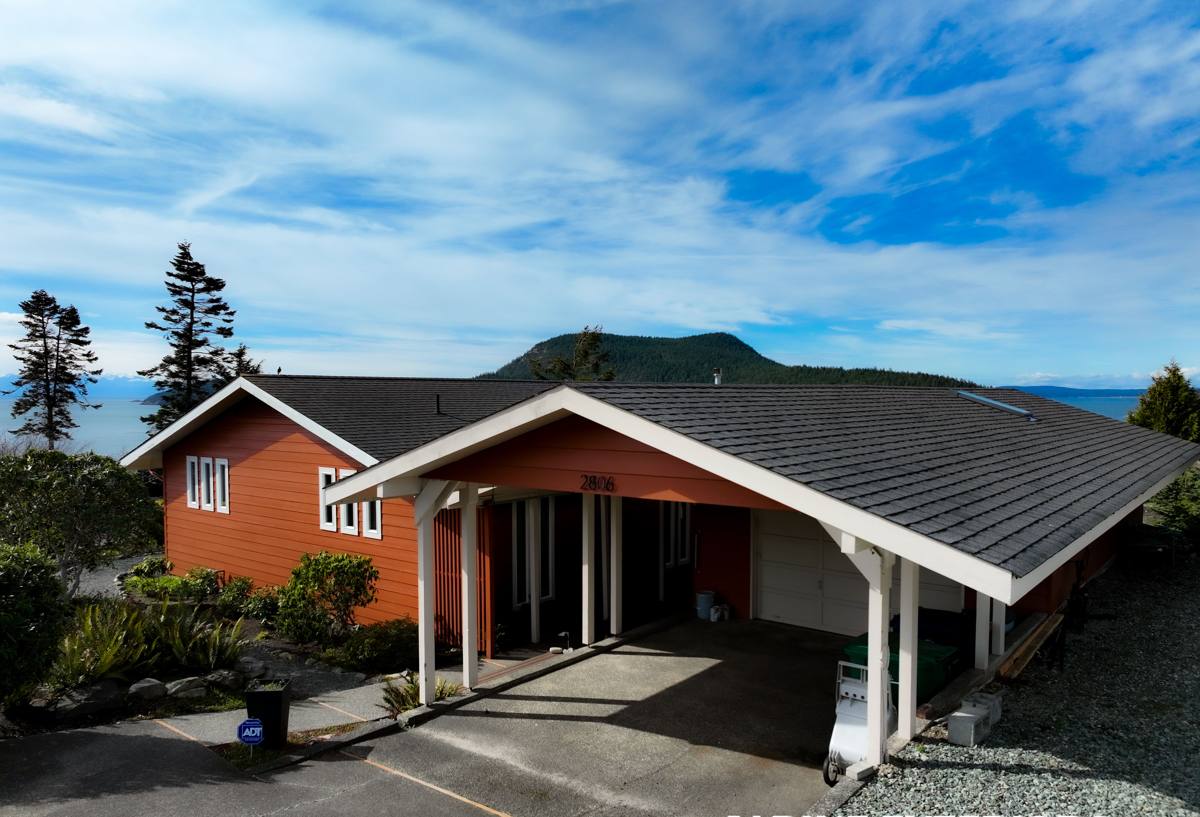
What the Climate Actually Does to a Barkley Home
Bellingham sits close enough to the water that salt-laden air moves through the whole city on a west wind, not just the waterfront neighborhoods. Combine that with our long stretch of driving rain — sideways rain that gets pushed into wall assemblies, not just straight-down rain that sheds off a roof — and you've got two forces working against any exterior material at once: corrosion and moisture intrusion. Add Whatcom County's mild, wet winters and the shade cover common in newer plantings around Barkley lots, and you get a moss season that can run eight or nine months a year on north-facing roof slopes and shaded siding.
The three things we watch for locally
- Moss and algae staining on roofs and siding that don't get much direct sun, especially north- and east-facing exposures
- Fastener and flashing corrosion from salt-influenced air, particularly on trim, gutters, and any exposed metal
- Moisture behind the cladding where wind-driven rain finds gaps in caulking, trim, or improperly lapped siding
None of this is unique to Barkley — it's Whatcom County weather, full stop. But because a lot of Barkley's housing stock is newer, homeowners here are often hitting the 10-to-20-year mark for the first time, which is exactly when builder-grade materials start showing their limits.
Siding: Why We Only Install James Hardie
We install James Hardie fiber cement siding exclusively. We don't install vinyl, LP SmartSide, Cemplank, Allura, or primed wood products, and we're upfront about why: those products can be reasonable choices in the right hands, but they carry trade-offs we're not willing to put our name behind in this climate.
Vinyl expands and contracts with temperature swings and can crack or warp over time; it also doesn't hold paint if you ever want to change the color. Wood-based composite siding like LP SmartSide performs well when installation and maintenance are done exactly to spec, but it's an engineered wood product at its core — it needs consistent caulking and paint upkeep to keep moisture out, and driving rain is precisely the condition that exposes any gaps in that upkeep. Other fiber cement brands, like Cemplank or Allura, are chemically similar to Hardie, but we've standardized on Hardie for its factory-applied ColorPlus finish, its HZ5 product engineering for the Pacific Northwest's moisture and temperature profile, and a warranty structure we're comfortable standing behind for the long term.
Fiber cement doesn't feed moss the way wood-based products can, it's non-combustible, and a factory finish means the color isn't relying on a field-applied coat to keep water out. In a climate that runs wet and mild for most of the year, that combination matters more than it does in drier parts of the country.
Hardie Product Lines We Use
| Product | Typical Use | Why It Fits Here |
|---|---|---|
| HardiePlank lap siding | Primary wall cladding | Most common look in Barkley's mixed housing stock; factory finish resists our moss and mildew conditions |
| HardieShingle | Accent gables, dormers | Adds texture without the maintenance burden of real cedar shingle |
| HardieTrim | Corner boards, window/door trim | Won't rot or wick moisture the way finger-jointed wood trim does |
| HardiePanel | Modern vertical/board-and-batten sections | Common on newer Barkley builds with contemporary elevations |
Roofing: Managing Moss Before It Manages You
Roofing in a place like Barkley is less about surviving a single storm and more about surviving the slow accumulation of moisture and organic growth over years. A roof that's shaded by newer landscaping or sits on a north slope will hold moss longer into the year than a south-facing roof across the street. That moss holds water against the shingle surface, which shortens the life of the roofing material and can work its way under flashing over time.
We install and repair roofing with an eye toward drainage detail, proper underlayment, and flashing that's sealed against wind-driven rain — not just shingles that look fine from the street. Ventilation matters too: a roof deck that can't breathe traps moisture from the inside, which compounds whatever's happening on the outside.
Windows: The Quiet Failure Point
Window failures rarely announce themselves. Seals degrade, flashing gaps open up a fraction of an inch, and the first sign is often a soft spot in the wall below a sill or a slight discoloration in the drywall — months or years after the actual failure started. Because Bellingham's rain comes in sideways as often as it comes straight down, window flashing and sill pan details matter more here than in climates where rain mostly falls vertically.
When we replace windows, we treat the flashing and integration with the siding as seriously as the window unit itself. A great window installed with a poor flashing detail will leak; a modest window installed correctly usually won't. We also look at how the new window interfaces with Hardie siding specifically, since proper head flashing and kick-out details are what keep water from tracking behind the cladding at every opening.
Decks: Built for Wet-Season Reality
Decks in Whatcom County take a beating from the same driving rain and shaded-moss conditions as roofs and siding, plus standing water and freeze-thaw cycling on horizontal surfaces. A deck that isn't detailed for drainage will hold moisture at the ledger board and joists — the two places you least want rot starting, because they're structural and hard to inspect without pulling boards. We build and repair decks with attention to ledger flashing, joist protection, and surface materials that won't turn into a moss rink by December.
Signs a Barkley Deck Needs Attention
- Soft or spongy spots near the house-side ledger board
- Persistent green or black staining on boards that stay shaded most of the day
- Rust streaking from fasteners, a sign the hardware isn't rated for our moisture exposure
- Gaps or separation where the deck meets the house siding
Why a Local Crew Matters in Barkley
Barkley's housing stock spans several building eras and a mix of developers, which means exterior details aren't uniform from one block to the next — a townhome cluster might have very different flashing and siding conditions than a single-family home built a few years later nearby. A crew that works across Whatcom County regularly sees that variation and knows what to check for on each type of build, rather than applying a one-size-fits-all approach. We also know how our local building department handles permitting for siding, roofing, and deck work, which keeps projects from stalling on paperwork.
Just as important: we're not driving in from out of the area for one job and leaving. If something needs a warranty follow-up years down the road, we're still a Whatcom County contractor working Bellingham neighborhoods.
What Drives Cost on an Exterior Project
| Factor | Why It Matters |
|---|---|
| Home size and elevation complexity | More corners, gables, and stories mean more material and labor time |
| Existing damage or rot | Hidden moisture damage found during tear-off adds repair scope before new material goes on |
| Access and site conditions | Tight lots, slopes, or landscaping close to the house affect staging and labor time |
| Product line and trim detail | HardiePanel vs. HardiePlank, shingle accents, and custom trim all shift material cost |
| Scope bundling | Combining siding with window or trim replacement often costs less than doing each separately later |
Get a Straight Answer on Your Barkley Home
Every exterior tells its own story once you get close to it — where the moss is holding, where the trim has softened, where a past patch job didn't quite solve the problem. We'll walk your home, tell you honestly what's urgent and what can wait, and give you a clear estimate with no pressure to sign anything on the spot. If you're in Barkley or anywhere else around Bellingham and want a second set of eyes on your siding, roof, windows, or deck, the form below gets you a free estimate.