 Bellingham
 What Cemplank Is, and Why Homeowners Ask About It
If you've been pricing out siding replacement in Bellingham, you've probably run into Cemplank somewhere along the way — usually as a lower bid from a contractor or a suggestion from a building supply counter. Cemplank is a fiber cement siding product, meaning it's manufactured from the same basic recipe as most fiber cement siding on the market: Portland cement, cellulose fiber, and sand, pressed and cured into planks, panels, and trim. On paper, it looks like a reasonable alternative to the fiber cement siding we install on every job, James Hardie. It isn't vinyl, it isn't wood, and it's priced to compete.
We get asked about it often enough that we think homeowners deserve a straight answer instead of a sales pitch. This page is that answer. We're not going to tell you Cemplank is junk, because it isn't — fiber cement as a category is a solid choice for a place like Whatcom County. What we're going to explain is why, after years of installing siding in this specific climate, we made the decision to only install James Hardie products, and where Cemplank falls short of that bar for us.
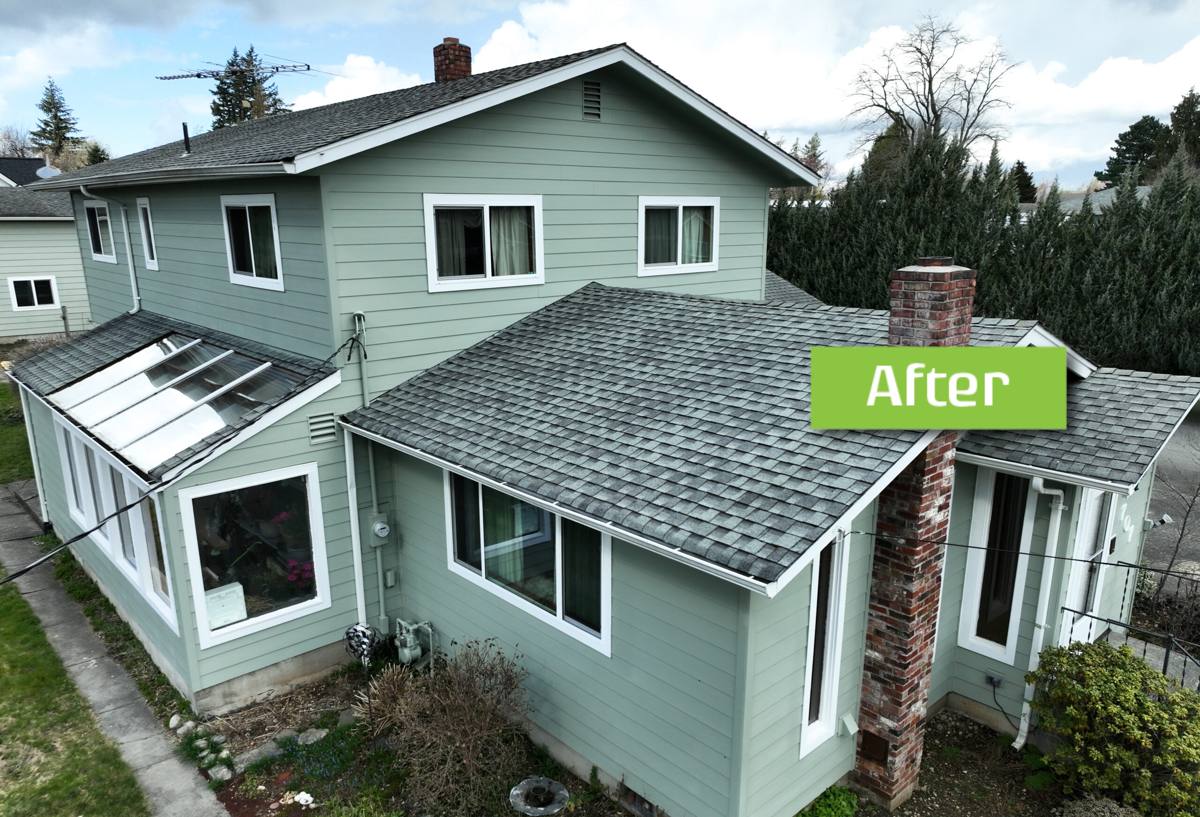
What Cemplank Gets Right
Credit where it's due. Cemplank is a genuine fiber cement product, not an imitation, and that matters. Compared to vinyl or engineered wood siding, it shares fiber cement's core advantages:
- It's non-combustible, which matters more every wildfire season, even here on the wet side of the Cascades.
- It resists rot in a way that solid wood and primed spruce products can't, since there's no organic wood fiber for moisture to feed on.
- It doesn't attract insects the way cedar or untreated wood trim does.
- It holds paint and texture better than vinyl over the long run, and it doesn't warp or buckle in direct sun the way some vinyl panels can.
If your only comparison is Cemplank versus vinyl siding or versus bare wood, Cemplank comes out ahead on durability almost every time. The real question isn't "is fiber cement a good idea" — it is. The question is which fiber cement product holds up best, looks best over 20-plus years, and comes with a warranty and support network that actually protects you here in Bellingham. That's where the gap opens up.
Why Whatcom County's Climate Raises the Stakes
Siding decisions that might not matter much in a dry climate matter a lot here. Bellingham sits on Bellingham Bay, which means salt air is a constant, low-grade stress on every exterior surface in town, not just homes right on the water. Add in driving rain that comes sideways off Puget Sound during winter storms, and you've got a climate that tests a siding product's finish and moisture management far harder than the national average.
Then there's moss. Whatcom County's long wet season, especially on shaded north- and west-facing walls under mature trees, gives moss and algae months at a time to establish themselves on any siding surface that holds moisture even slightly longer than it should. A siding product's finish quality and factory sealing aren't cosmetic details in this climate — they're the difference between a wall that sheds water and stays clean and one that starts showing green streaks and finish breakdown by year five or six.
This is the lens we run every siding product through before we'll put it on a client's home: not "does this work in a showroom," but "does this hold up on a Bellingham roofline through 20 winters of driving rain and moss season."
What This Looks Like in Practice
Salt air accelerates corrosion on fasteners and flashing details. Driving rain pushes water into any seam or joint that isn't detailed correctly. Moss and algae growth exploits any surface where the factory finish is thinner or less consistent. None of these are exotic problems — they're just the everyday reality of this coastline, and they separate siding products that were engineered for it from products that were engineered to be affordable nationwide.
The Factory Finish Question
This is the biggest practical difference we see between Cemplank and the Hardie products we install. James Hardie's ColorPlus finish is a baked-on, factory-applied finish process with a specific formulation and multiple coating layers, backed by its own dedicated finish warranty. Cemplank's finish options are more limited, and its factory-coated products don't carry the same depth of finish warranty or the same track record of long-term color and sheen retention in wet coastal climates.
In a drier region, the difference between finish systems might not show up for a decade or more. In Whatcom County, where siding stays damp for extended stretches during the fall and winter, finish quality shows up faster — in fading, chalking, or the kind of surface breakdown that gives algae and moss something to grip onto. We'd rather not gamble a client's siding investment on a finish system with less proven performance in exactly the conditions we're building for.
Warranty Structure: Read the Fine Print
Every fiber cement manufacturer offers a warranty, but the structure of that warranty matters as much as its length. This is a spot where Cemplank's paperwork asks more of the homeowner than we're comfortable with.
| Factor | What to Look For | Why It Matters |
|---|---|---|
| Transferability | Can the warranty pass to a new owner if you sell? | Protects resale value; a non-transferable or limited warranty is a weaker asset |
| Finish coverage | Is the factory finish covered separately, with its own term? | Finish failure (fading, chalking) is the most common real-world claim |
| Labor coverage | Does the warranty cover removal and reinstallation labor, or just materials? | Material-only coverage can leave you paying the larger cost — labor — out of pocket |
| Installer requirements | Does coverage depend on installation by a certified or approved contractor? | Determines whether you have a real path to a claim if something goes wrong |
James Hardie's warranty structure, including transferability and its ColorPlus finish coverage, is one of the more thoroughly tested in the industry, backed by decades of claims history. We're not going to install a product where we'd have to caveat the warranty conversation with a client — and with Cemplank, we would.
Installation Sensitivity and Local Support
Fiber cement siding, as a category, is unforgiving of poor installation. Improper fastening, wrong nail placement, insufficient clearance from grade or roof lines, and poor joint flashing will cause problems with any fiber cement product, Hardie included. The difference is what happens when something needs to be sourced, matched, or serviced years down the road.
James Hardie has a deep, established distribution and installer training network in the Pacific Northwest, which means matching trim, replacing a damaged plank, or getting manufacturer support on a warranty question is straightforward. Cemplank's presence and distribution in this specific market is thinner. If a plank gets cracked by a falling branch in a windstorm five years from now, or you're adding an addition and need siding that matches what's already on the house, you want that to be a phone call, not a project.
Cemplank vs. James Hardie: Side by Side
| Cemplank | James Hardie | |
|---|---|---|
| Base material | Fiber cement | Fiber cement |
| Factory finish | Limited options, shorter track record | ColorPlus baked-on finish, separately warrantied |
| Climate engineering | General-purpose formulation | HZ5 product line engineered for Pacific Northwest wet/freeze conditions |
| Warranty transferability | More limited | Transferable to subsequent owners |
| PNW distribution/support | Thinner network | Established regional network |
| Upfront cost | Generally lower | Moderate premium |
Why We Standardized on James Hardie
We made the decision years ago to install one fiber cement product, not several, and to build our entire process, crew training, and warranty relationships around it. James Hardie's HZ5 product line is specifically engineered for climates like ours — wet, mild, coastal — rather than a one-size-fits-all national formulation. Combine that with the ColorPlus finish system, a warranty structure that transfers with the home and covers the finish separately, and a distribution network that means we can always get matching material, and it's the product we're willing to stand behind on every home we side.
That's the whole reason this page exists. We're not telling you Cemplank can't be installed correctly or that everyone who's used it has had problems — we're telling you why, given a choice between fiber cement products for a Bellingham home, we settled on the one with the deepest climate engineering, the strongest warranty structure, and the best local support behind it.
What This Means for Your Project
If you're comparing bids and one includes Cemplank while another includes James Hardie, here's what to actually ask about, beyond just the price difference:
- Ask whether the finish is factory-applied and what the separate finish warranty term is.
- Ask whether the warranty is transferable to a future buyer of the home.
- Ask whether labor is covered under warranty, not just materials.
- Ask how easily matching trim or replacement planks can be sourced in five or ten years.
- Ask whether the product line is climate-rated for a wet coastal region like Whatcom County.
- Ask what happens to your warranty coverage if the installing contractor isn't a certified installer for that product.
Price matters, and we understand that a lower bid using a lower-cost fiber cement product will look attractive on paper. Just make sure you're comparing the whole picture — finish, warranty, and long-term support — not just the number at the bottom of the estimate.
If you'd like to see how James Hardie siding would look and perform on your specific home, we're happy to walk the property, talk through the HZ5 product line and color options, and put together a free, no-pressure estimate.