 Bellingham
 South Hill's Exterior Challenges Are Different From the Rest of Bellingham
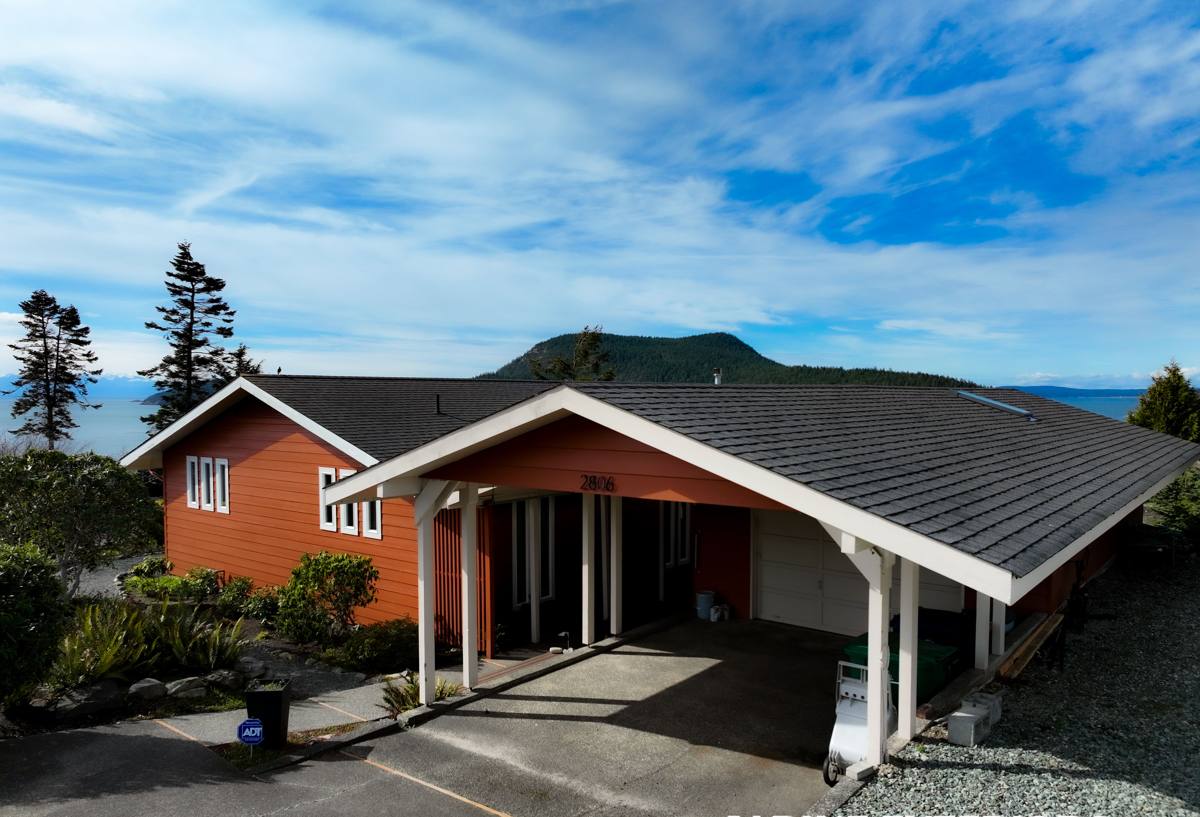
South Hill sits up on the hillside south of downtown, and that elevation cuts both ways. Homes here get some of the best views in Bellingham, but they also catch weather that lower, more sheltered neighborhoods don't see as directly. Wind off Bellingham Bay and the Strait pushes rain sideways into south- and west-facing walls, and the same elevation that gives you a view also means less windbreak from surrounding terrain. Add in Whatcom County's marine air — carrying a low but constant load of salt and moisture off the water — and you've got a combination that steadily works against paint, caulk, and lower-grade siding materials year after year.
Mature tree cover is common in older South Hill lots, which is great for privacy and shade but keeps roofs, siding, and decks damp longer after every rain. That extended dampness is exactly what moss, algae, and mildew need to take hold. In a region where the wet season can stretch from October well into May, a shaded, hillside lot in South Hill often stays wetter, longer, than a comparable house down near the flats.
Why Moss and Moisture Are the Real Enemy Here
Moss doesn't just look bad — it holds water against whatever it's growing on. On a roof, that means shingles or panels staying saturated instead of drying out between storms, which shortens their service life and can work moisture under flashing over time. On siding, moss and algae growth usually shows up first on north- and shade-facing walls, and it's a sign that the surface is retaining moisture rather than shedding it the way it should.
This is the core reason we're picky about what we put on a house. A siding product that swells, absorbs water at cut edges, or needs repainting every few years is fighting a losing battle against a South Hill winter. We'd rather install something engineered to handle it once, correctly, than have a homeowner calling us back in five years about paint failure or soft spots.
What driving rain does to a wall system
Wind-driven rain doesn't just wet the surface of a wall — it tests the whole assembly behind the siding: the house wrap, the flashing details around windows and doors, the way seams and butt joints are sealed. A siding material can be excellent and still fail a home if it's installed without attention to water management. That's why installation quality matters as much as the product itself, especially on exposed elevations that catch weather straight off the water.
Siding: Why We Install James Hardie and Nothing Else
We install James Hardie fiber cement siding exclusively. We don't install vinyl, LP SmartSide, Cemplank, Allura, primed spruce, or cedar. That's not a marketing position — it's a decision built around what actually holds up under Whatcom County's rain, humidity, and salt air over the long run.
Hardie's fiber cement is non-combustible, dimensionally stable in wet-dry cycling, and comes with a factory-applied ColorPlus finish that's baked on under controlled conditions rather than field-painted. That finish is a big part of why it resists the fading and peeling that plagues field-painted wood and some engineered wood products in marine climates. Hardie also makes climate-specific HZ product lines engineered for exactly the kind of high-moisture, high-humidity exposure the Pacific Northwest sees.
A quick honest comparison
| Material | Moisture behavior in marine climate | Maintenance | Typical concern locally |
|---|---|---|---|
| James Hardie fiber cement | Engineered for wet-dry cycling; won't rot or swell | Low — factory finish, no regular repainting | Requires correct installation and caulking details |
| Vinyl | Doesn't rot, but expands/contracts with temperature and can warp | Low, but limited repair options if damaged | Can crack in cold snaps; seams show over time |
| LP SmartSide / engineered wood | Wood-based core, vulnerable at cut edges and joints if not sealed perfectly | Moderate — watch edges and caulking | Moisture intrusion at seams in high-rain areas |
| Cedar / primed spruce | Natural wood; absorbs moisture, needs to breathe and dry | High — regular refinishing | Moss, rot, and repainting cycles in shaded lots |
None of these other products are "bad" outright — they each have a place. But for the conditions South Hill homes actually face, we standardized on Hardie because it's the option we're comfortable standing behind for the long haul, backed by a strong transferable warranty.
Roofing That Handles a Long Moss Season
Roofing is often the first thing a South Hill homeowner notices needs attention, because it's the surface catching the most direct exposure and the most tree debris. Under shaded, north-facing roof planes especially, moss can establish quickly if gutters and valleys aren't kept clear and if the roof system doesn't have good drainage detailing. We look at ventilation, flashing, and drainage as a full system rather than just swapping materials, since a roof that traps moisture underneath will fail early no matter what's on top of it.
Because tree cover is common on the hill, we also pay attention to how close overhanging branches sit to the roofline — closer branches mean more debris buildup, more shade, and a shorter interval between cleanings.
Windows: Managing Condensation and Wind Exposure
Older homes in South Hill's established neighborhoods often still have original or aging windows that struggle with condensation, drafts, and seal failure — all made worse by the area's humidity and temperature swings. Replacement windows here need to do two jobs at once: seal tightly against wind-driven rain on exposed elevations, and manage the interior humidity that builds up in a marine climate home. We pay close attention to flashing integration with the siding at every window opening, since that's one of the most common places water finds its way into a wall system.
Decks: Built for Shade, Rain, and Slope
Deck work in South Hill comes with its own set of considerations. Sloped lots mean structural support and drainage underneath the deck matter as much as the decking material itself. Shade from mature trees keeps deck boards damp longer, which accelerates wear on lower-grade wood and can lead to slippery, moss-covered surfaces if the material and finish aren't chosen with that in mind. We talk through material options, drainage, and structural condition with every deck project rather than just resurfacing over a problem that will resurface itself in a year or two.
Signs Your Exterior Is Losing the Fight
Most exterior problems in South Hill show up gradually, and homeowners often don't notice until something's visibly failing. A few things worth checking each fall before the wet season sets in:
- Moss or dark streaking on north- or shade-facing siding and roof sections
- Paint that's chalking, peeling, or bubbling, especially on wood or engineered wood siding
- Soft spots or slight give when you press on siding near the base of the wall
- Gutters overflowing or holding standing debris after a normal rain
- Deck boards that feel spongy, cupped, or stay damp long after the rain stops
- Window sills or interior trim with condensation, staining, or a musty smell
Any one of these is manageable if caught early. Left alone through another wet Whatcom County winter, they tend to compound.
Why a Local Crew Makes a Real Difference
Exterior work in South Hill isn't the same job as exterior work in a flat, sheltered neighborhood. A crew that works across Bellingham and Whatcom County regularly knows how the wind comes off the bay, how long moss season really runs, and how tree cover changes the maintenance math on a given street. That local knowledge shapes real decisions — where to add extra flashing, which elevations need closer attention to caulking and joints, and how to sequence a project around the wet season instead of fighting it.
It also means we're not disappearing after the job is done. A warranty is only as good as the company standing behind it, and we're here in the same county, working on the same kinds of homes, year after year.
What to Expect When You Call Us
We start with a walk-around of the house — siding, roofline, window condition, and any deck or structural concerns — and talk through what we're seeing in plain terms. From there we put together a straightforward scope and estimate, with no pressure to sign anything on the spot. Every project gets the same standard: Hardie siding installed to spec, proper flashing and drainage detailing, and materials chosen to actually hold up to a South Hill winter, not just look good on install day.
If you're noticing moss, peeling paint, a soft spot in your siding, or just want a second opinion on the condition of your home's exterior, we're happy to take a look. Reach out for a free, no-pressure estimate — we'll tell you honestly what we see and what we'd recommend.