 Bellingham
 Cordata's Exterior Climate, Explained
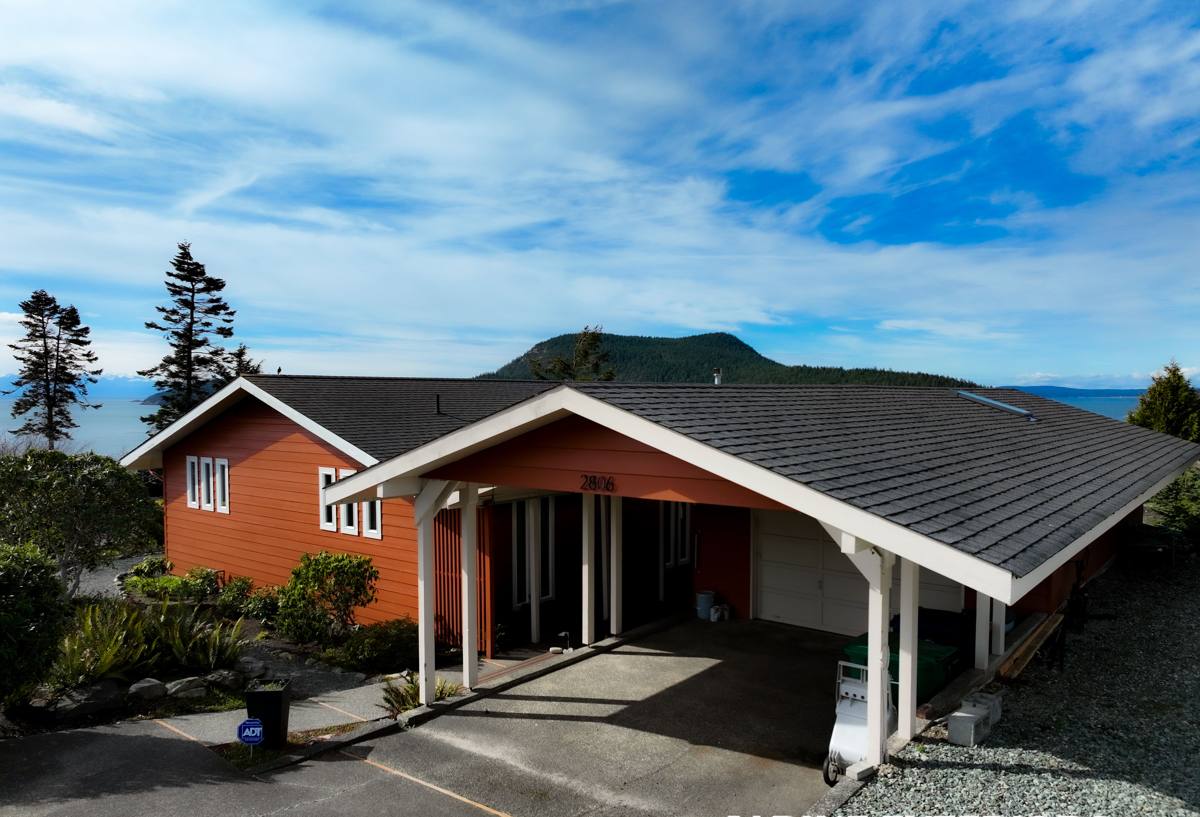
Cordata sits in north Bellingham, close enough to Bellingham Bay and the Salish Sea that homes here deal with a specific mix of weather stress: salt-laden marine air moving in off the water, long stretches of driving rain through fall and winter, and a shoulder season damp enough to keep moss and algae established on roofs, siding, and decks for months at a time. None of that is unusual for Whatcom County, but it adds up differently depending on what your house is built with and how it was installed.
Homes in this part of Bellingham range from newer construction near the commercial corridor to older single-family homes on established lots with mature landscaping. That landscaping is part of the equation too — big evergreens and dense shrub lines shade north- and east-facing walls for much of the year, which slows drying time after every rain event and gives moss more time to take hold.
Salt Air and Metal Fatigue
Proximity to the bay means airborne salt reaches building materials well inland of the actual shoreline, carried by wind and fog. Salt accelerates corrosion on exposed fasteners, flashing, and lower-grade metal trim, and it degrades some paint and coating systems faster than manufacturers' inland test data suggests. It's rarely dramatic — it shows up as premature rust streaking, chalking finishes, and fastener failure years before they should occur.
Driving Rain and Wall Assemblies
Bellingham's rain doesn't just fall — a good portion of it arrives sideways during winter storm systems, which pushes water into laps, seams, and penetrations that a vertical-rain assumption wouldn't have to deal with. Siding, flashing, and window installation details that work fine in a drier climate can fail here simply because the water is hitting the wall from the side, not just from above.
Moss Season
Cool, wet, shaded conditions for much of the year make moss and algae growth close to a given on north-facing roof slopes, in siding laps that don't drain well, and on decks that don't get direct sun. Moss holds moisture against the surface it's growing on, which is the real problem — it's not cosmetic, it's a moisture-retention issue that shortens the life of whatever it's sitting on.
How Different Materials Actually Hold Up
We get asked a lot why we standardized on one siding product instead of offering a menu of options. The honest answer is that we've watched how different materials perform in this specific climate over time, and the differences aren't marginal.
| Material | Moisture Behavior | Moss/Algae Resistance | Long-Term Maintenance |
|---|---|---|---|
| Vinyl siding | Doesn't absorb water itself, but seams and laps can trap moisture against sheathing; warps and gaps over time | Moderate — smooth surface sheds spores better than textured siding, but grime buildup is common in shaded areas | Low upfront, but fading, cracking, and seam failure are common on the 15-20 year mark |
| Primed wood/cedar | Absorbs moisture readily if the finish fails; prone to rot at end grain and fastener points | Poor — organic material is a moss magnet in constant damp shade | High — repainting and caulk maintenance on a recurring cycle |
| Engineered wood (e.g. LP-type) | Resin-treated to resist moisture, but edge and cut-end sealing is critical; failures concentrate at unsealed cuts | Moderate, dependent on coating integrity | Moderate — installation quality determines long-term outcome more than with other materials |
| James Hardie fiber cement | Non-combustible, dimensionally stable, engineered specifically for wet marine climates (HZ5 product line) | Good — factory finish resists the surface conditions moss needs to establish | Low — periodic washing, no repainting cycle with ColorPlus finish |
This is why we only install James Hardie. It isn't that other products can't be installed correctly — it's that fiber cement's moisture behavior and factory-cured finish line up with what a Cordata exterior actually experiences, without asking a homeowner to manage a maintenance cycle to keep it that way.
Siding: Why James Hardie, and Why It's the Only Thing We Install
We don't carry vinyl, LP SmartSide, Cemplank, Allura, or unfinished cedar or spruce siding. That's a deliberate standard, not an oversight. Each of those products has legitimate strengths — cost, weight, familiarity — but each also comes with a trade-off that shows up specifically in a climate like ours: moisture sensitivity at cut edges, a repainting burden, or a finish that doesn't hold up to years of damp shade and salt air without attention.
James Hardie fiber cement is cement, sand, and cellulose fiber — it doesn't rot, it won't feed moss the way organic material does, and it's non-combustible. The HZ5 product line is engineered for climates with exactly this profile: high moisture exposure and freeze-thaw cycling. The factory-applied ColorPlus finish is baked on under controlled conditions, which is a meaningfully different proposition than field-applied paint drying in Bellingham's humidity. Hardie backs the product with a strong transferable warranty, which matters if you sell the house before the siding's functional life is up.
None of this means Hardie is maintenance-free forever. It means the maintenance is periodic washing and inspection, not a repaint cycle or edge-sealing regimen that depends on a homeowner staying on top of it every year.
Roofing in a Wet, Shaded Climate
Roofs in Cordata do a lot of quiet work. Between the rain volume and the shading from mature trees on many established lots, moss and algae pressure on north and east slopes is constant. A roof system here needs to actually shed water fast and dry out between storms, not just keep water out during a single event.
- Underlayment and flashing details matter more here than in drier climates — they're what keeps driving rain from working its way under the roof covering at valleys, penetrations, and edges
- Gutter capacity and downspout placement should be sized for real Whatcom County rainfall, not a national average
- Ventilation keeps attic moisture from condensing against the roof deck from underneath, which is a separate problem from surface moss
- Ridge and edge details are where wind-driven rain most often finds a way in
We look at all of this together during a roofing estimate, not just the shingle or panel choice, because the assembly underneath is what determines whether the roof actually performs through a Bellingham winter.
Windows: Sealing Against Sideways Rain
Window failures in this climate are rarely about the glass — they're about the installation. Flashing integration with the wall assembly, sill pan drainage, and proper sealant details are what keep driving rain from finding its way behind the window frame. An older window with tired weatherstripping and failed seals doesn't just cost you on the energy bill; in a wet climate it's a slow path to hidden water damage in the wall cavity.
When we replace windows, we're paying as much attention to how the new unit integrates with the surrounding wall and siding as we are to the window itself. A well-built window installed with a bad flashing detail will still leak.
Decks: Built for Shade and Standing Water
Decks take a different kind of beating in Cordata's climate — standing moisture on horizontal surfaces, shaded areas that never fully dry, and moss that establishes on boards the same way it does on a north-facing roof slope. Structural framing, ledger flashing, and proper drainage slope matter as much as the decking material itself. A deck built without attention to water shedding will show rot at the framing long before the surface boards look bad.
Why a Local Crew Matters Here
A crew that works across Whatcom County year-round knows what a Bellingham winter actually does to a wall assembly, a roof valley, or a deck ledger — not from a manual, but from having gone back to fix work that wasn't detailed for this climate. That matters more here than in a lot of places, because the margin for error with driving rain and sustained dampness is smaller than it looks on a dry install day in July.
It also means someone local to call if a detail needs a look five years in, not a crew that's moved on to another region.
Signs Your Cordata Home's Exterior Needs Attention
- Moss or dark streaking on roof slopes, especially north-facing sections
- Siding that's soft, bubbling, or peeling at seams and butt joints
- Rust streaking below metal flashing or fasteners
- Windows that fog between panes or feel drafty near the frame
- Deck boards that stay damp days after the last rain, or soft spots near the ledger
- Paint that's chalking or fading unevenly across different wall exposures
If you're weighing a siding, roofing, window, or deck project for a home in Cordata, we're happy to take a look and walk through what your specific exterior is facing. There's no pressure and no cost to get an honest read on where things stand — the estimate form below is the easiest way to get started.