 Bellingham
 Exterior Work Built for Sehome's Climate
Sehome sits close to downtown Bellingham and Western Washington University, with a mix of older single-family homes, mid-century construction, and newer infill built on sloped, tree-shaded lots. That combination matters more than most homeowners realize. Older siding and roofing systems in this neighborhood were often installed before builders fully accounted for how much moisture Whatcom County pushes at a house year-round, and it shows up as soft trim boards, moss-streaked roofs, and paint that won't hold past a few seasons.
We're a local exterior contractor working siding, roofing, windows, and decks across Bellingham, and Sehome is a neighborhood we're in regularly. The climate factors that drive our recommendations here are the same ones that drive every job we take on: salt-tinged marine air off Bellingham Bay, driving rain that hits siding at an angle rather than straight down, and a moss season that can stretch from fall through spring under the tree canopy common in this part of town.
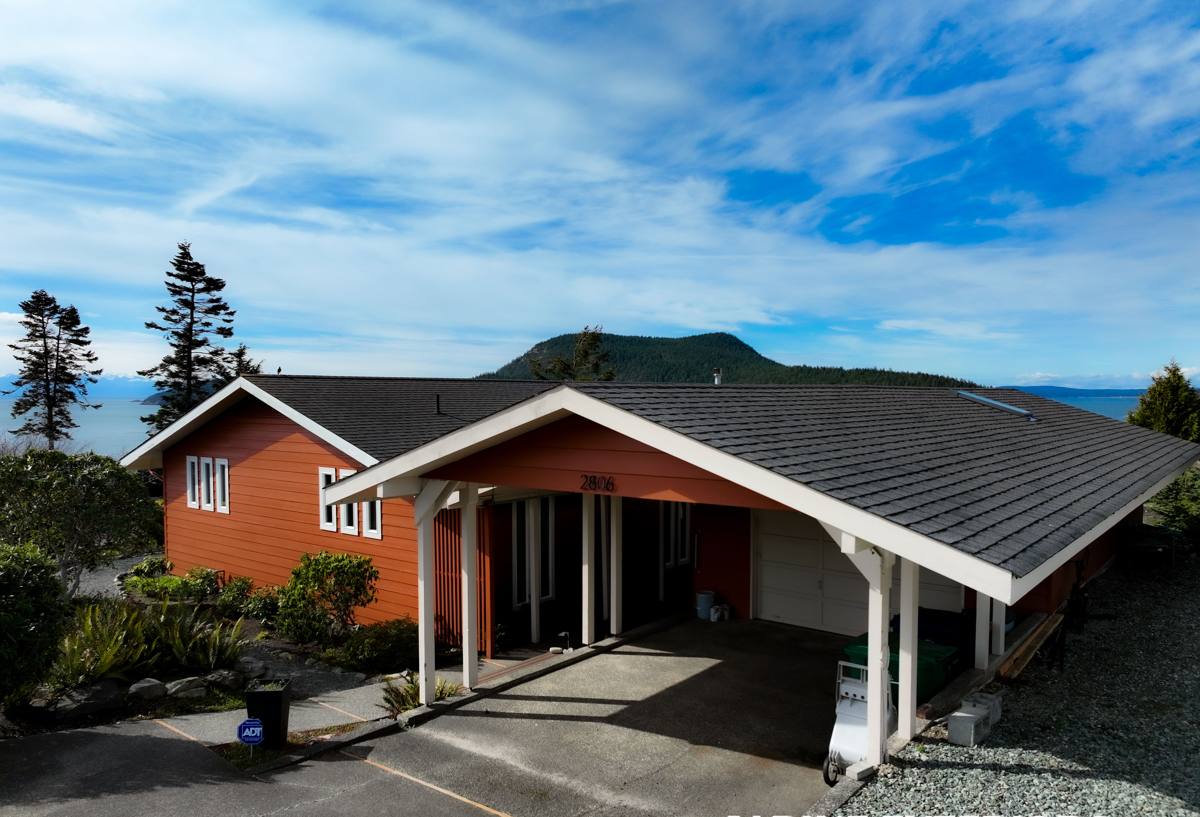
What Sehome Homes Face
Salt Air and Marine Moisture
Bellingham's proximity to the bay means exterior materials here deal with a low but steady dose of salt-laden moisture in the air, even blocks inland. It's not the same intensity you'd see right on the waterfront, but over years it accelerates corrosion on fasteners, flashing, and any exposed metal, and it keeps wood surfaces damp longer than they'd stay in a drier inland climate. Materials and hardware that aren't rated for coastal exposure tend to show their age faster here than the sales brochure suggests.
Driving Rain
Whatcom County doesn't just get a lot of rain — a good share of it comes in sideways during winter storms. Siding and window systems that rely on a snug fit rather than genuine water-shedding design (laps, proper flashing, correctly sequenced house wrap) are the ones that eventually let water track behind the cladding. Once moisture gets behind the siding on a wall that doesn't dry out quickly, rot follows, and by the time it's visible on the surface the sheathing underneath has usually been wet for a while.
Moss and Shade
Sehome's older tree cover is part of what makes the neighborhood pleasant to live in, but it also means a lot of roof and siding surfaces stay shaded and damp for extended stretches. Moss and algae take hold fastest on north-facing roof slopes and on siding that sits close to landscaping or under overhangs that block sun and airflow. Left unchecked, moss holds moisture against roofing material and can work its way under shingle edges, shortening the life of an otherwise sound roof.
Siding: Why We Standardized on James Hardie
We install James Hardie fiber cement siding exclusively — we don't install vinyl, LP SmartSide, Cemplank, Allura, or bare cedar and primed spruce. That's a deliberate decision based on how those materials perform over time in a climate like this one, not a knock on every homeowner who has one of them on their house today.
- Vinyl is affordable and low-maintenance, but it expands and contracts with temperature swings, can crack in impacts, and doesn't hold up as a long-term air/moisture barrier the way a properly installed fiber cement system does.
- LP SmartSide and other engineered wood products perform reasonably well when detailing is perfect, but they're wood-based, and wood-based siding is inherently more vulnerable to the kind of sustained moisture exposure Whatcom County delivers — cut edges and butt joints are the weak points if caulking and paint maintenance ever lapse.
- Cedar and primed spruce look great new, but they demand an ongoing maintenance schedule — refinishing, caulking, moisture monitoring — that most homeowners underestimate. Skip a cycle or two in a wet climate and problems compound quickly.
- Cemplank and Allura are also fiber cement, and reasonable products in their own right. We standardized on Hardie specifically for its ColorPlus factory finish, its HZ5 line engineered for Pacific Northwest moisture exposure, and the depth of its installer network and warranty backing in this region.
Fiber cement is non-combustible, doesn't rot, and holds paint far longer than wood-based alternatives because the ColorPlus finish is baked on at the factory rather than field-applied. For a neighborhood dealing with salt air, driving rain, and shaded moisture retention all at once, that combination of moisture resistance and a factory finish that doesn't depend on perfect field conditions is what tips the decision.
Comparing Siding Options for a Sehome Home
| Material | Moisture Tolerance | Maintenance | Typical Lifespan Here |
|---|---|---|---|
| James Hardie fiber cement | High — non-combustible, engineered for PNW exposure | Low — factory finish, occasional wash | 30+ years with correct install |
| Vinyl | Moderate — can trap moisture behind panels | Low, but prone to cracking/fading | 15-25 years |
| LP SmartSide / engineered wood | Moderate — vulnerable at cut edges/joints | Moderate — caulk and paint maintenance | 15-25 years |
| Cedar / primed spruce | Lower without diligent upkeep | High — regular refinishing needed | Highly maintenance-dependent |
Roofing in Sehome
Roofing decisions in this neighborhood come down to two things: shedding driving rain without leaks, and resisting moss growth under shaded, tree-covered lots. We look at ventilation, underlayment quality, and flashing detail as closely as the shingle or roofing material itself, because a roof that traps moisture or breathes poorly will grow moss and shorten its own life regardless of the surface material's rating.
If your roof sits under mature trees — common throughout Sehome — proactive moss management and clean gutters matter as much as the roofing material choice. We can walk through what your specific roof's exposure looks like and what maintenance rhythm makes sense for it.
Windows and Doors
Many Sehome homes have original or aging window units that were never built with today's insulation or air-sealing standards in mind. In a climate with this much sustained moisture, window replacement is as much about proper flashing and integration with the surrounding siding as it is about the glass package itself — a beautifully installed window with poor flashing detail is still a leak point waiting to happen. When we replace siding, we treat window and door flashing as part of the same water-management system, not a separate trade.
Decks: Built to Handle Wet Winters
A deck in Sehome spends a good part of the year wet, shaded, or both. Framing, fastener choice, and ledger-to-house flashing are what determine whether a deck stays solid for decades or starts showing soft spots and rust streaks within a handful of years. We build and repair decks with materials and hardware suited to sustained Pacific Northwest moisture exposure, not generic hardware-store fasteners that corrode faster than the lumber around them.
Signs Your Exterior Needs a Closer Look
- Moss buildup on roof slopes, especially north-facing or shaded sections
- Paint that's peeling, bubbling, or failing faster than expected on siding or trim
- Soft or spongy spots on deck boards, railings, or ledger areas
- Staining or streaking below window sills or siding seams
- Visible gaps, warping, or cracking in siding panels or trim boards
- Musty smell or discoloration on interior walls near exterior corners
Why a Local Crew Matters Here
Exterior work in Bellingham isn't the same job as exterior work in a drier inland climate. A crew that installs siding and roofing across the country, or even across drier parts of Washington, doesn't necessarily bring the same instincts for flashing sequencing, moisture management, and moss-prone shading that a Whatcom County-specific crew brings to a Sehome property. We work this climate every week, and the details we prioritize — house wrap overlap, kick-out flashing at roof-wall intersections, fastener spacing suited to marine air — are the same details that separate exterior work that lasts thirty years from work that needs revisiting in ten.
What Working With Us Looks Like
We start with an honest look at your home's current siding, roofing, windows, and deck condition, and we tell you what actually needs attention versus what can wait. If siding replacement is on the table, we'll walk you through why we install James Hardie and how its HZ5 line and ColorPlus finish are suited to this specific climate — not a generic sales pitch, but a real conversation about trade-offs and what holds up here.
If you're in Sehome and dealing with moss buildup, aging siding, a leak you can't pin down, or a deck that's starting to feel soft underfoot, we'd be glad to take a look. Reach out for a free, no-pressure estimate — there's a form below to get started.