 Bellingham
 Exterior Work Built for Columbia's Conditions
Columbia is one of Bellingham's older, more established neighborhoods, and that shows in its housing stock: a mix of mid-century homes, post-war bungalows, and newer infill construction, many shaded by mature trees that have had decades to grow in. That combination of age and tree cover creates a specific set of exterior challenges. Homes here deal with the same marine climate that defines all of Whatcom County — damp air rolling in off Bellingham Bay, long stretches of driving rain through fall and winter, and short, cool summers that never fully dry things out before the next wet season starts. Add heavy shade from established trees and you get a longer moss season than homes get in more open, sun-exposed parts of the county.
We've worked on homes throughout this part of Bellingham long enough to know that "the same siding everyone else uses" doesn't hold up the same way here as it might in a drier climate. That's part of why we made the call, years ago, to install only one fiber cement siding system rather than juggling several product lines with different moisture tolerances and maintenance needs.
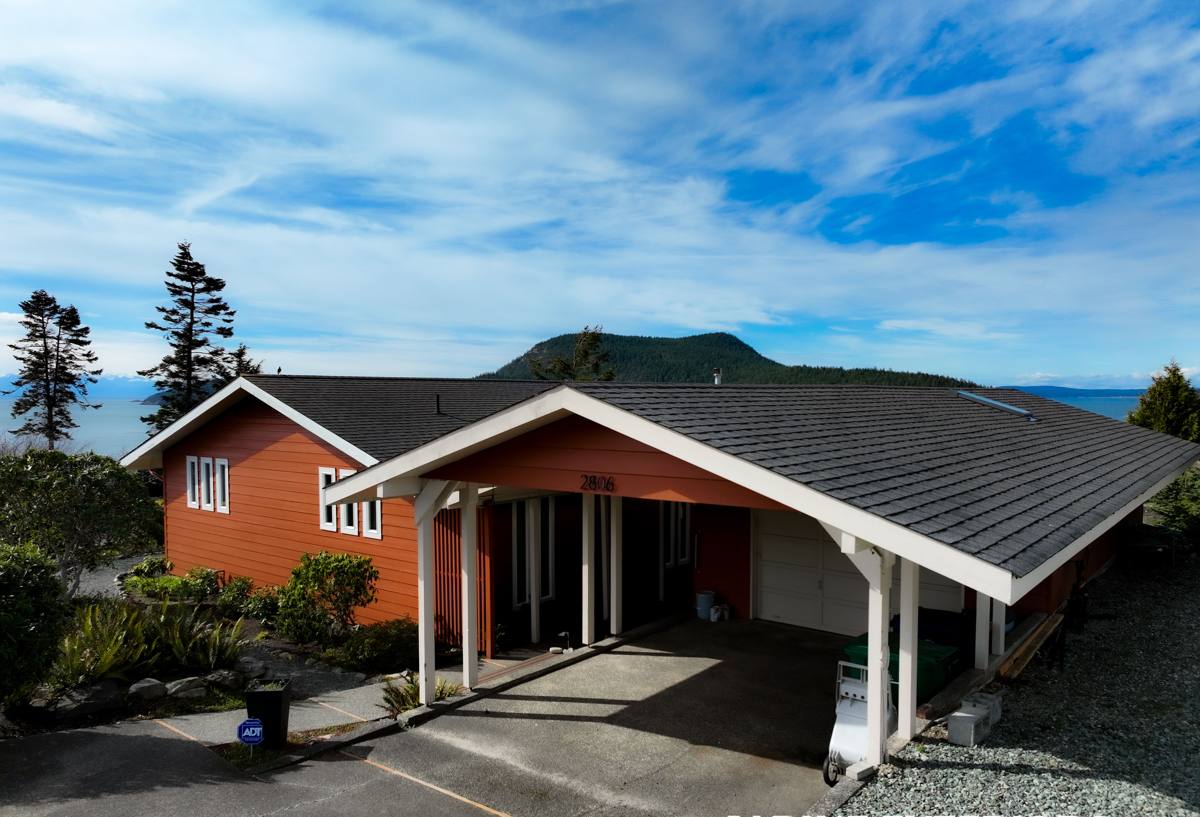
What the Columbia Neighborhood's Climate Does to a House
Moisture That Doesn't Let Up
Whatcom County gets a lot of its annual rainfall as a slow, steady drizzle rather than short heavy downpours. That's actually harder on siding and trim than a hard rain, because surfaces stay damp for days at a time instead of getting wet and then drying quickly. Wood-based products — cedar, primed spruce, and even engineered wood siding — depend on that dry-out window to stay ahead of rot. In a neighborhood with mature tree canopy blocking sun and wind, that window shrinks.
Moss, Algae, and Shade
Moss needs three things: moisture, shade, and a surface it can grip. Columbia's tree-lined streets provide the shade in spades, and the regional rain provides the moisture. North-facing walls, areas under overhangs, and anything tucked behind landscaping will show moss and algae growth faster here than on a home in full sun. This isn't a cosmetic-only issue — moss holds water against the surface underneath it, and on porous or wood-based siding that constant contact accelerates decay.
Salt Air's Slow Wear
Bellingham sits on salt water, and even homes a few miles inland get some benefit — or cost — of that marine air. Salt-laden moisture is more aggressive on fasteners, flashing, and unprotected wood fibers than fresh rain alone. Over years, it contributes to premature fading, corrosion at metal connection points, and faster breakdown of finishes that aren't factory-engineered to handle it.
Freeze-Thaw Cycling
Whatcom County doesn't get brutal winters, but it does get repeated freeze-thaw cycles — cold snaps followed by thaw, over and over through the winter months. Any siding, roofing, or trim material that has absorbed moisture is vulnerable to this cycling: water expands as it freezes, which stresses joints, seams, and any place where a coating has started to fail.
Why We Install Only James Hardie Fiber Cement Siding
We get asked regularly why we don't offer vinyl, LP SmartSide, cedar, primed spruce, or other fiber cement brands like Cemplank or Allura. The honest answer is that we looked at how each of those products performs over a 15-, 20-, and 30-year horizon in exactly the conditions Columbia homes face, and we decided we didn't want to install anything we'd have reservations about standing behind.
- Vinyl siding is inexpensive and low-maintenance in dry climates, but it expands and contracts more than fiber cement in temperature swings, and it's not a fire-resistant material — a growing consideration as wildfire smoke seasons extend into the Pacific Northwest.
- LP SmartSide and other engineered wood products perform reasonably well when installation and maintenance are followed to the letter, but they're wood-based at the core, meaning any breach in the factory coating — a nail pop, a scuff, a poorly sealed cut edge — opens a path for moisture, and moisture is exactly what this climate has in abundance.
- Cedar and primed spruce are attractive, traditional choices, but they require the homeowner to stay on top of repainting, resealing, and moisture inspection on a schedule that a lot of busy households simply don't keep up with. In a neighborhood with heavy shade and slow dry-out times, that maintenance gap shows up faster.
- Other fiber cement brands (Cemplank, Allura) are legitimate cement-based products, but we standardized on one manufacturer so we can guarantee consistent factory finish quality, a single warranty structure, and installation crews who know one system inside and out rather than several.
James Hardie fiber cement is non-combustible, doesn't support rot the way wood-based products can, and comes with a factory-applied ColorPlus finish that's baked on rather than field-painted — which matters a great deal in a climate where field-applied paint has trouble curing properly during our wetter months. Hardie also engineers specific product lines (their HZ5 line, for example) for climates with sustained moisture exposure, which describes Whatcom County about as well as any region in the country.
Siding Installation Done Right for This Neighborhood
Fiber cement siding is only as good as its installation. A huge share of the siding failures we get called out to inspect trace back not to the product but to how it was hung — wrong fastener pattern, missing flashing, caulk used where flashing should have been, or panels installed tight to the ground with no drainage gap. On a Columbia lot with shade and slow dry-out, those shortcuts fail faster than they would somewhere drier.
Our installation approach includes a drainable house wrap system, correctly lapped flashing at every window and door, and fastener spacing that follows Hardie's published specifications rather than a shortcut pattern. We also pay close attention to ground clearance and gutter performance, since standing moisture at the base of a wall is one of the most common causes of premature siding failure in wooded neighborhoods.
Roofing Considerations for Shaded, Rain-Heavy Lots
Roofs in tree-heavy neighborhoods like Columbia deal with more organic debris — needles, leaves, seed pods — than roofs on open lots, and that debris holds moisture against roofing material and clogs valleys and gutters. We look closely at flashing condition, ventilation, and moss growth on every roof inspection, because a roof that's shedding water properly but trapping moisture under a moss mat can still develop rot in the decking underneath.
What We Check on a Roofing Visit
- Moss and algae buildup, especially on north-facing slopes
- Flashing condition at chimneys, valleys, and wall intersections
- Gutter and downspout function, particularly where trees overhang the roofline
- Attic ventilation, which affects how much condensation builds up on the underside of the decking
- Granule loss and general wear consistent with age and sun exposure
Windows: Sealing Out a Wet Climate
Older homes in established neighborhoods often still have original or early-replacement windows with failed seals, fogged glass, or wood frames that have started to soften at the sill. In a climate that stays damp for long stretches, a window with a compromised seal isn't just a comfort or energy issue — it's a moisture entry point that can affect the wall structure around it. When we replace windows, we pay particular attention to flashing integration with the siding system, since a window that's watertight on its own can still leak if it isn't properly tied into the wall's drainage plane.
Decks: Built for Wet Wood and Shaded Ground
Decks in shaded, tree-lined yards face some of the toughest conditions on the whole property. Ground-level moisture, reduced airflow, and organic debris collecting between boards all accelerate wear on structural framing and decking material alike. We build and repair decks with attention to proper ledger flashing, joist protection, and drainage beneath the deck surface — the parts of a deck that don't show but determine how long it actually lasts.
Cost Factors to Understand Before You Start
| Project | What Drives Cost | Climate Factor to Weigh |
|---|---|---|
| Siding replacement | Home size, number of stories, trim detail, removal of old material | Moisture-damaged sheathing found during tear-off can add scope |
| Roofing | Roof size and pitch, layers to remove, decking condition | Shaded roofs often need more moss remediation and ventilation work |
| Window replacement | Number of openings, frame material, whether structural framing is sound | Rot around old frames can be hidden until removal begins |
| Deck construction/repair | Size, material, ledger and footing condition | Ground-level shade accelerates joist and post wear |
Why a Local Crew Matters in Columbia
A contractor who works across Whatcom County regularly, rather than parachuting in from outside the area, understands which neighborhoods have heavier tree cover, which streets tend to hold moisture longer, and how local permitting and inspection processes actually work in Bellingham. That local knowledge shapes decisions on the job — where we prioritize drainage details, how we sequence work around the rainy season, and what we flag during an inspection that an out-of-town crew might miss entirely.
What to Look For When Hiring an Exterior Contractor
- Washington state contractor license in good standing, and proof of liability insurance
- Manufacturer training or certification for the specific siding system being installed
- A written scope of work that specifies flashing, house wrap, and fastening details — not just "install siding"
- Willingness to explain why they use the materials they use, including honest trade-offs
- Local references or a track record of work in Whatcom County specifically
- A clear warranty structure covering both materials and labor
If you're weighing exterior work on a home in the Columbia neighborhood — whether it's a full siding replacement, a roof that's showing its age, tired windows, or a deck that needs rebuilding — we're happy to take a look and talk through what your home actually needs. Reach out for a free, no-pressure estimate; there's a form below to get started.