 Bellingham
 Exterior Work Built for Edgemoor's Conditions
Edgemoor sits close enough to Bellingham Bay that salt-laden air is a daily fact of life for the homes there, and the tree cover that gives the neighborhood its character also means shade, damp ground, and slower drying times on every exterior surface. That combination — salt air, driving rain off the water, and a moss season that can run from October through May in a normal Whatcom County year — is harder on a house than most homeowners realize until they're dealing with the consequences: streaked siding, a roof that never seems to dry out, windows that fog between the panes, or a deck with soft spots nobody noticed until a foot went through it.
We work Edgemoor regularly and build every job around what this specific stretch of Bellingham does to a house over time. That means material choices, fastener choices, and installation sequencing that account for salt exposure and prolonged moisture, not generic specs pulled from a catalog written for a drier climate.
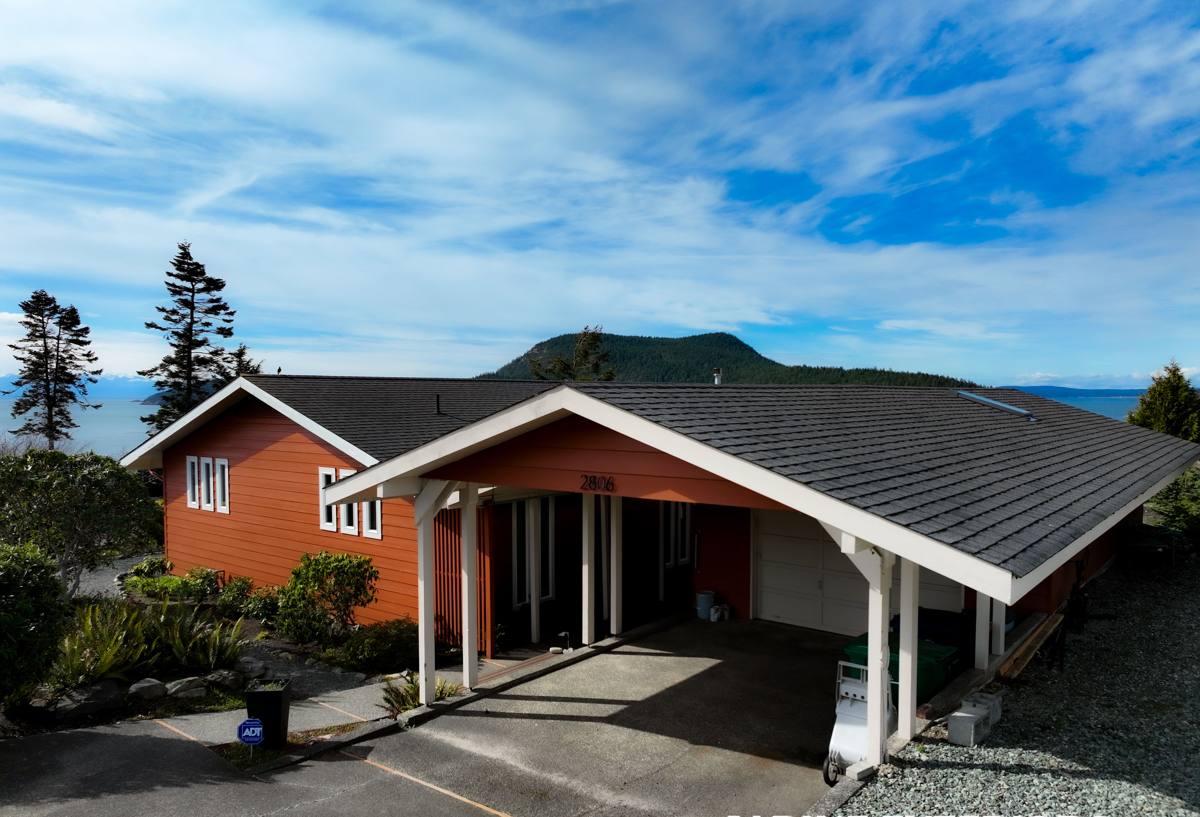
What the Local Climate Actually Does to a House
Salt Air and Corrosion
Proximity to the bay means airborne salt settles on every exterior surface — siding, trim, flashing, fasteners, deck hardware. Over years, that accelerates corrosion on anything that isn't rated for it. Standard fasteners and untreated metal flashing can start showing rust streaks well before a comparable house further inland would. This is one of the most common Edgemoor-specific issues we get called out for: staining that traces back to a fastener or flashing detail that wasn't spec'd for salt exposure in the first place.
Driving Rain
Wind off the water pushes rain sideways into wall assemblies, not just straight down onto roofs. That matters for how siding laps, how trim is flashed, and how window and door openings are sealed. A house built or re-sided without wind-driven rain in mind can look fine for a few years and then start showing water intrusion at corners, penetrations, and butt joints — exactly where a lower-quality install cuts corners.
Moss and Prolonged Moisture
Heavy tree cover keeps parts of many Edgemoor lots shaded and slow to dry. Combined with Bellingham's long wet season, that's ideal growing conditions for moss and algae on roofs, north-facing siding, and decks. Moss isn't just cosmetic — it holds moisture against the surface underneath it, which shortens the life of shingles, degrades wood, and can work its way under siding laps and roofing courses if it's left unchecked.
Siding: Why We Only Install James Hardie
For siding, we install James Hardie fiber cement exclusively. We don't install vinyl, LP SmartSide, or other engineered wood products, and that's a deliberate standard, not a limitation of what we're capable of installing.
In a climate like Edgemoor's, the trade-offs matter. Vinyl can warp and become brittle with UV and temperature cycling, and its seams and J-channels give wind-driven rain more places to find a way in. Engineered wood siding relies on factory coatings and careful field sealing at every cut edge to keep moisture out — miss one cut edge in a wet, shaded lot and that's where rot starts. James Hardie fiber cement is non-combustible, doesn't support moisture the way wood-based products do, and comes with a factory-applied ColorPlus finish that's baked on rather than field-painted, which matters when you're dealing with salt air working against a paint job year-round. Hardie also offers HZ5 product engineering built specifically for wetter, harsher climates, which is the version we spec for Edgemoor jobs.
None of that means other products are worthless — it means we've made a standard based on what holds up in this specific climate over decades, not just what looks good on installation day.
Roofing for Edgemoor's Tree Cover and Moisture
Roofing in a shaded, wet neighborhood is as much about moisture management and moss prevention as it is about the shingles themselves. We pay close attention to:
- Underlayment and flashing details at valleys, penetrations, and chimneys — the spots where wind-driven rain and standing moisture cause the most damage
- Ventilation, so trapped moisture in the attic doesn't compound what the roof surface is already dealing with from the outside
- Gutter and downspout capacity sized for the volume of water a heavy Bellingham rain event actually produces, not just code minimums
- Zinc or copper strips and moss-resistant granules where tree cover makes ongoing moss growth likely
A roof installed without those details in mind can look fine going up and still develop moss colonies, soft decking, or leaks within a handful of seasons in a lot like a typical Edgemoor property.
Windows: Managing Condensation and Water Intrusion
Many homes in and around Edgemoor are older, and older windows in a damp, shaded environment show their age in specific ways: fogged double-pane glass from failed seals, wood frames that have started to soften, and drafts that get worse as caulking and weatherstripping degrade under constant moisture exposure. Replacement windows here need proper flashing integration with whatever siding surrounds them — this is one of the most common places we find water intrusion on homes we're re-siding, where the original window flashing was never tied correctly into the wall assembly. When we install windows, we treat the flashing and sealing details as part of the whole exterior envelope, not a separate trade working in isolation.
Decks: Salt Air, Ground Moisture, and Fastener Choice
Decks take a beating in this environment from two directions at once: salt air corroding hardware from above, and damp, shaded ground keeping structural framing wet from below. Common problems we see on older Edgemoor decks include corroded fasteners bleeding rust into the decking, ledger boards that have trapped moisture against the house, and joists that stayed wet long enough to start rotting from underneath where nobody was looking. Building or rebuilding a deck here means stainless or coated corrosion-resistant hardware, proper ledger flashing where the deck ties into the house, and enough clearance and airflow underneath to let the structure actually dry between rain events.
Material and Cost Considerations for This Climate
Homeowners comparing options for an Edgemoor property should weigh long-term performance in this specific climate, not just upfront cost. The table below outlines how the main exterior materials generally compare here.
| Material | Salt Air / Moisture Behavior | Maintenance Burden | Typical Lifespan Here |
|---|---|---|---|
| James Hardie fiber cement | Non-combustible, doesn't absorb moisture like wood-based products, factory finish resists fading | Low — periodic washing, no repainting for years | Multiple decades with correct install |
| Vinyl siding | Can warp with temperature swings; seams allow water paths | Low but limited repair options if damaged | Variable, shorter in harsh coastal wind exposure |
| Engineered wood siding | Vulnerable at unsealed cut edges and prolonged moisture exposure | Higher — field sealing and coating maintenance | Shorter if moisture management lapses |
| Cedar/wood siding | Absorbs moisture, needs consistent sealing/staining | High — regular refinishing required | Shorter without diligent upkeep |
These are general patterns, not guarantees — actual performance always depends on installation quality, site conditions (sun exposure, tree cover, wind direction), and how consistently a home is maintained.
A Practical Maintenance Checklist for Edgemoor Homes
Between full replacements, a few habits go a long way toward protecting siding, roofing, windows, and decks in this climate:
- Rinse salt residue and moss buildup off siding and decking a couple of times a year, especially on north- and shade-facing walls
- Clean gutters and downspouts before the fall rains ramp up, and again mid-winter if tree cover is heavy
- Check roof valleys and flashing for moss accumulation before it has a chance to hold moisture against the surface
- Inspect deck fasteners and framing underneath for rust streaks or soft wood, particularly near the ledger board
- Check window seals and caulking annually, since failed seals here tend to show up as fogging or drafts sooner than in drier climates
- Trim back vegetation that's keeping any wall, roof section, or deck area in constant shade and slow to dry
Why a Local Crew Matters in a Neighborhood Like This
Edgemoor isn't a generic subdivision — it's a wooded, water-adjacent part of Bellingham with its own microclimate quirks, lot-by-lot variation in sun and shade, and older housing stock that often needs exterior work matched to how the home was originally built. A crew that works across Whatcom County regularly knows which details actually matter here: where wind-driven rain hits hardest, which lots hold moisture longest, and what permitting and inspection expectations look like with the City of Bellingham. That local familiarity is the difference between an install that's technically code-compliant and one that's actually built for what this specific piece of the county throws at it year after year.
Get a Straight Answer on Your Exterior
Whether you're dealing with moss-covered siding, a roof that won't dry out, foggy windows, or a deck that's starting to feel soft underfoot, it helps to have someone look at the actual conditions on your property before recommending anything. If you're in Edgemoor or elsewhere around Bellingham, reach out for a free, no-pressure estimate — we'll walk the property, tell you honestly what's going on, and lay out real options with no obligation.