 Bellingham
 Exterior Work in the Puget Area of Bellingham
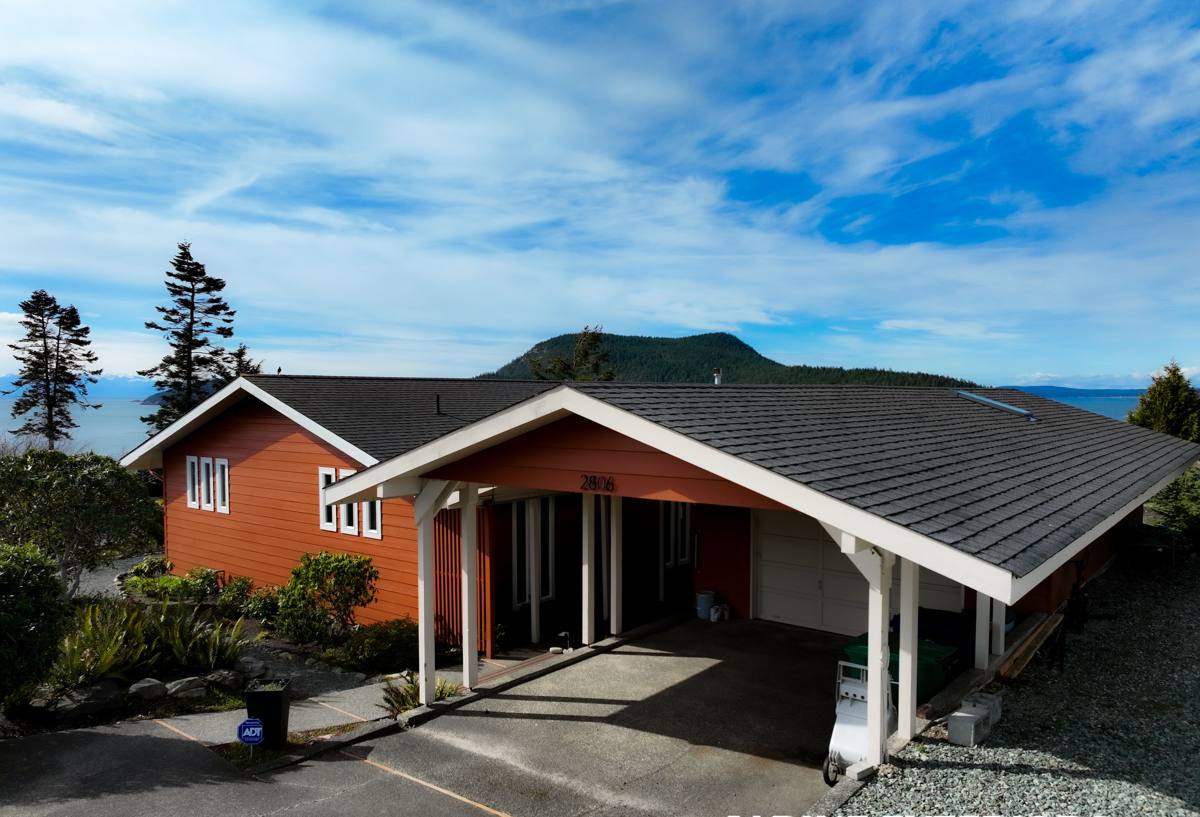
The Puget area sits close enough to the water that homes here live with a different set of exterior stresses than houses further inland in Whatcom County. Salt-tinged air off the Salish Sea, wind-driven rain that finds its way under poorly flashed trim, and a moss season that can stretch for most of the year all add up over time. None of that is dramatic on its own, but it's steady, and steady is what wears down siding, roofing, windows, and decks that weren't built or installed with this specific climate in mind.
We work on homes throughout Bellingham and the surrounding Whatcom County communities, and Puget's mix of older housing stock and newer infill means we see everything from original cedar siding well past its service life to vinyl and engineered wood products that were never a great match for this exposure. Our job is to look at what's actually happening on your exterior, explain it in plain terms, and give you a straightforward path forward.
What the Local Climate Actually Does to a House
Salt Air and Moisture Together
Coastal air carries fine salt particulate that settles on exterior surfaces and accelerates corrosion of fasteners, flashing, and any metal components on the building envelope. On its own, salt exposure is manageable. Combined with the region's near-constant moisture, it becomes a slow but real threat to anything not designed or protected for it — especially exposed nail heads, cheap flashing, and paint systems that weren't built to hold up against repeated wet-dry cycling.
Driving Rain
Bellingham doesn't just get rain — it gets rain pushed sideways by wind coming off the water, especially during fall and winter storm systems. That matters because driving rain doesn't behave like a straight downpour. It gets forced up under laps, around window and door trim, and into any gap in the siding or roofing that a calmer climate might never expose. A siding product or installation detail that would perform fine in a dry inland climate can fail here simply because the water is coming from a different angle.
Moss and Sustained Dampness
Whatcom County's long, mild, wet stretch of the year is exactly what moss needs to establish itself on roofs, in siding laps, and in shaded areas of a home where sun exposure is limited. Moss holds moisture against the surface it's growing on far longer than open air would, and on wood-based siding or aging roofing, that sustained dampness is what actually causes rot and granule loss — the moss itself is more of a symptom and an accelerant than the root cause.
Siding: Why We Only Install James Hardie
We install James Hardie fiber cement siding exclusively. We don't install vinyl, LP SmartSide, Cemplank, Allura, primed spruce, or cedar, and that's a deliberate standard, not a limitation on what we're capable of doing.
Vinyl siding is affordable and low-maintenance in mild climates, but it's a petroleum-based product that expands and contracts with temperature swings, and it can warp or become brittle over time in exposed, salt-air conditions. It also isn't a great match for a region where homeowners often want a more substantial, upscale look.
Engineered wood products like LP SmartSide use wood strand technology with resin binders, and while the manufacturer has improved moisture resistance over the years, any wood-based product is still fundamentally vulnerable at cut edges and fastener penetrations if the installation isn't precise — and in a climate with this much sustained moisture and driving rain, that installation sensitivity is a real long-term risk.
Other fiber cement brands like Cemplank and Allura are legitimate cement-based products, and we don't claim they're defective. Our decision to standardize on Hardie comes down to their factory-applied ColorPlus finish (which resists fading and chipping far better than field-applied paint), their HZ5 product line engineered specifically for climates like this one with heavy moisture and freeze-thaw cycling, and a warranty structure we've found to be the strongest and most consistently honored in the category.
Primed spruce and raw cedar are traditional choices with real aesthetic appeal, but both require an ongoing paint and maintenance cycle that most homeowners underestimate, and both are organic wood products that are directly vulnerable to the rot and moss issues described above. Fiber cement simply doesn't share that vulnerability — it's non-combustible, dimensionally stable, and doesn't provide the same food source for moss and mildew growth.
James Hardie Product Lines We Install
- HardiePlank lap siding — the most common choice, available in several exposure widths and textures
- HardiePanel vertical siding — often used for modern facades or accent sections
- HardieShingle — for homes wanting a shingled or cottage-style look without the maintenance of real wood shakes
- HardieTrim — matching trim boards for a consistent, factory-finished look around windows, corners, and fascia
Roofing
Roofing in the Puget area has to handle the same driving rain and moss pressure as siding, but with the added stakes of being the primary barrier between the house and the sky. We evaluate roof condition as part of most exterior projects because a compromised roof upstream will eventually show up as a siding or trim problem downstream — water doesn't stay where it enters. Proper underlayment, flashing detail at every penetration and valley, and ventilation that keeps moisture from building up in the attic are the fundamentals we won't skip, regardless of what roofing material a homeowner chooses.
Windows
Old, single-pane or poorly sealed windows are one of the most common sources of the "why is there a soft spot under my window" problem we get called out for. In a climate with this much driving rain, window flashing and integration with the surrounding siding matter as much as the window unit itself. When we replace windows as part of a siding project, we treat the flashing and weather barrier around each opening as part of the water management system for the whole house — not an afterthought bolted in after the fact.
Decks
Decks take the most direct, unshaded abuse of any exterior surface — full sun in summer, standing rain in winter, and constant foot traffic in between. In this climate, deck failures usually start at ledger board connections, joist tops, and any spot where two pieces of lumber trap moisture against each other. We build and repair decks with attention to flashing at the house connection, proper drainage, and materials suited to sustained wet conditions, because a deck that looks fine on the surface can be quietly rotting from the framing out.
Comparing Common Siding Choices for This Climate
| Material | Moisture Resistance | Maintenance | Typical Lifespan Here |
|---|---|---|---|
| James Hardie fiber cement | Strong; non-combustible, engineered HZ lines | Low; factory finish, occasional wash | 30+ years with proper install |
| Vinyl | Moderate; can warp/crack in temperature swings | Low, but limited repair options | 15-25 years |
| Engineered wood (e.g. LP SmartSide) | Moderate; vulnerable at cut edges/fasteners | Moderate; edge sealing critical | 20-30 years if installed precisely |
| Cedar / primed spruce | Low without upkeep; organic material | High; regular paint/stain cycle | 15-25 years with diligent maintenance |
These are general ranges based on typical performance, not guarantees — actual lifespan always depends heavily on installation quality and how consistently a home is maintained.
Why a Local Crew Matters
A lot of exterior problems in this area aren't caused by bad materials — they're caused by installation details that were fine for a drier or calmer climate but don't hold up against Bellingham's wind-driven rain and salt exposure. Flashing laps that should run one direction instead of another, caulk used where a proper drip cap belongs, or fastener spacing that doesn't account for the temperature swings we get — these are the kinds of things a crew that works this area regularly catches automatically, because they've seen what happens when it's done wrong. That local pattern-recognition is worth more than it sounds.
What to Check Before Hiring an Exterior Contractor
- Are they licensed and insured in Washington State, and will they provide proof without you having to ask twice?
- Do they have manufacturer certification for the products they install, particularly for James Hardie fiber cement?
- Will they explain the flashing and water-management plan for your specific home, not just the finish material?
- Do they offer a written scope of work and warranty terms before any money changes hands?
- Can they point to experience with homes in this climate specifically, not just general exterior work?
Getting Started
If you're noticing soft siding, moss buildup that keeps coming back, drafty windows, or a deck that feels a little spongy in spots, it's worth having someone look at it before those small signs turn into a bigger repair. We offer free, no-pressure estimates for homeowners in the Puget area and throughout Bellingham — use the form below to get one scheduled.