 Bellingham
 Happy Valley's Exterior Challenges Are Real, Not Generic
Happy Valley sits close enough to Bellingham Bay and the Salish Sea that salt-laden air is a constant, low-grade factor in how exteriors age here. Add in Whatcom County's long wet season, the tree cover that shades many lots on the hillside, and the driving rain that comes sideways off the water during winter storms, and you get a set of conditions that punish exterior materials in ways that don't show up in a showroom or a spec sheet. Homes in this neighborhood range from older single-family houses to newer infill, and almost all of them share the same basic exposure: months of sustained dampness, limited direct sun on north- and west-facing walls, and a steady buildup of organic growth wherever moisture lingers.
None of this is unique to one street or one lot. It's the baseline for anyone living in this part of Bellingham, and it's the reason exterior work here needs to be approached differently than it would be in a drier, more open part of the state.
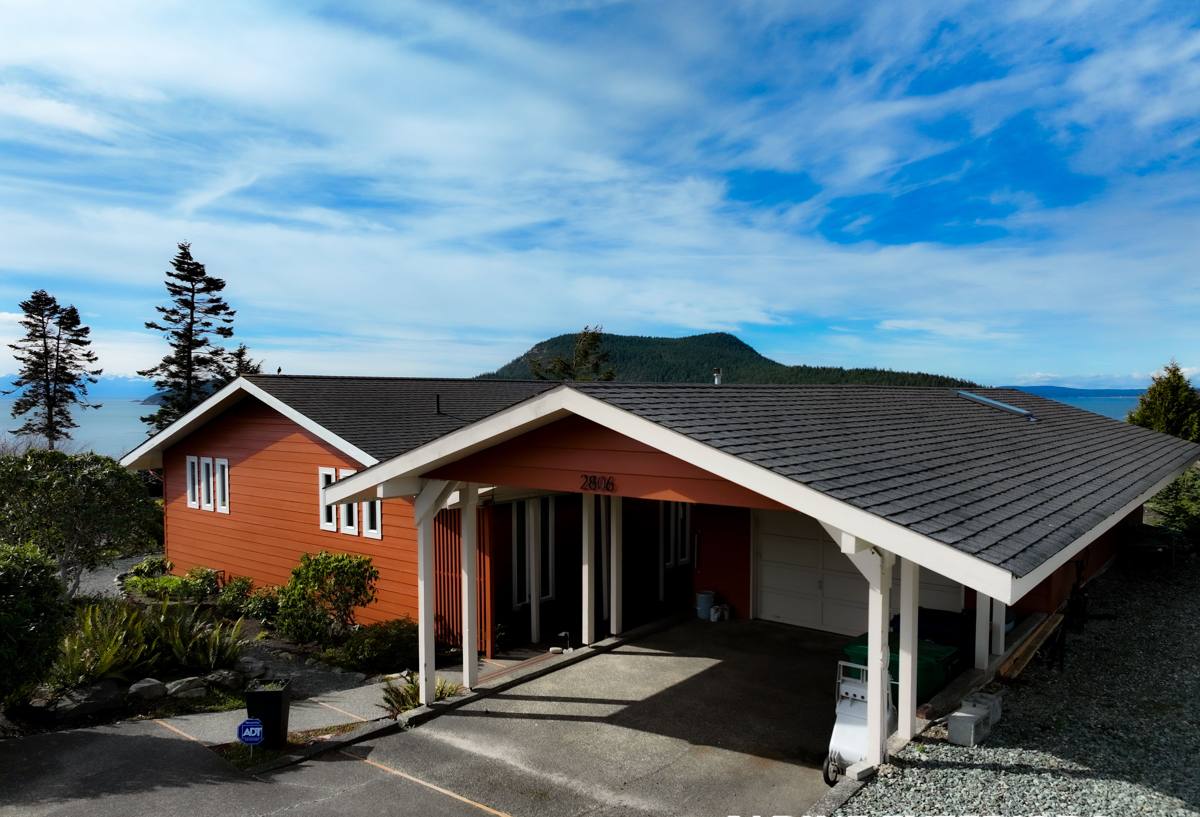
What Moss, Salt Air, and Rain Actually Do to a House
Moss and Organic Growth
Moss doesn't just sit on a roof or a north wall looking untidy — it holds moisture against the surface underneath it. On roofing, that means shingles or panels stay wet longer than they're designed to, which accelerates granule loss and, over years, can work moisture under laps and flashings. On siding, moss and algae growth on a damp, shaded wall section signal that the surface is retaining water rather than shedding it, which matters a lot depending on what the siding is made of.
Salt Air
Proximity to the bay means airborne salt settles on every exterior surface — metal fasteners, flashing, window hardware, and painted or coated finishes. Over time, salt exposure can accelerate corrosion on unprotected metal and stress lesser-quality finishes faster than an inland home would experience. It's a slow process, but it's constant, and it's one of the first things we account for when we're choosing materials and fasteners for a Happy Valley project.
Driving Rain
Bellingham doesn't get the heaviest rainfall totals in the state, but wind-driven rain off the water finds every gap, seam, and poorly flashed penetration. Vertical rain is forgiving; horizontal, wind-driven rain is not. It's why flashing detail and water management behind the siding and around windows matter more here than in calmer climates.
Siding: Why We Only Install James Hardie Fiber Cement
Siding is the single biggest factor in how well a Happy Valley home holds up over 15, 20, or 30 years, because it's the first line of defense against everything described above. We install James Hardie fiber cement exclusively — we don't install vinyl, LP SmartSide, or other engineered wood products — and the reasoning comes directly from what this climate does to a wall over time.
Fiber cement is non-combustible and dimensionally stable, meaning it doesn't swell, warp, or absorb moisture the way wood-based products can when they're repeatedly saturated and dried across a Pacific Northwest winter. Hardie's ColorPlus factory-applied finish is baked on under controlled conditions, which gives it better long-term adhesion and fade resistance than field-applied paint, and it comes with a stronger finish warranty than most homeowners get with site-painted siding. For a neighborhood dealing with salt air and constant damp shade, that combination — a material that doesn't take on water and a finish that isn't reapplied by hand on a ladder every several years — is the standard we hold ourselves to.
HZ5 Product Lines
Hardie's HZ5 formulation is engineered for colder, wetter climates like ours, as opposed to the HZ10 formulation built for hot, humid regions. Using the correct climate-engineered product line, installed with the correct fastener spacing, flashing, and clearances, is what actually delivers the performance the material is capable of — installation quality matters as much as the product itself.
Roofing: Managing Moss and Water Before They Become Bigger Problems
On the roofing side, our focus in a neighborhood like Happy Valley is proper ventilation, correct underlayment, and flashing detail at every valley, chimney, and penetration — the places where driving rain and accumulated moss-trapped moisture actually find their way in. A shaded roof plane holds moisture longer, which means moss and algae growth need to be addressed proactively rather than left to spread, and it means material choice and installation detail carry more weight than they would on a roof that gets consistent sun and airflow.
We also pay close attention to gutter and drainage performance on these jobs. A roof can be installed correctly and still underperform if water isn't being carried away from the wall assembly efficiently, which becomes a siding problem and a foundation problem just as much as a roofing one.
Windows: Sealing Out Wind-Driven Rain
Window failures in this area are rarely about the glass — they're almost always about flashing, sealant, and how the window integrates with the wall assembly behind the siding. Wind-driven rain will find a poorly flashed window opening long before it finds a flaw in the window unit itself. When we replace windows, we treat the flashing and water-management detail around each opening as seriously as the window product itself, because that's what actually keeps water out of the wall cavity over the long run.
Energy performance matters too. Homes tucked under tree cover in Happy Valley often deal with more shade and cooler wall temperatures than open, south-facing lots, and properly sealed, well-insulated windows make a noticeable difference in comfort and heating costs through a Bellingham winter.
Decks: Built for a Climate That Never Fully Dries Out
Decks in this neighborhood spend a large part of the year damp, often in partial shade from surrounding trees. That combination is exactly what accelerates rot in untreated or poorly maintained wood, and it's why material choice, proper spacing between boards for drainage, and correct ledger flashing at the house connection all matter more here than they would in a drier climate. We build and repair decks with an eye toward long-term moisture management first — good decking material and finish choices help, but they don't substitute for correct structural detailing underneath.
Material Comparison: How Common Siding Options Hold Up in This Climate
| Material | Moisture Behavior | Maintenance Burden | Typical Finish Warranty |
|---|---|---|---|
| James Hardie Fiber Cement | Dimensionally stable, doesn't absorb and swell | Low — factory finish, no repainting cycle for years | Strong, transferable, factory-backed |
| Vinyl Siding | Doesn't absorb water but can warp/buckle with heat and doesn't stop moisture at seams | Low, but limited repair options once damaged | Varies widely by manufacturer |
| Engineered Wood (e.g. LP SmartSide) | Wood-based; more sensitive to sustained moisture exposure than fiber cement | Moderate — seams and edges need monitoring | Manufacturer-dependent, often shorter |
| Primed Spruce / Cedar | Absorbs moisture readily; prone to swelling and rot in shaded, damp conditions | High — regular repainting and inspection required | Little to none; performance depends on ongoing upkeep |
This table reflects general material characteristics, not a claim about every product on the market — but it's the reasoning behind why we standardized on one system rather than offering several.
Signs a Happy Valley Home Needs Exterior Attention
- Persistent moss or dark streaking on north- or west-facing siding and roof planes
- Soft or discolored trim around window and door openings
- Paint that's peeling, bubbling, or chalking well ahead of its expected lifespan
- Gutters that overflow or drip along seams during heavy rain
- Deck boards that stay damp long after rain has stopped, or visible cupping/warping
- Corroding or rust-streaked fasteners and flashing on siding or roofing
Catching any of these early is almost always cheaper than waiting until they turn into a structural repair.
Why a Local Crew Matters for Happy Valley Homes
A crew that works across Bellingham and Whatcom County regularly sees how homes in specific micro-conditions — shaded hillside lots, proximity to the water, older housing stock — actually age, not just how a spec sheet says a product should perform. That means we're not guessing at flashing details, ventilation needs, or fastener choices; we're applying what we've already seen hold up, and what we've seen fail, on homes with the same exposure as yours. Local crews are also familiar with Bellingham and Whatcom County permitting requirements, which keeps a project moving instead of stalling on paperwork.
Get a Free, No-Pressure Estimate
If you're noticing moss buildup, aging siding, a roof that's due for attention, or a deck that never quite dries out, we're happy to take a look and give you an honest read on what your Happy Valley home actually needs. There's no pressure and no obligation — just a straightforward assessment from a crew that knows this neighborhood's climate firsthand. Use the form below to request your free estimate.