 Bellingham
 Exterior Contracting for Birchwood Homes
Birchwood is one of Bellingham's established residential neighborhoods, with a housing stock that spans decades of construction styles and exterior materials. Whether your home is an older place with siding that's been patched and repainted more times than anyone can remember, or a newer build that's starting to show its first signs of wear, the exterior of a Birchwood home works hard. Whatcom County's climate doesn't take a season off, and the cumulative effect of that weather shows up in soffits, trim, siding seams, roof valleys, and window frames long before most homeowners expect it.
Bellingham Exterior works throughout Bellingham and the surrounding Whatcom County communities, including Birchwood, on siding, roofing, windows, and decks. We're not a national franchise dispatching a different crew every visit — we're a local operation that knows how houses in this part of Washington actually perform over time, and we build our recommendations around that.
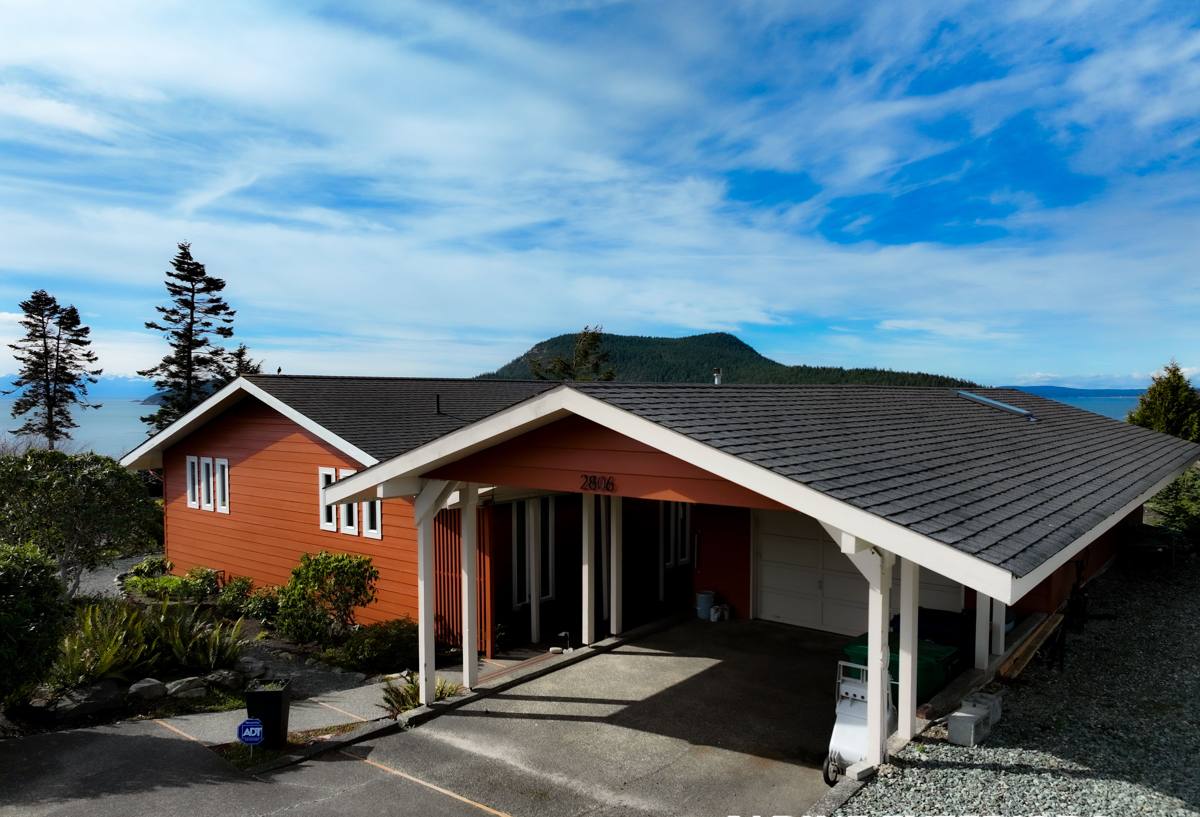
What the Climate Does to a Birchwood Exterior
Northwest Washington's marine-influenced weather is mild compared to a lot of the country, but "mild" doesn't mean gentle on a house. A few specific things stand out for homes in and around Birchwood:
Salt Air and Moisture
Bellingham's proximity to Puget Sound means a steady presence of salt-laden, moisture-heavy air moving through the region. Over years, that combination accelerates corrosion on exposed metal fasteners and trim, and it keeps humidity levels around a house elevated even on days without active rain. Materials that aren't built to handle sustained moisture exposure — or that were installed without proper flashing and drainage details — tend to show problems earlier here than they would in a drier climate.
Driving Rain
Whatcom County doesn't just get frequent rain, it gets wind-driven rain that hits siding and window assemblies at an angle instead of falling straight down. That matters because a lot of exterior failures aren't about water landing on a surface — they're about water finding its way behind a surface, through a gap in flashing, a failed caulk joint, or a seam that was never properly lapped. Driving rain finds those gaps faster than calm rain does.
A Long Moss Season
Shade, moisture, and mild temperatures are a perfect combination for moss and algae growth, and in this region that growing season runs long — often most of the year on north-facing walls and roof planes that don't get much direct sun. Moss holds moisture against a surface, and on organic or moisture-sensitive materials, that constant dampness is exactly the condition that leads to rot, delamination, or coating failure.
None of this means Birchwood homes are doomed to constant repair. It means material selection and installation quality matter more here than they would in a drier part of the country, and it's why we're selective about what we put on a house.
Siding: Why We Only Install James Hardie
Siding is the single biggest exterior investment most homeowners make, and it's also the component most directly exposed to everything described above. Bellingham Exterior installs James Hardie fiber cement siding exclusively. We don't install vinyl, LP SmartSide, Cemplank, Allura, or primed spruce and cedar siding, and we think Birchwood homeowners deserve an honest explanation of why.
What Rules Out the Alternatives, for Our Standards
- Vinyl siding is inexpensive and low-maintenance in a general sense, but it's a petroleum-based product that can warp or become brittle with temperature swings, and it isn't fire-resistant. In a wet, wind-exposed climate, vinyl's thin profile and reliance on overlap-and-gap installation (rather than a sealed, monolithic look) also make it more prone to water intrusion at seams over time.
- LP SmartSide and other engineered wood products use a wood-strand core, which means moisture is the product's primary long-term vulnerability. Even with resin treatments, engineered wood siding depends heavily on perfect installation and ongoing caulk and paint maintenance to keep water out — a hard standard to sustain over 20-plus years in a region with our rainfall.
- Cemplank and Allura are both fiber cement products, and fiber cement as a category is sound. Our decision to standardize on Hardie specifically comes down to manufacturing consistency, factory-finish quality control, and the depth of a warranty and installer-support network we've found to be more dependable in practice.
- Primed spruce and cedar are traditional, attractive materials, but solid wood siding requires the most maintenance of any option — regular repainting, caulk inspection, and vigilance against moss and rot. In a climate with a moss season as long as ours, that maintenance burden is significant and unforgiving of skipped years.
Why James Hardie
James Hardie fiber cement is a cement-and-cellulose composite, which makes it non-combustible and dimensionally stable — it doesn't expand, contract, warp, or rot the way wood-based products can. Hardie's ColorPlus factory-applied finish is baked on under controlled conditions, which gives it more consistent coverage and better fade resistance than field-applied paint, and it comes backed by a substantial, transferable finish warranty. Hardie also engineers specific product lines (their "HZ5" designation, for example) for regions with heavier moisture exposure, which is directly relevant to a Whatcom County installation. When it's installed to manufacturer spec — correct flashing, proper clearances, sealed joints — Hardie siding holds up to driving rain and long wet seasons better than any alternative we're willing to put our name on.
Roofing for Whatcom County Conditions
A roof in Birchwood deals with the same moss, moisture, and wind-driven rain as the siding below it, plus the added stress of direct sun exposure and temperature cycling. We handle roof replacement and repair with an eye toward the details that actually determine how long a roof lasts here: proper underlayment, correctly lapped flashing at valleys and penetrations, adequate ventilation to control attic moisture, and drip edge and gutter integration that actually moves water away from the structure instead of letting it pool or back up under shingles. Moss prevention treatments and simple maintenance steps — keeping gutters clear, trimming overhanging branches that keep a roof shaded and damp — go a long way toward extending a roof's service life in this climate.
Windows: Sealing Out Driving Rain
Old, single-pane, or poorly sealed windows are one of the most common sources of both energy loss and water intrusion in older Birchwood homes. Wind-driven rain in particular exposes weak window installations — water pushed sideways by wind finds gaps that vertical rain never would. We install replacement windows with attention to proper flashing integration with the surrounding siding, correct sealant application, and energy-efficient glazing appropriate for our marine climate, where keeping consistent interior temperatures through damp, overcast stretches matters as much as summer performance.
Decks: Built for Year-Round Exposure
A deck in this region doesn't get a dry-season break the way decks do in other parts of the country — it's exposed to moisture nearly year-round, plus the same moss growth pressure that affects roofs and north-facing walls. We build and repair decks with materials and fastening methods selected for that reality, with attention to proper drainage, ledger board flashing (a common failure point where decks attach to the house), and surface materials that won't become a slip hazard once the moss season sets in.
Comparing Siding Options at a Glance
| Material | Moisture Resistance | Maintenance Burden | Fire Resistance | Typical Longevity |
|---|---|---|---|---|
| James Hardie fiber cement | High, when installed to spec | Low | Non-combustible | 30+ years, factory finish warranty |
| Vinyl | Moderate; seam-dependent | Low | Not fire-resistant | Variable; can warp with heat/cold cycling |
| Engineered wood (LP SmartSide, etc.) | Moderate; core is moisture-sensitive | Moderate to high | Combustible | Depends heavily on maintenance and sealing |
| Solid wood (primed spruce, cedar) | Low without diligent upkeep | High | Combustible | Shortened by rot and moss in wet climates |
Why a Local Crew Matters in Birchwood
Exterior work isn't just about the material — it's about how it's installed, and installation quality is where climate-specific knowledge actually pays off. A crew that works throughout Bellingham and Whatcom County knows how much clearance to leave at grade, how to flash a window in a wall that's going to see driving rain for months at a time, and how a north-facing wall in a shaded Birchwood lot will behave differently than a south-facing wall two streets over. That's knowledge that comes from doing this work repeatedly in this specific climate, not from a general contracting playbook written for a different region.
A few things worth checking when hiring any exterior contractor in this area:
- Washington state contractor licensing and current insurance, verifiable through the state's contractor lookup tool
- Manufacturer-specific installation training for the materials being used, not just general carpentry experience
- A written scope of work that specifies flashing, ventilation, and drainage details — not just "siding replacement"
- References or completed local projects the contractor can speak to specifically
- A clear warranty structure covering both materials and workmanship
What to Expect Working With Us
We start with an on-site look at the actual condition of your siding, roof, windows, or deck — not a generic estimate based on square footage alone. From there we walk through what we're seeing, what's driving the recommendation, and what the realistic cost factors are, including the ones below.
| Cost Factor | Why It Matters |
|---|---|
| Extent of existing moisture or rot damage | Hidden sheathing or framing repair adds scope beyond surface replacement |
| Home size and wall/roof complexity | More corners, valleys, and penetrations mean more flashing and labor |
| Material selection | Hardie product line, color, and trim details affect material cost |
| Access and site conditions | Lot slope, landscaping, and staging space affect labor time |
| Current code requirements | Permitting and inspection requirements can affect scope on older homes |
If you're weighing a siding, roofing, window, or deck project on a Birchwood home, we're happy to take a look and give you a straightforward, no-pressure estimate — no obligation, just an honest read on what your home actually needs.