 Bellingham
 Exterior Work in Sunnyland: What the Climate Actually Demands
Sunnyland is one of Bellingham's older, established neighborhoods, and that comes with a mixed blessing for homeowners. The tree canopy and proximity to the water that make the area pleasant to live in are the same conditions that wear down siding, roofing, windows, and decks faster than most people expect. Bellingham sits on Bellingham Bay in Whatcom County, and homes throughout this part of the city deal with a specific combination of exposures: salt-laden air moving in off the water, long stretches of driving rain through fall and winter, and a moss and algae season that can run nine months of the year in shaded or north-facing spots.
None of that is unique to Sunnyland alone, but it's a real, cumulative load on a home's exterior. A house built or sided for a drier climate — or built with materials that were never engineered for this kind of sustained moisture exposure — shows it within a decade: swelling trim, soft siding edges, moss creeping up roof valleys, and window frames that never fully dry out between storms.
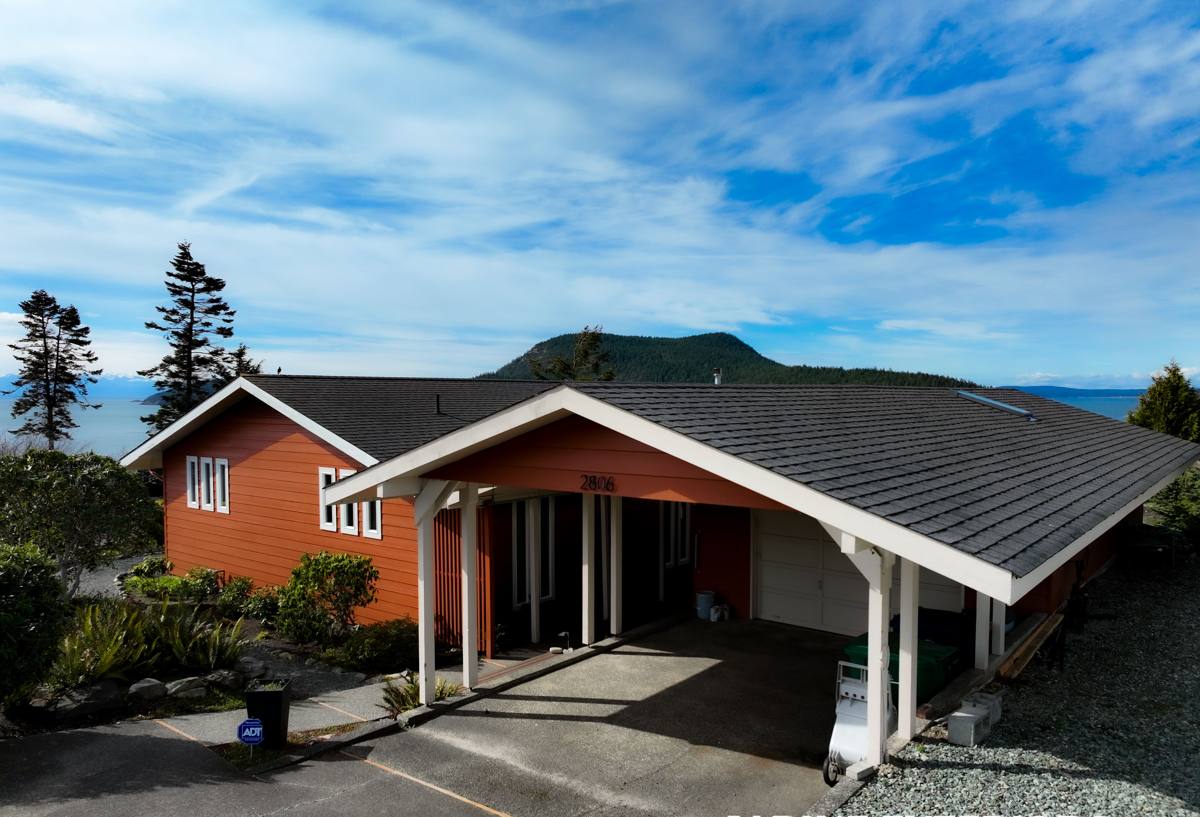
Siding That Can Actually Hold Up in Sunnyland
Siding is the single biggest factor in how well a home ages here, because it's the material taking the brunt of wind-driven rain and humidity cycles year-round. We install James Hardie fiber cement siding exclusively — we don't install vinyl, LP SmartSide, Cemplank, Allura, primed spruce, or raw cedar. That's a deliberate standard, not a sales pitch, and it's worth explaining why.
Why we don't install the alternatives
Vinyl siding is inexpensive and low-maintenance in the sense that it doesn't need painting, but it's a thin, flexible material that can warp or crack in temperature swings and doesn't hold up well to impact. It also doesn't offer the same fire resistance or resale perception as fiber cement.
LP SmartSide and other engineered wood products perform reasonably well when installation and caulking are perfect and stay perfect for the life of the product — but engineered wood is still wood at its core, meaning any breach in the factory coating gives moisture a path in. In a climate with this much sustained dampness, that's a maintenance burden we're not willing to put on a homeowner's roof, so to speak.
Primed spruce and cedar are traditional choices with real visual appeal, but they require the most upkeep of anything on this list: regular repainting or re-staining, vigilant caulk maintenance, and a real risk of rot if that maintenance schedule slips even a year or two. In a marine climate like ours, that schedule slips more often than homeowners plan for.
Why James Hardie
James Hardie fiber cement is made from cement, sand, and cellulose fiber. It doesn't absorb moisture the way wood-based products do, it's non-combustible, and it holds paint and factory finish far longer than wood substrates. Hardie's ColorPlus factory-baked finish is applied and cured under controlled conditions, which gives it better fade and chip resistance than field-applied paint, and it comes with a real transferable warranty. Hardie also makes climate-engineered HZ product lines specifically formulated for regions like ours with heavy moisture exposure. When it's installed correctly — proper flashing, correct clearances, factory-specified fasteners and caulk joints — it's about as close to a "set it and stop worrying about it" siding as exists for this climate, which is exactly what a Sunnyland exterior needs.
Roofing for a Long Moss Season
Moss and algae growth is one of the most visible signs of neglect on a Pacific Northwest roof, and it's more than cosmetic. Moss holds moisture against roofing material, works its way under shingle edges, and accelerates granule loss on asphalt shingles. Shaded lots and north-facing roof slopes — common in a mature, tree-lined neighborhood — are especially prone to it because they never get enough direct sun to dry out between rain events.
We handle roof replacement and repair with attention to the details that actually matter in this climate: proper underlayment, ice-and-water shield in valleys and vulnerable areas, correct ventilation to prevent moisture buildup in the attic, and flashing details around penetrations that are usually where leaks actually start. Zinc or copper strips near the ridge can help slow moss regrowth on a new roof, and we'll talk through that option honestly — it helps, it doesn't eliminate the need for periodic cleaning.
Signs a Sunnyland roof needs attention
- Moss visible on the roof surface, especially in valleys or on shaded slopes
- Granules collecting in gutters or downspouts
- Dark streaking or algae staining across shingles
- Soft spots, sagging, or visible daylight in the attic
- Interior ceiling stains after heavy rain events
- Curling, cracked, or missing shingles, particularly after a windstorm
Windows: Comfort, Condensation, and Energy Costs
Older windows in a neighborhood like Sunnyland are frequently single-pane or early-generation double-pane units that have lost their seal. The giveaway is fogging or moisture trapped between the panes — a sign the insulating gas has escaped and the window is no longer doing its job. Beyond comfort and heating costs, failed window seals let condensation build up on interior sills and frames, which over time can lead to wood rot in the surrounding trim.
We replace windows with an eye toward how they integrate with the siding system around them — flashing and sealing at the window opening is one of the most common failure points on any home's exterior, whether the siding is new or existing. A window replaced without proper flashing can undo the moisture protection of even the best siding job.
Decks Built for Rain, Not Just Sun
A deck in this climate spends more of the year wet than dry. Standing water on deck boards, moss growth between boards, and ledger board rot where the deck attaches to the house are the most common problems we see. Composite decking sheds water and resists rot better than untreated wood, but proper drainage, ledger flashing, and joist protection matter more than the decking material itself — a poorly built substructure will cause problems no matter what's on top of it.
We build and repair decks with attention to the structural details that don't show up in a quick visual inspection: joist tape, proper ledger flashing tied into the house's water-resistive barrier, and enough slope and spacing for water to actually drain instead of pooling.
Comparing Exterior Material Approaches
| Material | Moisture Behavior in This Climate | Maintenance Load | Our Position |
|---|---|---|---|
| Vinyl siding | Doesn't absorb water, but can warp/crack over time | Low, but limited repair options | Not installed |
| LP SmartSide / engineered wood | Performs well only if coating stays intact | Moderate — caulk and coating upkeep | Not installed |
| Primed spruce / cedar | Absorbs moisture if finish fails | High — regular repaint/restain | Not installed |
| James Hardie fiber cement | Non-absorbent core, factory-cured finish | Low — periodic cleaning, no repainting cycle | Our exclusive siding install |
| Asphalt roofing (standard install) | Prone to moss/algae without ventilation and prep | Periodic moss removal | Installed with moisture-focused detailing |
| Composite decking on proper substructure | Sheds water, resists rot | Low, if substructure is built correctly | Installed with flashing/drainage priority |
Why a Local Crew Matters Here
Exterior work in Whatcom County isn't the same job as exterior work in a drier inland climate, and it shows in the small decisions: how much clearance siding needs above grade and decking, how flashing details are handled around windows and rooflines, where moss-prone shade patterns are likely to cause the most trouble on a given lot, and how much weather-window planning a project actually needs. A crew that works this region every week makes those calls automatically. A crew that doesn't work here regularly is often making them by guesswork, and the home is the one that pays for it down the line.
We're a Bellingham-based crew, and Sunnyland is inside our regular service area — not a stretch job we take occasionally. That matters for scheduling, for warranty follow-up, and for simply knowing what a given block of the neighborhood tends to face in terms of drainage, exposure, and tree cover.
What to Expect From a Sunnyland Exterior Project
- An on-site walk-through where we look at existing siding, roofing, window seals, and deck structure — not just the surface condition
- A straightforward explanation of what's driving any damage we find, including moisture paths that aren't obvious from the ground
- A written scope that specifies materials, including which Hardie product line and profile fits the home
- Attention to flashing and transition details at windows, rooflines, and deck ledgers — the places most exterior failures actually start
- A realistic timeline that accounts for our rainy-season weather windows rather than ignoring them
- A warranty that's actually transferable and documented, not just verbal
Getting Started
If you're dealing with moss buildup, tired siding, foggy windows, or a deck that never quite dries out, it's worth having a local crew take a look before small problems become expensive ones. We offer free, no-pressure estimates for homeowners in Sunnyland and throughout Bellingham — use the form below to get one scheduled.