 Bellingham
 Building New in Cordata? The Window Package Matters More Than People Think
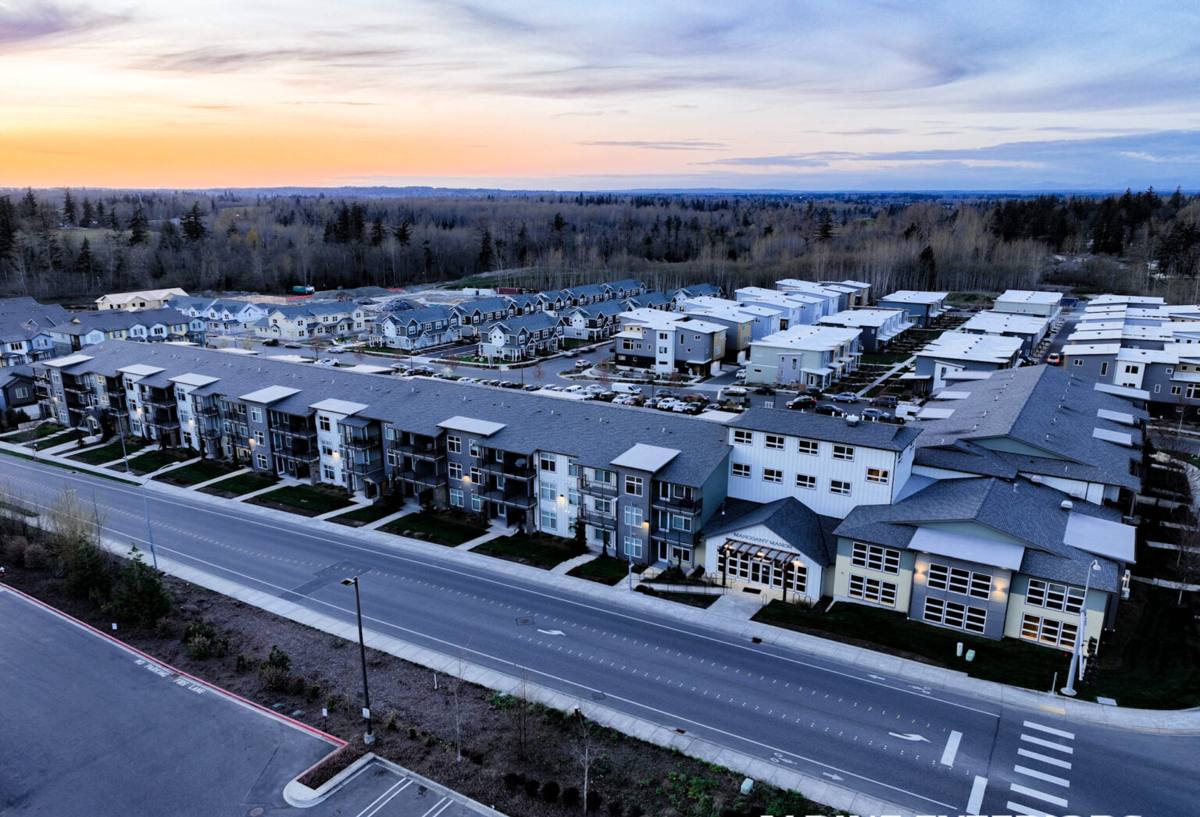
Cordata is one of the faster-growing pockets of Bellingham, and a lot of what's going up right now is new construction — infill lots, small subdivisions, and larger homes replacing older ones near Cordata Parkway and the surrounding area. When you're building new, the windows aren't a repair or a retrofit decision. They're a one-time chance to get the flashing, the glass package, and the frame material right before the siding and trim close everything in. Get it right at framing stage and the house stays dry and efficient for decades. Get it wrong and you're paying to fix it from the outside once the exterior is finished.
We install new-construction windows for builders and homeowners throughout Whatcom County, and Cordata jobs come with their own set of considerations tied to our local climate: steady winter rain, a marine-influenced air mass off Bellingham Bay, and a long moss season that keeps north-facing surfaces damp for months at a time.
What Bellingham's Climate Actually Demands From a New Window Install
Driving Rain and Wind-Driven Moisture
Whatcom County doesn't usually get violent storms, but it gets long stretches of steady, wind-pushed rain — the kind that finds every gap in a window opening if the flashing sequence isn't layered correctly. New construction gives us a real advantage here: we can integrate the window flashing directly with the weather-resistive barrier (WRB) before siding goes on, which is the single best way to prevent water intrusion around window openings. That opportunity disappears once a house is finished and sided.
Salt Air and Marine Moisture
Even homes set back a mile or two from Bellingham Bay pick up salt-laden marine air, especially with winter southwesterlies. Salt-influenced moisture accelerates corrosion on hardware, fasteners, and lower-grade cladding over time. It's a slower process than direct coastal exposure, but it's part of why we default to corrosion-resistant fasteners and hardware on every Cordata install rather than treating it as an upgrade.
Moss Season
Bellingham's moss season runs long — often eight months or more of conditions damp enough to support growth on north- and shade-facing surfaces. Moss itself doesn't attack a window, but it holds moisture against adjacent trim, siding, and sills longer than open sun-exposed areas dry out. That matters for sill pan design and drainage detailing, which we'll cover below.
What a Correct New-Construction Window Install Actually Involves
Sequencing With the Builder
On new construction, window installation is a coordinated step, not a standalone job. Windows go in after the WRB is applied and rough openings are prepped, and before siding, trim, or exterior finishes close things up. We work directly with framers and general contractors on timing so the opening is square, dry, and properly prepped before the window ever gets set — a rushed sequence is where most long-term leaks originate.
Sill Pan Flashing
Every opening gets a sloped sill pan, not just a flat strip of tape. A sloped pan directs any water that gets past the window itself back outside the wall assembly instead of letting it pool at the sill — the detail that matters most given how much of the year Cordata sees measurable rainfall.
Flashing Integration Order
Flashing tape and building paper (or housewrap) have to overlap in the correct shingle-style order — sill, sides, then head flashing — so water is always directed downward and outward, never trapped behind a layer. This is the step that's nearly impossible to fully correct after siding is installed, which is exactly why new construction is the right time to get it done properly the first time.
Fastening and Shimming
Windows need to be shimmed plumb, level, and square at all four corners and fastened per the manufacturer's schedule — not just nailed wherever framing allows. An out-of-square install stresses the frame, causes the sash to bind, and creates uneven gaps where air and water can work their way in over time.
Interior and Exterior Sealing
Low-expansion foam or backer rod and sealant around the frame perimeter controls air leakage without bowing the frame — over-filled gaps are a common source of warped vinyl frames and windows that won't operate smoothly a year or two later.
Choosing the Right Glass and Frame Package for This Climate
Washington's energy code sets minimum performance requirements for new construction, but "meeting code" and "right for Whatcom County" aren't always the same target. For a marine climate like ours, we generally steer homeowners toward:
- Vinyl or fiberglass frames with corrosion-resistant hardware — better tolerance for sustained damp conditions than bare aluminum
- Dual-pane, low-E glass as a baseline, with triple-pane worth considering on north- and west-facing walls that take the brunt of wind-driven rain
- Warm-edge spacer systems to reduce condensation risk on cold, wet mornings, which are common here from fall through spring
- Properly sized overhangs or trim details on exposed elevations, since Cordata's mix of open lots and mature-tree lots means sun and shade exposure varies a lot street to street
Frame Material Comparison for New Construction
| Frame Material | Moisture Tolerance | Maintenance | Typical Fit for Cordata New Builds |
|---|---|---|---|
| Vinyl | Good — won't rot or corrode | Low | Strong value option for most elevations |
| Fiberglass | Excellent — very stable in wet/dry cycling | Low | Best for exposed or high-wind-driven-rain walls |
| Wood-clad | Good if cladding and flashing are correct | Moderate | Works for architectural detail, needs careful sealing |
| Bare Aluminum | Poor in marine/salt-influenced air | Higher over time | We generally advise against it here |
We're not going to tell you a product is junk — every frame material has a place. But given the salt-influenced air and long wet season Cordata sees, bare aluminum frames tend to show corrosion and condensation issues sooner than vinyl or fiberglass, and that's a maintenance burden we'd rather steer clients away from up front than have them discover in year six.
Our Process for a Cordata New-Construction Job
- Plan review: We review window schedules, rough opening sizes, and elevations with the builder or homeowner before ordering.
- Site verification: We confirm rough openings are square, properly framed, and WRB is installed correctly before we schedule install day.
- Flashing and sill pan install: Every opening gets sloped sill pans and shingle-lapped flashing before the window is set.
- Window setting: Units are shimmed, squared, and fastened to manufacturer spec.
- Seal and insulate: Perimeter gaps are sealed and insulated without over-packing the cavity.
- Final walkthrough: We check operation, check for square reveal lines, and confirm the opening is ready for trim and siding.
A Quick Checklist for Homeowners Working With Any Builder
- Ask whether sill pan flashing is included as standard, not an upgrade
- Confirm the flashing sequence (sill, sides, head) is being followed, not just tape wrapped around the opening
- Ask what frame material is spec'd and why, given your lot's sun/shade and wind exposure
- Get the U-factor and SHGC ratings in writing for the specific units being installed, not just a general product line
- Confirm who is responsible if a window leaks after siding is installed — the window installer, the siding crew, or the builder
Why Local Installation Experience Matters in Cordata Specifically
A window that performs well in a dry inland climate can still underperform here if it's installed as if Bellingham's weather were an afterthought. Crews who work Cordata and the surrounding Whatcom County area regularly already know which elevations take the worst of the winter wind-driven rain, how long moss season keeps shaded sills damp, and how the marine air off Bellingham Bay affects hardware and fastener choices over the life of the window. That local pattern recognition is hard to replace with a generic installation checklist, and it's the difference between a window package that's technically installed and one that's installed for this specific climate.
Cost Factors for New-Construction Window Packages
| Factor | Why It Affects Cost |
|---|---|
| Number and size of openings | More openings and larger units mean more material and labor per house |
| Frame material | Vinyl is typically the most economical; fiberglass and clad-wood cost more upfront |
| Glass package | Triple-pane and specialty low-E coatings add cost but can reduce long-term energy bills |
| Elevation exposure | Walls facing prevailing wind-driven rain may warrant upgraded flashing details |
| Coordination complexity | Tight builder schedules or unusual opening sizes can add labor time |
We don't quote from a generic price sheet — every new-construction job gets priced from the actual window schedule and site conditions, so you know what you're paying for and why.
Let's Talk About Your Cordata Build
Whether you're a homeowner working with a builder or a contractor looking for a window crew that already understands Whatcom County's climate, we're happy to walk through the window schedule with you before anything is ordered. Reach out for a free, no-pressure estimate — there's a form right below to get started.