 Bellingham
 Storm Damage Roof Repair Built for Edgemoor's Weather
Edgemoor sits close enough to Bellingham Bay that its homes take weather differently than roofs a few miles inland. The trees are taller, the wind comes off the water with more force, and the salt air works on metal and fasteners year-round. When a windstorm or heavy rain event damages a roof here, the repair needs to account for all of that — not just patch the visible hole and move on. This page covers what storm damage actually looks like on an Edgemoor roof, what a correct repair involves, and how our process works from the first call to the final inspection.
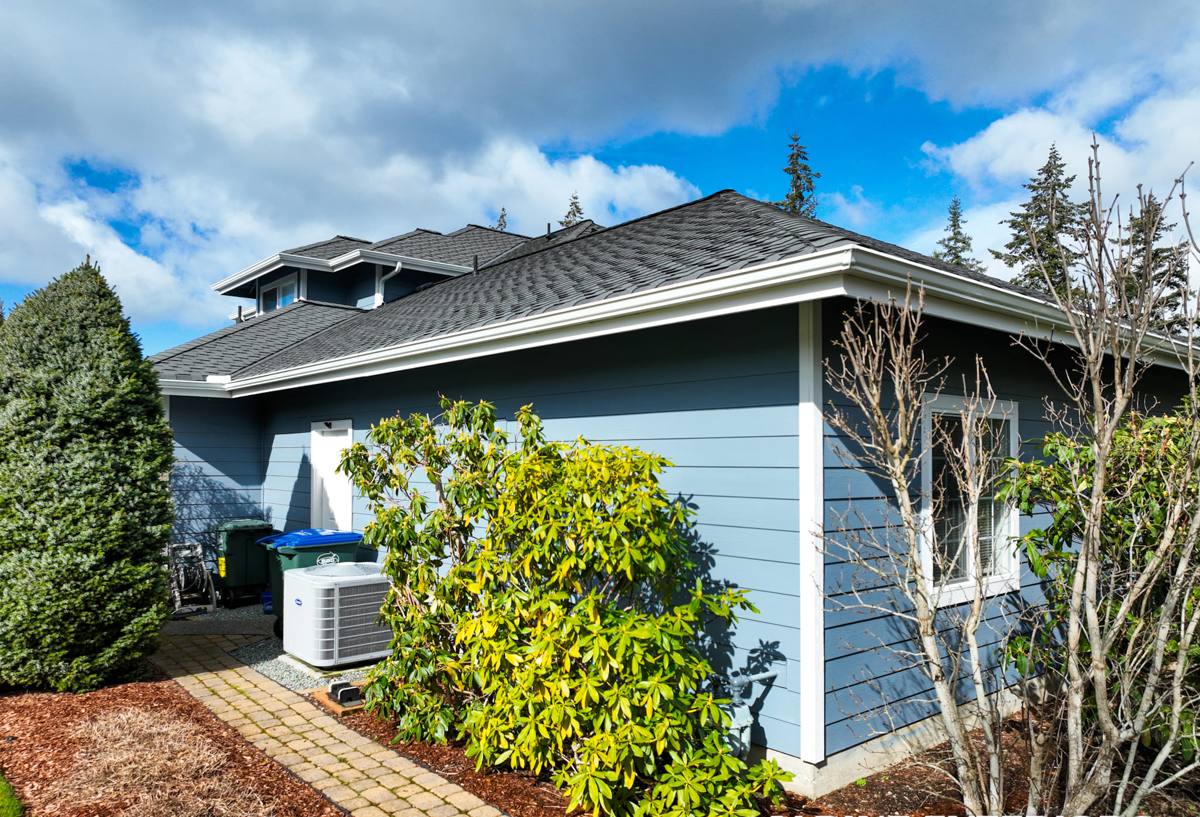
What Counts as Storm Damage on an Edgemoor Roof
Storm damage isn't always a dramatic hole in the roof deck. Most of the calls we get after a wind or rain event in Bellingham involve damage that's easy to miss from the ground.
Wind Damage
Sustained wind off the water can lift shingle tabs, crack ridge caps, and loosen fasteners without tearing anything off completely. A shingle that's been lifted and pressed back down by a passing storm often looks fine from the driveway but has a broken seal underneath — which means the next rain gets in.
Impact Damage
Edgemoor's mature tree canopy is part of what makes the neighborhood attractive, but it's also a liability during wind events. Falling limbs and debris crack shingles, dent metal flashing, and occasionally puncture decking. Impact damage is usually obvious when it's large; small impact cracks are the ones that get overlooked and leak months later.
Water Intrusion
Driving rain — rain pushed sideways by wind rather than falling straight down — finds its way under flashing, around chimneys, and through any gap that a calm-weather rain would never reach. This is one of the more common storm-related callouts we get in this part of Whatcom County, and it's often mistaken for a "leaky roof" rather than storm damage, which matters for how it gets documented and repaired.
Why Edgemoor's Location Adds Extra Wear
Three regional factors show up again and again on roofs in this neighborhood:
- Salt air: Proximity to the bay accelerates corrosion on exposed fasteners, flashing, and metal roof edges. A storm repair that uses the wrong-grade hardware can fail again within a few seasons.
- Driving rain: Wind-driven rain doesn't behave like a typical Pacific Northwest drizzle. It gets pushed uphill under shingle edges and around flashing laps that would otherwise shed water fine.
- Long moss season: Bellingham's damp, shaded conditions keep moss growing for most of the year. Moss holds moisture against the roofing material and can lift shingle edges over time, which makes a roof more vulnerable when a storm hits — a pre-weakened shingle tears where a healthy one would have held.
None of this means Edgemoor roofs are poorly built. It means storm repairs here need to be done with these conditions in mind, using fasteners and materials that hold up to salt exposure and detailing that accounts for wind-driven water.
Common Storm Damage Types We See
| Damage Type | Typical Cause | Signs to Watch For |
|---|---|---|
| Lifted or missing shingles | Sustained wind, prior moss lift | Bald patches, shingles in the yard, exposed underlayment |
| Cracked or dented flashing | Falling limbs, hail, wind-driven debris | Rust streaks, visible dents at chimneys or valleys |
| Torn or lifted ridge caps | High wind along the roof peak | Gaps at the ridge line, caps missing after a storm |
| Deck-level leaks | Prolonged wind-driven rain through a small breach | Ceiling stains appearing days after the storm, not during it |
| Gutter and edge damage | Wind, debris impact, ice buildup in cold snaps | Sagging sections, water overshooting during rain |
What a Correct Storm Repair Involves
A storm repair is only as good as the inspection behind it. Skipping steps here is how homeowners end up calling back three months later for the "same" leak.
Full Roof Inspection, Not Just the Obvious Spot
Wind and impact damage rarely stays in one place. We check the whole roof plane — not just where the homeowner saw a shingle come off — because a storm strong enough to cause visible damage in one area usually stressed fasteners and seals elsewhere too.
Decking Check
If water has been getting in for any length of time, the decking underneath needs to be checked for soft spots or rot before new material goes down. Covering damaged decking with new shingles just hides the problem.
Matching Materials, Not Just Available Materials
Where possible, repairs should match the existing roofing in profile, weight, and color so the patch doesn't stand out or create a mismatched wear pattern down the line. When an exact match isn't available, we say so up front rather than installing something that will visibly age differently.
Flashing and Underlayment Detail
Given how much wind-driven rain this area sees, flashing laps and underlayment overlaps need to be done generously and correctly — this is usually where storm leaks originate, not in the field of the roof itself.
Fastener and Hardware Selection
Given the salt air, we use corrosion-resistant fasteners and flashing on repairs in this neighborhood rather than whatever is standard inland. It costs a little more up front and saves a callback in a few years.
Our Storm Response Process
- Initial call and triage: We ask what happened and where, so we can bring the right materials and prioritize based on whether water is actively entering the home.
- Emergency tarping if needed: If the roof has an active breach, our first job is stopping water intrusion, not a full repair — that comes next, once it's safe and the area is dry.
- Full inspection and documentation: We photograph and document the damage clearly, which matters both for your own records and for any insurance claim.
- Written scope and honest options: You get a plain-English explanation of what's damaged, what needs to be repaired versus replaced, and roughly what that involves — before any work starts.
- Repair: We complete the repair using matched materials and details built for local conditions, not a quick patch.
- Follow-up check: We check the repair after the next significant rain where practical, since that's the real test of whether flashing and seals were done right.
Insurance Claims: What Homeowners Should Know
Most storm damage repairs in this area involve a homeowner's insurance claim, and the process goes more smoothly when the damage is documented properly from the start.
- Take your own photos as soon as it's safe, before any tarping or cleanup changes what the adjuster will see.
- Get a written, itemized scope of damage — verbal estimates don't hold up well with claims adjusters.
- Ask whether the repair contractor will meet the adjuster on-site if requested; a contractor who won't isn't doing you any favors.
- Understand the difference between a repair and a full section replacement — adjusters sometimes approve one and not the other, and it helps to know which your roof actually needs before that conversation happens.
We're happy to provide documentation that supports your claim, but we work for you, not the insurance company — our job is to tell you honestly what the roof needs.
Preventing the Next Storm from Doing More Damage
A storm repair is a good moment to address the conditions that made the damage worse than it needed to be.
Moss Management
If moss was already lifting shingle edges before the storm hit, that's worth addressing as part of the repair — a shingle held down cleanly handles wind far better than one already loosened by moss growth.
Gutter and Drainage Check
Storms often reveal gutter problems that were minor before — sagging sections, undersized downspouts, or debris buildup that made water back up under the roof edge during heavy rain.
Fastener and Flashing Age
If your roof is older and this is the second or third storm-related repair in a few years, it may be a sign that fasteners and flashing are reaching the end of their service life due to years of salt air exposure — worth a broader conversation rather than repeating spot repairs indefinitely.
Why an Edgemoor-Familiar Crew Matters
A crew that regularly works this part of Bellingham already knows which roof orientations take the worst of the wind off the bay, how moss behaves under this neighborhood's tree cover, and what fastener grade actually holds up here versus further inland. That familiarity shows up in faster, more accurate diagnosis and repairs that are built for the next storm, not just the last one. It also means a faster response — we're not driving in from the other side of Whatcom County when your roof needs a tarp before the next rain arrives.
After the Storm: A Quick Homeowner Checklist
- Check the yard and gutters for shingle granules, shingle pieces, or flashing debris
- Look for daylight or gaps at the ridge line and around chimneys from the ground with binoculars
- Check ceilings and attic spaces for new staining, especially a day or two after the storm
- Note the date and rough time of the storm for insurance purposes
- Avoid getting on the roof yourself — storm-loosened shingles and wet surfaces are a fall risk
- Call for an inspection promptly, even if damage looks minor — small breaches get worse with the next rain
If a recent storm has left your Edgemoor roof with missing shingles, a leak, or damage you're not sure how to categorize, we're glad to take a look. Fill out the form below for a free, no-pressure estimate — we'll tell you honestly what's damaged and what it actually needs.