 Bellingham
 Windows Built for a Silver Beach Winter, Not Just a Showroom
Silver Beach sits close enough to the water that homes here take a different kind of weather beating than houses further inland in Whatcom County. Salt-tinged air off the bay, wind-driven rain that finds its way sideways under eaves, and a moss season that seems to stretch longer every year all put steady pressure on window frames, sills, and the seals around them. A window that would hold up fine in a drier climate can fail early here if it's not installed with this specific exposure in mind.
We install windows across Bellingham and the surrounding county, and the jobs we do in Silver Beach get treated differently from the start. The flashing details, sealant choices, and frame materials we recommend for a home a few blocks from the water aren't automatically the same ones we'd suggest inland. This page is about what that actually means in practice — what local homes need, what a correct installation involves, and how our process works from estimate to final walkthrough.
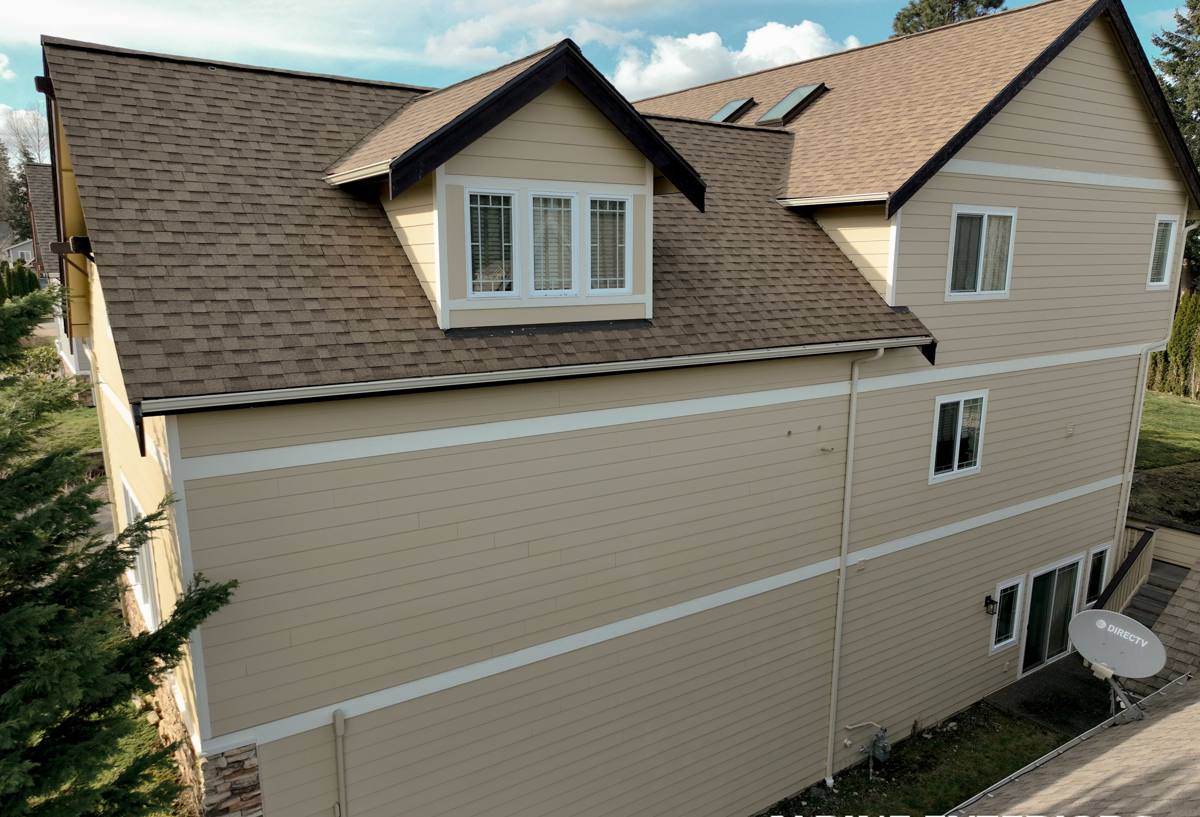
What Bellingham's Climate Does to Windows Over Time
It's rarely one dramatic storm that ruins a window installation — it's years of small, repeated exposure. A few of the mechanisms we see most often in this area:
- Wind-driven rain intrusion: Rain in this region often arrives at an angle, pushed by wind off the water. Standard flashing details that rely on gravity alone to shed water can let moisture work its way behind the trim.
- Salt air corrosion: Homes closer to the water deal with airborne salt that accelerates corrosion on hardware, fasteners, and some aluminum components — especially anything not rated for coastal exposure.
- Moss and organic growth: Long stretches of damp, mild weather let moss and algae take hold on sills, trim, and anywhere water sits rather than draining. That growth holds moisture against wood and paint longer than it should sit.
- Slow-drying wall assemblies: High ambient humidity means that once moisture gets behind a window frame, it doesn't dry out quickly. Small installation gaps that would self-correct in a drier climate can stay wet for weeks.
None of this means Silver Beach homes need exotic materials or unusual products. It means the installation details — flashing sequence, sealant selection, drainage paths — have to be done correctly every time, because this climate doesn't forgive shortcuts the way a milder one might.
Signs a Silver Beach Home Needs New Windows
Most homeowners don't call about windows until something is visibly wrong, but there are earlier signs worth acting on:
- Fogging or condensation between panes on dual-pane units — a sign the seal has failed
- Soft or discolored trim and sills, especially on the side of the house that faces prevailing wind and rain
- Windows that are noticeably harder to open, close, or lock than they used to be
- Visible moss or dark staining building up on exterior sills and trim
- Noticeable drafts or a cold feeling near the window even when it's closed
- Rising heating bills without an obvious explanation
Any one of these on its own isn't necessarily an emergency, but they're worth a look before the underlying framing gets involved. Once moisture reaches the wall structure behind a window, the repair scope changes considerably.
What a Correct Window Installation Actually Involves
It's Mostly About What You Don't See
The window unit itself is only part of the job. In our experience, most window failures in this region trace back to installation details rather than the product itself — a flashing step skipped, a sealant used in the wrong location, or a gap left where water can collect instead of drain.
Frame and Opening Preparation
Before a new window goes in, the existing opening needs to be inspected for rot, soft wood, or prior water damage — particularly common on older homes in this area where original windows may be decades old. Any compromised framing gets addressed before the new unit is set, not covered over.
Flashing and Drainage
This is the step that matters most for this climate. Flashing has to be layered correctly — typically sill pan flashing at the bottom, side flashing lapped over it, and head flashing lapped over the sides — so that any water that does get past the exterior finish has a clear path down and out, rather than pooling against the frame or wall sheathing.
Sealant Selection and Placement
Not every gap should be sealed solid. Some joints need a flexible, weather-rated sealant; others — particularly at the bottom of the window — need to stay open as a drainage path called a weep system. Sealing the wrong spot solid is a common shortcut that traps water instead of letting it escape.
Insulation Around the Frame
The gap between the new window frame and the rough opening needs to be filled with an appropriate low-expansion foam or insulation — enough to stop drafts and control condensation, without over-packing in a way that can bow the frame.
Choosing Windows for a Coastal-Adjacent Climate
Material choice matters here more than in drier parts of the county. The table below reflects general trade-offs we walk homeowners through — not a ranking of one manufacturer over another, since performance depends heavily on the specific product line and how well it's installed.
| Frame Material | Moisture & Salt Air Behavior | Maintenance | Typical Fit for Silver Beach |
|---|---|---|---|
| Vinyl | Doesn't corrode or rot; performs consistently in damp, salt-tinged air | Low — occasional cleaning | Strong general-purpose choice for this exposure |
| Fiberglass | Very stable in moisture and temperature swings; resists warping | Low | Good option where higher upfront cost fits the budget |
| Wood (unclad) | Attractive but requires diligent upkeep to resist rot and moss staining in this climate | High — regular painting/sealing | Workable with a real maintenance commitment, best in more sheltered locations |
| Wood-clad (vinyl or aluminum exterior) | Exterior shell resists weather while interior keeps a wood look | Moderate | Reasonable middle ground for exposed elevations |
| Aluminum | Can be prone to corrosion near salt air unless specifically rated for coastal use, and conducts cold | Low to moderate | We use this selectively and only in coastal-rated products |
We don't push homeowners toward one material across the board. A window on a covered, inland-facing wall has different requirements than one on an exposed elevation catching the brunt of driving rain — we walk each opening on its own merits.
Our Installation Process
1. On-Site Assessment
We look at each window opening individually — checking framing condition, current flashing (or lack of it), and how exposed that particular wall is to wind and rain. Two windows on the same house can need different treatment.
2. Straightforward Estimate
You get a written estimate that spells out product, labor, and any framing repair separately, so you can see what you're paying for rather than one bundled number.
3. Removal and Opening Prep
Old units come out carefully to avoid unnecessary damage to siding or interior trim. Any rot or soft framing we find gets flagged and repaired before the new window goes in — not hidden behind it.
4. Flashing, Setting, and Sealing
This is where the details described above happen: proper flashing sequence, correct sealant placement, and appropriate insulation around the frame.
5. Interior and Exterior Finish
Trim, casing, and paint or caulk lines get finished to match the surrounding wall as closely as possible.
6. Final Walkthrough
We check operation, locks, and weatherproofing with you before we consider the job done, and answer any questions about care going forward.
What Window Installation Typically Costs
Pricing depends on window size, material, number of openings, and whether framing repair is needed. The ranges below are general and meant to help with rough budgeting, not a quote.
| Factor | Why It Moves the Price |
|---|---|
| Frame material | Vinyl is typically the most budget-friendly; fiberglass and wood-clad options cost more upfront |
| Window size and configuration | Larger units, bay windows, or custom shapes cost more than standard double-hung sizes |
| Number of windows | Whole-house replacements typically bring a better per-window rate than one-off jobs |
| Framing or rot repair | Any wood replacement or structural repair found during removal adds labor and material |
| Access and site conditions | Second-story or hard-to-reach windows take more time and equipment |
We'd rather give you an honest range during an on-site look than a number over the phone that changes once we open the wall.
Why Hiring a Crew That Already Works Silver Beach Matters
A window installer who mostly works drier, inland areas may not think twice about flashing details that are non-negotiable this close to the water. We've seen homes where a window installed a few years ago is already showing rot at the sill — not because the window was a bad product, but because it was installed the same way you'd install one in a low-exposure location.
Working regularly in this neighborhood and the broader Bellingham area means we've already seen how these homes age, which elevations take the worst of the weather, and where past shortcuts tend to cause trouble. That local pattern recognition is part of what you're paying for, alongside the labor itself.
A Simple Checklist Before You Hire Anyone
- Do they inspect and address existing framing condition, or just swap the window in place?
- Do they explain their flashing and drainage approach, or wave it off as "standard"?
- Is the estimate itemized, separating product, labor, and any repair work?
- Do they carry appropriate licensing and insurance for work in Washington State?
- Can they speak specifically to how they handle wind-driven rain and coastal-adjacent exposure?
- Do they offer a written warranty on both product and installation labor?
Any reputable contractor should be able to answer these without hesitation. If the answers are vague, that's worth noticing before you sign anything.
Get a Straightforward, No-Pressure Estimate
If you're noticing drafts, moisture, moss buildup, or windows that just don't operate the way they used to, it's worth getting a second set of eyes on it before winter weather makes the problem worse. We're happy to walk your Silver Beach home, look at each opening honestly, and give you a clear picture of what's needed and what it costs — no pressure, no upsell. Use the form below to request a free estimate.