 Bellingham
 Windows Built for Silver Beach's Weather, Not Just Any Weather
Silver Beach sits close enough to the water that homes here take on a different kind of weathering than houses further inland in Whatcom County. Salt-laden air works on metal hardware and finishes. Wind-driven rain doesn't just fall on windows here, it gets pushed sideways into every gap, seam, and sill. And the long stretch of gray, wet months means moss and algae get a real foothold on anything that stays damp for more than a day or two. Window replacement in this neighborhood has to account for all three, not just the general Pacific Northwest rain that every Bellingham contractor talks about.
We've worked enough homes in this pocket of Bellingham to know that a window that performs fine on a dry inland lot can fail early here — not because the window itself is bad, but because the installation didn't account for what this specific location throws at it. That's the gap we're closing with this page: what Silver Beach homes actually need from a window replacement, and what a correct job looks like from tear-out to final seal.
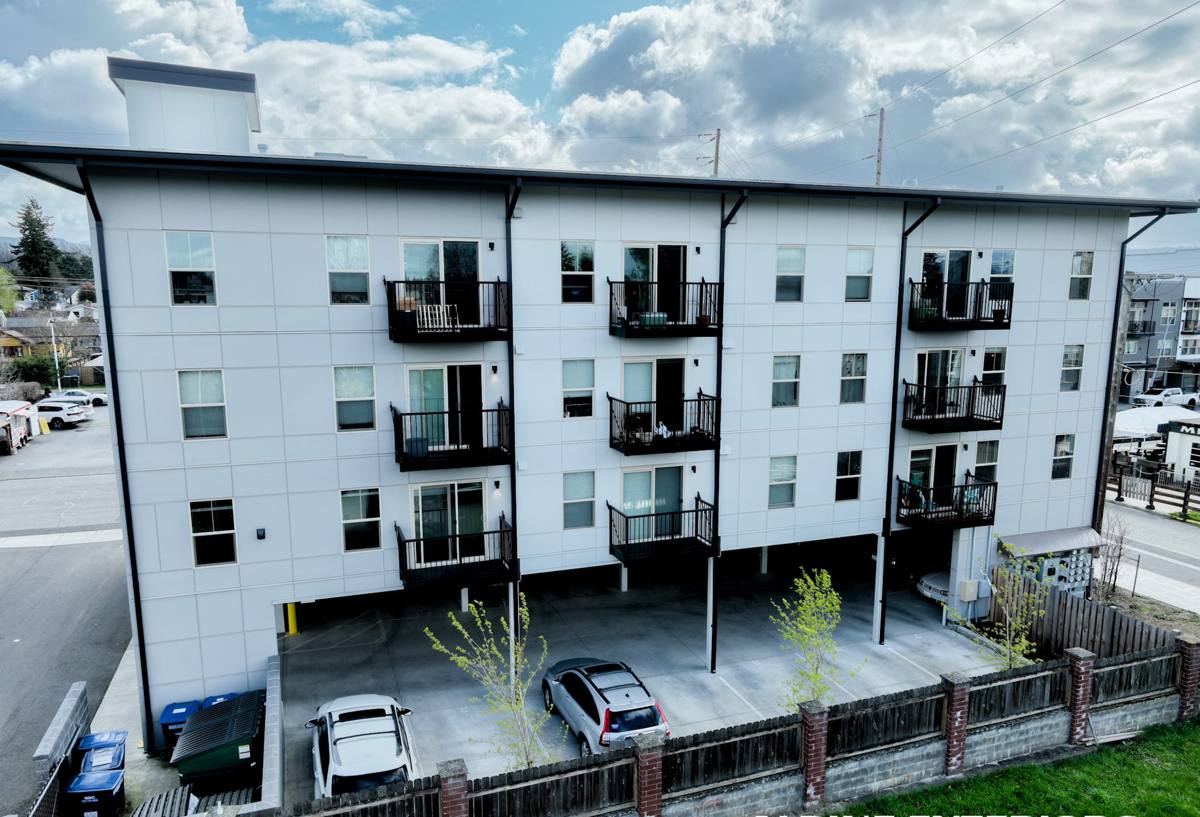
What Salt Air, Driving Rain, and Moss Season Actually Do to Windows
Salt Air and Hardware
Salt-bearing air accelerates corrosion on anything metal — window locks, hinges, screen frames, and especially lower-grade fasteners. Once corrosion starts on hardware, windows get harder to lock and seal properly, which lets in more moisture, which accelerates the damage further. It's a slow spiral, but it's a real one, and it's why hardware quality and finish matter more here than they would on a drier, inland Whatcom County lot.
Wind-Driven Rain
Ordinary rain falls straight down and mostly runs off a wall. Wind-driven rain is pushed horizontally and can find its way behind trim, under sills, and into any flashing gap that a calmer climate would never test. This is the single biggest reason we see premature window failures near the water — not the glass or the frame material, but water intrusion at the perimeter because the flashing and sealant details weren't built for lateral pressure.
Moss and Sustained Dampness
Long wet seasons mean surfaces near windows — sills, adjacent siding, trim — stay damp longer, which gives moss and algae time to establish. Moss holds moisture against wood and painted surfaces, which is a slow but steady path to rot if it's left unaddressed. It also tends to build up in window tracks and weep holes, which can block the drainage paths that are supposed to let incidental water escape.
Signs a Silver Beach Home Needs Window Replacement, Not Just Repair
- Fogging or a persistent haze between panes — the seal on the insulated glass unit has failed and moisture is trapped inside
- Soft or spongy wood at the sill or lower frame corners, especially on walls that face prevailing wind and rain
- Windows that are difficult to lock, or locks that no longer pull the sash tight against the weatherstripping
- Visible daylight or a noticeable draft around the frame when it's windy
- Paint or finish that's bubbling, peeling, or chalking faster near the window than elsewhere on the wall
- Recurring moss or dark staining at the sill that comes back within weeks of cleaning
- A noticeable jump in heating costs without any other obvious cause
Not every one of these means full replacement is the only option — some are repairable. But when we see two or three of these together on the same window, especially on the weather-facing side of a Silver Beach home, replacement usually ends up being the more honest recommendation, because the underlying frame or seal integrity is already compromised.
What a Correct Window Replacement Involves
Assessment Before Anything Is Ordered
We start by looking at each window individually rather than assuming every opening on the house needs the same treatment. Orientation matters — a window facing the prevailing wind and rain needs more attention to flashing and sealant detail than one tucked on a sheltered elevation. We also check the condition of the framing behind the trim, since that's often where the real story is, not on the visible face of the window.
Removal Without Hidden Damage
Careful tear-out matters as much as the new unit itself. We remove the old window and inspect the rough opening and sheathing underneath before anything new goes in. If there's rot or water damage back there — which isn't unusual on older homes in this area that have taken decades of wind-driven rain — it gets addressed before the new window is installed, not covered over.
Flashing and Water Management
This is the step that matters most in a location like Silver Beach. Proper flashing directs any water that gets past the exterior surface back out, rather than letting it sit against the framing. That means correctly lapped flashing tape, a sloped sill pan so water drains outward instead of pooling, and sealant placed only where it should be — sealing everything can trap moisture just as badly as sealing nothing.
Setting and Sealing the Window
The window gets shimmed level and plumb, fastened per the manufacturer's specification, and insulated around the frame without over-packing, which can bow the frame and affect how the sash operates. Exterior sealant and interior air sealing are both finished, and we check operation — locking, sliding, tilting, whatever the window type calls for — before we consider the job done.
Trim, Cleanup, and Final Check
Trim is reset or replaced to match the surrounding siding, and we do a final walkthrough on operation and appearance with the homeowner. Any debris, old materials, and packaging leave with us the same day.
Choosing Materials and Glass for a Near-Water Property
There's no single "best" window material for every home — it depends on the home's style, budget, and exposure. What we do adjust for a property like one in Silver Beach is hardware finish, glass package, and frame material tolerance for sustained moisture exposure.
| Factor | Why It Matters Here | What We Look For |
|---|---|---|
| Frame Material | Sustained dampness and salt air stress finishes and joints over time | Frame materials and finishes rated for coastal or high-moisture exposure |
| Hardware Finish | Salt air corrodes standard hardware faster than inland exposure | Corrosion-resistant lock and hinge hardware, not base-grade fasteners |
| Glass Package | Wind-driven rain and cool, damp air affect both comfort and condensation risk | Dual or triple-pane units with a warm-edge spacer to reduce interior condensation |
| Flashing/Sealant Detail | Lateral wind pressure pushes water where gravity-only details miss | Sloped sill pans and fully lapped flashing, not sealant used as the only barrier |
| Weatherstripping | Constant humidity cycling can compress or degrade lower-grade seals faster | Durable, replaceable weatherstripping rather than a fixed, non-serviceable seal |
We'll walk through these trade-offs honestly for your specific home and budget rather than pushing a single product line. The right choice for a sheltered inland lot in Whatcom County isn't always the right choice for a home taking the weather head-on near Silver Beach, and we'd rather explain that than sell the same package to everyone.
Why a Crew That Knows Silver Beach Specifically Matters
Window replacement isn't just swapping one unit for another — it's a judgment call at every step: how much flashing overlap this specific wall needs, whether this sill pan should slope more given the exposure, whether the sheathing underneath needs attention before the new window goes in. Those judgment calls get better with repetition in a specific location. A crew that's worked homes in this part of Bellingham has already seen how wind-driven rain behaves on these lots, how fast moss reestablishes in the shaded, damp corners, and where salt air tends to do the most damage to hardware first.
That local pattern recognition is what keeps a job from becoming a callback. It's also why we don't treat every window replacement in Whatcom County the same way — a home in Silver Beach gets a different level of attention to water management details than a sheltered inland property would need.
Maintenance That Extends the Life of New Windows Here
- Rinse sills and tracks periodically to clear salt residue and moss spores before they establish
- Keep weep holes and drainage channels clear, especially after the wet season builds up debris
- Check exterior caulking annually — UV and moisture cycling break down sealant faster near the water
- Operate locks and hardware a few times a year even on windows you don't open often, so hardware doesn't seize
- Address any soft trim or peeling paint near a window promptly rather than waiting for it to spread
None of this is complicated, but it's the kind of low-effort maintenance that meaningfully extends the life of a correctly installed window in a location like this. A well-installed window with basic upkeep should outlast a poorly flashed one on a much nicer product, every time.
Our Process, Start to Finish
We keep the process straightforward: an on-site assessment of your specific windows and their exposure, a clear written quote with no pressure to decide on the spot, a scheduled install date, and a walkthrough when the work is done. We handle the removal, any necessary framing repair, the new window installation with proper flashing and sealing, trim work, and full cleanup. You're not left guessing what happens next at any point in the job.
If you're weighing repair versus replacement, or just want an honest read on what your windows are dealing with given where your home sits, we're happy to take a look. Reach out for a free, no-pressure estimate using the form below — we'll tell you what we actually see, not just what's easiest to sell.