 Bellingham
 Why South Hill Roofs Take a Different Kind of Beating
South Hill sits up and out from the flatter parts of Bellingham, and that elevation comes with a trade-off. The views are real, but so is the extra wind exposure, the driving rain that comes straight off the water during a winter system, and the salt-laden air rolling in from Bellingham Bay. None of that is dramatic on any single day. It's cumulative. A roof up here isn't destroyed in one storm — it's worn down by dozens of them, season after season, until the day one more wind event finds the weak spot the others already created.
Add in Whatcom County's long, wet moss season — realistically eight or nine months of the year where conditions favor growth — and you've got a roofing environment that's genuinely harder on materials than most of the country deals with. Homes on South Hill, especially older ones with mature tree cover, tend to hold moisture in their roof systems longer than homes in more open, lower-elevation parts of town. That moisture is what turns ordinary storm damage into structural damage if it's not caught early.
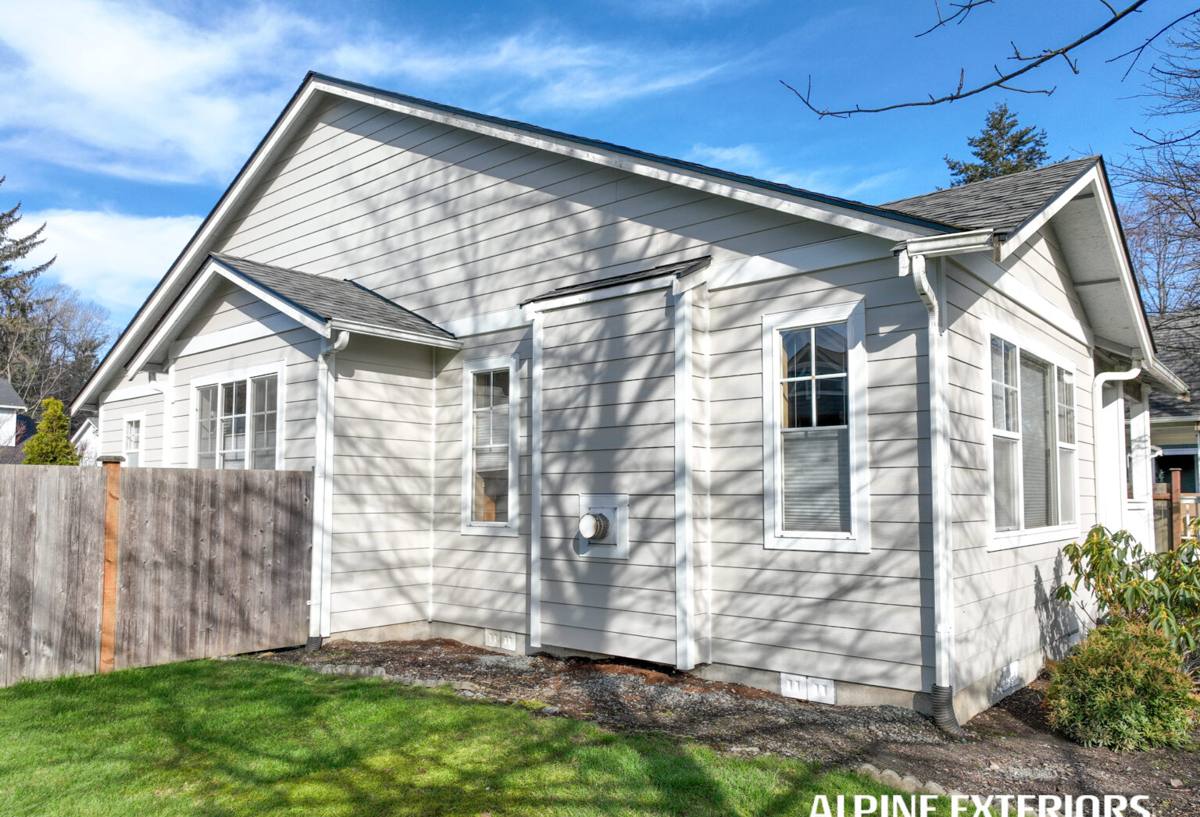
What Storm Damage Actually Looks Like on a South Hill Roof
Storm damage rarely looks like a hole in the roof. Most of the calls we get after a windstorm or a hard rain event involve damage that's easy to miss from the ground.
Wind Damage
Wind doesn't need hurricane force to do harm — it needs the right angle and a shingle edge that's already lifted from age or a prior storm. Once wind gets under a shingle, it can crease it, tear it loose, or fully remove it. On a hillside lot with fewer windbreaks than a home tucked into a valley, that lift-and-tear cycle happens more often than most homeowners realize.
Water Intrusion
Driving rain finds every gap in flashing, every nail that's backed out, every seam where a roof plane meets a chimney or a wall. It doesn't need a big opening — a fraction of an inch is enough over the course of a multi-day storm.
Moss and Organic Growth
Moss isn't just cosmetic. It holds water against the roofing surface, works its way under shingle tabs, and lifts them slightly over time — which is exactly the condition that turns a moderate windstorm into a shingle-loss event. A roof with heavy moss going into storm season is a roof that's already been weakened before the wind ever arrives.
Debris Impact
Mature trees are part of what makes South Hill's older neighborhoods attractive, but limbs and branch debris coming down in a windstorm are a real source of localized damage — bruised or cracked shingles, dented flashing, and occasionally punctured decking.
The Hidden Damage Homeowners Miss
The damage you can see — a missing shingle, a dented vent cap — is usually the least of it. What matters more is what's happening underneath.
- Underlayment that's been saturated and no longer sheds water even after the visible shingle is replaced
- Roof decking that's gone soft or delaminated from repeated wetting, which won't show until someone is standing on the roof
- Chimney and skylight flashing that's separated just enough to leak only during wind-driven rain, not in calm weather
- Valley areas where granule loss and moss have thinned the roofing material without an obvious tear
This is why a proper storm damage repair always starts with a hands-on inspection, not a look from the driveway. A roof can pass a visual check from the street and still be actively leaking into the attic.
What a Correct Storm Damage Repair Involves
Full Inspection Before Any Work Starts
We check the obvious damage first, then go beyond it — surrounding shingles, flashing, the attic side of the roof deck where accessible, and gutters and downspouts, since overflow damage often gets mistaken for roof damage when the real problem is drainage.
Matching, Not Improvising
A patch repair only holds up if the replacement material matches the existing roof in type, weight, and profile. Mismatched shingles create uneven wear patterns and can void what's left of a manufacturer's warranty on the surrounding roof.
Flashing and Underlayment, Not Just Shingles
Replacing a shingle over compromised underlayment or damaged flashing is a short-term fix that fails again in the next storm. Any repair we do addresses the water barrier underneath, not just the visible surface layer.
Moss Treatment as Part of the Repair
Given how much moss contributes to storm vulnerability in this region, we treat and clear moss as part of a storm repair whenever it's a contributing factor — not as a separate upsell, but because leaving it untreated undermines the repair itself.
Our Process for Storm Repairs on South Hill
1. Inspection and Documentation
We assess the damage and document it clearly, which matters if you're filing an insurance claim. Photos and a written scope of damage make the claims process faster and reduce back-and-forth with an adjuster.
2. Honest Scope, Written Down
You get a clear explanation of what's damaged, what's simply worn and should be watched, and what actually needs repair now versus later. We don't pad a storm repair with unrelated work.
3. The Repair Itself
We work efficiently and get your roof weathertight as a priority — especially important given how quickly the next system can roll in during storm season. Materials are matched to your existing roof wherever possible.
4. Cleanup and Final Check
Debris, old materials, and displaced granules are cleared from the roof and gutters before we call the job done, and we walk the repair with you if you'd like to see it.
Repair vs. Replacement: What Actually Drives the Decision
Not every storm-damaged roof needs a full replacement, but some do. The honest answer depends on a handful of factors, not just the size of the visible damage.
| Factor | Favors Repair | Favors Replacement |
|---|---|---|
| Roof age | Under roughly 10-12 years | Nearing or past expected material lifespan |
| Extent of damage | Localized to one section or plane | Spread across multiple roof planes |
| Underlayment condition | Dry, intact elsewhere on the roof | Widespread saturation or deterioration |
| Moss/organic history | Minor, treatable | Long-term, has affected multiple layers |
| Prior repair history | First significant repair | Multiple past patch repairs stacking up |
We'll always tell you honestly which category your roof falls into. A repair that's genuinely sound is the right call far more often than a full replacement — but we won't recommend patching a roof that's structurally past the point where a patch will hold.
Why a Crew That Already Works South Hill Matters
South Hill's older housing stock, hillside lots, and mature trees create access and logistics challenges that aren't the same as working a flat, newer subdivision elsewhere in Whatcom County. Steep driveways, tighter lot lines, and roof pitches suited to an earlier era of construction all affect how a repair should be staged and executed safely.
A crew that regularly works this neighborhood also has a practical read on how the local climate — the wind off the bay, the length of the moss season, the salt exposure — actually affects roofs here versus roofs a few miles inland. That's not something you learn from a single job. It shapes what we look for during an inspection and what we flag as a near-term risk versus something that can wait.
Preventing the Next Storm From Undoing the Repair
A good repair is only half the equation. A few maintenance habits go a long way toward keeping the next storm from causing the same problem again.
- Clear gutters and downspouts before the fall storm season, especially under mature trees
- Treat and remove moss before it has a chance to lift shingle edges
- Trim tree limbs that overhang or come close to the roofline
- Have flashing around chimneys, skylights, and vents checked annually, not just after visible damage appears
- Walk the exterior after any major windstorm and look for shingles in the yard or gutters — an early sign of loosened roofing
None of these prevent every storm from causing any damage at all. But they meaningfully reduce how often a normal Whatcom County storm turns into a repair call.
Get a Straight Answer About Your Roof
If your South Hill home has taken storm damage — or you're just not sure whether recent weather has caused damage worth addressing — we're happy to take a look. The estimate is free, there's no pressure to act on it immediately, and you'll get a straightforward explanation of what we find. Use the form below to get started.