 Bellingham
 Metal Roofing Built for Sunnyland's Weather, Not Just Installed There
Sunnyland sits close enough to the water and under enough tree canopy that its homes take a specific kind of beating year-round: salt-tinged air drifting off Bellingham Bay, long stretches of driving rain off the Sound, and a moss season that can run eight or nine months out of twelve. A roof that would hold up fine in a drier inland climate can start showing problems here within a few years if it wasn't installed with this exact combination of conditions in mind. Metal roofing, done correctly, handles all three better than most other roofing materials available to homeowners in this part of Whatcom County — but "done correctly" is doing a lot of work in that sentence, and it's the part that separates a roof that lasts thirty-plus years from one that leaks at every seam within a decade.
This page covers what metal roofing actually needs to look like for a Sunnyland home, what a proper installation involves, and how we approach these jobs specifically in this neighborhood.
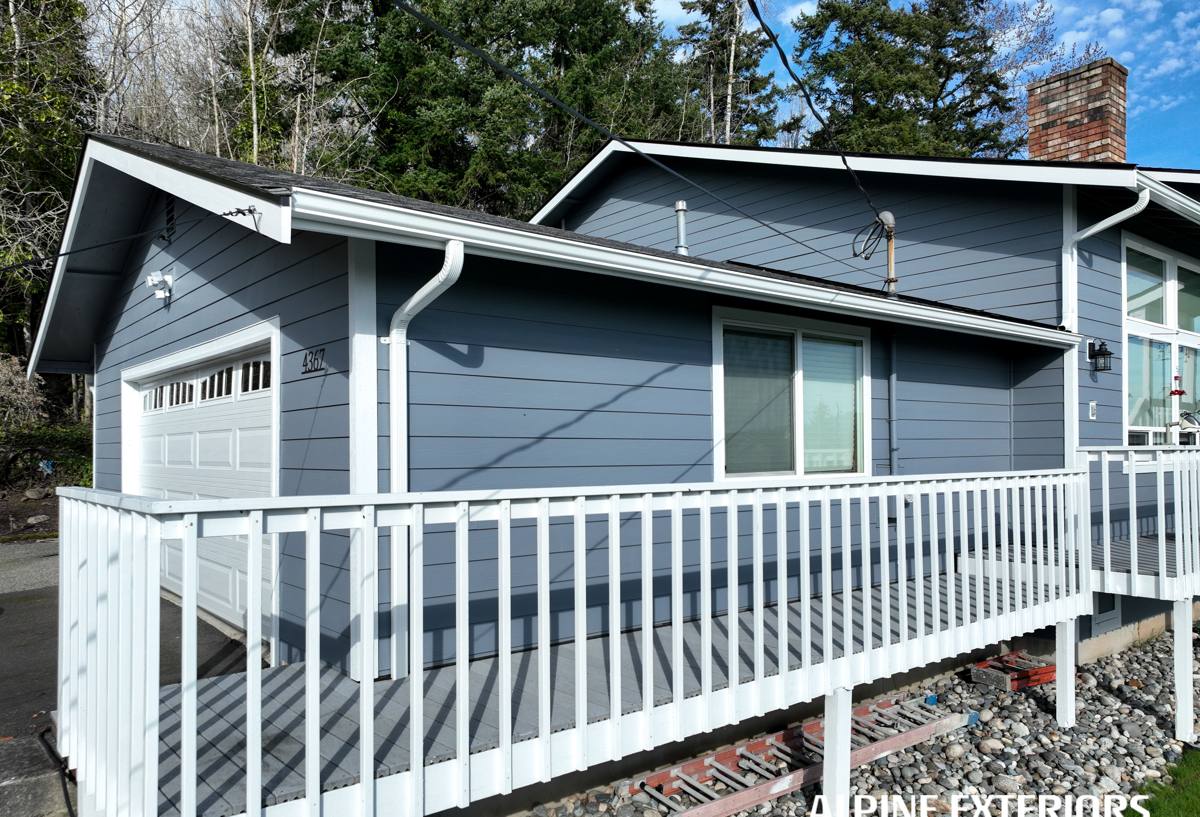
What Sunnyland's Climate Actually Does to a Roof
Salt Air and Corrosion
Even a few miles inland from open water, airborne salt accelerates corrosion on any metal that isn't properly coated or isn't the right alloy to begin with. This shows up first at cut edges, exposed fasteners, and flashing details — the places where a roofer's attention to detail matters more than the panel material itself. A roof that looks fine from the ground can be corroding quietly at every screw head if the wrong fastener was used.
Driving Rain
Bellingham doesn't just get a lot of rain — it gets a lot of wind-driven rain, which behaves differently than a straight vertical downpour. Wind-driven water finds its way sideways and upward under laps, around penetrations, and through any seam that wasn't sealed or overlapped with that in mind. Standard installation techniques that work in calmer climates aren't always sufficient here.
Moss and Organic Growth
The combination of shade from mature trees, near-constant moisture, and mild temperatures makes Sunnyland good moss habitat — good for the trees, bad for roofs. Moss holds water against roofing material, works into seams and laps, and on porous materials it can accelerate deterioration from underneath where you can't see it happening. Metal roofing doesn't feed moss the way some materials do, but it isn't immune to buildup, and debris that collects in valleys or against panel ribs still needs to be managed.
Why Metal Roofing Fits This Neighborhood
Metal roofing isn't the right fit for every home or every budget, and we'll say so plainly if that's the case. But for Sunnyland specifically, it earns its cost in a few concrete ways:
- Non-porous surface that doesn't absorb water the way wood shakes or aging asphalt can
- Steep runoff on standing seam profiles that sheds rain fast, giving driving rain less time to find a way in
- Poor surface for moss to root into compared to more textured, porous roofing materials
- Long service life that reduces how often a roof is exposed to the vulnerable "aging" years when most leaks start
- Better performance in wind, which matters on exposed lots and larger tree canopies where storm debris is a factor
None of that is automatic, though. It comes from correct material selection, correct fastening, and correct flashing — the next section covers what that actually looks like.
What a Correct Metal Roofing Job Involves
Underlayment
Metal roofing should never go down without a proper underlayment system, and in a climate this wet, that means a high-quality synthetic or self-adhered membrane, not a minimal builder's-grade layer. The underlayment is the backup system for the roof — the layer that has to work if wind-driven rain ever gets past the panels themselves, which over decades of service it eventually will at some point, somewhere.
Fasteners and Panel Attachment
This is where a lot of corner-cutting happens on lower-quality jobs. Exposed-fastener panels need the correct gasketed screws, driven at the correct torque, in the correct pattern — over-driven or under-driven screws are one of the most common sources of leaks on metal roofs. Concealed-fastener standing seam systems avoid exposed screw penetrations almost entirely, which is a meaningful advantage in salt-air conditions where every exposed fastener is a future corrosion point.
Flashing and Penetrations
Valleys, chimneys, vents, and wall-to-roof transitions are where the overwhelming majority of roof leaks originate, on metal roofs and every other kind. Correct flashing detail — not just caulk — at every one of these points is non-negotiable, especially with wind-driven rain pushing water into places gravity alone wouldn't take it.
Ventilation
A roof deck that can't breathe traps moisture underneath the roofing material, which leads to rot, mold, and reduced material life regardless of what's on top. Correct ridge and intake ventilation is part of a proper metal roofing installation, not an optional add-on.
Choosing a Metal Roofing System
Not all metal roofing is the same product wearing different colors. The main decision for most Sunnyland homeowners is between standing seam and exposed-fastener (corrugated or ribbed) panel systems.
| Factor | Standing Seam | Exposed Fastener |
|---|---|---|
| Fasteners | Concealed, clipped underneath panels | Visible screws through the panel face |
| Typical lifespan | 40–70 years | 25–40 years |
| Upfront cost | Higher | Lower |
| Salt-air durability | Stronger — fewer penetration points | Good, but fastener gaskets need eventual attention |
| Appearance | Clean, modern lines | More traditional, agricultural/utilitarian look |
| Maintenance | Minimal | Periodic fastener inspection recommended |
Steel and aluminum are both common base materials. Steel is generally more affordable and very strong, but needs a quality protective coating to hold up against salt air over the long term. Aluminum costs more but naturally resists corrosion, which can make it worth the difference for homes closer to the water or in more exposed locations around Bellingham Bay.
Our Process for Sunnyland Metal Roofing Projects
- On-site evaluation. We look at the existing roof deck, ventilation, moss and moisture patterns, tree exposure, and any current leak history before recommending anything.
- System recommendation. Based on the home's exposure and your budget, we'll recommend a panel type and material — standing seam or exposed fastener, steel or aluminum — and explain the tradeoffs honestly.
- Deck and structure check. Any rot, soft decking, or inadequate ventilation gets addressed before new roofing goes on top of it. Covering up a bad deck is how good materials end up in a short-lived roof.
- Underlayment and flashing installation. This is the part of the job that determines whether the roof performs in a real Whatcom County winter, and we don't shortcut it.
- Panel installation. Correct fastening, correct overlap, correct alignment — done to the manufacturer's specification, not just "close enough."
- Final walkthrough. We review the completed roof, ventilation, and any warranty documentation with you before we consider the job finished.
What Affects the Cost of a Metal Roof in Sunnyland
| Cost Factor | Why It Matters |
|---|---|
| Panel type and material | Standing seam and aluminum cost more upfront than exposed-fastener steel |
| Roof complexity | Valleys, dormers, and multiple roof planes add labor and flashing work |
| Deck condition | Rot or soft decking found during tear-off adds repair cost before new roofing goes on |
| Tear-off vs overlay | Removing old roofing adds cost but lets us properly inspect and repair the deck underneath |
| Ventilation upgrades | Older Sunnyland homes often need ridge or soffit vent improvements as part of the job |
| Access and pitch | Steep roofs or difficult site access can add to labor time |
We give straightforward, itemized estimates so you can see exactly what you're paying for and why — no vague lump-sum numbers that hide where the cost actually comes from.
Maintaining a Metal Roof in a Coastal, Tree-Covered Climate
Metal roofing needs less maintenance than most materials, but "less" isn't "none," especially in Sunnyland's specific mix of moisture and tree cover.
- Clear needles, leaves, and debris from valleys and roof-to-wall transitions a couple times a year, especially after fall leaf drop
- Check gutters and downspouts regularly — clogged gutters back water up under roof edges
- Watch for moss or algae buildup at shaded north-facing slopes and remove it before it spreads
- Have fastener heads and flashing points inspected periodically on exposed-fastener systems
- Trim overhanging branches that keep sections of roof shaded and damp longer than the rest
- After major windstorms, do a visual check for lifted panels, dented flashing, or debris damage
Signs Your Current Roof Is Ready for Replacement
Homeowners often wait too long to replace a failing roof because the damage isn't visible from the ground. A few signs worth taking seriously:
- Granule loss or curling on asphalt shingles, especially on slopes that stay shaded and wet
- Visible sagging anywhere along the roofline
- Moss buildup that keeps coming back within months of cleaning
- Water stains on interior ceilings or in the attic, even small ones
- Daylight visible through the roof deck from inside the attic
- A roof that's already at or past its expected service life for its material type
Why Local Experience in Sunnyland Matters
A roof installed by a crew unfamiliar with this specific stretch of Bellingham's climate is more likely to miss the details that actually matter here — the flashing details that stand up to wind-driven rain off the Sound, the fastener choices that resist salt air corrosion, the ventilation adjustments older Sunnyland homes often need. We work in this neighborhood regularly, which means we're not guessing at how a roof will hold up to a Whatcom County winter — we've seen how these systems perform here over time, and we build accordingly.
If you're weighing a metal roof for your Sunnyland home — new construction, replacement, or you're just trying to understand your options — we're happy to walk the roof with you and give you an honest, no-pressure estimate. Use the form below to get started.