 Bellingham
 Metal Roofing in York: Built for What Bellingham Weather Actually Does
York is one of Bellingham's older, established neighborhoods, and that means a lot of the housing stock here is aging into its second or third roof. When homeowners in this part of town start looking at metal roofing, it's usually for one of two reasons: their existing roof is showing moss damage and granule loss that a patch job won't fix, or they're tired of replacing asphalt shingles every 18-20 years and want something that will genuinely outlast them in the house. Metal roofing done right can do both — but "done right" matters more here than in a lot of climates, because Whatcom County throws a specific combination of conditions at a roof that not every crew, or every metal system, is built to handle well.
This page is about metal roofing specifically for York-area homes — what the local climate demands, what a correct installation actually involves, and why working with a crew that already knows this neighborhood's housing stock and weather pattern is worth something real, not just a sales line.
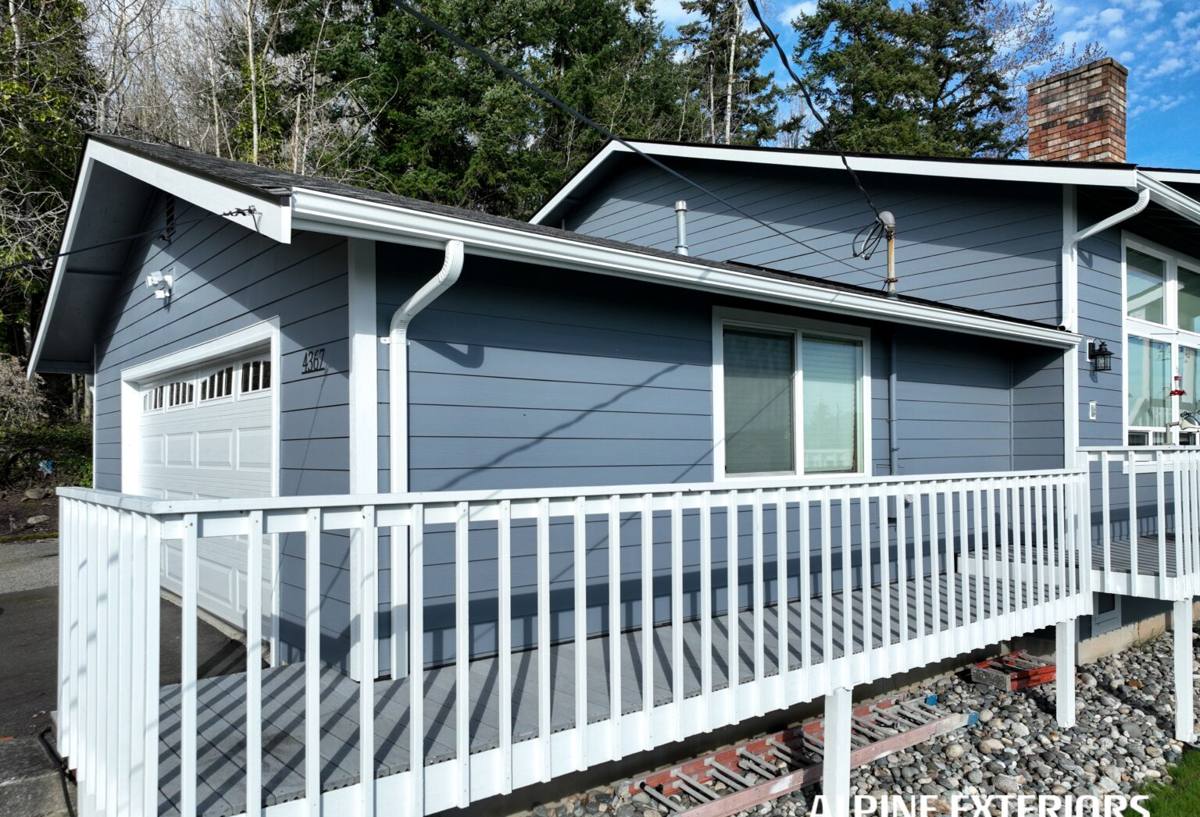
Why Bellingham's Climate Is Hard on Roofs
Three things define roofing conditions in this part of Whatcom County, and all three show up on York roofs regularly.
Salt Air
Bellingham sits close enough to salt water that airborne salt is a real factor in material selection, especially for anything metal. Salt air accelerates corrosion on unprotected or poorly finished metal, attacks fasteners, and eats away at cheap coatings faster than most homeowners expect. It's not dramatic — you won't see it happen — but over years it separates a roof that was specified correctly from one that wasn't.
Driving Rain
This isn't just a "lot of rain" climate — it's a driving rain climate, with wind-driven moisture that gets pushed sideways and upward under laps, around penetrations, and into any seam that isn't properly formed or sealed. A roof system that only sheds water when it falls straight down is not sufficient here. Every seam, flashing detail, and fastener pattern has to account for wind-driven water finding its way uphill.
Moss Season
Bellingham's long, damp, shaded stretches of the year create ideal conditions for moss growth, and York's tree cover only adds to it. On asphalt shingles, moss roots into the granule surface and lifts shingles, trapping moisture underneath. On metal, moss can't root the same way, but it can still colonize dirt and debris that collects in valleys, at the base of ribs, or around poorly designed transitions — which is why panel profile and drainage detailing still matter even on a "moss-resistant" material.
What Correct Metal Roofing Looks Like Here
Metal roofing isn't a single product — it's a category, and the differences between systems matter a lot in this climate. For most York homes, we're talking about one of two general approaches:
- Standing seam panels — continuous panels with raised, mechanically or hand-crimped seams, no exposed fasteners on the field of the roof. This is the higher-performing option for driving rain because there's nothing for wind-driven water to catch on.
- Exposed-fastener metal panels — a more affordable panel system where screws penetrate the panel face, sealed with washers. It performs fine when installed correctly, but it has more failure points over time as gaskets age, which matters more in a climate with this much sustained moisture exposure.
For most full roof replacements on York homes, we lean toward standing seam because the reduced number of penetration points is a genuine advantage in a driving-rain climate — not because exposed-fastener systems are bad, but because fewer places for water to test its way in is simply the safer bet over a 40-50 year service life.
Coating and Substrate Choice
Given the salt air factor, we pay close attention to base metal and finish coating rather than just panel profile. Galvalume steel with a quality paint finish, or aluminum where corrosion resistance is the top priority, both perform well here. What we avoid is cutting corners on coating quality to hit a lower price point — that's exactly the kind of shortcut that looks fine for the first several years and then shows its cost a decade in, right around fastener heads and cut edges where the coating is thinnest to begin with.
Metal vs. Asphalt vs. Other Options — An Honest Comparison
| Factor | Metal Roofing | Asphalt Shingles |
|---|---|---|
| Typical service life | 40-60+ years | 18-25 years in this climate |
| Moss resistance | High (no organic surface to root into) | Low; needs regular treatment/cleaning |
| Performance in driving rain | Very good with standing seam detailing | Good when properly laid and maintained |
| Salt air durability | Depends heavily on coating/substrate quality | Less sensitive to salt air specifically |
| Upfront cost | Higher | Lower |
| Long-term cost per year of service | Often lower over the full life of the roof | Higher due to earlier replacement |
Neither option is universally "correct" — it depends on how long the homeowner plans to stay in the house, roof complexity, and budget. What we won't do is recommend metal roofing on every job just because it's a bigger project; if a straightforward asphalt re-roof is the honest answer for a homeowner's timeline and budget, we'll say so.
How the Job Actually Works
1. Roof Assessment
We start by getting on the roof, not just looking from the ground. We check the deck condition, existing ventilation, flashing details around chimneys and dormers, and how water currently moves across the roof — including where moss or debris tends to collect. This tells us whether any deck repair or ventilation correction needs to happen before a single panel goes on.
2. System Selection
Based on the roof's exposure — how much direct salt air it gets, how shaded it is, roof pitch and complexity — we recommend a panel type, gauge, and finish that fits the actual conditions of that specific home, not a one-size-fits-all package.
3. Deck Prep and Underlayment
Metal roofing performance depends heavily on what's underneath it. We use underlayment rated for the exposure this climate demands, paying particular attention to eaves and valleys where wind-driven rain and ice-adjacent moisture concentrate.
4. Panel Installation and Flashing
This is where craftsmanship shows up. Seams need to be formed consistently, panels need correct fastening patterns (concealed or exposed, depending on system), and every penetration — vents, chimneys, skylights — needs custom-fitted flashing, not a generic boot stretched to fit. Rushed flashing work is the single most common cause of metal roof leaks we see on jobs we're called to fix.
5. Final Inspection and Cleanup
We walk the finished roof, check seams and flashing under close inspection, and make sure gutters and downspouts are clear and functioning with the new roofline before we consider the job done.
Pre-Project Checklist for York Homeowners
- Get on record what your current roof's biggest problem actually is — moss, leaks, age, or appearance — since that shapes the right system
- Ask any contractor what base metal and coating they're specifying, not just "metal roofing" as a category
- Confirm whether your attic ventilation will be addressed as part of the project, not just the roof surface
- Ask how flashing will be handled around every penetration on your specific roof, by name
- Get the warranty terms in writing — material warranty and workmanship warranty are two different things
- Ask how storm debris and existing moss will be cleared and disposed of before installation starts
Maintenance: What Metal Roofing Still Needs
Metal roofing is low-maintenance, not no-maintenance. In this climate, that means periodically clearing debris from valleys and low-slope sections where organic material can collect even on a metal surface, keeping gutters clear so water isn't backing up under eave flashing, and having penetrations and seams visually checked after major storms. None of this is heavy work, but skipping it entirely for decades is how small issues turn into deck damage.
Why a Crew That Works This Neighborhood Matters
York's homes span a range of ages and roof geometries, and a lot of the roofing problems we get called to fix started as a correct-looking installation that just wasn't detailed for this specific climate — flashing that would be fine in a drier region, underlayment that wasn't rated for sustained wind-driven exposure, or panel systems chosen on price without accounting for salt air. Working regularly in Bellingham and Whatcom County means we're not guessing at how these conditions behave over time — we're seeing it on re-roofs and repair calls, and building that into how we spec and install new metal roofs from the start.
If you're weighing metal roofing for a York-area home, we're happy to walk your roof, give you a straight read on condition and options, and put together a free, no-pressure estimate — no obligation, just an honest look at what your roof actually needs.