 Bellingham
 Roof Repair in York: What Bellingham's Climate Actually Demands
Homes in the York area of Bellingham sit close enough to the water and the tree canopy that roofs here take a specific kind of beating. Salt-laden air off the bay works on exposed metal fasteners and flashing year-round. Driving rain, pushed sideways by winter storms, finds its way into seams and laps that would stay dry in a calmer climate. And the long, damp moss season common to Whatcom County means organic growth is doing quiet damage to shingles and roof decking for months at a time, not just a few weeks in fall. A roof repair that doesn't account for all three of those factors tends to fail again within a year or two, which is why we treat York roof repair as its own job, not a generic patch-and-go visit.
This page covers what local homes actually need from a roof repair, what a correct repair job includes, how we approach the work, and why it matters that the crew showing up already knows this neighborhood's housing stock and weather pattern.
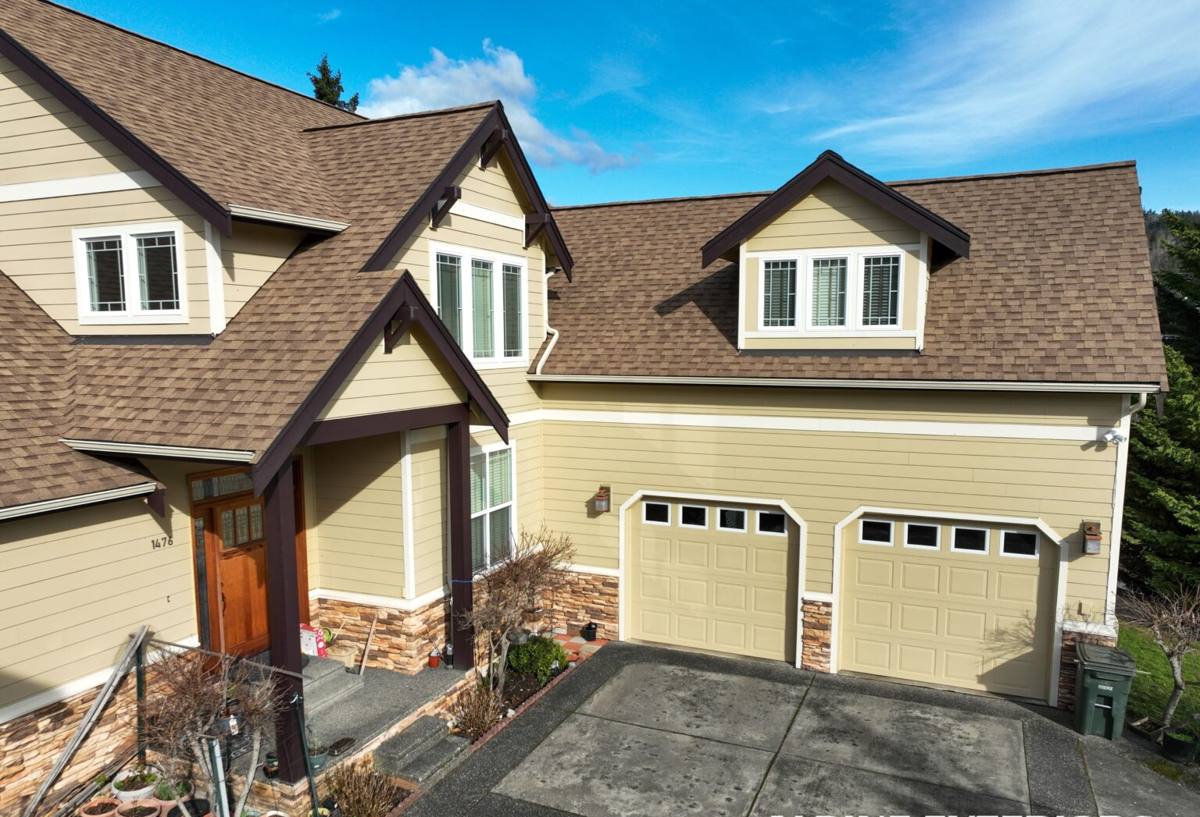
Signs a York Roof Needs Repair, Not Just a Look
Most roof problems in this area don't announce themselves with a dramatic leak on day one. They show up as small, easy-to-dismiss signs first. If you're seeing any of the following, it's worth having someone look before the next big rain event turns a small issue into an interior repair too.
- Dark streaking or thick green-black moss buildup, especially on the north-facing slope or under tree cover
- Granules collecting in gutters or at downspout outlets, which signals shingle wear
- Curling, lifting, or cracked shingle edges near ridges, valleys, or roof penetrations
- Rust staining or visible corrosion around flashing, vent boots, and exposed nail heads
- Soft or spongy spots when walking the roof, indicating decking that has absorbed moisture
- Water stains on interior ceilings, especially after a windy rainstorm rather than a calm one
- Daylight visible through the attic roofline, or damp insulation near the eaves
- Gutters pulling away from the fascia, which lets water run behind the roof edge instead of off it
Why Salt Air, Driving Rain, and Moss Change the Repair Approach
Salt Air and Metal Fatigue
Bellingham's proximity to the water means metal roofing components age faster here than they would inland. Nail heads, drip edge, step flashing, and vent boot collars are all vulnerable to corrosion over time, and a repair that reuses compromised metal or matches it with an incompatible fastener type can fail well before the surrounding shingles do. Part of a correct repair is checking metal condition, not just the shingle field around it.
Driving Rain and Wind-Driven Water
Rain that falls straight down is rarely the problem. Rain pushed sideways by wind off the water is what gets past standard laps and under-driven nails, especially at valleys, chimney flashing, and low-slope transitions. A repair has to be evaluated against wind-driven conditions, not just a static water test, or it will leak the first time weather actually tests it.
Moss Season and Roof Deck Health
Whatcom County's moss season runs long compared to drier climates, and moss doesn't just sit on top of shingles looking bad. It holds moisture against the roof surface, lifts shingle edges as it grows, and over time can contribute to decking rot underneath. Any repair on a moss-affected roof needs to address the moss itself and check what's happening beneath it, not just patch the visible symptom.
What a Correct Roof Repair Actually Involves
Diagnosis Before Patching
A repair that starts with a patch instead of a diagnosis usually treats the wrong spot. Water travels along the underlayment and decking before it shows up as a stain, so the visible leak point and the actual entry point are often several feet apart. We trace the path before deciding what gets replaced.
Matching Materials, Not Just Colors
Shingle repairs that don't match the existing product's age, granule wear, and manufacturer profile tend to stand out and can create their own micro-leak points at the seam between old and new material. We match as closely as the existing roof allows and are upfront when an exact match isn't realistic.
Flashing and Underlayment
Most repeat leaks come back because flashing was reused instead of replaced, or underlayment wasn't extended far enough past the repair area. Correct repair work replaces compromised flashing outright and ties new underlayment into the existing roof system properly, not just tucked in at the edge.
Ventilation and Moisture Balance
A roof that traps moisture from below is fighting itself, no matter how good the surface repair is. We check attic ventilation as part of any repair scope, because poor airflow accelerates decking rot and moss growth from the inside out.
Repair vs. Replacement: How We Help You Decide
Not every roof problem in York calls for a full replacement, and not every leak is safely solved with a patch. The table below outlines the general factors that push a decision one way or the other. These are guidelines, not rules — the right call depends on the specific roof.
| Factor | Leans Toward Repair | Leans Toward Replacement |
|---|---|---|
| Roof age | Under 15 years, or within expected lifespan of material | At or past manufacturer's expected service life |
| Damage extent | Isolated to one slope, valley, or penetration | Spread across multiple slopes or recurring in several spots |
| Decking condition | Solid, no soft spots or rot found | Soft, delaminated, or rotted decking discovered |
| Moss/algae history | Surface growth, roof otherwise sound | Long-term growth with granule loss and shingle lifting |
| Leak pattern | Single, traceable source | Multiple or untraceable leak points |
| Prior repairs | First repair, or well-maintained roof | Roof has been patched repeatedly with no lasting fix |
Our Process for York Roof Repairs
- Inspection. We walk the roof (weather permitting) and check the attic from inside, looking at decking, insulation, and ventilation as well as the surface.
- Diagnosis and scope. We identify the actual entry point and any related issues, like flashing wear or moss damage, and explain what we found in plain terms.
- Written estimate. You get a clear scope of work and price range before anything starts, including whether repair or replacement makes more sense for your roof.
- Repair work. We remove and replace only what's actually compromised, match materials where possible, and rebuild flashing and underlayment properly rather than patching over old material.
- Moss and debris treatment. Where moss or heavy debris contributed to the problem, we clear it and discuss maintenance options so it doesn't come right back.
- Final check. We walk the repair with you, confirm the area is sealed and watertight, and clean up the site before we leave.
Materials We Use, and Why
Most York roofs are asphalt composition shingle, and for repair work that's usually the right call — it's a well-understood system with predictable maintenance and widely available matching materials. For flashing and metal components, we favor corrosion-resistant materials suited to a coastal climate rather than the cheapest option available, since standard-grade fasteners and flashing tend to show premature rust in this air. On roofs where we see recurring moss issues, we'll talk through zinc or copper strip options as a preventive measure — these work by slowing moss regrowth through natural runoff, not by any coating or chemical treatment, and they're a reasonable add-on rather than a requirement for every repair.
We're generally cautious about repair shortcuts like roof cement or sealant used as a stand-alone fix over a larger structural issue. It can look like a solved problem for a season, but it doesn't address decking or flashing underneath, and it makes the eventual real repair harder to diagnose. We'll tell you plainly when a sealant-only fix is genuinely appropriate versus when it's just delaying a bigger job.
Why Hiring a Crew That Already Works in York Matters
York's roofs share a lot of common ground: similar age ranges, similar exposure to wind off the water, similar tree cover contributing to moss buildup. A crew that regularly works this specific area already has a sense of which roof ages and styles are prone to which issues, which speeds up diagnosis and helps avoid repair approaches that don't hold up to Bellingham's weather. It also means straightforward logistics — someone who knows the neighborhood can typically get out for an inspection without the back-and-forth that comes with an unfamiliar area, and can speak plainly about what similar homes nearby have needed.
Whatcom County's building requirements and typical permitting expectations for roofing work are also easier to navigate for a crew that handles them regularly, which keeps a repair project moving instead of stalling on paperwork.
Get a Straightforward Estimate
If you're seeing moss buildup, a stain on the ceiling, or just want a second opinion on a roof that's due for a look, we're happy to walk it with you and give you an honest read on what it needs. Fill out the form below for a free, no-pressure estimate on roof repair for your York home.