 Bellingham
 Asphalt Shingle Roofing for Sudden Valley Homes
Sudden Valley sits close to Lake Whatcom, tucked into tree cover that keeps homes shaded, cool, and — for a roof — under near-constant moisture stress. Between the lake humidity, heavy tree canopy, and the salt-tinged marine air that moves through Whatcom County off the Puget Sound, asphalt shingle roofs here work harder than they would in a drier inland community. We install and repair asphalt shingle roofing throughout Sudden Valley, and this page walks through what that actually involves, what tends to go wrong locally, and what a correctly done job looks like.
Asphalt shingles remain the most common roofing material in Bellingham for good reason: they're cost-effective, widely available in a range of styles and colors, and — when installed correctly for this climate — hold up well against the region's long wet season. The catch is in that phrase "installed correctly for this climate." A shingle roof detailed for a dry climate and one detailed for Western Washington's rain and moss pressure are not the same job, even if the shingle bundle looks identical.
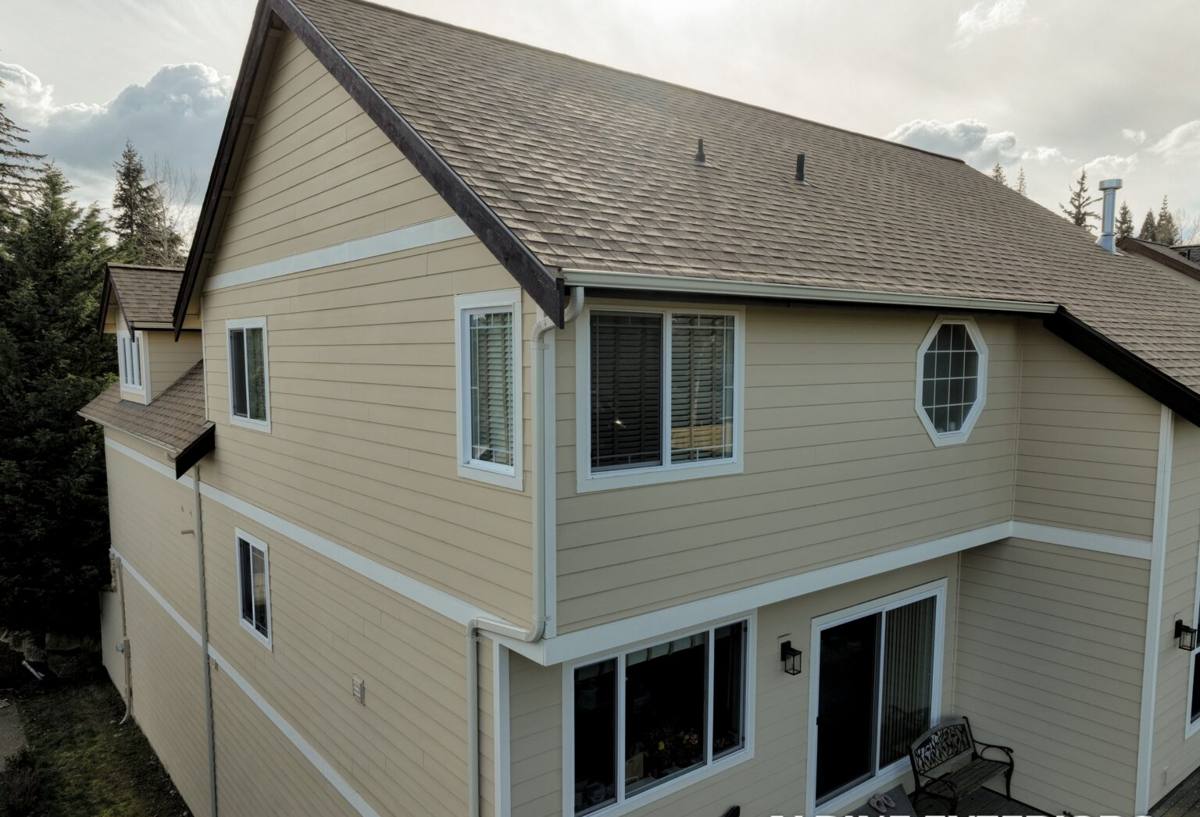
Why Sudden Valley's Climate Is Hard on Shingle Roofs
Salt Air and Driving Rain
Homes in and around Bellingham sit close enough to the Sound and connected waterways that airborne salt is a real factor, particularly on exposed metal roofing components — flashing, vent caps, gutter hardware, and fasteners. Salt-laden air speeds up corrosion on lower-grade metal, which is why flashing and fastener quality matter more here than in an inland climate. Add in driving rain that comes sideways during winter storms, and any weak point in a roof's flashing or underlayment system gets tested repeatedly, not just occasionally.
The Long Moss Season
Sudden Valley's tree cover and lake-adjacent humidity create ideal conditions for moss growth on north-facing and shaded slopes — which describes a lot of roof area in this neighborhood. Moss isn't just a cosmetic issue. It holds moisture against the shingle surface long after rain has stopped, which accelerates granule loss, promotes rot in the decking underneath, and can work its way under shingle tabs and lift them. In our experience, moss-related shingle failure is one of the most common reasons we get called out to Sudden Valley roofs that are otherwise not that old.
Shade, Slow Drying, and Algae Staining
Roofs that stay shaded for long stretches of the day simply don't dry out between rain events the way a sun-exposed roof does. That slower drying cycle contributes to both moss and the dark algae streaking common on older shingle roofs in wooded neighborhoods. Neither is dangerous on its own, but both are signs of a roof surface that's staying wet longer than it should.
What a Correctly Installed Shingle Roof Looks Like Here
A shingle roof built for Sudden Valley's conditions isn't fundamentally different in materials from one built anywhere else — it's different in the details that don't show up in a quick visual estimate.
- Ice-and-water shield at vulnerable points: eaves, valleys, and around penetrations, not just where code minimums require it.
- Quality synthetic underlayment across the full deck, as a real second layer of protection, not a formality under the shingles.
- Corrosion-resistant flashing and fasteners around chimneys, skylights, and wall intersections, sized and lapped correctly for our wind-driven rain.
- Balanced ventilation — intake at the eaves, exhaust at the ridge — so the attic isn't trapping moisture that later shows up as rot or premature shingle aging from underneath.
- Proper nailing pattern and shingle exposure per manufacturer spec, since gun pressure and placement errors are a leading cause of shingles blowing off in a windstorm, even on newer roofs.
- Valley and step flashing done as metal-and-shingle systems, not shingle-only "closed cut" valleys that tend to fail sooner under heavy, sustained rainfall.
None of this is exotic. It's standard trade practice applied without shortcuts — but shortcuts are exactly what tends to get taken when a crew is used to drier climates or is moving fast through a high-volume schedule.
Our Process for a Sudden Valley Roofing Project
1. On-Roof Inspection, Not a Guess From the Ground
We get on the roof (weather permitting) to look at deck condition, existing flashing, ventilation, and moss or algae patterns before we quote anything. A roof that looks fine from the driveway can have soft decking or failed flashing that only shows up up close.
2. A Scope You Can Actually Read
We write up what we found, what we recommend, and why — including whether this is a full replacement, a targeted repair, or a maintenance job like moss treatment and gutter clearing. If a repair is the honest answer instead of a full re-roof, we say so.
3. Tear-Off and Deck Check
On a full replacement, we remove old roofing down to the deck and check for soft or delaminated sheathing before anything new goes down. Covering rot with new shingles just hides the problem for the next owner or the next storm.
4. Underlayment, Flashing, and Shingle Installation
We install underlayment and flashing to the standard described above, then the shingle field, following manufacturer nailing and exposure specs to keep the warranty valid and the roof wind-rated as intended.
5. Cleanup and Walkthrough
We clear job-site debris, including a magnetic sweep for stray nails, and walk the finished roof with you so you know what was done and what maintenance, if any, to expect going forward.
Shingle Options and Cost Factors
Most Sudden Valley homes are well served by standard three-tab or architectural (dimensional) asphalt shingles. The right choice depends less on brand and more on the factors below.
| Factor | What It Affects | Why It Matters in Sudden Valley |
|---|---|---|
| Shingle type (3-tab vs. architectural) | Upfront cost, wind rating, appearance | Architectural shingles generally handle driving rain and wind better and shed water more effectively on shaded slopes |
| Roof pitch and complexity | Labor time, waste factor | Steeper or multi-valley roofs need more flashing detail, which is exactly where local rain finds weak points |
| Number of layers to remove | Tear-off time, disposal cost | Older homes with layered roofing often have hidden deck damage under a moss-heavy top layer |
| Ventilation upgrades needed | Attic moisture control | Poor ventilation is a common contributor to underside rot in humid, shaded lake-adjacent lots |
| Flashing and decking repairs | Longevity of the whole system | Salt-air corrosion and moss-trapped moisture are the two most common causes of hidden damage here |
We're not going to publish a per-square-foot number that means nothing until we've actually seen your roof — pitch, access, layers, and deck condition swing the cost too much for a generic figure to be honest. What we can tell you upfront is the range of factors above, and we'll give you a firm, written number after inspection.
Moss and Algae: Prevention Beats Reaction
Given how much of the moss problem in Sudden Valley comes down to shade and moisture retention, prevention is more cost-effective than letting it run and repairing the damage later.
- Keep gutters and valleys clear so water isn't pooling against shingle edges.
- Have overhanging branches trimmed back where practical to reduce shade and debris buildup.
- Use zinc or copper control strips near the ridge on new installations — they release trace metal ions with rain runoff that inhibit moss regrowth over time.
- Schedule periodic moss removal using proper technique (soft-washing or hand removal), not pressure washing, which strips protective granules and shortens shingle life.
- Have a roof checked after any major windstorm, since lifted or cracked shingles are easy fixes early and expensive fixes once water gets underneath.
Signs Your Sudden Valley Roof Needs Attention
- Granules collecting in gutters or at downspout outlets, a sign of accelerating shingle wear.
- Dark streaking or thick moss mats, especially on north-facing slopes.
- Curling, cracking, or missing shingle tabs after a windy winter storm.
- Daylight or water stains visible in the attic near the roof deck.
- Soft or spongy spots underfoot on the roof surface (leave this check to a professional).
- Rusting or visibly corroded flashing around chimneys, vents, or skylights.
Why Hire a Crew That Already Works Sudden Valley
Roofing crews that mostly work drier, less wooded parts of the country — or even drier parts of Washington east of the Cascades — don't always default to the flashing, ventilation, and moss-prevention details that a lake-adjacent, tree-shaded neighborhood like Sudden Valley actually needs. That's not a knock on their general skill; it's a mismatch between their normal working conditions and yours. A crew that regularly works Bellingham and Whatcom County roofs already knows which slopes on a given lot tend to hold moss, how much flashing detail the local rain demands, and how HOA or access considerations in a community like Sudden Valley typically play out on a job site.
We'd also encourage you to vet any roofing contractor you're considering, us included: confirm current Washington state contractor licensing, ask for proof of liability insurance, and get the scope of work in writing before anyone starts. A straight answer to those questions is a good early signal of how the rest of the job will go.
Ready for a Straight Answer on Your Roof?
If your Sudden Valley roof is showing moss, aging shingles, or storm damage — or you just want an honest read on how much life is left in it — we're happy to take a look. Reach out for a free, no-pressure estimate using the form below, and we'll give you a clear picture of what your roof actually needs.