 Bellingham
 Siding Built for Barkley's Weather, Not Just Its Curb Appeal
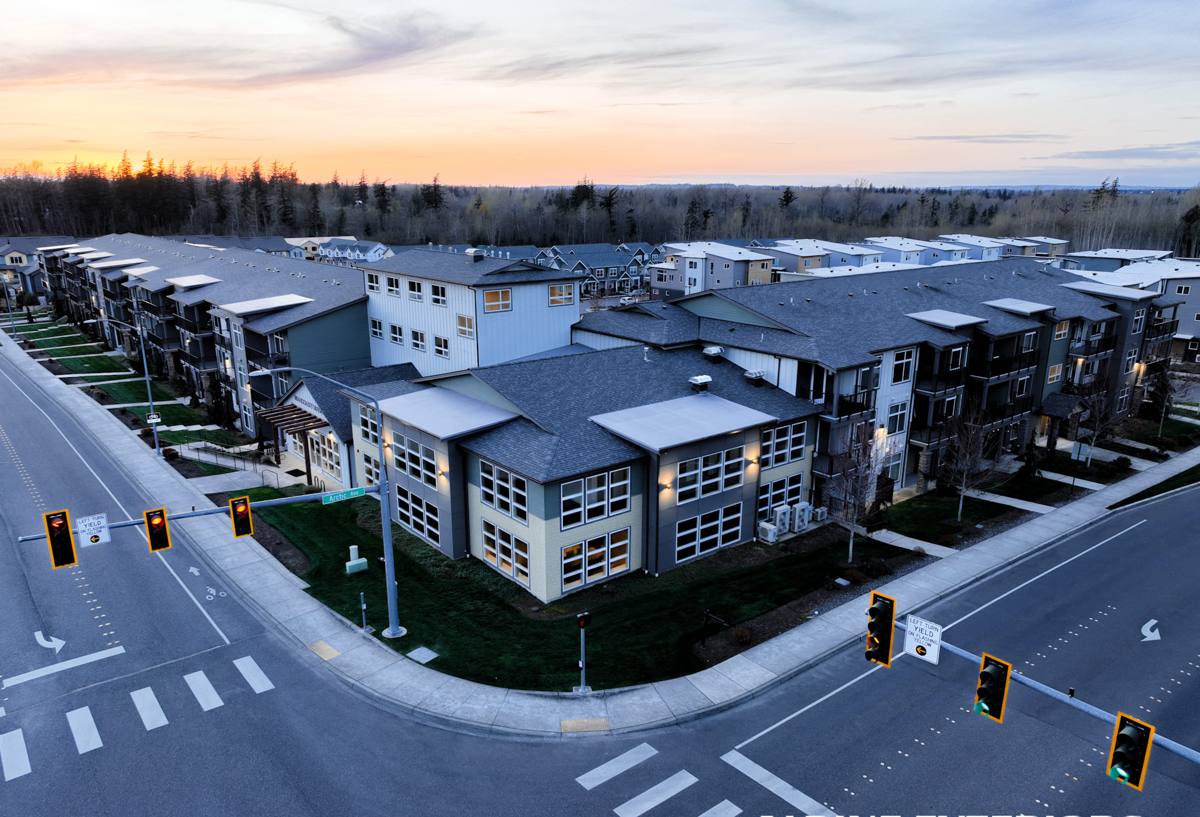
Barkley sits close enough to Bellingham Bay and the surrounding wetlands that homes here deal with a specific combination of punishment: salt-tinged air drifting in off the water, long stretches of driving rain through fall and winter, and the shaded, damp conditions that let moss and algae get a foothold on north- and west-facing walls. None of that is unusual for Whatcom County. But it does mean siding decisions that work fine in a drier inland climate can fall short here within a decade. We install James Hardie fiber cement siding exclusively, and on Barkley homes specifically, that choice comes down to how the material handles moisture, salt exposure, and biological growth over the long haul — not just how it looks the day it goes up.
What Barkley's Microclimate Actually Does to Siding
Every material reacts differently to the mix of conditions common in this part of Bellingham. Understanding the mechanism matters more than a generic "wet climate" warning.
Salt Air and Moisture Cycling
Proximity to the bay means airborne salt settles on exterior surfaces, especially on the windward sides of a house. Combined with near-constant humidity, this accelerates corrosion of exposed fasteners and can degrade paint films faster than in drier regions. Fiber cement itself doesn't corrode, but every siding job is only as good as the fasteners, flashing, and finish protecting it.
Driving Rain and Wind-Driven Water
Bellingham's rain rarely falls straight down. Wind off the water pushes it sideways into wall assemblies, which is why lap joints, butt joints, and penetrations (hose bibs, light fixtures, vents) are where most water intrusion problems start. A siding product that resists water absorption is only half the equation — the installation detailing at every joint is the other half.
Moss and Algae in Shaded, Damp Zones
Mature tree cover in and around Barkley keeps some wall sections shaded most of the day. Shade plus moisture plus organic debris (needles, leaves, pollen) is exactly what moss and algae need to establish. Once organic growth takes hold on a porous or absorbent surface, it holds moisture against the substrate and speeds up whatever decay process is already underway.
Why We Only Install James Hardie Here
James Hardie fiber cement is engineered specifically to resist the failure modes above. It's non-combustible, dimensionally stable in wet-dry cycling, and doesn't provide the same food source or moisture-retention surface that wood-based or wood-adjacent products do. Hardie's HZ5 product line is engineered for cold, wet climate zones, which fits Whatcom County's weather pattern better than a general-purpose HZ10 product built for hot, humid Southern exposure. The factory-applied ColorPlus finish also matters more here than in drier markets: it's baked on under controlled conditions rather than field-applied, so it holds up better against the repeated wet-dry cycling and UV exposure this area sees across the year.
We don't install LP SmartSide, vinyl, Cemplank, Allura, primed spruce, or cedar. That's not a knock on every homeowner who has one of those products on their house — plenty of them perform adequately with regular maintenance. It's that after years of doing this work in this specific climate, we've standardized on the one product system that consistently holds up to salt air, driving rain, and moss pressure with the least amount of homeowner upkeep and the strongest warranty backing it.
What a Correct Hardie Install Actually Involves
The material is only part of the job. A correct installation in a climate like Barkley's requires disciplined water management at every step:
- Weather-resistive barrier installed and lapped correctly, with all seams sealed
- Rainscreen or drainage gap where conditions call for it, so incidental moisture behind the siding can drain and dry instead of sitting against the wall
- Flashing at every horizontal joint, window head, and penetration — not caulk used as a substitute for flashing
- Correct fastener type, spacing, and embedment depth per Hardie's published installation specs
- Proper clearance at grade, decks, and roof lines so siding never sits in standing water or snow
- Field-cut edges primed and sealed before installation, since factory ColorPlus protection doesn't extend to a fresh cut
Skipping any one of these doesn't necessarily cause a visible problem right away. It shows up years later as trapped moisture, paint failure, or rot in the sheathing behind the siding — which is a far more expensive repair than doing the detailing correctly the first time.
Our Process on a Barkley Job
1. Assessment and Exposure Mapping
We walk the property and identify which walls take the most wind-driven rain, which stay shaded and prone to moss, and where existing moisture damage might already be hiding behind the current siding. This shapes decisions about drainage detailing and flashing priorities before a single board goes up.
2. Tear-Off and Substrate Check
Once the old siding comes off, we inspect the sheathing and framing underneath. Any rot or water damage gets addressed before new siding goes on — covering over an existing moisture problem just hides it, it doesn't fix it.
3. Water Management Layer
Weather barrier, flashing, and drainage gap go in according to spec, with extra attention at the joints and penetrations most exposed to this area's wind-driven rain pattern.
4. Hardie Installation
Boards, fasteners, and joints are installed to Hardie's published specifications, matched to the HZ5 climate zone requirements for this region.
5. Final Walkthrough
We review the finished work with the homeowner, including basic care guidance — what to expect from the ColorPlus finish, how to handle routine cleaning, and what (if anything) needs periodic attention.
Why a Crew That Already Works Barkley Matters
Bellingham's neighborhoods aren't uniform in exposure. A crew that has worked Barkley specifically already knows which streets sit in more shade, which lots catch more wind off the bay, and where moss pressure tends to be worse. That local pattern recognition shapes real decisions on the job — where to add extra flashing attention, which walls need a closer look at the drainage gap, where existing moss growth signals a deeper moisture issue worth checking before closing up the wall. A crew installing here for the first time is starting from zero on all of that. A crew that already knows Whatcom County's weather isn't guessing.
Comparing Siding Approaches for This Climate
| Factor | James Hardie Fiber Cement | Wood-Based / Vinyl Alternatives |
|---|---|---|
| Moisture absorption | Low; engineered for wet-dry cycling | Higher (wood) or prone to trapping moisture behind panel (vinyl) |
| Moss/algae resistance | Non-organic surface, less hospitable to growth | Wood provides an organic food source; growth still occurs on any surface without maintenance |
| Finish durability in salt air | Factory-baked ColorPlus finish, engineered for UV and moisture cycling | Field-applied paint (wood) degrades faster; vinyl can fade and become brittle |
| Fire resistance | Non-combustible | Combustible (wood); vinyl can melt/deform under heat |
| Long-term maintenance | Periodic cleaning, repaint on much longer cycle | Wood needs more frequent repainting/sealing; vinyl needs less but degrades in appearance over time |
What to Check Before Hiring Anyone for This Work
- Are they licensed and insured to do exterior siding work in Washington?
- Will they show you the flashing and drainage detailing plan before starting, not just the color and board style?
- Do they inspect and address sheathing condition during tear-off, or just cover over what's there?
- Can they explain why they use the products they use — and are they willing to say why they don't use others?
- Does the estimate distinguish material cost from labor and detailing work, so you understand where the money goes?
What Drives Cost on a Barkley Siding Job
Every home is different, but a few factors consistently move the price on jobs in this area: the amount of existing damage found once old siding comes off, the complexity of the roofline and number of penetrations that need flashing, the height and accessibility of the walls, and the amount of trim and detail work involved. We give honest, itemized estimates rather than a single flat number, because a house with hidden moisture damage behind the old siding costs more to do right than one that doesn't — and you deserve to know which situation you're in before work starts, not after.
If you're weighing a siding project in Barkley, we're glad to come take a look and walk you through what your home specifically needs — no pressure, no obligation. Fill out the form below and we'll set up a time to assess your home's exposure and give you a straight answer.