 Bellingham
 Why Metal Roofing Makes Sense for Birch Bay
Birch Bay sits right up against the water, and that changes what a roof has to deal with compared to a home even a few miles inland in Bellingham or elsewhere in Whatcom County. Salt-laden air, wind-driven rain coming off the Strait, and a long wet season that feeds moss and algae growth all put extra stress on roofing materials. A roof here needs to shed water fast, resist corrosion, and hold up under wind loads that push rain sideways under poorly sealed edges.
Metal roofing, installed correctly, handles that combination better than most other roofing types available to homeowners today. It sheds water quickly because of its slick surface and steep-shed panel profiles, it doesn't absorb moisture the way organic shingle materials can, and with the right metal and coating it resists the corrosion that coastal exposure accelerates. That said, "metal roofing" is not one product — the metal type, coating, gauge, and installation details all matter, and getting any of them wrong in a coastal environment shows up faster here than it would on an inland roof.
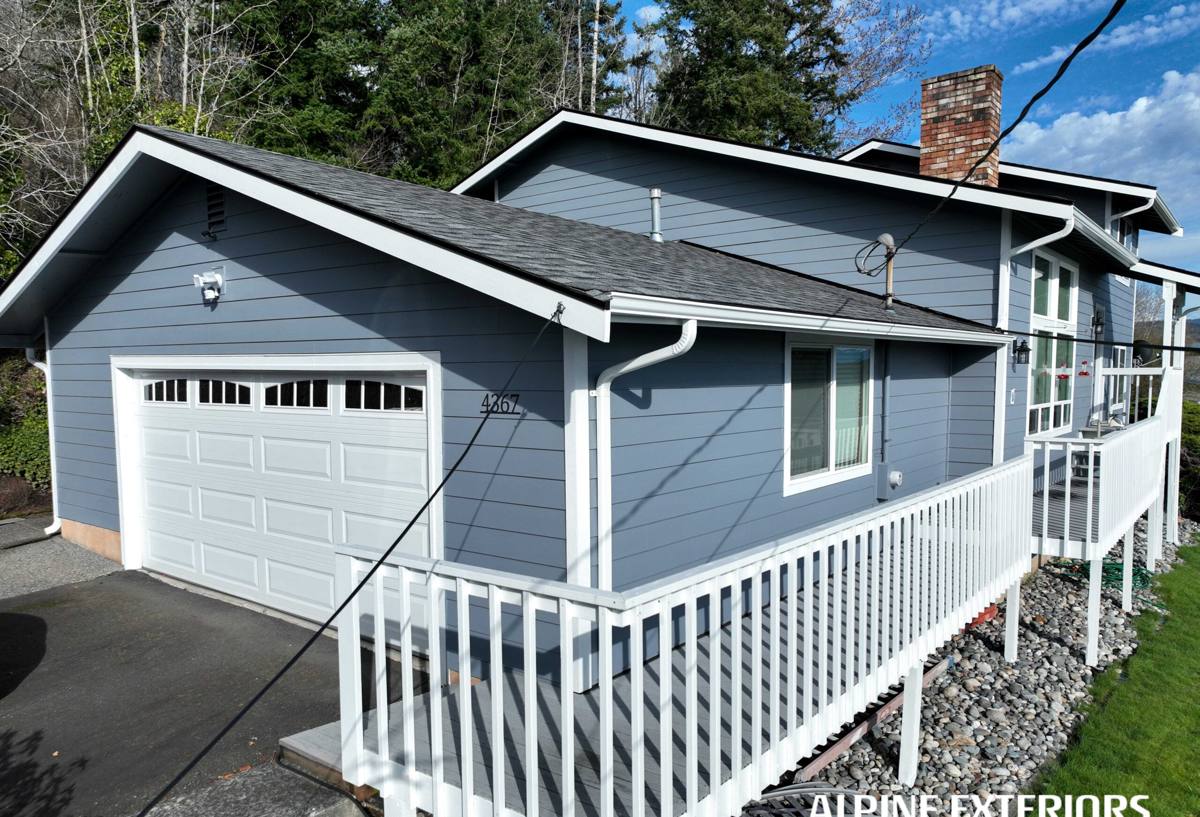
What Salt Air and Coastal Exposure Actually Do to a Roof
Corrosion and Fastener Wear
Airborne salt is corrosive to raw or poorly coated metal, and it doesn't need direct ocean spray to do damage — salt particles travel on the wind and settle on roof surfaces, fasteners, and flashing over time. Exposed fasteners are usually the first thing to show wear, since they're small, often made from a different metal than the panel itself, and rely on a rubber washer that degrades with UV and weather exposure long before the panel does.
Moss, Algae, and Trapped Moisture
Whatcom County's wet season runs long, and shaded or north-facing roof sections in Birch Bay can stay damp for weeks at a stretch. On asphalt shingles, that moisture feeds moss roots that work into the shingle mat and lift edges. Metal doesn't give moss the same foothold, but debris (needles, leaves, wind-blown organic matter) can still collect in valleys and against obstructions, holding moisture against the panel and, over years, against fasteners and cut edges where coatings are more vulnerable.
Wind-Driven Rain
Open exposure near the water means wind gusts push rain at steep angles, testing every seam, flashing detail, and penetration on a roof. A roof that performs fine in a calm inland yard can leak in Birch Bay if the underlayment, flashing laps, and panel seams weren't detailed for wind-driven water rather than just water running straight downhill.
Choosing the Right Metal for a Salt-Air Environment
Not every metal roofing product is a good fit this close to the water. The base metal and its coating matter more here than they would inland.
| Material | Salt-Air Performance | Typical Considerations |
|---|---|---|
| Bare or lightly galvanized steel | Weakest choice this close to the water | Zinc coating alone corrodes faster under salt exposure; not what we recommend for Birch Bay |
| Galvalume steel (zinc-aluminum coated) | Good, with a quality paint finish | Widely used, cost-effective; performance depends heavily on the paint system and cut-edge treatment |
| Aluminum | Strongest natural resistance to salt corrosion | Doesn't rust since it has no iron content; costs more than coated steel; slightly softer material |
| Stone-coated steel | Good if the coating and edges are properly sealed | Heavier system, adds visual texture, needs correct flashing at seams since it's a shingle-profile panel |
For most Birch Bay homes we lean toward galvalume steel with a premium paint finish (such as a PVDF/Kynar-type coating) for the balance of cost and durability, or aluminum for homes with the most direct exposure to wind and salt spray. We'll walk through the trade-offs for your specific site rather than defaulting to one product for every job.
Standing Seam vs. Exposed-Fastener Panels
Homeowners often ask whether to go with standing seam or a ribbed, exposed-fastener panel. Both are legitimate metal roofing systems, but they behave differently in a coastal setting.
Standing Seam
Panels are joined with concealed clips and a mechanically seamed or snap-lock joint, with no exposed fasteners penetrating the panel face. That means no exposed screw heads and washers for salt air and UV to degrade over time, and better performance under wind-driven rain because there's no fastener penetration for water to find under pressure. It costs more than exposed-fastener panel, but for a home with direct exposure to Birch Bay's wind and salt, it's typically the more durable long-term choice.
Exposed-Fastener Panel
A more affordable option, commonly used on garages, shops, and secondary structures, or on homes where budget is the driving factor. It performs fine when installed correctly and maintained, but the exposed screws and washers are the first maintenance point — they eventually need inspection and occasional replacement, more so here than in a drier inland climate.
What a Correct Metal Roof Installation Actually Involves
The panel itself is only part of the system. A metal roof is only as good as everything underneath and around it.
Underlayment and Deck Prep
We check the roof deck for soft spots or rot before anything goes down, and use a synthetic or self-adhered underlayment suited to metal roofing — not a generic felt that wasn't designed for the temperature swings and condensation behavior of a metal panel.
Fastening and Seams
Fastener spacing, panel overlap, and seam type all affect how well a roof handles wind uplift and driving rain. This is where corners get cut on rushed jobs, and it's exactly the detail that determines whether a roof holds up through a windy winter on the water.
Flashing and Penetrations
Valleys, chimneys, vents, and wall transitions are where most roof leaks actually start, metal or otherwise. Flashing needs to be sized, lapped, and sealed correctly for the panel profile being used — not just caulked as an afterthought.
Ventilation
Proper attic or roof-deck ventilation prevents condensation from forming on the underside of the metal, which matters in a climate where humidity stays high for long stretches of the year.
Moss, Debris, and Ongoing Maintenance in a Wet Climate
A well-installed metal roof needs far less maintenance than shingles, but "far less" isn't "none." In Whatcom County's wet season, a bit of routine attention goes a long way:
- Clear needles and leaf debris from valleys and roof-to-wall intersections a couple of times a year, especially if there are conifers nearby
- Check that gutters and downspouts are flowing freely so water isn't backing up against roof edges
- Look at exposed fasteners (if that's your panel type) every year or two for loosening or washer wear
- Watch for any streaking or discoloration near flashing, which can signal a sealant that needs attention before it becomes a leak
- After any major windstorm, a quick visual check for lifted panel edges or dislodged flashing is worth the ten minutes
None of this is heavy work, but skipping it is how small issues on any roof — metal or otherwise — turn into deck damage over a few seasons.
How Our Process Works
We keep the process straightforward and don't push a single product on every roof we look at.
1. On-Site Inspection
We look at your existing roof, deck condition, exposure to wind and salt, roof slope, and any problem areas (valleys, chimneys, low-slope sections) before recommending a system.
2. Material Selection
We walk through panel type, metal, and coating options honestly, including cost differences, so you're choosing based on what fits your home and budget — not just what's cheapest to install.
3. Installation
Deck repair as needed, correct underlayment, proper fastening and seaming for the panel type, and flashing detailed for wind-driven rain rather than just gravity drainage.
4. Walkthrough and Cleanup
We review the finished roof with you, including care and maintenance specific to the system installed, and clean the site thoroughly before we leave.
Why Hiring a Crew That Already Works in Birch Bay Matters
A roofing crew that mostly works inland, away from direct coastal exposure, doesn't always think about salt-air corrosion, wind-driven rain angles, or the fastener wear that shows up faster near the water. Those are details you learn by working roofs in this specific environment repeatedly, not from a general roofing background alone. Local experience in and around Bellingham and the Whatcom County coastline means we're already familiar with the exposure conditions in Birch Bay, the moisture patterns of the wet season, and the material choices that actually hold up here rather than just on paper.
It also means we're a known, reachable crew if a question comes up two or five years down the road — not a name from an out-of-area lead generation service that isn't easy to reach for a warranty question or a maintenance visit.
Get a Free, No-Pressure Estimate
If you're weighing a metal roof for a Birch Bay home — whether it's a full replacement, a re-roof over an aging shingle system, or a new build — we're glad to come take a look and walk you through honest options for your specific site and exposure. Use the form below to request a free estimate; there's no pressure and no obligation.