 Bellingham
 Why Windows Take a Beating in Birch Bay
Birch Bay sits right on the water, and that location cuts both ways. The views are part of why people live there, but that same exposure means homes take on weather that inland Whatcom County properties rarely see in the same intensity. Wind off the bay carries salt, and salt is corrosive to metal hardware, fasteners, and unprotected aluminum components. Driving rain — rain pushed sideways by wind rather than falling straight down — finds every gap in flashing and trim that a calmer climate would never expose. And like most of the Pacific Northwest coast, Birch Bay gets a long stretch of damp, low-sun months every year where moss, algae, and general dampness sit on exterior surfaces for weeks at a time.
None of this means windows are doomed. It means the installation has to account for conditions a generic install in a drier or more sheltered part of the county wouldn't need to worry about as much. A window that's a fine fit for a sheltered lot a few miles inland can underperform on a waterfront-facing wall in Birch Bay if it's not sealed and flashed with that exposure in mind.
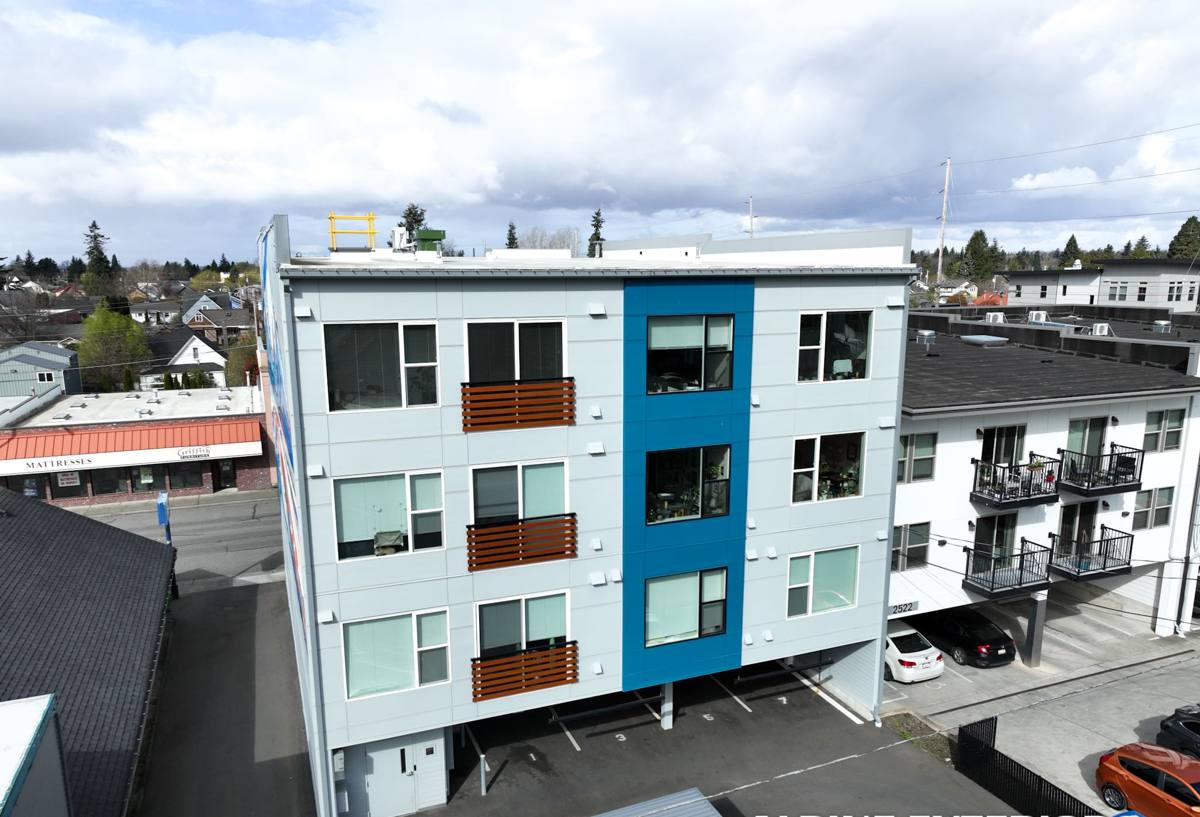
Signs Your Windows Are Losing the Fight
Coastal wear on windows doesn't always show up as an obvious leak. More often it's a slow accumulation of small problems. Worth checking for:
- Fogging or a hazy film between the panes of double-pane glass — a sign the seal has failed and the gas fill has escaped
- Sticking, swelling, or difficulty locking sashes, especially after wet weather
- Soft or discolored wood trim around the frame, or bubbling paint at the sill
- Visible corrosion or white powdery buildup on aluminum frames or hardware
- A cold draft near the frame even when the window is fully latched
- Moss or dark streaking building up on the sill or exterior casing faster than on the rest of the siding
- Condensation forming on the inside of the glass regularly during colder months
Any one of these on its own might just mean the window needs maintenance. Several at once, or on windows over 15-20 years old, usually points to a replacement conversation rather than another repair.
What a Correct Window Replacement Actually Involves
Removing the old window without damaging what's around it
The opening under an old window is often where problems have been hiding for years — soft framing, old caulk that's failed, or insulation that's absorbed moisture. A careful crew doesn't just pull the sash and drop in a new unit; they check the condition of the rough opening and deal with anything compromised before anything new goes in. Skipping this step is one of the most common ways a replacement job looks fine for a year or two and then starts leaking anyway.
Flashing and the moisture barrier
This is the part of the job that matters most in a place like Birch Bay and is the least visible once it's done. Proper flashing directs water that gets behind the siding or trim back out and away from the wall assembly instead of letting it pool at the sill or track down into the wall cavity. On homes facing open water or prevailing wind, this detail deserves extra attention — it's the difference between a window that sheds wind-driven rain and one that slowly lets it in over several winters.
Sealing, shimming, and insulation
A new window needs to be shimmed level and square, then sealed around the full perimeter with the right materials — not just a bead of caulk on the outside. Gaps around the frame should be filled with a low-expansion foam or backer rod and sealant, not stuffed with loose insulation that can settle and leave voids. Done right, this step is also where a lot of a window's real-world energy performance comes from, separate from whatever the glass itself is rated for.
Choosing the Right Frame Material for a Salt Air Climate
There's no single "best" frame material for every home — it depends on budget, how exposed the wall is, and how much upkeep you want to take on. Here's how the common options hold up under Birch Bay's conditions specifically:
| Frame Material | Salt Air / Corrosion Resistance | Maintenance | Notes for This Climate |
|---|---|---|---|
| Vinyl | Good — doesn't corrode | Low, occasional cleaning | Solid all-around choice for wind and moisture exposure; quality varies a lot between manufacturers |
| Fiberglass | Very good — stable, doesn't corrode | Low | Handles temperature swings and moisture well; costs more up front |
| Wood / Wood-clad | Fair — cladding protects the wood if intact | Higher — paint, caulk, and clad seams need regular checks | Can look great but is less forgiving on a wall that takes direct weather |
| Aluminum | Poor without a marine-grade finish | Moderate | We're cautious about uncoated aluminum this close to the water — it's the material most likely to show corrosion first |
Our general standard on a Birch Bay job leans toward vinyl or fiberglass for anything facing the water directly, simply because they hold up with the least fuss. That's not a knock on wood-clad or aluminum windows — they can work fine on a sheltered elevation — it's about matching the material to how much weather that specific wall actually takes.
Glass Packages Worth Considering
The frame gets most of the attention, but the glass package affects comfort and condensation just as much, especially in a damp climate. A few things worth understanding before you decide:
- Double-pane with a low-E coating is the standard baseline for this region and performs well for most homes.
- Triple-pane adds a real step up in insulation and sound dampening, which some Birch Bay homeowners find worthwhile on the side of the house that takes the most wind — though it costs more and adds weight to the sash.
- Argon or krypton gas fill between panes improves insulating performance, but that benefit disappears if the seal fails, which is why seal quality matters more than the gas choice itself.
- Condensation resistance is worth asking about directly if you've had fogging or interior condensation problems — it's a specific rating, not just a byproduct of "good" glass.
Our Process, Start to Finish
- On-site assessment. We look at each window's exposure, the condition of the existing framing, and what's actually causing the problem before recommending anything.
- Product selection. We walk through frame and glass options based on that specific wall's exposure, not a one-size-fits-all recommendation.
- Prep and protection. Interior and exterior work areas are protected before any removal starts.
- Careful removal. Old units come out without unnecessary damage to surrounding siding or trim, and we check the opening underneath.
- Installation, flashing, and sealing. New windows are set, shimmed, flashed, and sealed to shed water rather than trap it.
- Cleanup and walkthrough. We clean up the work area and walk through the finished windows with you, including how they operate and what to expect from the warranty.
Cost Factors to Expect
We don't publish flat per-window pricing because the honest answer is "it depends," but these are the factors that actually move the number:
| Factor | Why It Matters |
|---|---|
| Frame material | Vinyl is typically the most budget-friendly; fiberglass and wood-clad cost more |
| Window size and style | Larger openings, custom shapes, and operable styles (casement, sliders) vary in price |
| Glass package | Triple-pane, upgraded coatings, and specialty glass add cost over standard double-pane |
| Condition of the opening | Rot or damage found during removal adds repair work before the new window goes in |
| Number of windows | Doing a whole house at once is usually more efficient per-window than one at a time |
| Access and elevation | Upper-floor or hard-to-reach windows take more time and equipment |
A broad-strokes range for a standard mid-size vinyl replacement window, fully installed, tends to run from roughly one to two thousand dollars per window, with fiberglass, larger units, or upgraded glass pushing higher. The only way to get a real number is a walkthrough of your specific windows.
Why Local Experience in Birch Bay Matters
A crew that regularly works Birch Bay and the surrounding Whatcom County coastline has already seen how these homes weather over time — which elevations take the worst of the wind and rain, where moss builds up fastest, and which older installation methods tend to fail first in this specific environment. That's different from general window installation experience. It means fewer surprises during the job and a better shot at flashing and sealing details that actually hold up through a few winters, not just through the first inspection.
It also means familiarity with permitting and inspection expectations in Whatcom County, and a realistic sense of timelines given how weather windows can shrink during the wetter months. None of that replaces a careful, honest assessment of your specific home — but it does mean less guesswork.
If your windows are showing any of the signs above, or you're just planning ahead for a home that faces Birch Bay's weather head-on, we're happy to take a look and give you a straightforward, no-pressure estimate. Use the form below to get started.