 Bellingham
 Building a Deck That Actually Holds Up in Birchwood
Birchwood homeowners know their yards get used differently than a lot of drier climates allow — decks here have to earn their keep through long stretches of rain, mossy shade, and salt-tinged air rolling in off the water. A deck that looks great the day it's finished but wasn't built for this environment will show its age fast: soft boards, rusted fasteners, slick green surfaces by late fall, and joints that never quite dry out. We build custom decks for Birchwood the way this climate actually demands, not the way a generic build sheet says to.
This page focuses specifically on custom deck construction for homes in Birchwood and the surrounding Bellingham area, and what separates a deck that lasts fifteen-plus years from one that needs major repair inside five.
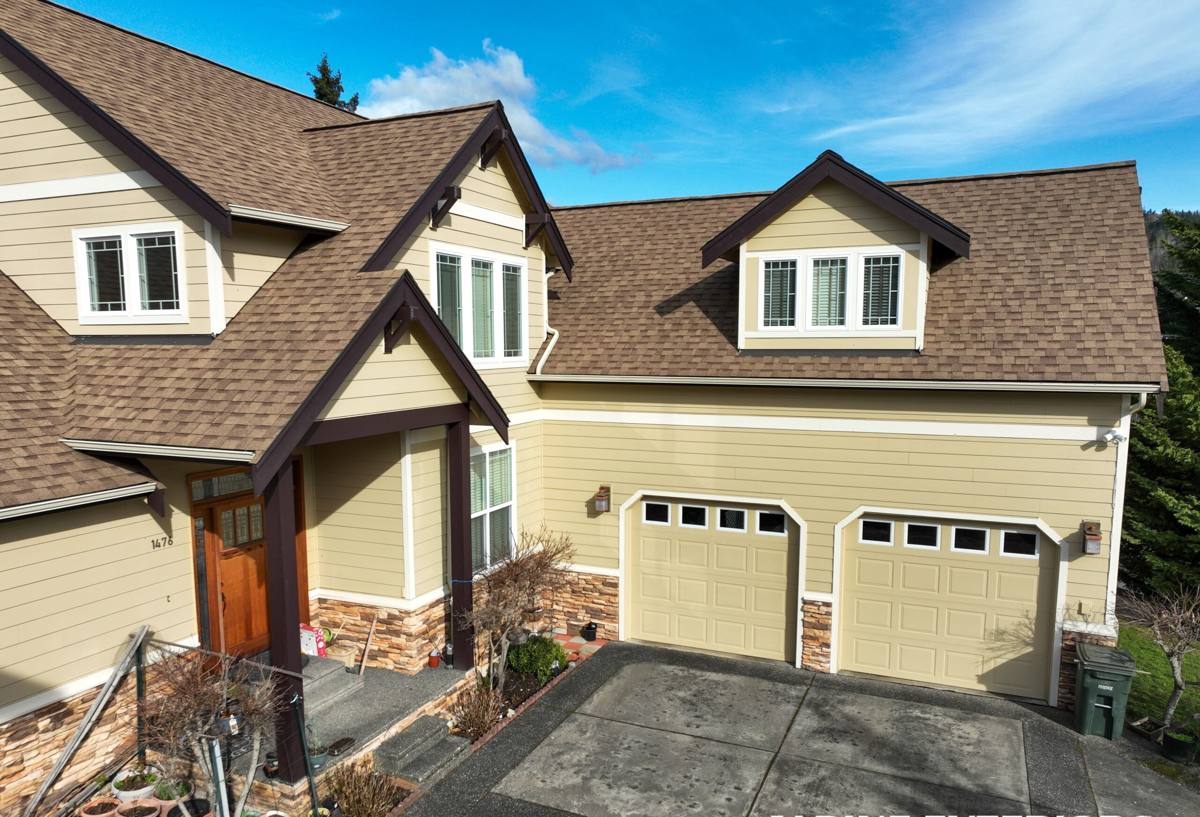
What Bellingham's Climate Does to a Deck
Salt Air and Corrosion
Whatcom County's proximity to the water means many Bellingham neighborhoods, Birchwood included, get a steady dose of salt-laden moisture in the air. That salt exposure accelerates corrosion on anything metal — fasteners, joist hangers, post bases, railing hardware. Standard hardware store screws and hangers that might last elsewhere can start rusting and staining within a couple of seasons here.
Driving Rain
Rain in this region rarely falls straight down. Wind-driven rain gets pushed sideways into ledger boards, under railing posts, and into any gap where flashing or sealant was skipped. Over time, that's how rot starts — not from standing water on the surface, but from moisture working its way into places it was never supposed to reach.
Moss Season
Shaded decks, north-facing decks, and decks tucked under mature trees — common in established Birchwood yards — deal with a moss and algae season that can stretch from fall through spring. Beyond looking unkempt, moss holds moisture against the decking surface and turns boards slick and dangerous underfoot.
What a Correctly Built Deck Needs to Get Right
A custom deck built for this climate isn't just about picking a nice-looking board. The details that don't show up in a walkthrough are usually the ones that determine whether the deck is still solid in ten years.
- Ledger flashing: The board that attaches the deck to the house needs proper metal flashing and a water-resistant barrier behind it — this is the single most common failure point on decks we're asked to repair.
- Corrosion-resistant fasteners and hardware: Structural screws, joist hangers, and post bases rated for coastal or wet-climate exposure, not standard interior-grade hardware.
- Board gapping for drainage: Correct spacing between deck boards lets water and debris pass through instead of pooling and feeding rot or moss growth.
- Footings below frost depth: Whatcom County code sets minimum footing depths for a reason — shallow footings shift with freeze-thaw cycles and seasonal ground saturation.
- Under-deck airflow: Enough clearance and ventilation beneath the structure so the framing can actually dry out between rain events instead of staying damp for weeks.
Choosing Decking Material for a Birchwood Yard
There's no single "best" decking material for every yard — it depends on how much sun the deck gets, how much maintenance the homeowner wants to do, and budget. Here's how the common options actually perform in this specific climate.
| Material | Upfront Cost | Maintenance | How It Handles Local Climate |
|---|---|---|---|
| Pressure-treated lumber | Lowest | Annual cleaning, re-staining every 2-3 years | Solid if maintained; skipped maintenance leads to graying, splintering, and moss buildup |
| Cedar | Moderate | Regular cleaning, periodic oiling or sealing | Naturally moisture-resistant and handles rain well, but needs upkeep to resist moss staining in shaded spots |
| Composite decking | Higher | Occasional washing, no staining or sealing | Very good moisture resistance; still needs cleaning to keep moss and algae from taking hold in shade |
| PVC decking | Highest | Minimal — mostly rinsing | Excellent moisture and rot resistance; surface texture and color options vary by product line |
Composite and PVC products cost more upfront but remove a lot of the moisture-related maintenance burden that pressure-treated and cedar decks carry in a climate this wet. That said, cedar built and finished correctly still performs well for homeowners who prefer a natural wood look and don't mind the upkeep. We'll walk through the honest trade-offs for your specific yard rather than pushing one product line.
Substructure and Fasteners: Where Most Deck Failures Start
The framing underneath a deck does all the real work, and it's also where corner-cutting shows up years later as a structural problem instead of a cosmetic one. In a salt-air, high-rain climate, mismatched or undersized hardware is one of the most common causes of premature deck failure we see when repairing older decks.
A few things we treat as non-negotiable on every build:
- Matching fastener and hardware metals to avoid galvanic corrosion between dissimilar metals
- Using structural screws rated for exterior and coastal exposure, not general-purpose deck screws
- Flashing tape or joist tape on the tops of joists to keep water from soaking into end grain and screw holes
- Post bases that hold posts up off standing water rather than embedding wood directly in concrete or soil
Drainage, Airflow, and Moss Control by Design
Moss and slick surfaces aren't just a maintenance nuisance — on a deck used for daily foot traffic, a shaded, moss-prone surface becomes a real safety issue by winter. Good design reduces how much moss problem you're signing up for in the first place:
Layout Choices That Help
Board orientation, gap spacing, and where stairs and low-traffic corners land all affect how quickly water clears the surface. Decks positioned or shaped to avoid trapping standing water in corners dry out faster and grow far less moss over a season.
Surface and Finish
Some composite and PVC boards are manufactured with more texture or grip specifically to reduce slip risk when wet — worth discussing if your yard is heavily shaded or under tree cover, both common in established Birchwood lots.
Our Process for a Custom Deck Build in Birchwood
- Site visit and assessment: We look at sun exposure, drainage patterns, existing structure (if replacing a deck), and how the space will actually be used.
- Design and material selection: We walk through layout options and material trade-offs based on your budget, maintenance preference, and the specific conditions of your yard.
- Permitting: Most elevated decks in Bellingham require a building permit through the city or county, and we handle that process rather than leaving it to the homeowner.
- Construction: Footings, framing, ledger attachment and flashing, decking, and railing, built in that order with inspections at the structural stages that require them.
- Final walkthrough: We go over the finished deck together, including basic care specific to the material installed.
Permits and Code in Whatcom County
Deck permitting in Bellingham and unincorporated Whatcom County depends on the deck's height, size, and attachment to the home. Elevated decks and anything with a guardrail requirement typically need a permit and inspection; smaller ground-level decks may not. Because footing depth, ledger attachment, and guardrail specs are all code-governed, this isn't a step worth skipping even on a straightforward rebuild — it protects you if you ever sell the home and a buyer's inspector checks for permit history.
Maintenance That Actually Matters Here
Every deck, regardless of material, needs some seasonal attention in this climate. What changes is how much.
- Clear leaves, needles, and debris from between boards and off the surface before they trap moisture
- Rinse or scrub shaded areas periodically through fall and winter to keep moss from establishing
- Check railing posts and stair connections annually for movement or soft wood
- Inspect ledger flashing and the house-to-deck connection every year or two — this is the area most prone to hidden water damage
- Re-stain or reseal wood decking on the schedule the product actually requires, not just when it looks faded
- Keep gutters and downspouts near the deck clear so roof runoff isn't dumping extra water onto the structure
Why Hiring a Crew That Already Works in Birchwood Matters
A deck builder who mostly works drier inland climates will often spec the same materials and hardware they'd use anywhere else — and that's exactly how decks end up with rusted hangers and rotted ledger boards within a few years out here. Working regularly in Bellingham and Whatcom County means knowing which fasteners actually hold up against salt air, how local permit review tends to go, and how a given yard's sun and shade pattern will affect moss growth before the first board is ever installed. That local pattern-matching is the difference between a deck that needs real repair work by year five and one that's still solid at year twenty.
If you're planning a custom deck in Birchwood, we're happy to walk your property, talk through material and layout options honestly, and give you a clear, no-pressure estimate — just fill out the form below to get started.