 Bellingham
 Siding That Has to Work in Birchwood's Climate, Not Just Look Good on Day One
Birchwood sits close enough to the water and the wet Pacific weather pattern that siding here takes a different kind of beating than siding on the dry side of the state. Salt-laden air corrodes fasteners and trim metal faster than inland installs. Driving rain, pushed sideways by wind off the bay, finds every gap in flashing and caulk that a calmer climate would never expose. And Whatcom County's long, wet, low-light season keeps north- and shade-facing walls damp for weeks at a stretch — which is exactly the environment moss, algae, and mildew need to take hold. None of that is unique to one house on one street; it's a Bellingham-area reality that shapes how siding should be chosen and installed on almost any home in this part of the county.
A siding product or installation that would hold up fine in a drier climate can fail here in ways that show up slowly — soft trim, staining, bubbling paint, or rot behind the cladding that isn't visible until a repair is already underway. That's the lens we bring to every Birchwood project: not "does this look right today," but "will this still be doing its job in fifteen years of Whatcom County weather."
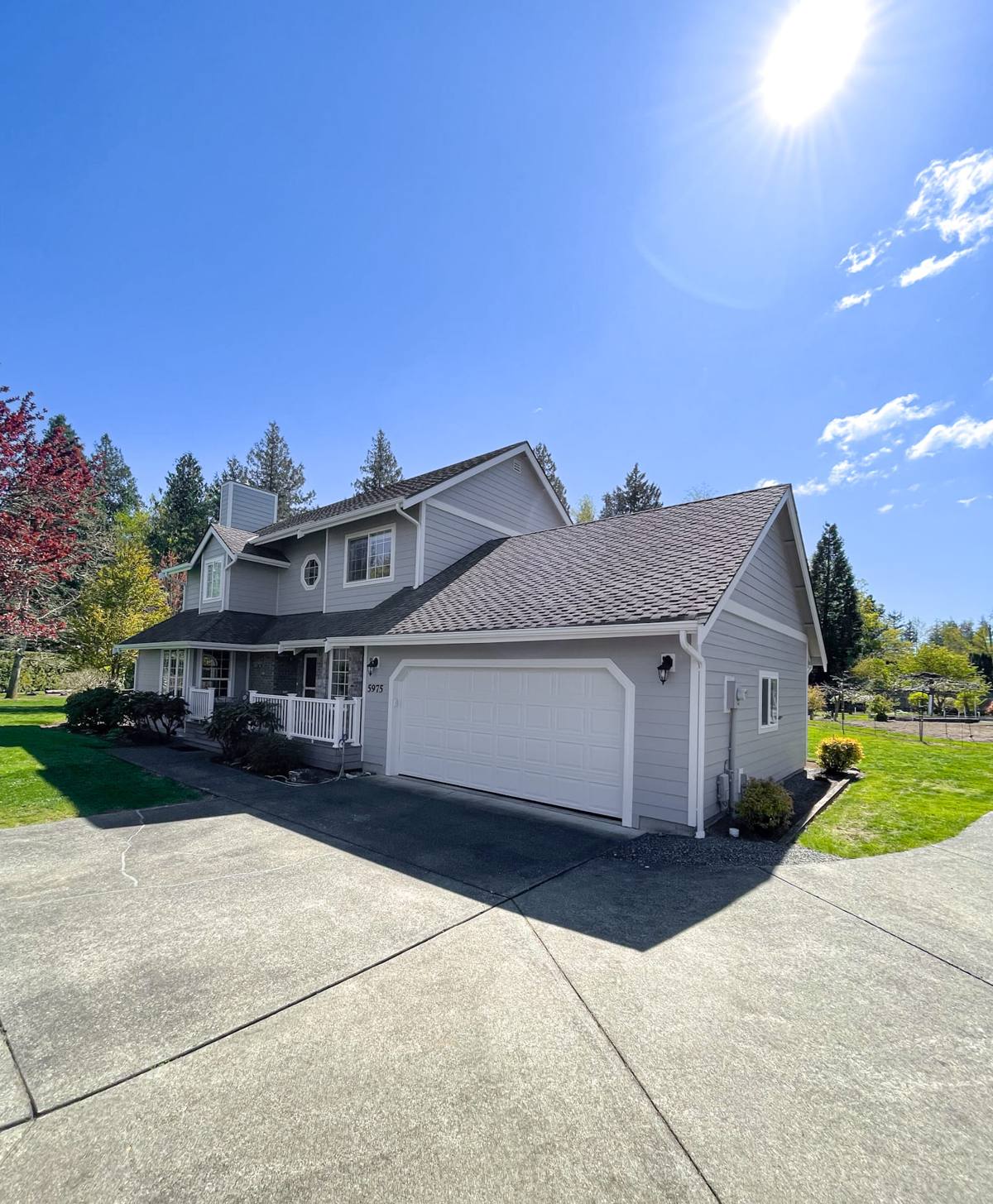
What Birchwood Homes Actually Need From Their Siding
Moisture Management First
In this climate, the siding itself is only half the system. What's behind it — the water-resistive barrier, the flashing at windows and doors, the drainage plane that lets incidental moisture escape instead of pooling — matters as much as the cladding material. A beautiful siding job over poor moisture detailing will still lead to problems here; it just takes longer to show.
Corrosion-Resistant Fasteners and Trim
Salt air in coastal and near-coastal Whatcom County neighborhoods accelerates corrosion on standard fasteners, flashing, and trim hardware. Using the wrong-grade nails or unprotected metal is a common shortcut that costs homeowners a repaint or a repair years earlier than it should.
A Surface That Resists Moss and Mildew
Given how long shaded and north-facing walls stay damp through a Bellingham winter, siding that holds moisture at its surface — through a porous finish, poor drainage, or a material that swells and cups — gives moss and mildew a foothold. The finish and the material both play a role in how much cleaning and maintenance a home needs.
Why We Install Only James Hardie Fiber Cement — Nothing Else
We don't offer vinyl, LP SmartSide, cedar, primed spruce, or other fiber cement brands as alternatives. That's a deliberate standard, not a lack of options. Each of those products has real strengths, but each also carries a trade-off — moisture sensitivity at cut edges, appearance limitations, more frequent repainting, or a shorter service life in a wet coastal climate — that we're not willing to install and then have to explain to a homeowner five or ten years later.
James Hardie fiber cement is non-combustible, engineered specifically for climate zones (their HZ5 product line is built for the kind of wet, moderate Pacific Northwest exposure Birchwood sits in), and finished with the ColorPlus factory-baked coating system rather than field-applied paint. That factory finish is a meaningful advantage in a climate where field-painted trim tends to need touch-up work sooner than manufacturers' warranties assume. Hardie also backs its products with a strong transferable warranty, which matters to homeowners who may sell within the warranty period.
We stand behind one product system because we can install it to spec, warranty it honestly, and know exactly how it performs in Whatcom County weather — rather than juggling installation methods and moisture behavior across five different materials.
What a Correct Fiber Cement Install Involves
Fiber cement siding is only as good as the install underneath it. A rushed or shortcut job with premium material still fails in this climate. Here's what we consider non-negotiable on every Birchwood project:
- Full inspection and repair of sheathing and framing before any new siding goes up — covering rot or soft wood is never an option
- A continuous water-resistive barrier installed and lapped correctly, with all seams sealed
- Properly flashed windows, doors, and penetrations, integrated with the drainage plane so water sheds outward instead of behind the cladding
- Correct fastener type, spacing, and depth per Hardie's published installation specs — not generic siding nails
- Proper clearance from siding to grade, decks, roofing, and other transitions to keep the bottom edge out of standing moisture
- Factory-cut and factory-primed edges used wherever possible, with any field cuts sealed per manufacturer requirements
- Caulking used only where Hardie specifies it — not as a substitute for proper flashing
Skipping any one of these doesn't usually cause an immediate problem. It shows up two, five, or ten winters later, which is exactly why the installation details matter more than the material choice alone.
Our Process for a Birchwood Siding Job
1. On-Site Assessment
We walk the exterior, check for hidden moisture or framing damage, and look at how the home's specific exposure — shade, prevailing wind, roofline, grade — affects the plan.
2. Tear-Off and Substrate Repair
Old siding comes off, sheathing gets inspected, and any rot or damage is repaired before anything new goes on. This is the step that gets skipped by crews trying to move fast, and it's the step that determines whether the new siding lasts.
3. Weather Barrier and Flashing
We install the water-resistive barrier and integrate flashing at every window, door, and penetration before siding goes up — the part of the job nobody sees once it's finished, but the part that determines whether the house stays dry.
4. Hardie Panel or Lap Siding Installation
Installed to Hardie's published spec for fastener type, spacing, and clearances, matched to the HZ5 product line appropriate for this climate zone.
5. Trim, Caulking, and Detail Work
Corners, trim boards, and transitions are finished with the same attention as the field siding — these are the spots most exposed to driving rain and most likely to fail first if rushed.
6. Final Walkthrough and Cleanup
We review the finished work with the homeowner and leave the site clean.
Comparing How Materials Handle Birchwood's Wet Climate
| Factor | James Hardie Fiber Cement | Vinyl | Cedar / Wood |
|---|---|---|---|
| Moisture behavior | Dimensionally stable, engineered for wet climate exposure | Can warp or gap over time, allowing water behind it | Absorbs moisture, prone to rot without diligent upkeep |
| Moss/algae resistance | Factory finish resists staining better than field-painted surfaces | Susceptible to algae streaking, especially in shade | Highly susceptible in constant damp conditions |
| Fire resistance | Non-combustible | Combustible | Combustible |
| Repainting cycle | Factory ColorPlus finish, long repaint intervals | Color molded in, but can fade and become brittle | Needs regular repainting or restaining |
| Typical service life | Multiple decades when installed to spec | Shorter, varies with UV and impact exposure | Shorter without consistent maintenance |
Maintenance Birchwood Homeowners Should Expect
Fiber cement is low-maintenance compared to wood, but "low-maintenance" doesn't mean "no maintenance," especially in this climate. Plan on periodically rinsing off pollen, road film, and early moss growth before it establishes, checking caulk lines at trim and penetrations every year or two, and keeping gutters and downspouts clear so runoff isn't sheeting down the siding face. Shaded and north-facing walls will need more frequent attention than sun-exposed sides — that's true of any siding material in Whatcom County, but Hardie's factory finish gives you more margin before minor buildup becomes a real problem.
Why a Crew That Already Works Birchwood Matters
A contractor who works this specific area regularly has already dealt with the local permitting process, understands how homes here are typically built and where they tend to have moisture issues, and knows which exposures in the neighborhood need extra attention to flashing and drainage. That's not a marketing point — it's the difference between a crew guessing at the right approach and a crew that's already made the adjustments this climate demands. It also means someone local is available if a warranty question or a follow-up issue comes up down the road, rather than a company that did one job in the area and moved on.
Questions to Ask Before Hiring a Siding Contractor
- Do they install to the manufacturer's published specifications, or their own shortcuts?
- Will they inspect and repair sheathing before installing new siding, not just cover what's there?
- Do they detail flashing and the water-resistive barrier as carefully as the visible siding?
- Can they explain why they recommend one product over another for this specific climate?
- Do they carry a manufacturer-backed warranty that transfers if you sell the home?
- Have they worked in this area before and can they speak to local conditions specifically?
If your Birchwood home needs new siding, or you want a second opinion on a quote you've already received, we're happy to walk the exterior with you and give you a straightforward, no-pressure estimate — just fill out the form below.