 Bellingham
 Roofing in a Neighborhood That Sits Between Water and Weather
Silver Beach homes deal with a combination most inland Bellingham neighborhoods don't see in the same intensity: damp air rolling in off the water, driving rain that comes in sideways during winter storms, and long stretches of gray, humid weather that never quite dry a roof out. Add in mature tree cover on many lots, and you get a moss season that can run eight or nine months out of the year. Asphalt shingle roofing can absolutely hold up here — but only when it's specified and installed with this specific mix of conditions in mind, not treated like a generic roof job.
We work on roofs throughout Whatcom County, and Silver Beach roofs tend to show a particular pattern of wear: granule loss on the west- and south-facing slopes from wind-driven rain, moss buildup in shaded valleys and north slopes, and soft spots near eaves and chimneys where trapped moisture has been quietly doing damage for years before anyone notices a leak inside.
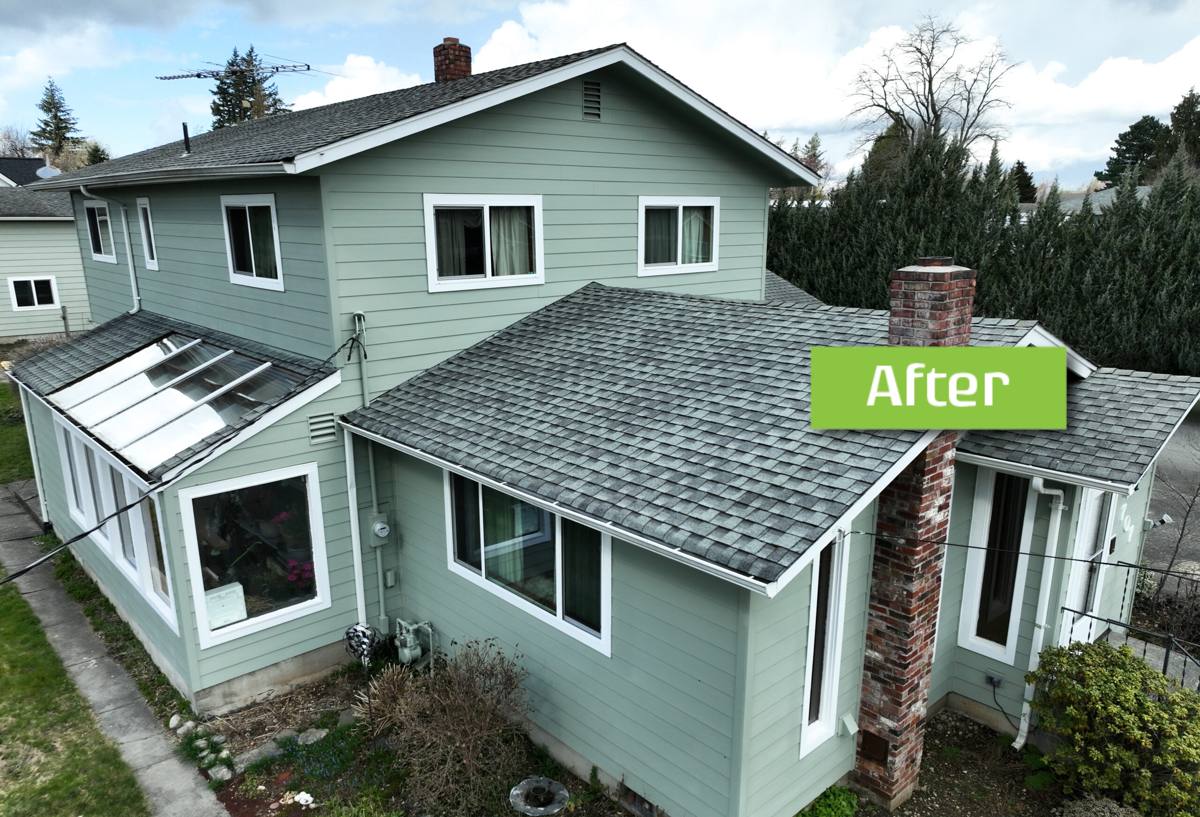
What "Salt Air, Driving Rain, and Moss Season" Actually Does to a Shingle Roof
Salt-Laden Air
Homes closer to the water pick up airborne salt and moisture that accelerates corrosion on exposed metal — flashing, fasteners, vent boots, and gutter hardware. Standard galvanized fasteners and low-grade flashing corrode faster in this environment than they would ten miles inland, which is why fastener and flashing spec matters as much as the shingle brand.
Driving, Wind-Pushed Rain
Bellingham's winter storms don't just drop rain straight down — wind pushes it sideways and up under shingle tabs, at ridge lines, and around any penetration in the roof. A roof that would perform fine in a calmer climate can leak here if the underlayment, ice-and-water membrane at vulnerable points, and shingle sealing weren't installed with wind-driven rain specifically in mind.
Long Moss Season
Moss doesn't just look bad — it holds moisture directly against the shingle surface, works its way under tabs, and lifts granules over time. On shaded or north-facing sections of a Silver Beach roof, moss can establish itself in a single wet season and start causing real damage within two or three years if it's never addressed.
What a Correctly Installed Roof Needs to Handle This Climate
A roof that's going to perform for its full expected lifespan in this environment needs several things working together — not just a good shingle laid over whatever was there before:
- A synthetic underlayment rated for the wet exposure this roof will see before shingles ever go down, not just building paper
- Ice-and-water shield at eaves, valleys, and around every penetration — the spots where wind-driven rain and ice dams do the most damage
- Corrosion-resistant flashing and fasteners, especially on homes with more direct water exposure
- Balanced attic ventilation so moisture from inside the home isn't condensing against the roof deck from underneath
- Proper nailing pattern and sealant activation so shingles actually bond down instead of lifting in wind
- Algae-resistant shingle granules on shaded slopes to slow moss and algae colonization
Skip any one of these and the roof may look fine for a season or two before problems start showing up — usually as a leak that's harder and more expensive to trace than it would have been to prevent.
Signs a Silver Beach Roof Needs Attention
Because a lot of the damage from moisture and moss happens gradually, it's easy to miss until it's a real problem. Watch for:
- Moss or dark streaking on north-facing or shaded slopes
- Granules collecting in gutters or at the base of downspouts
- Curling, cupping, or lifted shingle tabs, especially on wind-exposed sides
- Soft or spongy spots when walked (a sign of trapped moisture in the deck)
- Rust staining or visibly corroded flashing around chimneys, vents, or skylights
- Daylight visible through the roof deck from inside the attic
- Interior ceiling stains, especially after a heavy storm
Any one of these on its own isn't necessarily an emergency, but they're worth a look before the next wet season rather than after.
Choosing the Right Shingle for This Environment
Not every asphalt shingle product is built the same way, and in a climate like this, the difference matters more than it would somewhere dry. Here's how the common tiers compare for a Silver Beach home specifically:
| Shingle Type | Typical Lifespan Here | Moss/Algae Resistance | Wind Rating Fit |
|---|---|---|---|
| Standard 3-tab | 15–20 years | Low unless algae-resistant granules specified | Adequate for sheltered lots; marginal on exposed ones |
| Architectural (laminated) | 25–30 years | Better mass and granule adhesion; algae-resistant options widely available | Good; most products rated for higher wind exposure |
| Premium/designer | 30+ years | Highest granule density and algae-resistant coatings | Best available wind and impact ratings |
For most Silver Beach homes, architectural shingles with algae-resistant granules hit the right balance of durability and cost. Standard 3-tab shingles can still make sense on a sheltered, less shaded lot with a tighter budget — we'll tell you honestly if that's a reasonable fit for your specific roof rather than upselling a product you don't need.
How the Job Actually Works
1. On-Site Assessment
We look at the whole system, not just shingle condition: deck integrity, ventilation, flashing points, moss patterns by slope, and how the roof is currently handling water at eaves and valleys.
2. Straightforward Scope and Options
You get a clear explanation of what's needed versus what's optional, with shingle and underlayment options that fit your home's exposure — not a one-size-fits-all quote.
3. Tear-Off and Deck Inspection
Old roofing comes off down to the deck, which is inspected for soft spots or rot before anything new goes down. This is the point where hidden moisture damage from driving rain typically gets found — and fixed before it's covered up again.
4. Underlayment, Flashing, and Moisture Protection
Synthetic underlayment and ice-and-water membrane go in at the vulnerable points first, followed by corrosion-resistant flashing at every penetration and edge.
5. Shingle Installation
Shingles are installed to manufacturer nailing specs and wind-rating requirements, with extra attention at ridges, valleys, and any wind-exposed slope.
6. Final Walkthrough
We walk the finished roof with you, cover basic maintenance expectations for this climate, and make sure gutters and downspouts are clear so the new roof starts out draining the way it should.
Moss and Ongoing Maintenance in a Wet Climate
Even a well-installed roof needs occasional upkeep here. A realistic maintenance rhythm for a Silver Beach home looks like periodic moss and debris removal (particularly on shaded slopes), keeping gutters clear so water isn't backing up under shingle edges, and a visual check after major windstorms for lifted or missing shingles. None of this is complicated, but skipping it is the single most common reason a shingle roof underperforms its expected lifespan in this region.
We're upfront that no roofing product eliminates moss entirely in a climate this wet and shaded — algae-resistant granules slow it down significantly, but they're a maintenance-reducer, not a maintenance-eliminator.
What Affects the Cost of a Silver Beach Re-Roof
| Factor | Why It Matters Here |
|---|---|
| Roof pitch and complexity | Steeper or cut-up rooflines take longer and need more flashing detail against wind-driven rain |
| Deck condition | Hidden moisture damage found during tear-off may require deck repair before shingles go down |
| Shingle tier chosen | Architectural and premium shingles cost more upfront but hold up longer against moss and wind |
| Ventilation upgrades | Homes with poor attic airflow may need vent work to prevent moisture problems from the inside out |
| Access and tree cover | Mature trees common in Silver Beach can add setup time and cleanup |
We won't give you a number over the phone that isn't grounded in an actual look at your roof — too much of the real cost here depends on what condition the deck is in underneath the shingles.
Why Local Experience in Silver Beach Specifically Matters
A roofing crew that mostly works dry, inland climates will spec a roof differently than one that works Whatcom County's wet side day in and day out. Knowing which slopes in a given neighborhood collect moss first, which flashing details actually hold up against sideways rain, and how much attic ventilation a home really needs in this humidity isn't something you get from a manufacturer's install guide — it comes from doing this work in this exact climate, repeatedly. That local pattern recognition is what keeps a roof performing for its full lifespan instead of needing early repairs.
If your Silver Beach roof is showing moss, wear, or you're just due for an honest look before the next wet season, we're happy to come take a look. Use the form below to request a free, no-pressure estimate.