 Bellingham
 Siding in Puget Has to Work Harder Than Siding Inland
Homes in the Puget area sit close enough to Bellingham Bay and Puget Sound that the exterior of a house takes on a different kind of abuse than a home twenty minutes inland. Salt-laden air moves in off the water, wind-driven rain comes at the wall sideways instead of straight down, and the tree cover that makes this part of Whatcom County beautiful also keeps everything damp for months at a time. Siding here isn't just cladding — it's the first and most important line of defense against moisture that never really goes away for half the year.
This page is specifically about James Hardie fiber cement siding installed on homes in the Puget neighborhood, and what it takes to get that installation right in this particular climate. We don't install every siding product on the market, and we'll explain why. But the bigger point of this page is practical: what your siding actually has to resist here, what a correct Hardie install looks like, and how our process is built around the realities of this location rather than a generic install anywhere in the Pacific Northwest.
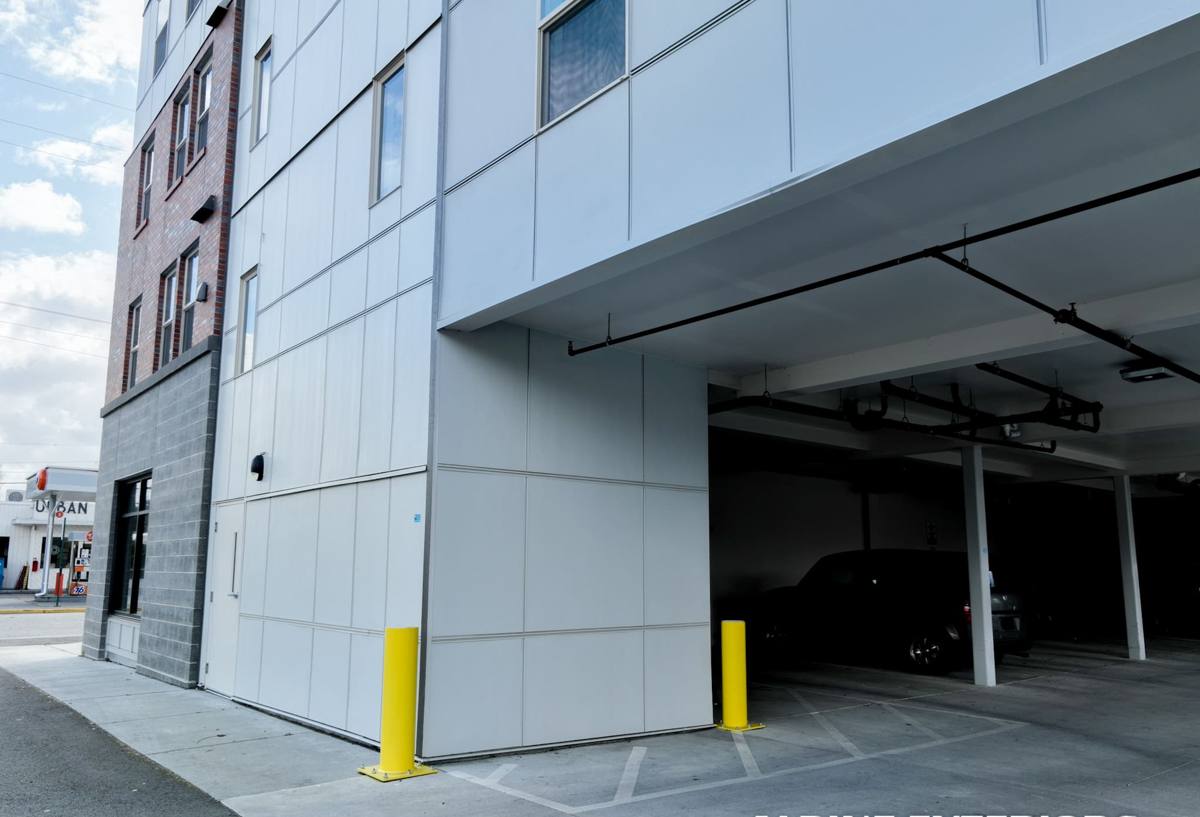
What Salt Air, Driving Rain, and Moss Season Actually Do to a Wall
It helps to separate the three stressors, because they attack siding in different ways.
Salt air
Airborne salt is corrosive to metal and hard on paint film. Fasteners, flashing, and trim that aren't rated for a marine-influenced environment can corrode years before they would inland, and a paint finish that isn't formulated to resist salt exposure will chalk, fade, or blister faster near the water.
Driving rain
Wind off the Sound doesn't just fall on a roof — it pushes rain sideways into wall assemblies, seams, and anywhere two pieces of siding meet. A siding system with weak lap joints, poor flashing details, or no real drainage plane behind it will eventually let water track behind the cladding, where it can sit against sheathing and framing unseen.
Moss and prolonged dampness
Shade, moisture, and mild temperatures are exactly what moss and algae need to establish themselves. On a wall, that means siding stays damp longer after every rain, which extends the amount of time paint film, seams, and any exposed wood-based products are sitting wet. Over years, that constant wet-dry cycling is what actually breaks down lesser siding materials — not one storm, but thousands of days of dampness that never fully dries out.
None of this is unique to any one street or block in Puget — it's the nature of a neighborhood this close to the water, in a county with our rainfall pattern. But it does mean the siding choice and installation details matter more here than they would in a drier climate.
Why We Only Install James Hardie in Puget
We install James Hardie fiber cement siding exclusively. We don't install vinyl, LP SmartSide, Cemplank, Allura, primed spruce, or cedar, and the reasons come directly from what this climate does to a wall.
It's non-combustible
James Hardie siding is fiber cement — it doesn't burn, warp, or feed a fire the way wood-based products can. That's a genuine safety advantage regardless of climate, and it's one reason we don't feel the need to offer alternatives.
It's engineered for wet climates specifically
Hardie makes climate-specific product lines, and the HZ5 line is engineered for regions with more moisture exposure — which describes Puget and the rest of Whatcom County well. The core material is formulated to hold up under repeated wetting and drying without the swelling, delamination, or rot risk that wood-based siding products can develop when they stay damp for extended periods.
ColorPlus factory finish
Instead of relying on field-applied paint, Hardie's ColorPlus finish is baked on at the factory in multiple coats under controlled conditions. That finish is formulated to resist fading and hold up to UV and moisture exposure far longer than a job-site paint job, which matters directly in a salt-air environment where lesser finishes chalk and fade faster.
A warranty that's actually transferable
Hardie backs its siding with a long-term, transferable warranty on both the substrate and the ColorPlus finish. That matters to homeowners who may sell within the life of the siding — a strong warranty that follows the house adds real resale value, not just peace of mind for the current owner.
We're not going to tell you every other siding product on the market is junk — some of them are reasonable products with real trade-offs. What we will say is that after years of working on homes in this climate, we've standardized on the one product system that consistently holds up to salt air, driving rain, and a long moss season without the maintenance burden or moisture risk we've seen from the alternatives. That's a professional judgment call we're comfortable standing behind, and it's why it's the only thing we put on a house.
What a Correct James Hardie Installation Actually Involves
The siding material is only half the equation. The other half — arguably the more important half in a climate like this — is the installation details behind and around it. A Hardie install done wrong can still let water in; done right, it's one of the most weather-resistant wall assemblies available.
A real drainage plane
Behind the siding, there should be a weather-resistant barrier and, ideally, a rainscreen gap that lets any moisture that does get behind the cladding drain and dry out instead of sitting against the sheathing. In a neighborhood that gets driving rain off the water, this drainage layer is what keeps an occasional moisture intrusion from turning into a rot problem.
Flashing at every transition
Windows, doors, roof-to-wall intersections, and any penetration through the siding need properly lapped, correctly sequenced flashing — installed so water is always directed outward and downward, never trapped behind a joint. This is the detail that separates a siding job that lasts decades from one that causes hidden damage within a few years.
Correct fastening and clearances
Hardie specifies fastener type, spacing, and placement for a reason — get it wrong and you can crack boards, void the warranty, or create entry points for water. Siding also needs proper clearance from grade, roof lines, and decks so it isn't sitting in standing water or constant splash-back, which is especially relevant on lots with heavy tree cover and slower-drying ground.
Caulking and joint treatment done to spec
Hardie's installation instructions specify exactly which joints should be caulked, which should be left as a shadow gap, and what sealant is compatible with the ColorPlus finish. Skipping or guessing at this step is a common source of early paint failure and water staining.
Hardie Compared to the Alternatives, for This Climate Specifically
| Factor | James Hardie Fiber Cement | Vinyl | Wood-Based (LP SmartSide, Cedar, Primed Spruce) |
|---|---|---|---|
| Moisture behavior in a marine climate | Engineered HZ5 core resists repeated wetting/drying | Doesn't absorb water, but seams and expansion gaps can let it track behind the panel | Wood fiber content is vulnerable to swelling and rot if moisture gets in or finish fails |
| Finish durability against salt air and UV | Factory-baked ColorPlus finish, multi-coat | Color is through-body but can fade and become brittle over time | Relies on field-applied paint or stain that needs recoating |
| Fire resistance | Non-combustible | Can melt or deform under heat | Combustible |
| Maintenance in moss-prone shade | Low — finish sheds moss growth better than porous surfaces | Low, but can look dated and doesn't clean up as well cosmetically | Higher — wood surfaces are more hospitable to moss and mildew |
| Warranty structure | Long-term, transferable on substrate and finish | Varies widely by manufacturer and installer | Often shorter, or finish-only |
| Upfront cost | Mid-to-higher | Lower | Lower to mid, depending on product |
The upfront cost gap is real and worth acknowledging honestly — Hardie is not the cheapest option on the shelf. But in a climate that puts this much sustained moisture pressure on a wall, the lifetime cost comparison looks different once you factor in repainting cycles, moisture-related repairs, and how long each product actually lasts before it needs replacing.
Our Process for a Puget Job
Every home is different, but the process we follow doesn't change:
- On-site inspection of the existing siding, sheathing, and any trouble spots — especially north-facing and shaded walls where moss and dampness linger longest
- Assessment of drainage and grading around the foundation, since standing water and splash-back are common contributors to siding failure near the water
- Removal of the old siding and inspection of the sheathing underneath for any hidden moisture damage before anything new goes up
- Installation of a weather-resistant barrier and rainscreen system appropriate for the wall assembly
- Flashing installed at every window, door, and roof intersection before siding goes on
- James Hardie panels or lap siding installed to manufacturer fastening, clearance, and joint specifications
- Final walkthrough covering caulking, trim details, and care instructions specific to a marine climate
We don't skip steps to save time, and we won't quote a job without seeing the actual wall conditions first — what's hiding behind old siding in a damp climate can change the scope of the work.
Why It Matters That We Already Work in This Area
A crew that primarily works drier, inland jobs can install Hardie siding perfectly well on paper and still miss the details that matter specifically near the water — how much rainscreen gap to leave given the wind exposure here, where moss is likely to establish itself first, which walls need extra attention because they rarely get direct sun. Working repeatedly in Bellingham and the surrounding Whatcom County neighborhoods means we're not guessing at how this climate behaves — we're accounting for it in the install from the start.
It also means we're a known, findable local business if you ever have a warranty question or a concern down the road — not a crew that did one job in the area and moved on.
Living With Hardie Siding in a Marine Climate
Once it's installed correctly, Hardie siding in this environment is genuinely low-maintenance, but "low-maintenance" isn't "no-maintenance." A few things are worth doing:
- Rinse siding periodically, especially shaded or north-facing walls, to discourage moss and algae buildup before it takes hold
- Keep gutters clear so overflow isn't running down the face of the siding
- Trim back vegetation that's keeping any section of wall in constant shade and dampness
- Have caulking and trim joints checked every few years — it's a small thing to maintain and a bigger thing to fix if neglected
None of this is a heavy lift, especially compared to the recoating and repair cycles that come with wood-based siding in a climate like ours.
Get a Straight Answer on Your Siding
If you're weighing a siding replacement on a home in Puget, we're glad to come take a look, tell you honestly what condition your current siding and sheathing are in, and walk you through what a correct James Hardie installation would involve for your specific house. There's no pressure and no obligation — just a straightforward assessment from a crew that already knows this climate. Use the form below to request a free estimate.