 Bellingham
 Birchwood's Climate and What It Does to Siding
Birchwood is one of Bellingham's established residential neighborhoods, with a mix of home ages and construction styles typical of Whatcom County's older subdivisions. What ties these homes together isn't their floor plans — it's what the weather does to their exteriors. Bellingham sits close enough to salt water that homes throughout the city, including Birchwood, deal with a fine layer of salt-laden air settling on exterior surfaces year-round. Add driving rain that comes in sideways during fall and winter storms, and a moss season that can stretch eight or nine months under the region's persistent cloud cover, and you have three separate stressors working on your siding at the same time, every year, for decades.
None of these on their own is dramatic. A little salt air won't rot a wall. One wet winter won't destroy a paint job. But siding replacement is rarely about one bad season — it's about what twenty or thirty years of this combination does to a wall system that wasn't built, installed, or maintained with it in mind.
Salt Air and Fasteners
Airborne salt accelerates corrosion on anything metal — nail heads, flashing, hose bibs, light fixtures. On older homes, siding was often hung with fasteners that weren't rated for this kind of long-term exposure. Once a fastener starts to corrode, it stains the siding around it and eventually loses its grip, which is one of the quieter reasons old siding starts to look tired even when the boards themselves seem intact.
Driving Rain and Wall Assembly
Wind-driven rain doesn't just wet the surface of a wall — it tests every seam, every joint, and every piece of flashing behind the siding. A wall assembly that manages water correctly sheds it before it reaches the sheathing. A wall assembly with gaps in the weather-resistive barrier, missing flashing, or siding installed too tight to the ground will eventually let water in, and once water gets behind siding in this climate, it doesn't dry out quickly.
Moss, Shade, and Slow-Drying Surfaces
Bellingham's tree cover and long stretches of overcast, damp weather create ideal conditions for moss and mildew on north-facing and shaded walls. Beyond the cosmetic issue, moss holds moisture directly against the siding surface far longer than an open, sun-exposed wall would ever experience, which shortens the useful life of moisture-sensitive materials and accelerates paint failure.
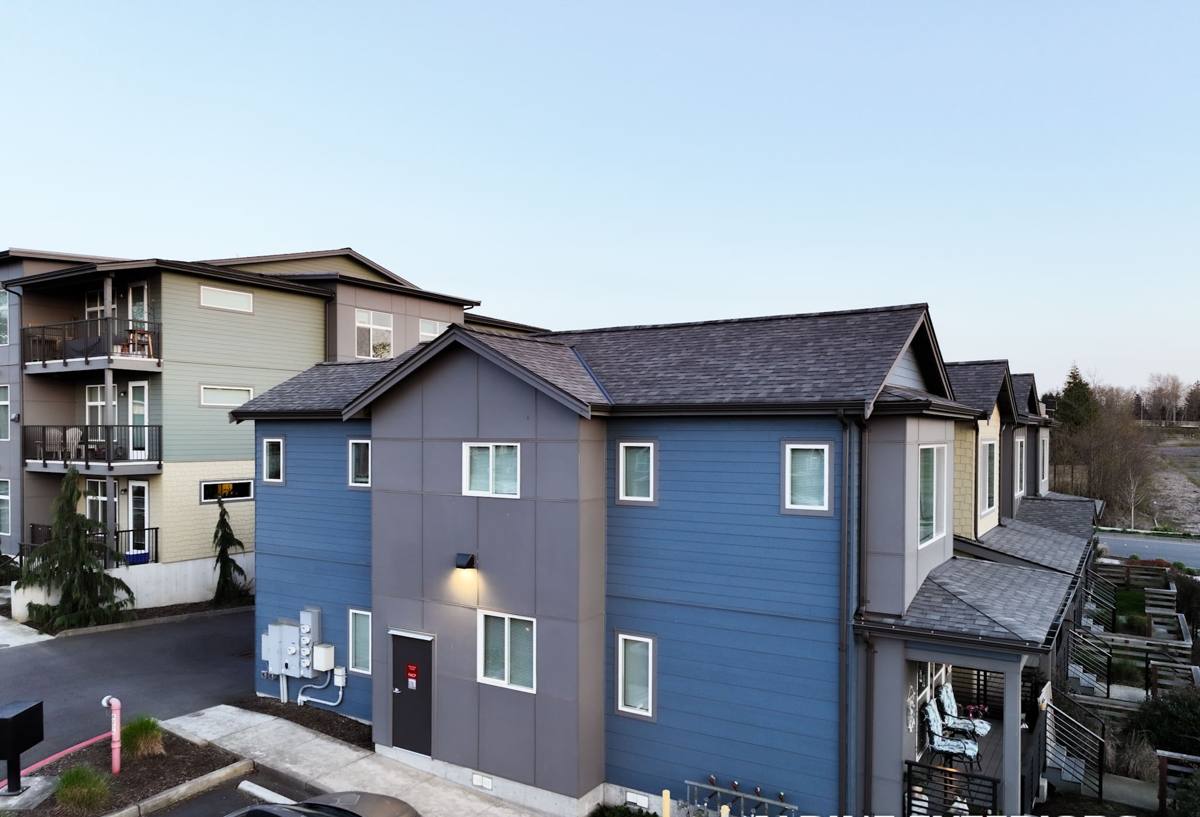
Signs Your Birchwood Home Is Due for Siding Replacement
Most siding problems don't show up as a dramatic failure — they show up as a pattern of small issues that add up. If you're seeing more than one or two of the following, it's worth having the siding evaluated rather than just repainted again.
- Paint that fails within just a few years of repainting, especially on shaded or north-facing walls
- Soft or spongy spots when you press on the siding, particularly near the bottom edge or around windows
- Visible warping, cupping, or gaps opening up between boards or panels
- Moss or dark staining that returns quickly after cleaning
- Rust streaks running down from nail heads or seams
- Cracking or splitting, especially after freeze-thaw cycles
- Rising energy bills that suggest the wall assembly is no longer performing as insulation and a moisture barrier
What a Correct Siding Replacement Job Actually Involves
Siding replacement is often sold as a cosmetic upgrade, but the real value is in what happens underneath the new material. A correct job addresses the wall assembly, not just the surface.
Tear-Off and Sheathing Inspection
Old siding has to come off before anyone can tell you what's really going on underneath. This is the point where hidden rot, soft sheathing, or past water damage gets found — and it needs to get fixed before anything new goes up. Skipping this step and installing new siding over a compromised wall just hides the problem for a few more years.
Weather-Resistive Barrier and Flashing
A properly installed weather-resistive barrier, correctly lapped and sealed, combined with flashing at every window, door, and horizontal transition, is what actually keeps Bellingham's driving rain out of the wall. This layer does more long-term work than the siding material itself, and it's also the layer that's easiest to shortcut if a crew is moving fast.
Fastening and Finish
Fastener type, spacing, and depth all affect how siding performs over time — especially in a climate where corrosion resistance matters. Proper clearance at the ground, correct caulking at joints, and manufacturer-spec installation of trim and corners are what separate a job that looks good on installation day from one that still looks good in year fifteen.
Why We Install Only James Hardie Fiber Cement
We install James Hardie fiber cement siding exclusively. We don't offer vinyl, LP SmartSide, Cemplank, Allura, primed spruce, or cedar, and that's a deliberate standard, not a limitation of what we know how to install. Given what Bellingham's climate does to exterior walls, we'd rather stand behind one product system we trust completely than offer a menu of options with trade-offs we're not willing to put our name on.
Built for Wet, Coastal Conditions
James Hardie's HZ5 product line is engineered specifically for climates like ours — regions with high moisture exposure and freeze-thaw cycles. Fiber cement doesn't absorb water the way wood-based siding can, and it won't support the kind of moisture-driven rot that's a real long-term risk for organic siding materials in Whatcom County's rainfall totals.
ColorPlus Factory Finish
Rather than relying on field-applied paint, which is exactly what fails fastest on shaded, moss-prone walls, Hardie's ColorPlus finish is baked on at the factory under controlled conditions. It holds color and resists fading and chipping far longer than a job-site paint job, which matters directly on the north-facing, tree-shaded walls that are common throughout Birchwood.
Fiber cement is also non-combustible, which is a meaningful consideration given how much of the Pacific Northwest has seen increased wildfire smoke and risk in recent summers. And Hardie's transferable warranty gives homeowners real protection if the home changes hands before the siding does.
Our Process, Start to Finish
- Free on-site evaluation of your current siding, trim, and any visible moisture or damage
- Honest assessment of whether replacement is actually needed, or whether repair makes more sense right now
- Written estimate covering material, labor, tear-off, and any sheathing repair contingencies
- Full tear-off and inspection of the wall assembly before anything new is installed
- Repair of any damaged sheathing or framing found during tear-off
- Installation of weather-resistive barrier, flashing, and James Hardie siding to manufacturer spec
- Final walkthrough and cleanup, including removal of all old material and debris
We don't skip the tear-off inspection to save time, and we don't quote a job without seeing the actual condition of your walls first. Both of those shortcuts are common ways siding jobs go wrong in this climate.
What Siding Replacement Costs in Birchwood
Every home is different, but the factors that move the price up or down are consistent. Use this as a general guide for what drives cost — a proper number only comes from an on-site look.
| Cost Factor | Why It Matters |
|---|---|
| Home size and wall complexity | More square footage and more corners, dormers, or gables mean more material and labor |
| Condition found at tear-off | Rotted sheathing or framing discovered underneath old siding adds repair cost before new siding goes up |
| Siding profile and trim detail | Lap siding, panel systems, and trim board choices carry different material and labor costs |
| Color and finish selection | Factory ColorPlus finishes vs. field painting affect both cost and long-term maintenance |
| Access and site conditions | Landscaping, slope, or tight setbacks common on older Bellingham lots can affect labor time |
| Existing moisture damage | Homes with a history of leaks or unaddressed moss growth often need more extensive repair, not just new siding |
Choosing a Contractor Who Actually Works This Neighborhood
Siding replacement is a big enough investment that it's worth vetting whoever you hire, not just comparing bottom-line numbers. A few things worth confirming before you sign anything:
- Do they inspect and repair sheathing as part of the job, or just cover whatever is underneath?
- Do they detail exactly which weather-resistive barrier and flashing approach they use?
- Are they a licensed, insured contractor in Washington State, and can they show proof?
- Do they install to the manufacturer's specific installation instructions, which affects whether the product warranty stays valid?
- Do they give you a written estimate that separates material, labor, and any contingency for repair work found during tear-off?
- Have they worked on homes in Bellingham's older neighborhoods, where wall assemblies and moisture history vary block to block?
A crew that's already familiar with Whatcom County's building conditions will spot the difference between cosmetic wear and a real moisture problem faster, and won't need to relearn how this climate behaves on someone else's home first.
Living With New Siding Through Moss Season
Even the best siding install benefits from a small amount of ongoing attention in a climate like ours. Keeping gutters clear so water doesn't sheet down the wall face, trimming back vegetation that shades and dampens siding, and doing a gentle rinse of shaded walls once a year go a long way toward keeping moss from establishing itself. Fiber cement handles this far better than wood-based products, but no siding is entirely maintenance-free in a place with this much rain and shade.
If your Birchwood home's siding is showing its age, or you just want a straight answer about whether repair or replacement makes more sense, we're happy to take a look. Reach out for a free, no-pressure estimate using the form below.