 Bellingham
 Storm Damage Roof Repair Built Around Birchwood's Weather
A storm doesn't have to be dramatic to hurt a roof. In Birchwood, the damage that actually shortens a roof's life usually comes from a stretch of driving rain pushed sideways by wind off the water, not a single headline-grabbing event. Salt-tinged marine air is already working on exposed fasteners and flashing before a storm ever arrives, and once wind and rain find a weak point, that point fails faster than it would somewhere inland. Add a long moss season on shaded roof planes that traps moisture year-round, and you have a climate that turns small storm damage into a real leak much faster than homeowners expect.
This page is specifically about repairing storm damage on Birchwood roofs — what to look for after a rough stretch of weather, what a correct repair actually involves, and how we handle the job from the first call to the final walkthrough. It's a different service than a full re-roof, and treating it that way matters: a good storm repair fixes the actual damage without opening up your budget to a job you don't need yet.
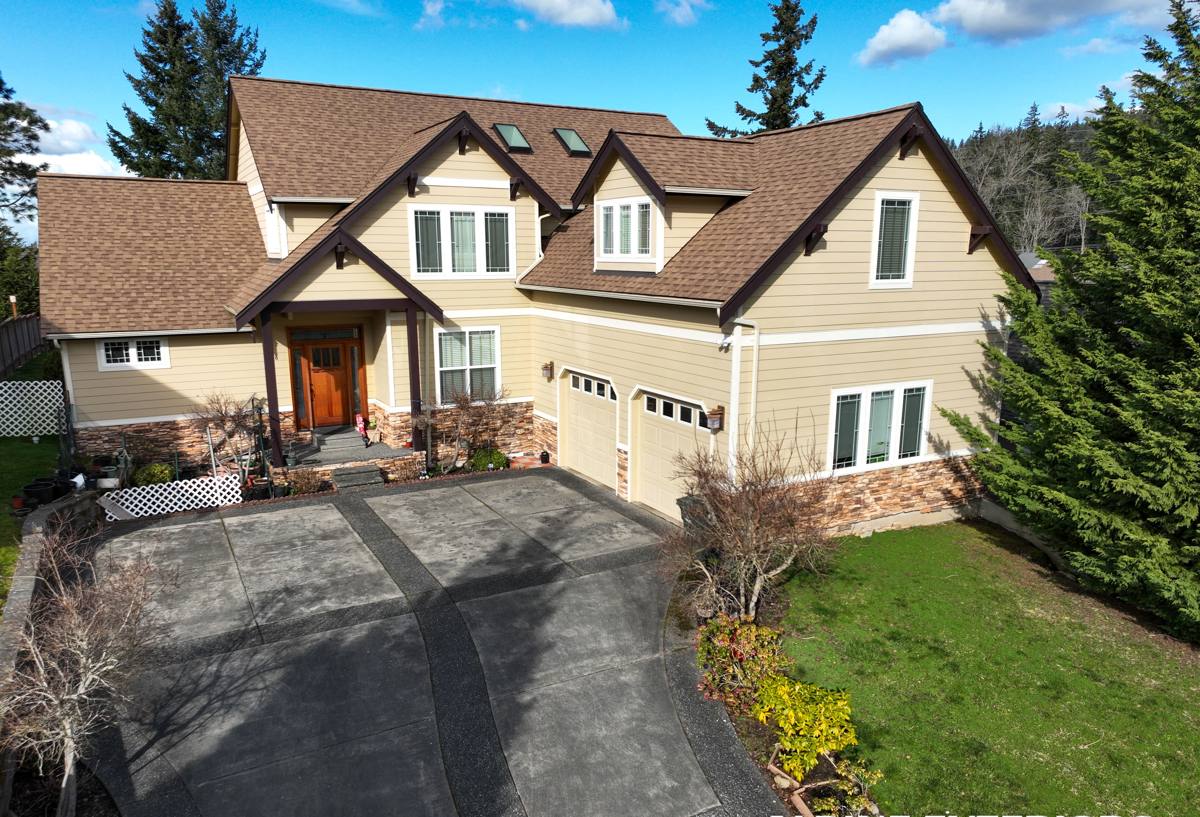
What Storm Damage Actually Looks Like Here
Wind and rain don't usually tear a roof apart in one visible motion. More often, a storm loosens or lifts something just enough that the next rain — or the one after that — finds the opening. That's why storm damage in Birchwood tends to show up as a slow leak weeks after the weather event that actually caused it, which makes early inspection worth more here than in drier climates.
Common Storm-Related Issues We See
- Lifted or torn shingle tabs along ridges and exposed slopes, where wind gusts get the most leverage
- Flashing pulled loose or bent at chimneys, skylights, and valleys, often the first thing to move in sustained wind
- Granule loss from wind-driven rain scouring shingle surfaces, thinning their protective layer faster than normal weathering
- Debris impact damage from branches or limbs coming down during wind events, which can crack or puncture shingles without always breaking through the decking
- Clogged or torn gutters that back water up under the roof edge instead of carrying it away
- Fastener backout where repeated wind uplift works nails loose over one or several storms rather than all at once
Why Waiting Costs More in This Climate
A lifted shingle tab or a gap at a flashing seam doesn't necessarily leak the first time it rains after a storm. But Whatcom County's damp stretches give that opening repeated chances to work, and moisture that gets underneath shingles or flashing doesn't dry out quickly on a shaded or north-facing roof plane. What starts as a small entry point can soak the underlayment, then the decking, then insulation — and by the time a stain shows up on an interior ceiling, the damage is usually well past a quick patch.
Salt air compounds this. Corrosion works faster on any exposed metal or fastener once water has direct contact with it, so a storm-damaged flashing detail that would sit and rust slowly under normal exposure fails noticeably faster once it's been physically bent or pulled loose. Getting storm damage assessed and repaired promptly is less about urgency for its own sake and more about not giving this specific climate extra time to turn a repair into a replacement.
What a Correct Storm Damage Repair Involves
A storm repair done right isn't just replacing the shingles that are obviously missing or torn. It's a diagnostic process first, followed by a repair that addresses the actual failure point — not just the visible symptom.
Full Roof and Attic Inspection
We check the entire roof, not just the area where damage was reported, because wind and rain rarely limit themselves to one spot. We also check the attic from the inside for moisture staining, since that often reveals a leak path that isn't obvious from the roof surface alone.
Tracing the Water Path, Not Just the Symptom
Water that shows up on a ceiling doesn't necessarily originate directly above that spot — it often travels along the underside of the decking or along a rafter before dripping down. A correct repair traces the actual entry point, which might be a flashing seam or a valley several feet away from where the stain appears, rather than patching wherever the damage is easiest to see.
Matching Materials, Not Just Covering the Gap
Replacement shingles and flashing need to match the existing roof's material, profile, and where reasonably possible, color and age-weathering, so the repair blends in rather than creating an obvious patch. Flashing gets rebuilt and properly integrated with the surrounding underlayment, not just caulked over the damaged spot.
Checking for Secondary Damage
Once shingles or flashing are pulled back, we check the decking underneath for soft spots or rot that the storm damage may have allowed water to reach. Repairing the surface without checking what's underneath is how a "fixed" roof ends up leaking again at the same spot a year later.
Repair vs. Replacement: Making the Right Call
| Situation | Usually Calls For | Why |
|---|---|---|
| Isolated shingle or flashing damage on an otherwise sound roof | Targeted repair | The rest of the roof still has useful life; no reason to replace what isn't damaged |
| Storm damage on a roof already near the end of its expected lifespan | Replacement, or a repair paired with a replacement timeline conversation | A repair on an aging roof may only buy a short amount of time before other areas start failing too |
| Widespread granule loss or multiple damaged slopes | Full assessment before deciding | Damage spread across the roof often points to a broader weathering issue, not just storm impact |
| Deck rot discovered during repair | Repair scope expands to include deck replacement in that section | New shingles over a compromised deck won't hold or perform correctly |
An honest contractor will tell you plainly when a repair makes sense and when it doesn't, including saying so when a repair is the right call even though a replacement would be the bigger job. We'd rather give you an accurate picture than sell a bigger project than the roof actually needs.
Working With Insurance on a Storm Claim
Many storm repairs in Birchwood involve a homeowner's insurance claim, and the process goes more smoothly when the documentation is thorough from the start. We provide clear photos and a written description of the damage we find, which gives you something concrete to bring to your adjuster or insurance company rather than a verbal description alone.
- Document damage with photos before any repair work begins
- Get a written scope of repair, not just a verbal estimate, to compare against the adjuster's assessment
- Keep receipts and records for any emergency work, such as temporary tarping, done to prevent further damage
- Ask your insurer about their timeline and process before scheduling permanent repairs, so the work lines up with the claim
We work for you as the homeowner throughout this process — our job is to document and repair the damage accurately, and to give you the information you need for your claim, not to negotiate on the insurance company's behalf.
How Our Storm Damage Repair Process Works
- Initial contact and prioritization: If there's an active leak or exposed decking, we prioritize getting the roof protected first.
- In-person inspection: We walk the roof and check the attic ourselves, documenting what we find with photos.
- Temporary protection if needed: Tarping or other temporary measures go on quickly when a roof is actively letting water in, buying time for a proper repair without rushing the actual fix.
- Written repair scope: You get a clear description of the damage found, the repair we recommend, and why — useful both for your own understanding and for an insurance claim.
- Repair work: Matching materials go in, flashing gets properly rebuilt and integrated, and any deck damage found underneath gets addressed before new material goes back down.
- Final walkthrough: We review the completed repair with you and do a cleanup sweep of the site before considering the job finished.
Why Hiring a Crew That Already Works in Birchwood Matters
A crew that regularly repairs storm damage in and around Birchwood already knows which roof orientations catch the worst of the wind, which flashing details tend to fail first in salt air, and how long a shaded slope stays wet after a storm passes through. That's not something a crew unfamiliar with this specific stretch of Whatcom County coastline picks up on the first visit — it comes from having repaired dozens of roofs facing the same conditions.
It also matters for response time and follow-through. A local crew can typically get to an active leak faster than a company dispatching from farther away, and they're still around months or years later if a question comes up about the repair. That's a meaningful difference when the whole point of a storm repair is making sure the problem is actually solved, not just patched enough to get through the next inspection.
A Practical Checklist Before You Choose a Storm Repair Contractor
- Do they inspect the full roof and attic, not just the reported damage spot?
- Do they trace the actual water path rather than assuming the leak starts directly above the stain?
- Will they document damage with photos and a written scope you can use for an insurance claim?
- Do they check for deck rot or secondary damage before closing the repair back up?
- Do they carry current WA contractor licensing, liability insurance, and workers' compensation?
- Can they point to recent, real storm repair work in or near Birchwood?
Signs You May Have Storm Damage Worth Checking
Not every sign of storm damage is obvious from the ground, which is exactly why a fast inspection after a rough stretch of weather is worth the time.
- Shingles that look lifted, torn, or missing after a windy stretch
- A noticeable increase in granules collecting in gutters or downspouts after a storm
- New or worsening water stains on interior ceilings or attic framing
- Visible dents, bent metal, or gaps at chimney or skylight flashing
- Debris, branches, or limbs that came down on or near the roof during wind events
- Gutters pulled loose or sagging away from the roofline
If any of this sounds familiar after recent weather, it's worth having the roof checked before the next storm gives the same weak spot another chance to fail.
If you've had recent storm damage or just want a Birchwood roof checked out after a rough stretch of weather, we're happy to take a look and give you an honest, no-pressure assessment. Use the form below to request a free estimate.