 Bellingham
 Why Birchwood Roofs Wear Differently
Birchwood sits close enough to Bellingham Bay and the surrounding tree canopy that its roofs deal with a combination most inland neighborhoods don't: salt-laden air moving in off the water, long stretches of driving rain through fall and winter, and enough shade from mature trees to keep roof surfaces damp well after a storm passes. None of that is unusual for Whatcom County, but it adds up. A roof that would hold up fine in a drier, more open part of the state can start showing granule loss, moss colonies, and soft decking years ahead of schedule here if it wasn't built for these conditions from the start.
That's the difference between a generic new roof installation and one that's actually right for this neighborhood. The framing, the underlayment, the ventilation, and the material choice all need to account for moisture that doesn't dry out quickly and air that carries salt. Get any one of those wrong and you're not looking at a 25-30 year roof — you're looking at a re-roof in half that time.
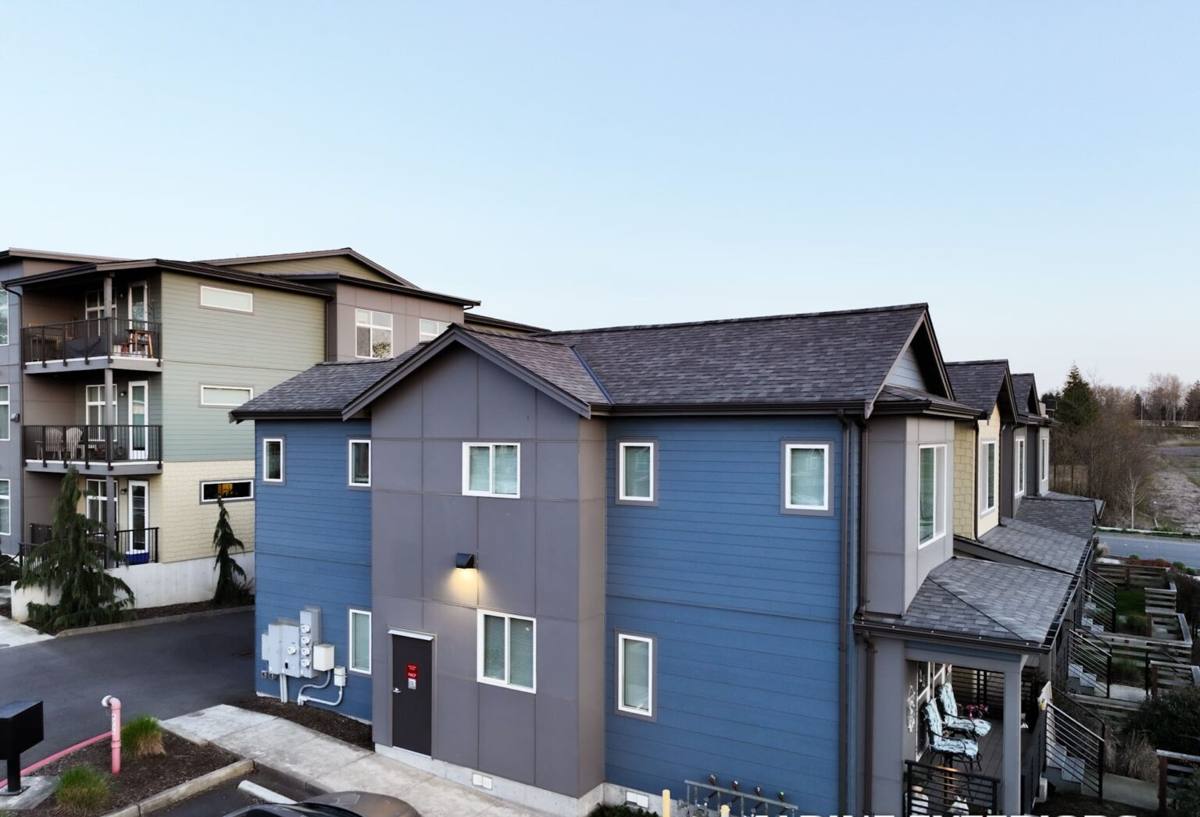
What a New Roof in Birchwood Actually Needs
Moisture Barriers That Do More Than the Minimum
Code sets a minimum for underlayment, but minimum code isn't the same as right for this climate. On a Birchwood re-roof we run self-adhered ice-and-water membrane along eaves, valleys, and around every penetration — not just where code technically requires it — because those are the spots where wind-driven rain gets pushed sideways under shingles instead of running off. A synthetic underlayment across the rest of the field holds up better than old-style felt when it's exposed to humidity for any length of time during installation, which matters on a coast where a dry work window isn't guaranteed.
Ventilation That Actually Moves Air
Moss and premature shingle failure are almost always a moisture problem before they're a roofing-material problem. A roof deck that can't breathe stays damp longer, and damp decking is what moss spores and algae need to get established. Balanced intake at the soffits and exhaust at the ridge — sized correctly for the attic volume, not just "a vent because code says so" — is one of the most important things we control on a new install, and it's one homeowners rarely think to ask about.
Moss and Algae Resistance
Most major shingle lines now offer algae-resistant granules (usually copper- or zinc-based) built into the product. We default to these on Birchwood installs because tree cover here keeps roofs shaded and damp, which is exactly the environment moss and blue-green algae favor. It's not a permanent fix — nothing is — but it buys years compared to a standard shingle, and combined with good ventilation and periodic cleaning it meaningfully slows regrowth.
Flashing and Penetrations
Every place a roof isn't a flat, uninterrupted plane — chimneys, skylights, vent stacks, wall intersections — is a place water can find a way in. We use step flashing and counter-flashing (not just sealant) at walls and chimneys, and we replace pipe boots and vent flashing rather than reusing old ones. Sealant-only repairs are a shortcut that fails first when a roof gets tested by driving rain off the bay.
Roofing Material Options for This Climate
There's no single "best" roofing material for every Birchwood home — it depends on the roof's exposure, the home's style, and your budget. Here's how the common options actually perform under local conditions:
| Material | Moss/Algae Resistance | Salt Air Durability | Typical Lifespan | Maintenance |
|---|---|---|---|---|
| Architectural asphalt shingle (algae-resistant) | Good with AR granules | Good with proper fasteners/flashing | 25-30 years | Low-moderate |
| Standing seam metal | Very good — sheds moisture fast | Very good with coastal-rated coating | 40-50+ years | Low |
| Synthetic/composite shingle | Good | Good | 30-40 years | Low-moderate |
| Cedar shake | Requires ongoing treatment | Moderate — needs upkeep near salt air | 20-30 years with maintenance | High |
Asphalt shingle remains the most common choice for Birchwood homes because it balances cost, appearance, and performance well when installed correctly. Metal roofing costs more upfront but sheds moss-friendly moisture better than anything else on this list and needs the least attention over its life. We're upfront with homeowners that cedar shake, while attractive, asks for a level of ongoing maintenance — treatment, cleaning, occasional shake replacement — that most people underestimate when they're this close to the water and this much tree cover.
Tear-Off vs. Roof-Over — Why We Don't Cut That Corner
Installing new shingles directly over an existing layer is technically allowed by code in limited situations, and it's cheaper up front. We don't recommend it for Birchwood re-roofs, and we won't do it on a home with any history of moss, moisture staining, or a roof that's already been layered once. Here's why: a roof-over traps whatever moisture and organic growth is already in the old layer, buries any deck damage that's already happening, and gives us no way to inspect or replace the sheathing underneath. On a roof that's going to face this much rain and shade, starting clean — full tear-off, deck inspection, repair of any soft or rotted sheathing — is what actually protects the investment. It costs more on day one and saves money over the life of the roof.
Our Installation Process
- On-site inspection and estimate. We walk the roof (not just the yard), check the attic for existing ventilation and moisture signs, and give you a written scope and price — no pressure, no inflated "today only" pricing.
- Material selection. We go over the options above based on your roof's exposure, your home's style, and your budget, and help you land on something that fits.
- Permit and scheduling. We pull the required permit through Whatcom County or the City of Bellingham (depending on exact location) and schedule around the weather window rather than rushing a job into a rain system.
- Full tear-off. Old material comes off down to the deck, and we inspect every square foot of sheathing before anything new goes down.
- Deck repair. Any soft, delaminated, or water-damaged sheathing gets replaced — this is called out separately in your estimate, not buried or skipped.
- Underlayment and flashing. Ice-and-water membrane at eaves, valleys, and penetrations; synthetic underlayment across the field; new step and counter-flashing at walls and chimneys.
- Ventilation check and correction. We confirm intake and exhaust are balanced for the attic space, and correct it if the existing setup was undersized.
- Installation of the new roofing material to manufacturer specification — this is what keeps the material warranty valid, not just what looks finished from the ground.
- Final walkthrough and cleanup. Magnetic sweep for nails, debris removal, and a walkthrough so you know what was done and what to expect going forward.
Permits and Local Requirements
New roof installations in and around Bellingham require a permit, and inspections are part of the process — this isn't optional paperwork, it's how you (and any future buyer) have proof the work was done to code. We handle the permit application and coordinate inspections as part of the job. If you're ever getting quotes and a contractor tells you a permit "isn't necessary" for a full re-roof in Whatcom County, that's a red flag worth asking more questions about.
Signs You're Getting a Correct Installation
Whether you hire us or someone else, these are worth checking on any new roof install in this area:
- Full tear-off to the deck, not an overlay — with sheathing actually inspected, not assumed
- Ice-and-water membrane at eaves, valleys, and every penetration, not just where code bare-minimum requires
- Balanced soffit intake and ridge exhaust ventilation, sized for your attic
- Step and counter-flashing at chimneys and walls — not sealant used as a substitute
- Algae-resistant shingles or a material suited to shaded, damp conditions
- A pulled permit and scheduled inspection
- A written scope that names the specific products and warranty terms, not just "shingles"
Why a Crew That Already Works Birchwood Matters
A roofing crew that works this neighborhood regularly already knows which streets sit in more shade, which roofs face the worst of the wind off the bay, and what tends to fail first on homes of a given age here. That's not a marketing point — it changes real decisions, like where we add extra ice-and-water coverage, whether a roof needs more ventilation than it currently has, or whether a particular material is worth the upcharge for a specific exposure. A crew unfamiliar with Bellingham's coastal and tree-cover conditions is more likely to install to generic code minimums instead of what the site actually needs.
Maintaining Your New Roof Through Moss Season
A correctly installed roof still benefits from basic upkeep, especially through the wetter months. Keep gutters clear so water isn't backing up under the eaves, trim back overhanging branches where you reasonably can to cut down on shade and debris, and have the roof looked at every couple of years for early moss growth or lifted shingles rather than waiting until there's a leak. Catching a small patch of moss early is a five-minute fix; letting it spread for a few seasons can mean granule loss and, eventually, a shortened roof life.
If your current roof is showing moss, curling shingles, granules collecting in the gutters, or it's simply old enough that a full replacement makes more sense than another round of patching, we're happy to take a look and give you a straight answer — including telling you if repair is still a reasonable option instead of a full new roof. Reach out for a free, no-pressure estimate and we'll walk your roof and talk through what it actually needs.