 Bellingham
 Blaine's Marine Climate and What It Does to a Roof
Blaine sits at the northwest corner of Whatcom County, right where Puget Sound meets the Strait of Georgia and the border with Canada is just a few minutes away. Homes near the water in Blaine deal with a version of Pacific Northwest weather that's more demanding than what you'll find further inland. Salt-laden air off Drayton Harbor and Semiahmoo Bay settles on everything, including roofs. Winter storms bring rain that doesn't just fall straight down — it drives sideways under eaves and around flashing. And the mild, wet winters combined with shade from mature conifers common on Blaine lots create a moss season that can stretch for the better part of the year.
None of these are dealbreakers for asphalt shingle roofing. It remains one of the most practical, cost-effective roofing systems available, and it holds up well in Whatcom County when it's specified and installed with this exact climate in mind. The problems show up when a roof gets installed the same way it would be in a dry inland town — using standard fasteners, minimal underlayment, or ventilation that isn't sized for the amount of moisture in the air here.
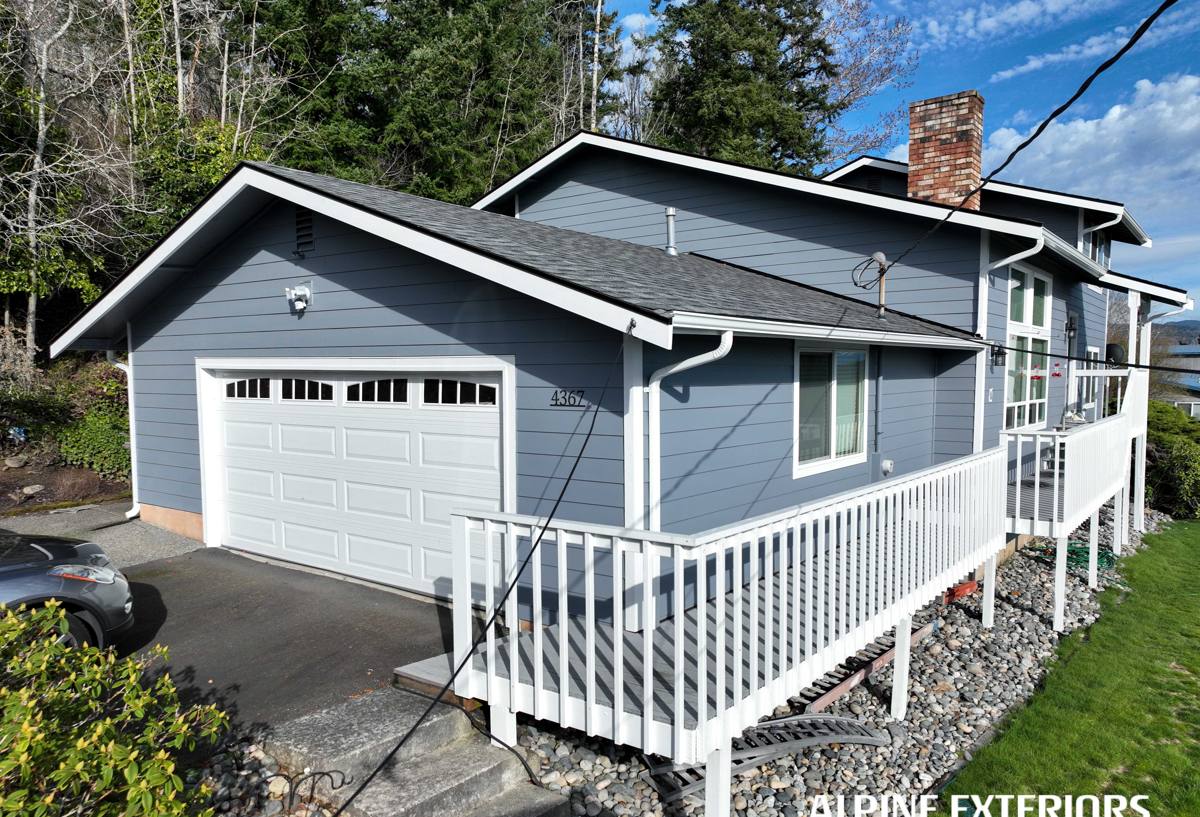
What Salt Air and Wind-Driven Rain Actually Do to a Roof
Corrosion on Fasteners and Flashing
Salt air speeds up oxidation on any exposed metal. Standard electro-galvanized roofing nails, cheap vent boots, and thin drip edge can start showing rust streaks and losing holding strength years before they would inland. On a roof, that's not cosmetic — a corroded nail loses grip on the shingle it's holding down, and corroded flashing around chimneys, skylights, and sidewalls is exactly where leaks start.
Wind-Driven Rain Finds Gaps
Rain that comes in at an angle off open water works its way under shingle tabs, around poorly lapped flashing, and through nail holes that weren't sealed correctly. A roof that would shed straight-down rain without issue can still take on water during a coastal storm if the underlayment, flashing laps, and fastening pattern weren't built with wind-driven rain in mind.
Moss, Shade, and Trapped Moisture
Moss needs shade, moisture, and time — Blaine's tree cover and long wet season provide all three. Moss doesn't just look bad; it holds water against the shingle surface and works under tabs and around fasteners, which shortens the life of an otherwise sound roof.
What a Correctly Installed Shingle Roof Needs in Blaine
A roof built for this environment isn't a different product — it's the same asphalt shingle system, installed with attention to a handful of details that matter more here than they would in a drier, calmer climate.
- Corrosion-resistant fasteners — hot-dip galvanized or stainless steel roofing nails rather than standard electro-galvanized
- Full synthetic underlayment, not just felt, for better resistance to wind-driven moisture
- Ice-and-water shield at eaves, valleys, and around every penetration, not just the code minimum
- Metal flashing sized and lapped correctly at chimneys, skylights, and sidewalls, with corrosion-resistant materials
- Balanced intake and exhaust ventilation so damp attic air doesn't condense on the underside of the deck
- Algae-resistant shingle granules to slow moss and algae growth on north-facing and shaded slopes
Skip any one of these and the roof will likely still pass a casual look, but it will age faster and start showing problems years before it should — usually right at the flashing details and shaded slopes where Blaine's climate concentrates its wear.
Choosing the Right Shingle for a Blaine Home
Asphalt shingles come in a few tiers, and the right choice depends on how exposed the home is to wind and salt air, how much shade the roof gets, and how long you plan to stay in the house.
| Shingle Type | Typical Lifespan | Wind Rating | Best Fit |
|---|---|---|---|
| 3-tab | 15-20 years | Lower | Budget-focused projects on sheltered lots |
| Architectural / laminate | 25-30 years | Higher, rated for coastal wind exposure | Most Blaine homes, especially waterfront-adjacent |
| Premium algae-resistant laminate | 30+ years | Highest available in asphalt | Shaded lots or homes with a heavy moss history |
For most Blaine homes, especially anything within a mile or two of open water, we steer people toward architectural shingles with algae-resistant granules as the practical middle ground. Three-tab shingles still have a place on a detached shop or a low-exposure roof where budget is the deciding factor, but they carry a lower wind rating and no algae resistance, which shows up faster here than it would in a drier inland town.
Moss and Algae: Managing a Long Wet Season
You can't stop moss spores from landing on a roof in Whatcom County, but you can control how much they take hold and how much damage they do before you catch them.
- Keep gutters clear — clogged gutters hold water against the lowest course of shingles and give moss an easy foothold
- Trim back overhanging branches where possible to cut down on shade and falling debris
- Consider zinc or copper strips near the ridge on shaded slopes — rain washing over them helps suppress new moss growth
- Have moss removed by low-pressure, gentle methods — never pressure-washed, which strips protective granules and shortens shingle life
- Schedule a roof check before and after the wettest months so small issues get caught before they become leaks
Homeowners sometimes wait until moss mats are thick and visible from the ground before doing anything about it. By that point it's usually been holding moisture against the shingles for a season or more. Catching it early is cheaper and safer for the roof than an aggressive cleanup later.
Our Asphalt Shingle Roofing Process
- Inspection and estimate. We walk the roof, check the attic for ventilation and moisture issues, and give you a straightforward written estimate — no pressure, no inflated scare tactics.
- Tear-off and deck inspection. Old shingles come off completely so we can check the decking underneath for soft spots or water damage that needs to be addressed before anything new goes on.
- Underlayment and flashing. Synthetic underlayment, ice-and-water shield at vulnerable areas, and new corrosion-resistant flashing at every penetration and edge.
- Shingle installation. Installed to manufacturer specification for nailing pattern and exposure, with attention to wind-rated fastening given Blaine's coastal exposure.
- Ventilation check. We confirm intake and exhaust venting are balanced so the new roof isn't fighting trapped moisture from day one.
- Cleanup and walkthrough. Job site cleared of debris and nails, and we walk the finished roof with you before calling it done.
Signs Your Blaine Roof Needs Attention
- Granules collecting in gutters or at downspout outlets
- Shingles that are curling, cupping, or lifting at the edges
- Visible moss mats or thick green-black streaking on shaded slopes
- Rusty streaking around nail heads, flashing, or vent boots
- Soft or spongy spots when walking the roof
- Daylight or damp insulation visible in the attic
- A noticeable jump in heating costs, which can point to failing ventilation or insulation under the roof deck
Any one of these on its own isn't necessarily an emergency, but they're worth a professional look before the next round of winter storms rolls in off the water.
Cost Factors for Asphalt Shingle Roofing in Blaine
| Factor | Why It Matters Here |
|---|---|
| Roof size and pitch | More area and steeper slopes mean more material and labor time |
| Number of existing layers | Tear-off of multiple old layers adds disposal and labor cost |
| Decking condition | Salt-air moisture and past leaks sometimes mean sections of deck need replacing |
| Shingle tier chosen | Architectural and algae-resistant lines cost more upfront but last longer in this climate |
| Flashing complexity | Chimneys, skylights, and multiple valleys need more detail work and material |
| Ventilation upgrades | Older Blaine homes often need added intake or exhaust venting to control moisture |
| Site access | Waterfront lots and tight lots can add staging and material-handling time |
Broad ranges for a full asphalt shingle re-roof in this region typically run from the mid-single-digit-thousands for a smaller, simple roof to well into five figures for a larger home with a complex roofline. Every estimate we give is specific to your roof, not a generic per-square number pulled off a website.
Why Hiring a Crew That Already Works in Blaine Matters
A roofing crew that mainly works drier, inland jobs isn't necessarily going to think about corrosion-resistant fasteners, algae-resistant granules, or wind-driven rain details unless they're specifically asked. A crew that regularly works Blaine and the surrounding Whatcom County coastline builds those choices into the estimate by default, because we've seen what standard-grade materials and generic installation do to a roof out here within a few years.
That local experience also means fewer surprises around permitting requirements, a better read on which weather windows to work around during the wetter months, and a working knowledge of which details on Blaine's older housing stock — attic ventilation, past moss damage, prior patch jobs — tend to need a closer look. It's the difference between a roof that's built to look right on installation day and one that's built to hold up through another decade of salt air and coastal storms.
If you're weighing a repair against a full replacement, or just want an honest read on how much life is left in your current roof, we're happy to take a look. Use the form below to request a free, no-pressure estimate for your Blaine home.