 Bellingham
 Board & Batten Siding Built for Columbia's Conditions
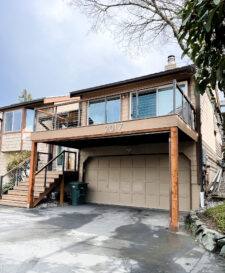
Columbia is one of Bellingham's older, established neighborhoods, with a mix of vintage homes and newer infill sitting close enough to the water that the weather here behaves a little differently than it does further inland. Homes in this part of Whatcom County take on salt-tinged air off the bay, long stretches of driving rain through fall and winter, and a moss season that can run for months. Board and batten siding — with its vertical boards and raised battens covering the seams — has a strong, clean look that suits both the craftsman-era homes and the newer builds in the neighborhood. But that same profile, with its extra seams and vertical grain lines, is less forgiving of poor materials and sloppy installation than a standard lap siding job. Done right, it's one of the most durable, good-looking siding options for this climate. Done wrong, it's a magnet for the exact problems Columbia homes are most exposed to.
What Columbia Homes Actually Need From Their Siding
Salt Air and Corrosion
Proximity to salt water accelerates corrosion on fasteners, flashing, and any metal trim components. Cheap or mismatched hardware shows rust streaks and pitting years before the siding itself would otherwise fail. Every fastener and flashing detail on a board and batten job in this area needs to be corrosion-resistant by design, not by luck.
Driving Rain and Wind-Driven Moisture
Bellingham's winter storms don't just drop rain straight down — wind pushes it sideways into wall assemblies, and vertical board and batten siding has more vertical seams for water to find a path along if the underlying water management isn't handled correctly.
Moss, Mildew, and Prolonged Dampness
Extended damp seasons mean anything that holds moisture against the wall — wood that swells and doesn't fully dry, siding installed tight to grade, poor airflow behind the boards — becomes a growth medium for moss and mildew. That's a maintenance headache on any siding, but it's a structural risk on products that absorb water rather than shed it.
Board and Batten Is a System, Not Just a Look
The vertical boards and battens are the visible layer. What actually determines whether the siding performs in a Whatcom County winter is everything behind it: the weather-resistive barrier, the flashing at every penetration and transition, the drainage plane behind the cladding, and the fastening pattern that lets the material expand and contract without cracking or popping loose. A board and batten installation that looks identical to a neighbor's from the street can perform completely differently over ten years depending on what's underneath.
Why the Seams Matter More Here
Every vertical joint between boards and every batten placement is a potential water entry point if it isn't lapped, flashed, or sealed correctly. In a low-rain climate that's a minor detail. In Columbia, with sustained wind-driven rain off the water, it's the detail that separates a siding job that lasts decades from one that needs rework in five years.
Why We Install Only James Hardie Fiber Cement for Board and Batten
Board and batten is available in engineered wood, vinyl, and fiber cement, and each has real trade-offs worth understanding before you choose one for a home exposed to this much moisture and salt air.
- Engineered wood board and batten looks good initially and is easier to cut on site, but it relies on a factory coating and careful site sealing at every cut edge to keep moisture out. In a climate with this much sustained dampness, any breach in that coating — a missed cut-edge seal, a fastener that splits the coating — gives moisture a way into the wood substrate.
- Vinyl board and batten is low-maintenance and inexpensive, but it's a thin, flexible material that can warp, fade, and crack in temperature swings, and it isn't fire-resistant — a real consideration during wildfire smoke seasons even this far north.
- James Hardie fiber cement board and batten is non-combustible, dimensionally stable in wet-dry cycling, and holds its factory-applied ColorPlus finish far longer than field-painted alternatives, because that finish is baked on and warrantied specifically against fading and peeling.
We standardized on Hardie because it's engineered for exactly the conditions Columbia sees — moisture, temperature swings, and long damp stretches — and because its warranty structure is built around correct installation, which is the part we control.
Comparing the Options for This Climate
| Material | Moisture Behavior | Fire Resistance | Finish Longevity |
|---|---|---|---|
| Vinyl board and batten | Doesn't absorb, but seams can trap moisture behind panels | Combustible | Color molded in, but fades and can become brittle |
| Engineered wood board and batten | Vulnerable if coating is breached at cuts or fasteners | Combustible | Factory coating, sensitive to field cuts and seals |
| James Hardie fiber cement | Dimensionally stable, resists moisture-driven warping | Non-combustible | Factory ColorPlus finish, longer warrantied lifespan |
What a Correct Board and Batten Installation Involves
Drainage Plane and Rainscreen Gap
A ventilated gap behind the siding lets any moisture that does get past the cladding drain and dry out instead of sitting against the wall sheathing. This matters more on vertical board and batten than on horizontal lap siding, since the vertical orientation can channel water down along the wall if there's no gap to interrupt it.
Flashing at Every Transition
Windows, doors, roof-to-wall intersections, and deck ledgers all need integrated flashing that directs water out and away from the wall assembly, lapped correctly with the weather-resistive barrier underneath the siding.
Fastening and Joint Spacing
Fiber cement needs to be fastened according to the manufacturer's engineering — correct fastener type, spacing, and clearance from board edges — to avoid splitting, popped nails, and gaps that open up over time as the material moves seasonally.
Batten Placement and Backer Boards
Battens need solid backing and consistent spacing so they don't trap water against the vertical boards. This is one of the most common places we see corner-cutting on rushed jobs — battens fastened straight to a flat board with no attention to how water sheds at each joint.
Our Process for Columbia Board and Batten Projects
- On-site assessment — we look at your home's current siding, existing moisture damage if any, and how the specific exposure (wind direction, tree cover, proximity to grade) affects your walls.
- Scope and product selection — we walk through the relevant Hardie board and batten profiles and ColorPlus color options for your home.
- Written estimate — a clear, itemized quote before any work begins, no surprise add-ons mid-job.
- Tear-off and inspection — once old siding is off, we inspect sheathing for hidden moisture damage before closing the wall back up.
- Water management install — weather-resistive barrier, flashing, and rainscreen gap go in before a single piece of visible siding.
- Board, batten, and trim installation — installed to Hardie's fastening specification, not shortcuts.
- Final walkthrough — we go over the finished work with you before calling the job done.
What Drives the Cost of a Board and Batten Job
| Factor | Why It Matters |
|---|---|
| Extent of tear-off and repair | Hidden moisture or rot damage under old siding adds sheathing repair work |
| Home's wall complexity | More corners, gables, and transitions mean more flashing and cutting |
| Board width and reveal choice | Wider boards and battens change material quantities and labor time |
| Color and finish selection | ColorPlus factory colors versus field-painted options affect pricing and long-term upkeep |
| Access and site conditions | Steep lots, tight setbacks, or limited equipment access add labor time |
Maintenance in a Moss-Prone, Salty Environment
Even correctly installed siding benefits from basic upkeep in this climate. A short seasonal routine goes a long way toward protecting your investment:
- Rinse siding gently once or twice a year to clear salt residue and organic buildup before it feeds moss growth
- Keep gutters clear so overflow doesn't run down the face of the siding
- Trim back vegetation that shades siding and keeps it damp longer than it should be
- Check caulking at trim and penetrations periodically, since it's the one component that isn't part of the factory warranty
- Have any soft spots, staining, or gapped boards inspected promptly rather than waiting for them to spread
Why Local Board and Batten Experience Matters in Columbia
A crew that works this neighborhood regularly already understands how the wind comes off the water, which wall orientations take the worst of the driving rain, and how quickly moss establishes itself on north- and west-facing walls here. That local pattern recognition shows up in small decisions — where to add extra flashing attention, which details to double-check — that a crew unfamiliar with Bellingham's specific version of Pacific Northwest weather might not think to prioritize.
If you're weighing board and batten siding for a home in Columbia, we're happy to walk the property with you, look at what your current siding is telling us, and put together a straightforward, no-pressure estimate. Use the form below to get started.