 Bellingham
 Fiber Cement Siding Built for Columbia's Climate
The Columbia neighborhood sits close enough to Bellingham Bay and Whatcom Creek that homes here deal with a specific combination of punishment: salt-laden air drifting off the water, driving rain that comes in sideways during fall and winter storms, and a moss season that seems to stretch longer every year. Siding that works fine in a drier inland town can fail early here if it wasn't chosen, or installed, with this exact climate in mind.
We install James Hardie fiber cement siding exclusively, and Columbia is a neighborhood where that decision matters in a very practical way. Fiber cement doesn't rot, doesn't feed moss the way wood fiber products can, and holds up to salt exposure without the swelling, cracking, or paint failure that plague other materials in this part of Whatcom County.
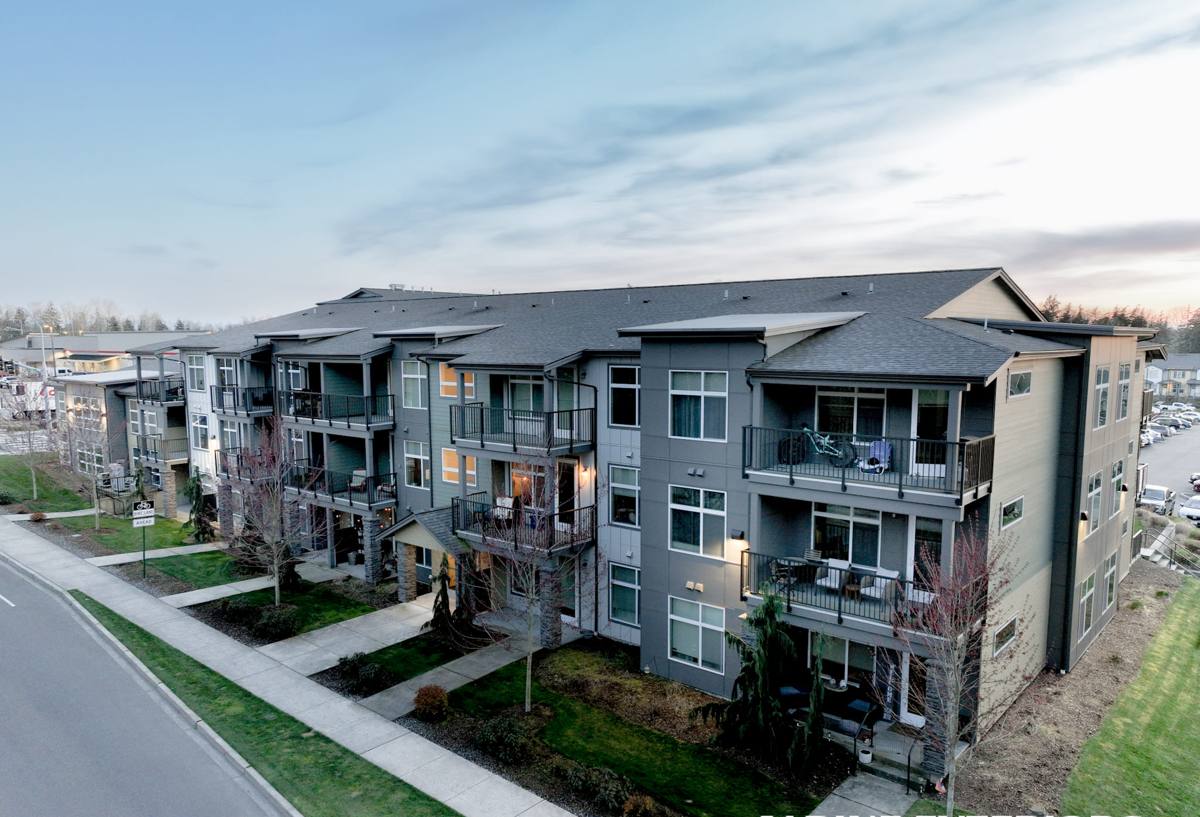
Why Columbia's Location Puts Extra Stress on Siding
Proximity to the water changes what siding has to withstand. Salt air accelerates corrosion of fasteners and metal trim, and it works its way into any gaps or unsealed joints faster than it would further inland. Combine that with Bellingham's wet season — long stretches of steady rain plus wind-driven storms off the Sound — and you get siding that's almost never fully dry for months at a time.
That constant dampness is exactly what moss and algae need. On homes with north-facing walls, deep eaves, or heavy tree cover (common throughout Columbia's older, established lots), you'll often see green growth on siding within a year or two if the material and finish aren't suited to it. Moss doesn't just look bad — it holds moisture against the wall, which is where real damage starts.
What This Means for Material Choice
- Wood-based products (cedar, primed spruce, LP SmartSide) rely on paint film and caulking to keep moisture out — both degrade faster in salt air and constant damp
- Vinyl siding can warp or fade under UV and temperature swings, and it doesn't hold paint if you ever want to update the color
- Fiber cement is dimensionally stable — it doesn't expand and contract with moisture the way wood does, so joints and paint lines stay tight longer
- A factory-applied finish (like James Hardie's ColorPlus) resists the fading and chalking that field-applied paint suffers under years of coastal sun and salt
What a Correct Fiber Cement Job Involves
Fiber cement siding is only as good as its installation. Most of the failures we get called out to inspect on other contractors' work trace back to a handful of installation mistakes, not the material itself. In a climate like Bellingham's, these details aren't optional extras — they're what determines whether the siding lasts 10 years or 40.
The Non-Negotiables
- Proper rainscreen or drainage gap — a small air space behind the siding lets any moisture that gets past the cladding drain and dry out instead of sitting against the sheathing
- Correct fastener spacing and type — stainless or coated fasteners driven to Hardie's spec, not overdriven or underdriven, which both cause problems over time
- Flashing at every penetration — windows, doors, hose bibs, light fixtures, and roof-to-wall transitions all need proper flashing, since these are the spots where driving rain actually gets in
- Correct clearance at grade and at horizontal surfaces — siding held too close to the ground, a deck, or a roofline traps moisture and invites rot in whatever framing is behind it
- Caulking and sealing at the right joints only — some joints should be sealed, others need to breathe; sealing the wrong ones traps water instead of keeping it out
Get any one of these wrong and you can end up with problems that look like a material defect but are actually an installation defect — moisture intrusion, premature paint failure, or soft spots at the bottom courses.
Why James Hardie Is the Only Product We Install
We made the decision to install only James Hardie fiber cement, and we explain that decision honestly to every homeowner who asks. Other siding products have real advantages — vinyl is cheap and low-maintenance in mild climates, cedar has a look some homeowners love, LP SmartSide is lighter and easier to handle on site. We're not pretending those products have no merit.
What we've found, particularly on homes near the water in places like Columbia, is that the trade-offs on those alternatives show up early and expensively. Wood products need ongoing paint maintenance that most homeowners underestimate. Vinyl can't be painted if it fades or you want a different color later, and it's more prone to impact damage. Engineered wood products are sensitive to installation quality and moisture exposure in ways that fiber cement simply isn't.
James Hardie's HZ5 product line is engineered specifically for climates like ours — cold, wet, humid — with a formulation designed to resist moisture damage and hold its factory finish. It's non-combustible, which matters increasingly to insurers and homeowners alike, and it carries a strong transferable warranty that reflects the manufacturer's confidence in long-term performance when installed to spec.
Comparing Siding Options for a Coastal Whatcom County Home
| Factor | James Hardie Fiber Cement | Vinyl | Wood / Engineered Wood |
|---|---|---|---|
| Salt air resistance | Strong — non-organic, stable material | Moderate — can fade, brittle over time | Weak — finish breaks down faster near salt spray |
| Moss/algae resistance | Good, especially with factory finish | Moderate — surface can stay damp | Poor — organic material feeds growth |
| Repaint needed | Rarely, factory finish lasts years | Not paintable long-term without prep issues | Every 3-7 years typically |
| Fire resistance | Non-combustible | Melts/deforms under heat | Combustible |
| Installation sensitivity | Moderate — needs correct detailing | Low | High — moisture-sensitive |
Our Process for Columbia Installations
Every job starts with a walk-around of the home, not a generic quote. We're looking at which walls face prevailing weather, where tree cover keeps siding damp longer, where old flashing or trim might already be compromised, and whether the current wall assembly needs a drainage plane added or corrected before new siding goes on.
- On-site assessment of existing siding, trim, and any moisture damage or rot in the sheathing
- Removal of old siding and inspection of the wall behind it — this is where hidden problems get caught before they're covered up again
- Correction of any drainage, flashing, or sheathing issues found during removal
- Installation of James Hardie panels or lap siding to manufacturer spec, including fastener pattern, clearances, and joint treatment
- Flashing and sealing at all windows, doors, and penetrations
- Final walkthrough covering warranty details and basic care
We don't skip the removal-and-inspection step to save time. On older Columbia homes especially, what's behind the existing siding often tells us more than what's visible from the street.
Why Hiring a Crew That Already Works Columbia Matters
A contractor who works this neighborhood regularly already knows which walls tend to hold moss, which older homes are likely to have outdated or missing flashing details, and how the local weather pattern actually behaves across a full year — not just how it looks on a mild day during the estimate. That local knowledge changes decisions on site: where to add extra flashing, whether an existing drainage gap needs correcting, which trim details need upgrading rather than just matching what was there before.
It also matters for warranty and accountability. A crew that's still working in the same few square miles of Bellingham a year or five years from now is a crew that has a reason to get the details right the first time.
Maintenance Expectations After Installation
Fiber cement is low-maintenance, not no-maintenance. In a Columbia setting, a realistic maintenance routine looks like:
- Annual rinse-down to clear salt residue and early moss growth before it takes hold
- Periodic check of caulking at trim joints and penetrations, especially after major storms
- Keeping gutters clear so overflow doesn't run down and saturate siding repeatedly in one spot
- Trimming back vegetation that keeps a wall section shaded and damp longer than the rest of the house
None of this is heavy lifting, but skipping it entirely is how otherwise well-installed siding starts to look tired years before it should.
Cost Factors to Expect
Every home is different, but the main variables that move a Columbia fiber cement project's cost are worth knowing before you get a quote:
| Factor | Why It Affects Cost |
|---|---|
| Condition of existing sheathing | Rot or moisture damage found during removal requires repair before new siding goes on |
| Home size and wall complexity | More corners, penetrations, and trim details mean more labor and flashing work |
| Siding profile chosen | Lap siding, panel systems, and shingle-style Hardie products differ in material and labor cost |
| Trim and accent work | Upgraded trim boards or accent siding add cost but improve long-term water management |
| Access and site conditions | Tree cover, tight lot lines, or multi-story walls affect scaffolding and labor time |
We give honest, itemized numbers based on what we actually find at your home — not a generic per-square-foot figure that ignores the condition of what's underneath.
If you're considering new siding for a home in Columbia, we're happy to take a look and walk you through what your specific house needs — no pressure, no obligation. Use the form below to request a free estimate.