 Bellingham
 Composite Decking Built for Barkley's Conditions
Barkley sits close enough to Bellingham Bay and Whatcom Creek that homes here deal with a specific mix of weather: salt-tinged air rolling in off the water, long stretches of driving rain from fall through spring, and a moss season that can run six months or longer under the neighborhood's mature tree canopy. A deck built for a drier climate, or built without local conditions in mind, tends to show its age fast here — soft spots, green streaks, boards that cup or crown, fasteners that bleed rust. Composite decking, installed correctly for this specific environment, is one of the more reliable ways to avoid that cycle.
This page is about one job in one area: composite deck installation for Barkley homes. Not a general overview of every decking material on the market — just what actually matters when you're building or replacing a deck a few blocks from where salt air, standing moisture, and shade collide.
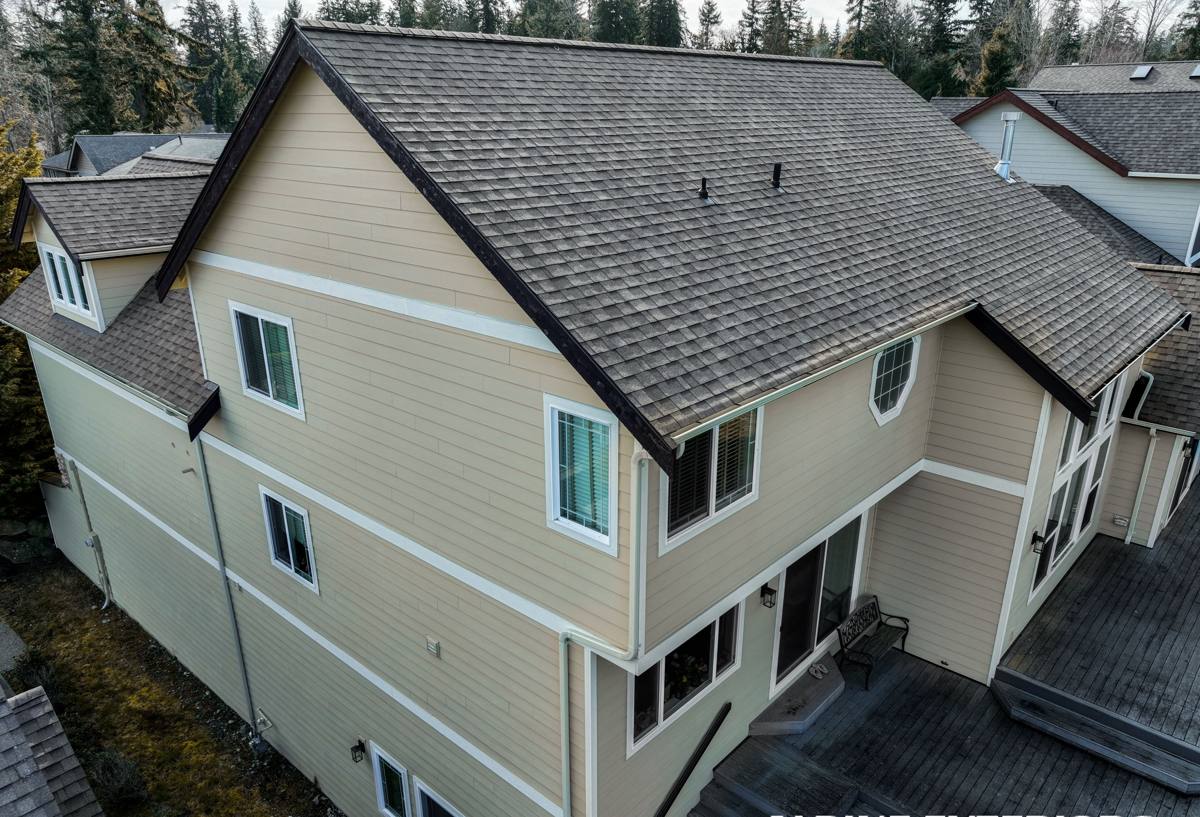
Why the Local Climate Changes the Job
Whatcom County's weather isn't dramatic, but it's relentless. It's the steady, low-grade exposure that wears decks down over time, not any single storm.
Salt Air and Metal Fatigue
Homes closer to the bay get a slow drip of salt-laden moisture on everything metal — fasteners, joist hangers, railing brackets. Standard zinc-coated hardware corrodes faster under that exposure, and once a fastener starts rusting, it can stain the surrounding decking board even if the board itself is fine. This is a hardware decision as much as a decking decision.
Driving Rain and Water Management
Rain here doesn't just fall straight down — wind-driven rain gets pushed sideways into ledger connections, under railing posts, and into any gap where flashing wasn't done right. A deck that looks fine on a dry day can still be taking on water at the house connection every time a storm blows through.
The Long Moss Season
Shaded, north-facing, or tree-covered sections of a Barkley lot can stay damp for months at a stretch. That's exactly the environment moss and algae need. On uncapped or lower-grade composite, and especially on wood, that dampness turns into a slick green film that's both a maintenance headache and a slip hazard on stairs and landings.
What Correct Installation Looks Like Here
Composite boards themselves are fairly forgiving. What determines whether a deck holds up in Bellingham's climate is almost entirely in the substructure and details underneath — the parts you don't see once the job is done.
Framing, Ventilation, and Ground Clearance
Composite decking needs airflow underneath it to stay dry. On lots with poor drainage or a low deck height — common on older Barkley properties where the deck sits close to grade — we look hard at ground clearance and add ventilation gaps or drainage adjustments where the original framing didn't allow for enough. Skipping this step is one of the most common reasons a composite deck develops a musty smell or soft joist ends years down the road, even though the boards on top look perfect.
Fasteners, Flashing, and the Ledger Connection
Every fastener exposed to Whatcom County air should be stainless or a coating rated for coastal exposure — not the standard hardware that's fine 50 miles inland but starts rusting here within a couple seasons. Where the deck attaches to the house, proper flashing and a water-resistant barrier between the ledger and the wall sheathing matters more in a driving-rain climate than almost anywhere else in the build. This is the single most common failure point we find on older decks in this area, composite or wood.
Hidden Fastener Systems and Board Spacing
Most composite lines today use a hidden fastener/clip system instead of face screws, which gives a cleaner look and eliminates the screw-head pockets where water and grime used to collect on older wood and first-generation composite decks. Correct board spacing — not too tight, not too loose — is what lets the boards expand and contract with temperature and moisture without buckling, and it's also what keeps debris from packing into the gaps and holding moisture against the board edge.
Choosing the Right Board for a Barkley Lot
Not every composite product is built the same way, and the right choice depends on how much sun, shade, and moisture a specific deck will actually see. A fully shaded deck under mature trees has different needs than an open, south-facing deck with more direct sun and less standing moisture.
| Decking Type | Moss/Algae Resistance | Maintenance | Typical Longevity Here |
|---|---|---|---|
| Uncapped composite (older-generation) | Moderate — surface can absorb moisture | Periodic cleaning, some fading over time | 15-20 years with upkeep |
| Capped composite (current-generation) | Strong — sealed outer shell resists moisture and staining | Occasional rinse/wash, minimal upkeep | 25-30 years, most carry longer warranties |
| Pressure-treated wood | Weak — porous surface holds moisture, feeds moss | Annual sealing/staining, regular moss treatment | 10-15 years before major repair or replacement |
For most Barkley homes, especially anything with shade for part of the day, capped composite is the more sensible long-term choice. Our standard is to steer clients toward capped boards on shaded or moisture-prone sections of a lot — not because uncapped products or wood are bad materials, but because the maintenance burden they carry doesn't match how most homeowners actually want to spend their weekends.
Our Process, Start to Finish
- On-site assessment — we walk the lot, check sun/shade exposure, drainage, existing substructure condition, and how the deck ties into the house.
- Design and material selection — board style, color, and railing system chosen based on the specific conditions of that section of the yard, not a one-size-fits-all recommendation.
- Permitting — we handle the paperwork required for the scope of the project so you're not chasing that down yourself.
- Demo and substructure work — if replacing an existing deck, we inspect the framing underneath before building over it; rotted or undersized framing gets addressed, not covered up.
- Framing, flashing, and fastening — ledger connection, coastal-rated hardware, and proper ventilation gaps go in before a single composite board is installed.
- Decking, railing, and finish work — hidden fastener installation, board spacing, and railing/stair details completed to the manufacturer's spec (this matters for warranty coverage).
- Final walkthrough — we go over basic care with you before we consider the job finished.
Living With a Composite Deck in a Moss Climate
Composite cuts down maintenance dramatically compared to wood, but "low-maintenance" doesn't mean "no-maintenance" in a climate like this one. A little seasonal attention goes a long way toward keeping a Barkley deck looking and performing the way it should.
- Sweep off fallen leaves and needles regularly in fall — trapped organic debris is what feeds moss growth in shaded corners
- Rinse the deck surface a few times a year, more often on heavily shaded sections, to clear pollen and airborne grime before it builds up
- Keep gutters and downspouts near the deck clear so runoff isn't dumping extra water onto or under the decking
- Check railing posts and stair connections once a year for any movement or loosening
- Trim back overhanging branches where practical to cut down on shade and debris on the deck surface
- Address any standing water or slow-draining spots on the deck surface promptly — it's usually a sign of a leveling or drainage issue, not a defect in the boards
What Drives the Cost of a Barkley Composite Deck
Every lot is different, so exact numbers only come from an on-site look, but these are the factors that move the price up or down most often on jobs in this area.
| Factor | Why It Matters |
|---|---|
| Deck height and substructure access | Decks close to grade or hard to access underneath take more labor to frame and ventilate correctly |
| Board tier (capped vs. uncapped) | Capped composite costs more upfront but reduces long-term maintenance and often carries a longer warranty |
| Railing system | Composite or metal railing systems vary widely in material cost compared to basic wood rail |
| Existing structure condition | Rotted joists, an undersized ledger connection, or old non-compliant framing add repair work before decking can go on |
| Site exposure and drainage | Shaded, low-drainage lots may need extra grading, gravel, or ventilation work to keep the substructure dry |
As a broad range, most composite deck projects in this area land somewhere between $45 and $75 per square foot installed, depending on the factors above — but the only way to know what your specific project costs is to have someone look at it in person.
Why a Crew That Already Works Barkley Is Worth Something
A lot of what separates a deck that lasts 25 years from one that needs rework in 8 comes down to details a contractor either accounts for or doesn't: how much ventilation a shaded lot near Whatcom Creek actually needs, which hardware holds up against bay-area salt exposure, and how much drainage margin to build in for a driving rainstorm that's coming in sideways. None of that is guesswork once you've built decks in this specific area repeatedly — it's just what the job requires here. A crew that already knows Barkley's lots, drainage patterns, and weather doesn't have to relearn those lessons on your project.
If you're planning a new composite deck or replacing an aging one in Barkley, we're happy to come take a look and give you a straightforward, no-pressure estimate — no hard sell, just an honest read on what your specific lot and deck need. Use the form below to get started.