 Bellingham
 Composite Decking Built for York's Conditions
York is one of Bellingham's older, established neighborhoods, and a lot of the homes here have decks that were built decades ago with whatever lumber was standard at the time. If yours is starting to show gray, soft spots, or a permanent green tint no matter how often you scrub it, you already know what Whatcom County weather does to an exposed wood structure. Composite decking is one of the more reliable answers to that problem, but "composite" covers a wide range of products and installation quality, and getting it right in this specific location takes more than ordering boards and screwing them down.
This page is about composite decking specifically for York properties — what the local climate demands, what a correct installation actually involves, and how we approach the job from first look to final walkthrough.
What Bellingham's Climate Does to a Deck
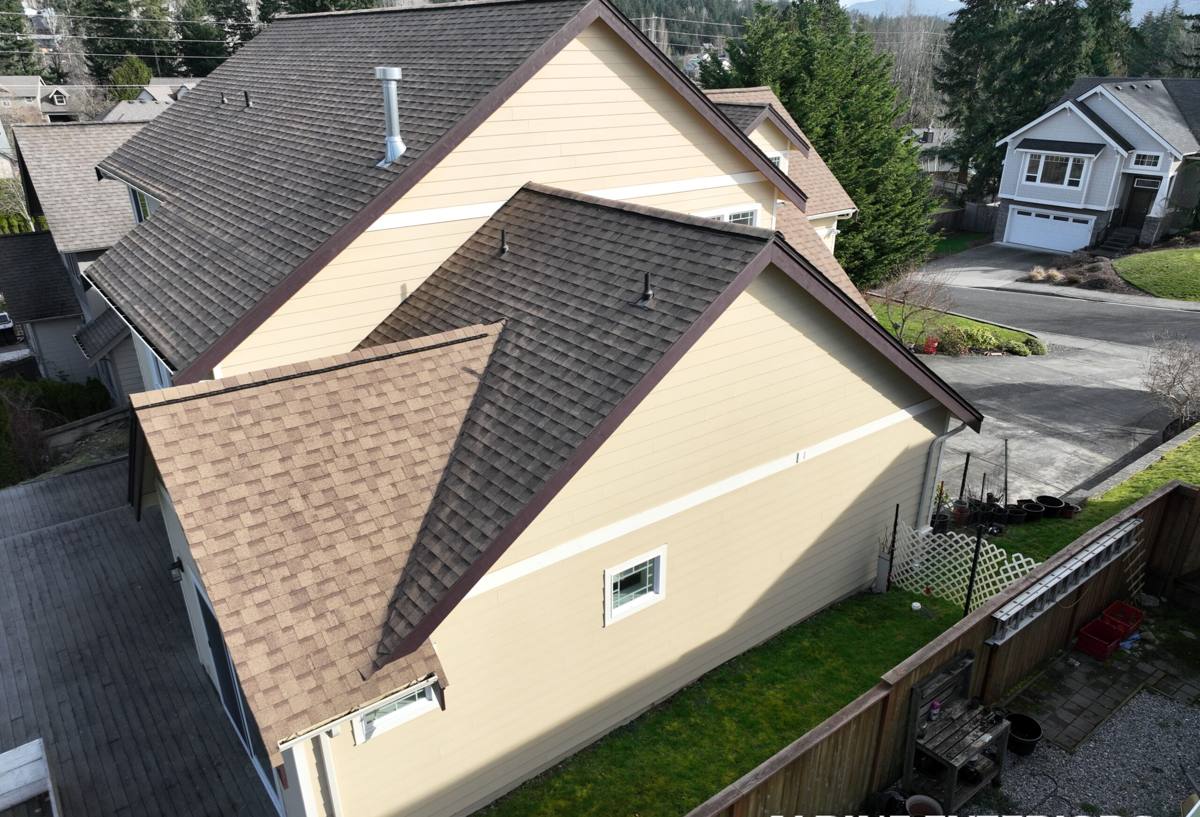
York sits close enough to the water and the general Bellingham Bay air pattern that salt-laden moisture is a real factor for exterior materials, not just a coastal talking point. Combine that with the region's long stretch of driving rain each fall and winter, plus a moss season that can run from early fall through spring, and a deck here is under near-constant low-grade attack.
- Salt air accelerates corrosion on fasteners, brackets, and any exposed metal hardware, which is often the first thing to fail on an otherwise sound deck.
- Driving rain doesn't just fall straight down — wind-driven moisture gets pushed sideways into ledger boards, stair stringers, and any gap where water can collect instead of shed.
- Moss and algae thrive in the shaded, damp conditions common under tree cover and on north-facing decks, and they hold moisture against the deck surface far longer than open sun exposure would.
- Freeze-thaw cycles, while milder here than inland, still stress joints and connections that were built with cheap or minimal hardware.
None of this is unique to York, but it's more pronounced here than in drier, more sheltered parts of Whatcom County, which is exactly why generic decking advice often falls short for homes in this area.
Why Composite Over Wood for This Location
Wood decking isn't a bad product — it's a maintenance commitment. In a climate with this much sustained moisture and moss pressure, that commitment is heavier than most homeowners want to keep up with year after year. Composite decking shifts the equation: instead of annual staining, sealing, and moss scrubbing, you're dealing with a material engineered to resist moisture absorption and surface growth in the first place.
That said, composite isn't maintenance-free, and we won't tell you it is. It still needs periodic cleaning, the substructure underneath still needs to be built and ventilated correctly, and not every composite product on the market performs the same way in a wet, salt-influenced environment. Part of our job is steering you toward products with a track record here, not just whatever's cheapest at the yard.
Composite vs. Other Common Decking Materials
| Material | Moisture Resistance | Moss/Algae Resistance | Ongoing Maintenance | Typical Lifespan Here |
|---|---|---|---|---|
| Pressure-treated wood | Fair, degrades with age | Poor without regular cleaning | Annual staining/sealing | 10-15 years |
| Cedar | Good when sealed | Fair, needs regular treatment | Frequent sealing, higher cost | 12-18 years |
| Composite (mid-grade) | Very good | Good | Periodic washing | 20-25 years |
| Composite (premium, capped) | Excellent | Very good | Occasional washing | 25-30+ years |
The lifespan ranges above assume correct installation. A premium composite board installed over an undersized or poorly ventilated substructure will still fail early — the board is only as good as what's underneath it.
What a Correct Composite Deck Installation Involves
This is where a lot of decks in this region go wrong, and it's rarely the decking material itself. It's what's hidden underneath.
Substructure and Framing
Composite boards are heavier than most wood decking and behave differently under load and temperature swings. Joist spacing needs to match the manufacturer's spec for the specific product, not just standard wood-frame spacing. We also treat every cut end of the framing lumber before it goes in, since a sealed composite deck sitting on untreated, unprotected joists just moves the rot problem out of sight instead of solving it.
Ledger Attachment and Flashing
Where the deck attaches to the house is the single most common failure point we see on older decks in wet climates like this one. Proper flashing — installed so water is directed out and away from the ledger board, never trapped behind it — is non-negotiable. This detail matters more in a driving-rain climate than almost anywhere else in the build.
Drainage and Airflow
Water needs somewhere to go, both off the surface and underneath the structure. That means correct board spacing, a substructure that isn't sitting flush against grade or trapping moisture, and attention to any low spots where water and debris — including moss spores — can collect and sit.
Fasteners and Hardware
Given the salt air exposure in this part of Bellingham, we use corrosion-resistant, code-rated hardware and hidden fastener systems rated for coastal-adjacent conditions. Cheap galvanized fasteners can start showing rust streaks and weakening within a few seasons here — stainless or coated hardware is worth the modest upcharge.
Our Process From Estimate to Finished Deck
- On-site assessment — we look at your existing deck or build site, note drainage, sun/shade exposure, tree cover, and any existing moisture damage.
- Material selection — we walk through composite options and grades suited to your budget and this environment, including color and board profile.
- Written estimate — clear scope, materials, and timeline, no vague allowances.
- Demolition and substructure work — removal of the old deck if applicable, framing repair or rebuild, ledger flashing, and hardware upgrades.
- Composite installation — board layout, hidden fastening, stair and railing work, and edge detailing.
- Final walkthrough — we go over care basics with you before we consider the job done.
Cost Factors for a York Composite Deck
Every deck is different, so we won't quote a number without seeing the site, but these are the main variables that move the price:
- Square footage and shape complexity (multiple levels, angles, or curves cost more than a simple rectangle)
- Condition of the existing substructure — reusable framing versus a full rebuild
- Composite grade selected, from mid-tier boards to premium capped products
- Railing style and material (composite, metal, cable, or glass)
- Stairs, landings, and how much grade change is involved
- Site access — how easily materials and equipment can reach the build area
Generally, composite decking runs a noticeably higher upfront cost than pressure-treated wood, but the gap narrows over the life of the deck once you account for staining, sealing, and moss removal labor that wood demands year after year in this climate.
Living With a Composite Deck in a Moss-Prone Climate
Composite resists moss and algae far better than wood, but "resists" isn't "immune." A deck under heavy tree cover or on the shaded side of a York home will still collect organic buildup over time. The good news is that cleaning composite is simple: a soft-bristle brush, mild soap, and a garden hose handle most seasonal buildup, and a low-pressure wash once or twice a year keeps growth from getting a foothold. Avoid high-pressure washing directly into board grooves, since it can drive water and debris into the fastener channels rather than clearing it out.
A quick seasonal checklist for York homeowners:
- Clear leaves and debris from board gaps before fall rains set in
- Check that gutters and downspouts aren't dumping directly onto or near the deck
- Rinse and brush shaded areas more frequently than sun-exposed sections
- Inspect railing posts and stair connections once a year for movement
- Trim back overhanging branches that keep sections of the deck perpetually damp
Why It Matters to Hire a Crew That Already Works in York
A contractor who mostly builds decks in drier inland areas can still do competent work, but they're often applying general best practices rather than decisions shaped by what actually holds up here. Knowing how much wind-driven rain a west-facing deck in this part of Bellingham takes, which hardware actually resists the salt air over a decade rather than a season, and how aggressive moss growth gets under mature tree canopy in this neighborhood all come from doing this work locally and repeatedly. That local pattern recognition is what separates a deck that looks good at handoff from one that still looks good in year fifteen.
Get a Straightforward Estimate
If your current deck is showing its age, or you're planning a new one and want it built to actually hold up to Whatcom County weather, we're happy to take a look and give you an honest read on your options. Use the form below to request a free, no-pressure estimate for your York property.