 Bellingham
 Board & Batten in Cordata: A Look That Has to Earn Its Keep
Board and batten has become one of the most requested siding profiles in Cordata over the last several years, and it's easy to see why. The vertical lines read as modern farmhouse or craftsman depending on the trim details, and it pairs well with the mix of newer construction and updated older homes you find in this part of north Bellingham. But board and batten is also one of the least forgiving siding styles when it's installed wrong. The wide panels and raised battens create more seams, more fastener penetrations, and more places for water to find a way in than a standard lap profile does. In a climate like ours, that difference matters more than the style choice itself.
This page is about doing board and batten correctly for homes in Cordata specifically — what the local weather asks of this profile, what a correct installation actually looks like, and why we build it exclusively in James Hardie fiber cement rather than the wood or engineered-wood alternatives that are also sold as "board and batten."
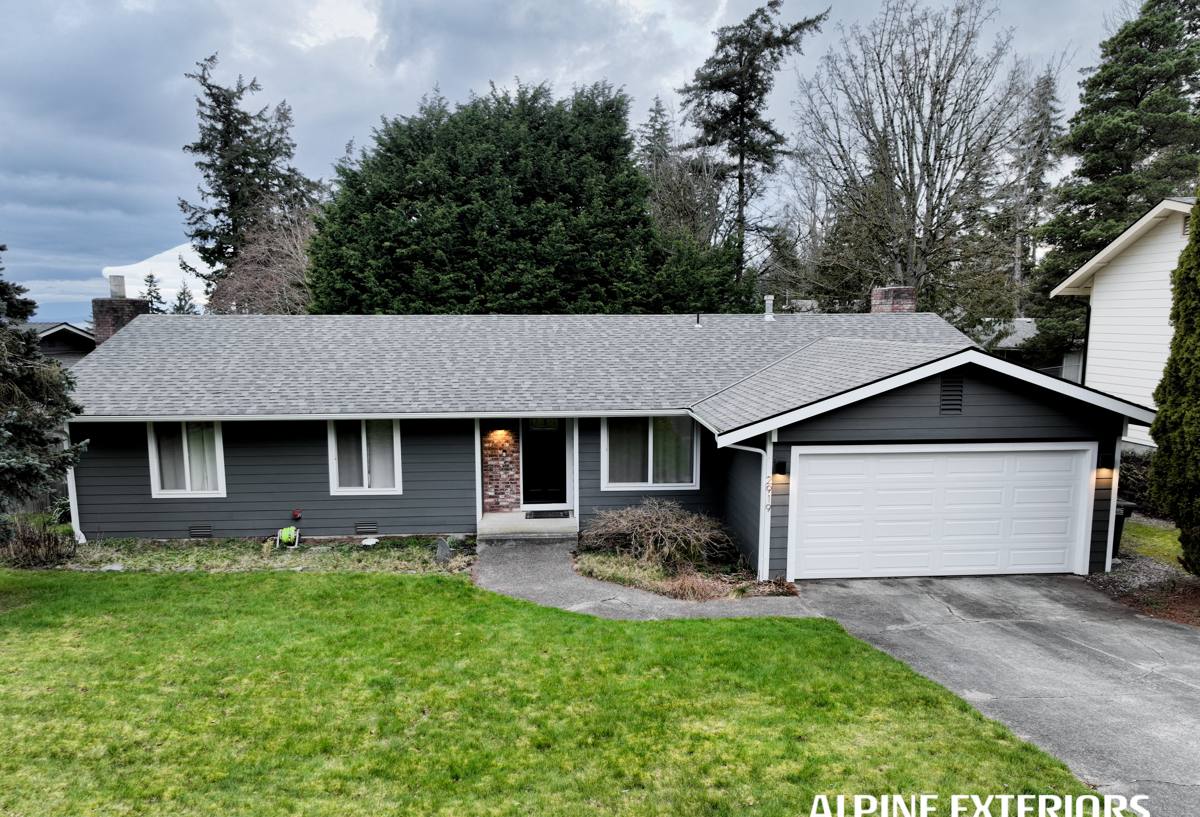
What Bellingham's Climate Actually Does to Vertical Siding
Cordata sits close enough to Bellingham Bay that salt-laden air is a real factor on siding, trim, and fasteners, especially on the sides of a house that face open exposure. Add Whatcom County's driving, wind-pushed rain — not just straight-down rain, but rain that gets pushed sideways into vertical seams and batten joints — and you have two of the harshest ordinary conditions a siding system can face. The third factor is moss. Our moss season here runs long, often eight months or more of damp, low-light conditions that let algae and moss establish on any siding surface that stays wet or shaded, particularly north- and east-facing walls and anything under tree cover.
None of this is unique to Cordata, but it's more pronounced here than in drier parts of Washington, and it's exactly the combination that exposes weak board and batten installations first: batten seams that trap moisture, fasteners that corrode and streak, and painted surfaces that lose their finish faster than the siding itself wears out.
Where Board & Batten Installations Go Wrong
Most board and batten failures we get called out to inspect trace back to a handful of repeatable mistakes, not to the siding material itself:
- No drainage gap behind the panels, so any water that gets past the battens has nowhere to go and sits against the wall sheathing
- Battens relied on caulking rather than proper flashing or layout to keep water out of the seam
- Fasteners driven through both the panel and the batten at the wrong spacing, creating stress points that crack over time
- Field-painted panels (rather than factory-finished) that peel or fade unevenly within a few years in our UV and moisture cycle
- Butt joints and inside corners left unflashed, assuming caulk alone will hold up through a full wet season
Board and batten can absolutely hold up in this climate — it's a common, proven profile in the Pacific Northwest — but only when it's installed with the water management details a vertical profile demands.
What a Correct Installation Involves
Weather-Resistive Barrier and Drainage Plane
Every board and batten job we do starts with a continuous weather-resistive barrier and a drainage gap behind the siding, not directly against the sheathing. That gap is what lets any moisture that does get past the outer siding drain and dry out instead of sitting against the wall. On a vertical profile with more seams than lap siding, this is not optional — it's the difference between a wall that dries and a wall that rots quietly behind a good-looking exterior.
Flashing and Panel Layout
Butt joints, window and door heads, and any horizontal transition need proper flashing, not just sealant. Panel layout is planned before the first piece goes up so seams land in sensible places and battens cover joints cleanly rather than being positioned to use up material.
Fastening and Batten Placement
Fastener type, spacing, and depth follow the manufacturer's installation instructions for our wind and moisture exposure, not a generic pattern. Battens are placed to shed water down and away from the seam underneath rather than funneling it into the joint.
The James Hardie Board & Batten System
We install board and batten using James Hardie's vertical siding panels paired with Hardie trim boards as battens, engineered specifically for high-moisture climates like ours. A few specifics worth knowing:
HZ10 Engineering
James Hardie makes region-specific product formulations, and the HZ10 line is engineered for climates with significant moisture exposure — which describes western Washington well. That engineering affects how the fiber cement handles moisture cycling over decades, not just how it looks on day one.
ColorPlus Factory Finish
Rather than field-painting panels on site, Hardie's ColorPlus finish is baked on at the factory under controlled conditions, which gives a more even, longer-lasting color than a job-site paint job exposed to our weather during and right after application. It also comes with its own finish warranty, separate from the substrate warranty.
Non-Combustible Fiber Cement
Fiber cement doesn't feed a fire the way wood-based sidings can, which matters to insurers and to homeowners thinking about long-term risk, not just aesthetics.
How Board & Batten Materials Compare
| Material | Moisture Behavior | Maintenance | Fit for This Climate |
|---|---|---|---|
| James Hardie fiber cement | Dimensionally stable, doesn't swell/rot from moisture | Occasional wash; factory finish holds color | Engineered for high-moisture regions |
| Primed wood / cedar | Absorbs and releases moisture, prone to swelling and checking | Repainting and sealing on a recurring cycle | Struggles with sustained wet-season exposure |
| Engineered wood (LP-type) | Resists moisture better than solid wood but relies on intact factory coating | Coating damage needs prompt repair to prevent swelling | Workable, but edge and seam sensitivity is a real concern here |
| Vinyl board and batten | Doesn't rot, but flexes and gaps with temperature swings; seams rely on overlap, not flashing | Low maintenance, but limited repairability if damaged | Handles rain fine; less rigid look and can loosen over time |
This is why we standardized on James Hardie rather than offering all of these side by side: the trade-offs on the alternatives are real, and board and batten's extra seams make those trade-offs matter more than they would on a simpler lap profile.
Our Process for Cordata Projects
- On-site walkthrough to assess existing siding, wall condition, and any moisture or moss damage already present
- Layout plan for panel and batten placement, including flashing details at joints, corners, and openings
- Removal of old siding and inspection of sheathing, with repairs addressed before anything new goes up
- Installation of weather-resistive barrier and drainage gap
- Panel and batten installation to manufacturer fastening and spacing specifications
- Final trim, caulking at appropriate transition points only, and a walkthrough with the homeowner
Cost Factors on a Board & Batten Project
| Factor | Why It Affects Price |
|---|---|
| Condition of existing wall sheathing | Rot or moisture damage found during tear-off requires repair before new siding goes on |
| Complexity of trim and batten layout | More corners, gables, and window/door openings mean more cut panels and flashing detail |
| Home height and access | Multi-story sections or steep terrain increase scaffolding and staging time |
| Color and finish selection | Standard ColorPlus colors versus custom finishes can shift material cost |
| Removal and disposal of old siding | Type and condition of the existing material affects tear-off time |
We give homeowners a written estimate that breaks these out rather than a single lump number, so it's clear what's driving the cost on their specific home.
Living With Board & Batten Through a Long Moss Season
Even a correctly installed system benefits from basic upkeep in a climate that stays damp this long. A short annual routine keeps board and batten looking and performing the way it should:
- Rinse siding surfaces, especially shaded and north-facing walls, once or twice a year to slow moss and algae growth
- Keep gutters clear so overflow doesn't run down and pool against batten seams
- Trim back vegetation and tree cover that keeps siding sections shaded and slow to dry
- Have caulking at transition points (not the main seams, which should be flashed rather than caulked) checked every few years
- Address any impact damage promptly rather than letting an exposed edge sit through a wet season
Why a Crew That Already Works Cordata Matters
Board and batten's failure points are almost all installation details — flashing choices, fastening patterns, drainage planning — that don't show up on a spec sheet and aren't visible once the siding is up. A crew that has already worked through a wet season in Cordata and the surrounding Whatcom County area has seen how these details actually perform locally, not just how they're described in an installation manual. That's the gap between a board and batten job that looks right on install day and one that still looks and performs right five wet seasons later.
If you're considering board and batten siding for a home in Cordata, we're glad to take a look and talk through what your specific home needs. Fill out the form below for a free, no-pressure estimate.