 Bellingham
 What Cordata's Climate Actually Does to Siding
Cordata sits close enough to Bellingham Bay and the broader Salish Sea shoreline that salt-laden air is a real factor in how exterior materials age here, not a theoretical one. Add Whatcom County's long stretch of driving rain from fall through spring, plus a moss and mildew season that can run eight months or more in shaded, north-facing yards and tree-lined lots, and you have a climate that is quietly hard on siding even when nothing looks obviously wrong from the street.
Salt air accelerates corrosion on exposed fasteners and metal trim. Wind-driven rain finds every gap in flashing, caulking, and butt joints, then works behind the cladding rather than off of it. And moss doesn't just grow on roofs — it colonizes horizontal siding laps, trim ledges, and anywhere moisture sits a little too long, holding water against the material and feeding rot underneath. None of this is unique to Cordata, but the combination of coastal exposure and heavy tree cover in this part of Bellingham makes the margin for error smaller than it looks.
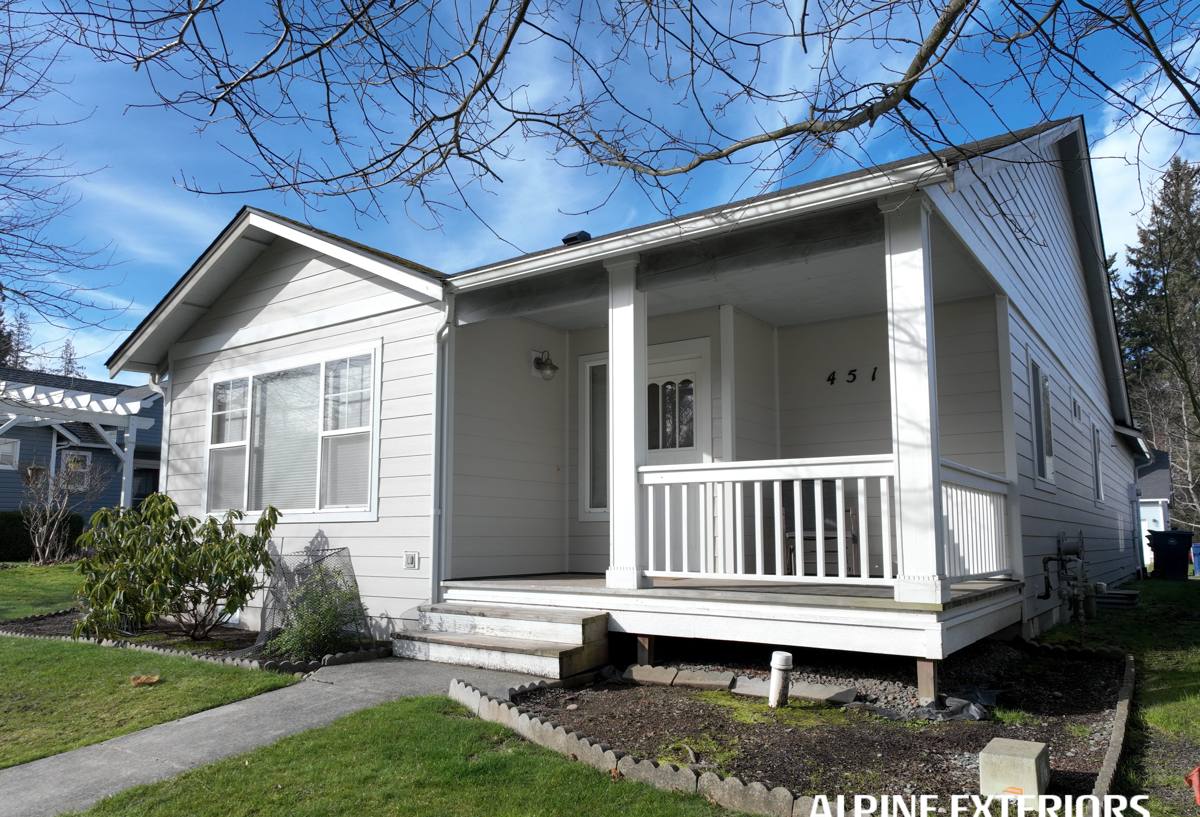
Why We Install James Hardie and Nothing Else
We standardized on James Hardie fiber cement siding for every job we do, including here in Cordata, and we turn down requests to install vinyl, LP SmartSide, cedar, primed spruce, or other fiber cement brands. That's not a marketing position — it's a decision based on what actually holds up in this climate over decades, not just the first few years.
Hardie's fiber cement is non-combustible, doesn't swell or delaminate the way wood-based and some engineered wood products can when they take on repeated moisture, and comes factory-finished with ColorPlus technology — a baked-on finish that resists the fading and chalking that plain field-painted siding shows first in coastal sun and salt exposure. Hardie also engineers specific product lines (the HZ5 line, for example) for wetter, more variable climates like the Pacific Northwest, which matters more in a place like Cordata than in a dry inland market. The warranty is transferable and backed by a large, established manufacturer, which carries real weight if you sell the home down the road.
We're not saying every other product is unusable everywhere — we're saying that for the way we build and the climate we build in, Hardie is the one product where we can stand behind the long-term result without hedging.
What This Means in Practice
If you're comparing quotes and one contractor is proposing vinyl or an engineered wood product at a lower price point, that's worth discussing honestly with them about maintenance and moisture behavior over 15-20 years, not just the installed price today. We're happy to explain the trade-offs directly if you want a second opinion.
What a Correct Installation Involves
The siding material is only part of the equation. Most siding failures we get called out to inspect in this region trace back to installation shortcuts, not the product itself. A correct James Hardie install on a Cordata home involves several layers working together.
Weather-Resistive Barrier and Drainage Plane
A properly lapped weather-resistive barrier goes on before the siding, and on most jobs we use a rainscreen gap behind the cladding. That gap lets any moisture that does get past the siding drain and dry out instead of sitting against the sheathing — a detail that matters more here than in drier climates precisely because of how much driving rain this area gets.
Flashing and Trim Details
Window and door flashing, kick-out flashing at roof-to-wall intersections, and proper head flashing above trim boards are where water intrusion actually starts on most homes. These details don't show up in a quick visual estimate, but they're the difference between siding that lasts and siding that looks fine for a few years before problems appear behind it.
Fastening and Fastener Choice
Hardie specifies fastener type, spacing, and placement for a reason — improper fastening is one of the most common causes of buckling, cracking, and warranty denial. In a salt-air environment, using corrosion-resistant fasteners rated for the exposure isn't optional; it's what keeps rust streaks and fastener failure from showing up years earlier than they should.
Joints, Caulking, and Clearances
Butt joints need to be sealed correctly or backed with flashing, siding needs proper clearance from grade, roof lines, and decks, and caulking has to be the right product for a fiber cement substrate. Skipping any of these is exactly how moss and moisture find a foothold within a few seasons.
Comparing Hardie Product Options
Not every part of a home calls for the same profile. Here's how the main James Hardie product lines typically get used on homes in this area:
| Product | Best Use | Why It Fits This Climate |
|---|---|---|
| HardiePlank lap siding | Main wall surfaces | Traditional lap look; HZ5 formulation engineered for wet, variable Pacific Northwest conditions |
| HardiePanel vertical siding | Accent walls, gables, modern facades | Fewer horizontal ledges for moss and debris to collect on |
| HardieShingle | Accent areas, gables, Craftsman-style detailing | Textured look without the moisture risk of real wood shingles |
| HardieTrim | Corners, window and door surrounds, fascia | Won't rot or absorb water at end-grain cuts the way wood trim does |
Moss, Mildew, and Ongoing Maintenance
Even correctly installed siding needs some basic upkeep in a climate like Cordata's. The good news is that ColorPlus-finished Hardie siding needs far less than painted wood or unfinished fiber cement.
- Rinse siding annually, especially on shaded or north-facing walls where moss and algae take hold first
- Keep gutters clear so overflow doesn't run down and pool against siding laps
- Trim back trees and shrubs to keep airflow moving across wall surfaces and reduce prolonged dampness
- Check caulking at trim and joints every couple of years and re-seal if it's cracked or pulling away
- Look at fastener heads periodically for rust staining, which can signal the wrong fastener was used originally
None of this is heavy maintenance — it's closer to what you'd already be doing for gutters and landscaping — but skipping it in a moss-prone microclimate lets small problems compound faster than they would in a drier region.
Our Process, Start to Finish
We keep the process straightforward and the same whether the job is a single accent wall or a full re-side:
- On-site assessment of existing siding, trim, flashing, and any moisture or rot already present behind the wall
- Honest scope discussion — what needs full replacement versus what can be addressed selectively
- Written estimate with product lines, colors, and a realistic timeline based on Whatcom County weather windows
- Removal of old siding and inspection of sheathing, with repairs made before anything new goes on
- Installation of weather-resistive barrier, rainscreen where specified, flashing, and James Hardie siding to manufacturer spec
- Final walkthrough covering what was done and basic care going forward
What Affects the Cost of a Job Like This
| Factor | Why It Matters |
|---|---|
| Extent of existing damage | Rotted sheathing or framing found during tear-off adds repair work before new siding can go on |
| Product line and profile mix | Combining lap siding with panel accents or shingle detailing changes material and labor needs |
| Home size and wall complexity | Dormers, multiple gables, and cut-up wall lines take more time than simple rectangular walls |
| Trim scope | Full trim replacement alongside siding costs more but avoids mismatched old wood trim against new siding |
| Access and site conditions | Tree cover, tight lot lines, and grade changes common in parts of Cordata can affect setup and labor time |
We give real, project-specific numbers after seeing the home — broad ranges without an on-site look tend to be more misleading than helpful.
Why a Crew That Already Works Cordata Matters
A contractor who works this specific part of Bellingham regularly already understands the practical realities: which lots hold moisture longer because of tree cover, how salt exposure varies depending on proximity and prevailing wind, and what permitting and inspection expectations look like locally. That familiarity shows up in fewer surprises mid-project and fewer callbacks after the fact.
It also matters for something less visible: knowing what "normal wear" looks like on a five-year-old Hardie install in this climate versus what's actually a sign of a flashing or fastening mistake. A crew that's seen both on real homes in this area is better positioned to install it right the first time.
Questions Worth Asking Before You Hire
- Do you install James Hardie specifically, and are your installers factory-trained on it?
- Will you use a rainscreen or drainage gap behind the siding on this home?
- What fastener type will you use, and is it rated for coastal/salt-air exposure?
- How do you handle flashing at windows, doors, and roof-to-wall intersections?
- What does your warranty cover, separate from Hardie's manufacturer warranty?
If you're weighing a siding project on a Cordata home, we're glad to take a look and give you a straightforward, no-pressure estimate — including an honest read on what your current siding is actually telling you. Use the form below to get started.