 Bellingham
 Building a Deck in Sehome: What Bellingham's Climate Actually Demands
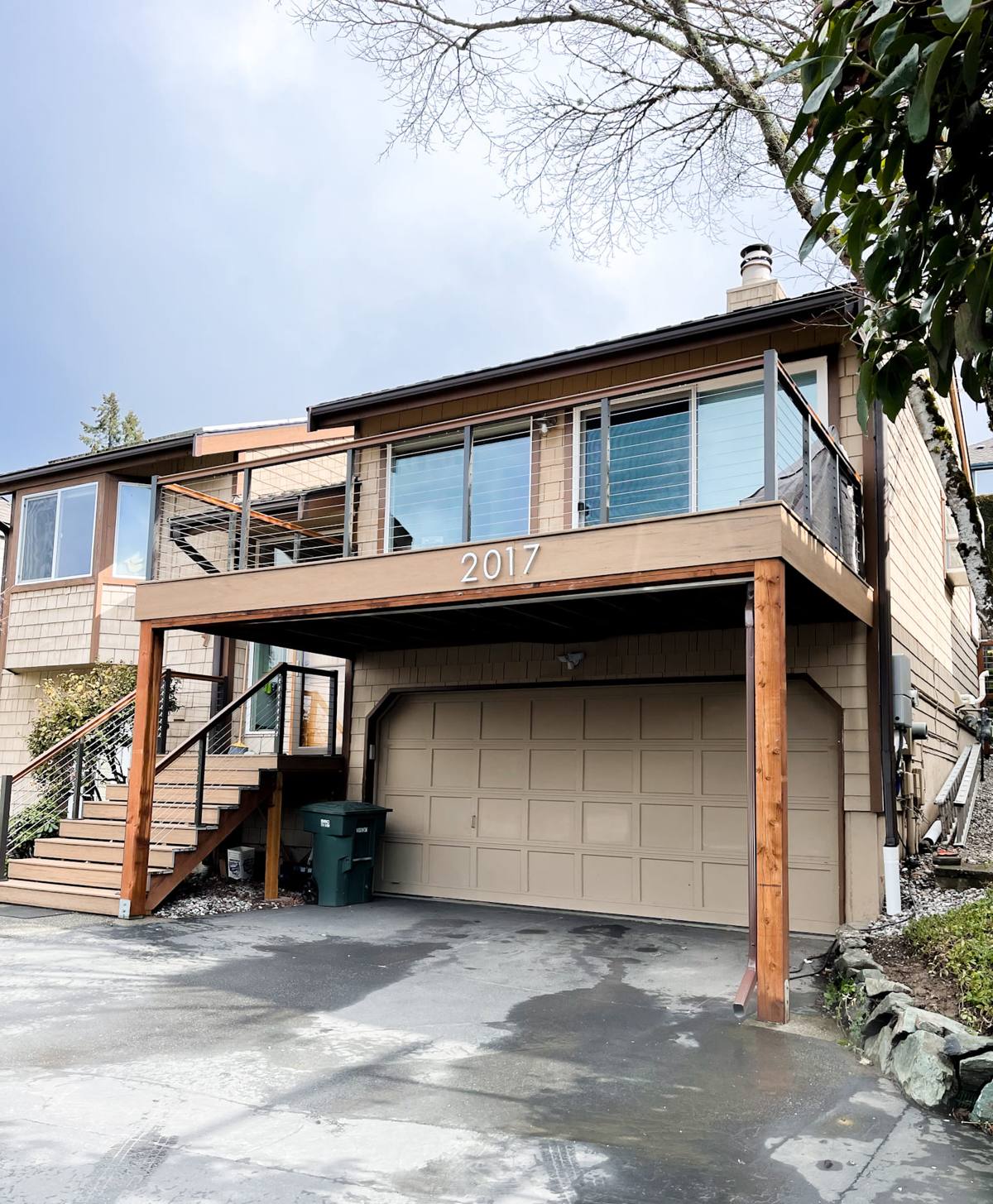
Sehome sits on hillside terrain with a heavy tree canopy, and that combination changes how a deck should be built compared to a flat, open lot elsewhere in the region. Between the marine air off Bellingham Bay, the driving rain that Whatcom County sees for a good chunk of the year, and shade that lingers on tree-covered lots, a deck here takes on more moisture stress — and holds onto it longer — than the same deck built somewhere sunnier and drier. A well-built deck can handle all of that for decades. A deck built to a generic, one-size-fits-all spec usually starts showing problems within a few wet seasons: soft spots at the ledger, black staining that won't scrub off, rust streaks from the wrong hardware, and boards that stay slick well into late spring.
None of that is inevitable. It comes down to material choices, framing details, and fastener selection that account for how much water this area actually sees and how long it takes to dry out between storms.
The Sehome Factor: Hillside Lots, Mature Trees, and Shade
A lot of Sehome's charm — mature fir and cedar cover, established landscaping, hillside lots with some grade change — is exactly what makes deck maintenance harder here than in a newer, more exposed subdivision. Tree cover means less direct sun to dry a deck surface after rain, more organic debris (needles, pollen, leaf litter) settling into board gaps, and root systems nearby that can affect footing placement. Sloped lots often call for taller substructures, which means more exposed framing and more surface area for moisture and airflow to matter.
None of that rules out a great deck. It just means the build has to be planned around the site instead of dropped onto it. We look at sun exposure, tree proximity, slope, and drainage before we talk materials — the right approach for a shaded, sloped Sehome backyard is often different from what we'd spec on a flat, open lot a few miles away.
Choosing Decking Material for Long-Term Performance
Every decking material handles Pacific Northwest moisture differently. The right choice depends on your budget, how much upkeep you're willing to do, and how much shade your specific lot gets.
| Material | Moisture & Moss Resistance | Maintenance | Typical Lifespan |
|---|---|---|---|
| Pressure-treated wood | Moderate — needs sealing to resist moss and checking | Annual cleaning, re-sealing every 1–2 years | 10–15 years |
| Cedar | Good natural resistance, but surface still hosts moss in shade | Cleaning and oiling every 1–2 years to hold color and resist mildew | 15–20 years |
| Composite (capped) | Very good — non-porous surface resists moisture absorption | Periodic washing; no sealing or staining | 25–30+ years |
| PVC/vinyl decking | Excellent — fully impervious to moisture | Occasional washing only | 25–30+ years |
We install all of the above and won't push one material as a blanket answer — a shaded Sehome lot under heavy tree cover is a different conversation than an open, sun-exposed yard. What we won't do is spec a low-grade composite or an uncapped board on a heavily shaded site and let a homeowner find out the hard way that it wasn't built for that much sustained moisture. If a product isn't a good match for your site's shade and drainage, we'll say so up front rather than sell it anyway.
Wood vs. Composite: The Honest Trade-Offs
Wood costs less up front and can be refinished if it gets damaged, but it demands real annual maintenance to stay ahead of moss and rot in a climate this wet — skip a season of sealing and you're playing catch-up. Composite and PVC cost more initially but shed water instead of absorbing it, which matters most on shaded lots where a wood deck simply doesn't get enough sun exposure to dry out between storms.
Framing and Substructure: Where Most Deck Failures Actually Start
Almost every deck failure we get called out to look at started below the surface boards, not on top of them. The visible decking gets all the attention, but the ledger board, joists, and hardware are what actually determine whether a deck lasts 10 years or 30.
Ledger Flashing and Water Management
The ledger — where the deck attaches to the house — is the single most common failure point on any deck in a wet climate. Without proper flashing that directs water away from the house band board, water tracks behind the ledger and rots the framing from the inside, often for years before anyone notices from the outside. We flash every ledger connection correctly and never rely on caulking alone to keep water out.
Fasteners and Hardware in a Salt-Air Climate
Bellingham's proximity to salt water means airborne salt is a real factor for exterior metal, even a few miles inland. Standard electro-galvanized fasteners and connectors corrode faster here than their ratings suggest. We use hot-dip galvanized or stainless steel hardware rated for coastal exposure, along with corrosion-resistant structural connectors at every ledger, post base, and beam connection — not just at the points that are easy to see.
Joist Protection and Airflow Underneath
Joist tape over the tops of joists keeps standing water from sitting directly on cut lumber, which is one of the cheapest, most effective upgrades against rot. Underneath, we account for airflow so the substructure can actually dry between storms instead of staying damp for weeks at a time — this matters even more on shaded, tree-covered lots where sun never really reaches under the deck.
Moss, Algae, and Slip Safety Through a Long Wet Season
Whatcom County's moss season runs long, and a shaded Sehome yard can stay damp enough to grow moss on decking almost year-round in spots that never see direct sun. Beyond the cosmetic issue, moss and algae buildup on decking is a genuine slip hazard, especially on stairs.
Board spacing, surface texture, and drainage slope all affect how much moss a deck grows. A deck built with tight, poorly-drained gaps and a smooth, low-traction surface in full shade will grow moss noticeably faster than one built with adequate spacing, a slight drainage pitch, and a surface texture designed for wet-climate traction. We factor sun exposure and drainage into the layout itself, not just the material choice.
Our Process for a Sehome Deck Build
- Site walk and assessment — we look at slope, tree cover, sun exposure, existing drainage, and how the deck will tie into the house.
- Design and material selection — sized and specced for your site's actual conditions, not a generic template.
- Permitting — we handle the paperwork with the appropriate local building department before work starts.
- Framing and flashing — proper ledger flashing, corrosion-resistant hardware, and joist protection installed first, since this is the part that determines longevity.
- Decking installation — laid with attention to drainage pitch and airflow underneath.
- Final walkthrough — we go over care and maintenance specific to your deck's material and sun exposure.
Permits and Guardrails: What to Expect
Most raised or attached decks require a building permit, and guardrail height and spacing requirements apply once a deck reaches a certain height off grade — these are code items, not optional upgrades. On sloped Sehome lots, taller substructures often mean guardrails and stair details come into play more often than on a flat, single-story-height deck. We design to code from the start so there's no rework or failed inspection to deal with later, and we pull permits as part of the job rather than leaving that step to the homeowner.
Maintenance Checklist for Sehome Homeowners
Whatever material you choose, a few habits make a real difference in how long your deck stays solid and safe in this climate:
- Sweep needles, leaves, and debris out of board gaps regularly, especially in fall
- Clean moss and algae off decking and stairs at least once a year, more often on heavily shaded areas
- Check that gutters and downspouts near the deck aren't dumping extra water onto or under it
- Inspect ledger flashing and fastener heads for rust or gaps once a year
- Reseal wood decking on the schedule the product calls for — don't wait until it looks dry
- Confirm under-deck airflow isn't blocked by stored items or overgrown landscaping
Why Hiring a Crew That Already Works in Sehome Matters
A lot of deck problems in this area trace back to a crew that built to a generic spec without accounting for local conditions — the wrong hardware grade, a ledger flashed like it's for a dry climate, or decking chosen without thinking about how much shade the lot actually gets. Working regularly in Sehome and the surrounding Bellingham neighborhoods means we already know how hillside lots drain, how much tree cover typically shades a given yard, and which details matter most given how long this area stays wet. That familiarity shows up in fewer callbacks and a deck that's still solid well past the point a poorly-specced one would be showing problems.
If you're planning a new deck or replacing one that hasn't held up, we're happy to walk your property, look at your specific sun and drainage conditions, and put together a straightforward, no-pressure estimate. Use the form below to get started.