 Bellingham
 Why Edgemoor's Windows Work Harder Than Most
Edgemoor sits on the bluff above Bellingham Bay, and that view comes with a trade-off: homes here take weather straight off the water. Salt-laden air, wind-driven rain, and a long stretch of gray, wet months put more stress on window frames, glazing, and seals than you'd see on a home a few miles inland. If your windows are original to the house or getting up toward the end of their service life, that exposure shows up faster here than it would in a more sheltered part of Whatcom County.
Salt air and metal fatigue
Airborne salt from the bay accelerates corrosion on aluminum frames, hardware, and old single-pane spacers. You'll often see pitting on hinges and locks, or a chalky film on frames, well before the glass itself fails.
Driving rain and wind-loaded walls
Bluff-facing homes take rain at an angle, not straight down. That means water gets pushed sideways into gaps around a window opening that would stay dry on a more protected wall. Weak flashing or old caulk lines are where this shows up first — as staining, soft trim, or a drafty feeling on windy nights.
Moss season and hidden moisture
Bellingham's long wet season keeps moss and algae active on north- and west-facing surfaces for much of the year. On windows, that moisture holding pattern isn't just cosmetic — it keeps wood sills and old sealant damp for weeks at a time, which is exactly the condition that leads to rot and seal failure.
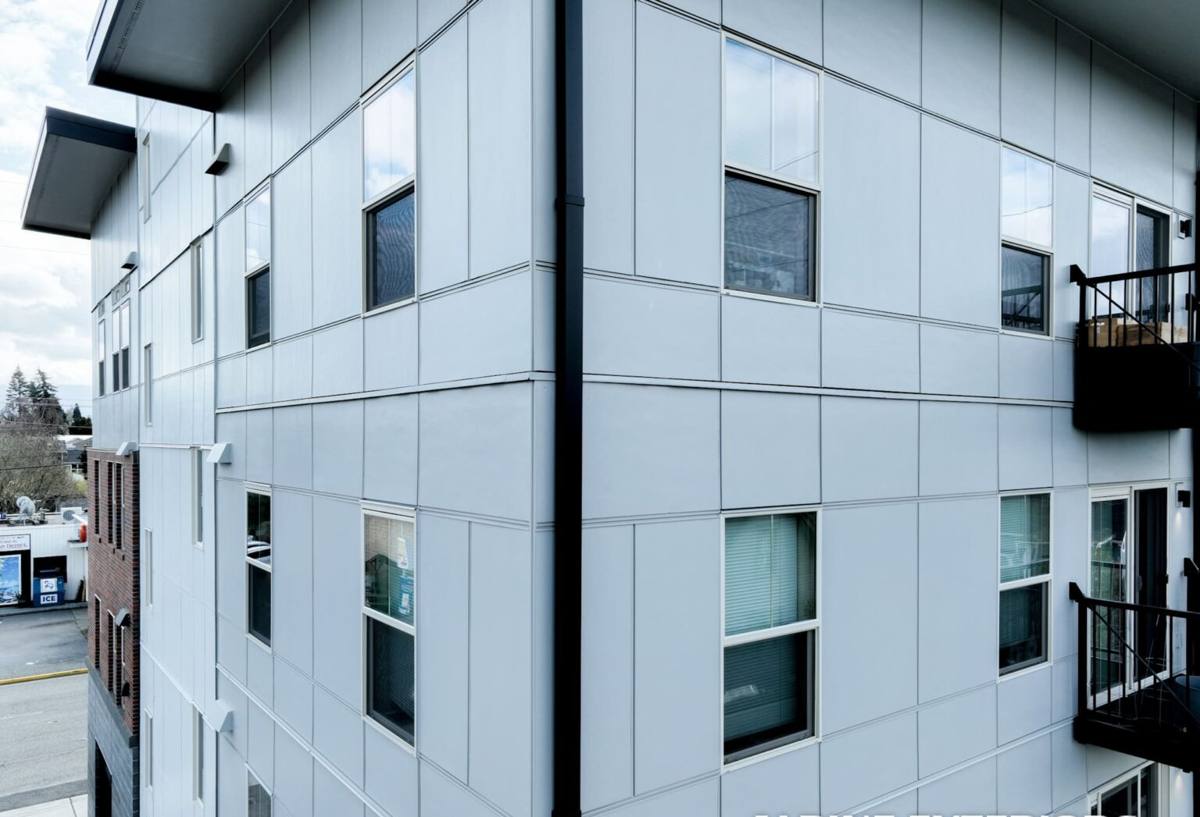
What "Custom" Actually Means Here
Custom doesn't mean fancy — it means the window is built and installed to match your home's actual openings and construction, not a generic stock size squeezed into place. Edgemoor has a mix of older homes with settled, slightly out-of-square openings and newer construction with modern framing. Both need accurate measurement and, often, a bit of problem-solving that off-the-shelf replacement work skips.
A custom approach also means matching sightlines, trim profiles, and grid patterns so a replacement window doesn't look bolted on. On a home where the windows are a big part of the curb appeal — and on view-oriented lots, they usually are — that detail matters as much as the performance specs.
Signs It's Time to Replace, Not Patch
Repair makes sense when the frame and structure are sound and the problem is isolated — a failed seal on one unit, a broken sash cord, a cracked pane. Replacement makes more sense once the damage is systemic. Common signs we look for on Edgemoor homes:
- Fogging or a hazy film between panes — the seal has failed and the gas fill or air gap is compromised
- Soft or spongy wood at the sill or bottom corners of the frame
- Persistent condensation on the inside of the glass, even in mild weather
- Visible daylight or a draft you can feel around the frame when it's windy
- Windows that are difficult to open, close, or lock — often a sign the frame has shifted or swollen
- Paint or finish that keeps failing in the same spot no matter how often it's touched up
If you're only seeing one of these on one window, a repair or resealing job may buy you more years. If you're seeing several of these across multiple windows, especially on the bay-facing side of the house, replacement is usually the more cost-effective call.
Choosing a Frame Material for a Bay-Facing Home
There's no single "best" material — the right choice depends on how exposed the wall is, how much upkeep you want to do, and what look you're after. Here's how the common options hold up in this specific climate:
| Material | How it handles salt air & moisture | Maintenance | General cost position |
|---|---|---|---|
| Vinyl | Doesn't corrode; performs well against salt air and rain | Low — no painting, occasional cleaning | Lower to mid |
| Fiberglass | Excellent — very stable in wet, temperature-swinging conditions, resists warping | Low | Mid to higher |
| Wood-clad (exterior-clad, wood interior) | Good if cladding and flashing are done correctly; the wood interior needs protection from any moisture that gets past the exterior shell | Moderate — interior finish upkeep | Higher |
| Bare aluminum | Poor in salt air without upgraded, marine-grade coatings — prone to pitting and corrosion over time | Moderate to high | Varies |
For most Edgemoor homes taking direct exposure off the bay, we steer clients toward vinyl or fiberglass for the working parts of the window — not because wood or aluminum are bad products, but because they demand more consistent upkeep to hold up in this specific environment, and a missed maintenance cycle costs more here than it would somewhere drier.
Glass and glazing
Double-pane, low-E glass is the practical baseline for this region — it cuts heat loss, reduces condensation risk, and holds up well through Whatcom County's mild-but-damp winters. Triple-pane adds another layer of insulation and sound dampening, which is worth considering on a wind-exposed, bay-facing wall where noise and heat loss are both a bigger factor than on a sheltered interior wall.
The Installation Details That Actually Prevent Leaks
Most window failures we see aren't a bad window — they're a window that wasn't sealed and flashed correctly for a wet, wind-driven climate. On a wind-exposed wall, the installation details matter as much as the product itself:
- Proper flashing integration with the existing weather-resistive barrier, lapped correctly so water sheds outward and down, not into the wall cavity
- Sill pan flashing under every opening, so any water that does get past the primary seal has somewhere to drain instead of sitting on the sill
- Correct backer rod and sealant depth at the perimeter — too thin a bead fails fast in freeze-thaw and constant damp cycles
- Proper shimming so the frame sits square and doesn't rack over time, which is what causes seals to open up years down the road
- Insulation in the gap between the new frame and rough opening, not just caulk at the surface
Skipping any one of these doesn't usually cause a problem on day one — it shows up two or three wet seasons later as a stain on the interior wall or a soft spot in the trim. That delay is exactly why installation quality is harder to judge up front and worth asking about directly.
How We Approach a Custom Window Job in Edgemoor
- On-site assessment. We look at the existing frames, flashing, and any sign of moisture intrusion before talking product — the condition of the opening drives the plan, not the other way around.
- Precise measurement. Every opening gets measured individually. On older homes, openings are rarely perfectly square, and we account for that rather than forcing a stock size to fit.
- Material and glazing selection. We walk through frame material, glass package, and grid/trim options based on your home's exposure and style, with honest trade-offs on cost and upkeep.
- Removal and inspection. Once the old window comes out, we check the framing and sheathing underneath for hidden rot or moisture damage before anything new goes in — this is where problems that caused the original failure get found and fixed.
- Installation with full flashing and sealing. Sill pan, flashing tape, backer rod, and sealant go in as a system, not an afterthought.
- Final check and cleanup. Operation, seal, and finish work get checked before we call the job done, and the site is left clean.
Why a Crew That Already Works Edgemoor Matters
Bay-facing homes on a bluff have specific access, wind, and moisture considerations that a crew unfamiliar with the area has to learn on your job. A crew that already works in and around Bellingham knows what driving rain off the bay does to a poorly flashed opening, what the local wet season does to an unfinished sill, and how to sequence work around Whatcom County's weather windows instead of guessing. That local familiarity translates into fewer surprises, tighter installs, and a job that's planned around the conditions your house actually faces rather than a generic checklist.
Keeping New Windows Performing Through Whatcom County Winters
A correctly installed custom window is low-maintenance, not no-maintenance. A little seasonal attention goes a long way toward getting the full service life out of the investment:
- Rinse salt residue and grime off frames and glass a couple of times a year, especially on the bay-facing side
- Check and clear weep holes so water can drain out instead of pooling in the frame
- Inspect exterior caulk lines each fall before the wet season sets in, and touch up any cracked or separated sealant
- Keep gutters and downspouts clear so roof runoff isn't sheeting down over window heads
- Wipe down interior sills after heavy condensation events, particularly in unheated or infrequently used rooms
- Trim back vegetation or moss growth that's holding moisture against the frame or trim
What Drives Cost on a Custom Window Job
Every job is different, but the main cost factors are consistent: the number and size of openings, frame material, glazing package (double vs. triple pane), whether the trim or siding needs repair from prior water damage, and how much of the existing flashing has to be rebuilt rather than reused. A single-window repair sits at the low end; a full-home replacement with upgraded glazing and full flashing rework sits at the higher end. We'll always walk you through where your specific job falls and why, rather than quoting a number without context.
If your windows are showing wear, fogging, or drafts, or you're planning ahead for a full replacement, we're happy to take a look and give you a straightforward, no-pressure estimate — use the form below to get started.