 Bellingham
 Decks Built for the Puget Area's Conditions, Not a Catalog Photo
A deck in the Puget area of Bellingham lives a different life than one in a dry inland climate. Between salt-laden air off the water, long stretches of driving rain, and a moss season that can run from fall through spring, the structure and surface underneath your feet are under near-constant low-grade attack. Most of the deck problems we get called out for in this area aren't dramatic failures — they're slow ones. Fasteners that corrode quietly for years. Ledger connections that trap water against the house. Boards that hold moss and stay damp two extra days after every rain, which is exactly the two extra days that rot and mildew need to get going.
Building a deck that holds up here isn't about using fancier materials than everyone else. It's about respecting what Whatcom County weather actually does to wood, fasteners, and framing over ten, twenty, thirty years — and building accordingly from the first stake in the ground.
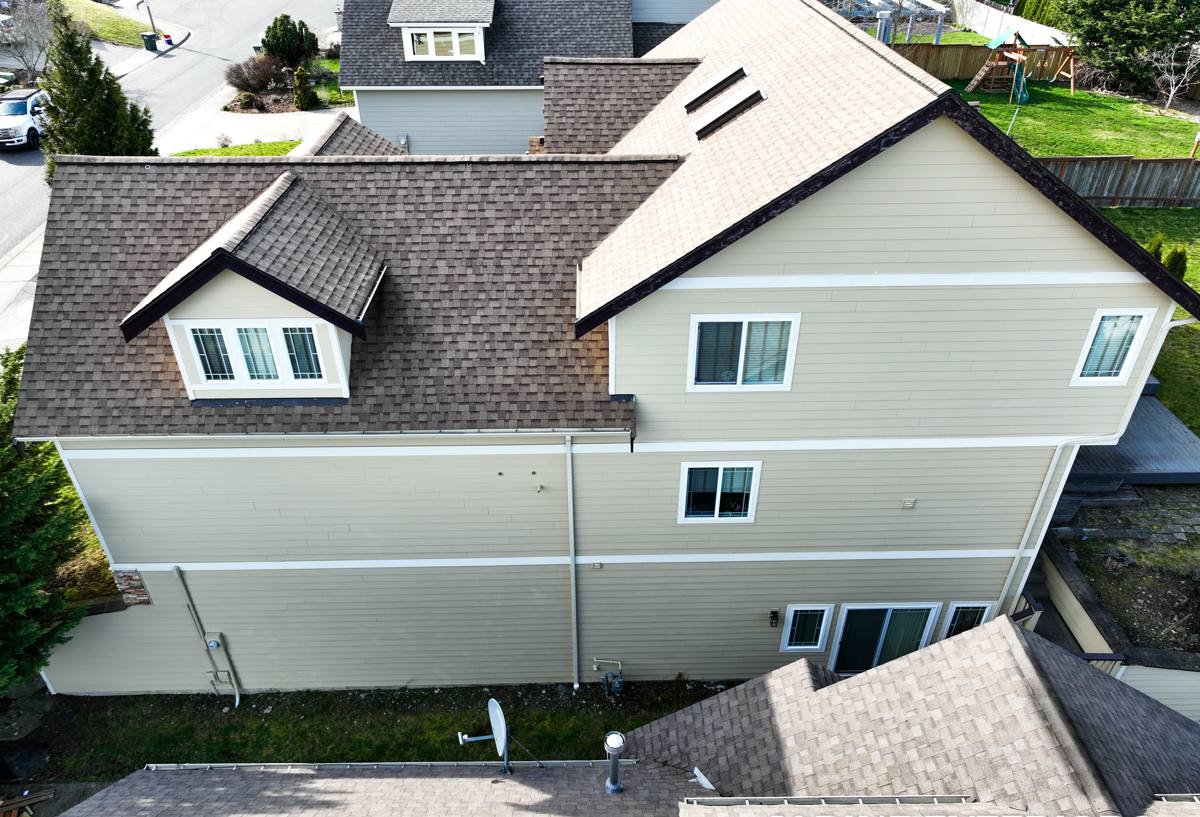
What the Local Climate Actually Does to a Deck
Salt Air and Metal Fatigue
Proximity to Puget Sound means airborne salt is a real factor, even a few miles inland. Standard coated fasteners and connectors can start showing surface corrosion faster here than in a landlocked town the same distance from the coast. Once a fastener starts to corrode, its holding strength degrades — slowly at first, then all at once, often right when a deck sees the most weight during a summer gathering.
Driving Rain and Water Intrusion
Rain here doesn't just fall, it drives — pushed sideways by wind off the water. That matters for ledger boards, flashing, and any point where the deck attaches to the house. A ledger connection that would be fine in a calm-rain climate can let water track sideways and get behind the flashing here, quietly soaking the rim joist and sill plate for years before anyone notices a soft spot.
Moss Season
Shaded decks, north-facing decks, and decks under tree cover in this area can grow moss for the better part of the year. Moss holds moisture against the deck surface, blocks airflow to the wood or composite underneath, and turns boards slick and dangerous underfoot. Left alone, it accelerates rot in wood decking and can stain and etch some composite and PVC surfaces over time.
What a Correctly Built Deck Looks Like Here
The visible decking is the smallest part of what determines whether a deck lasts. The framing, fasteners, and water management underneath do the real work.
Framing and Fasteners
- Structural connectors and fasteners rated for coastal/high-corrosion exposure, not just standard exterior-grade hardware
- Joist hangers and structural screws sized and spaced to current code, not "close enough"
- Posts set on proper footings below frost depth and away from standing water paths
- Pressure-treated framing lumber with cut ends field-treated before they're buried in the structure
Ledger and Water Management
Where the deck meets the house, we flash it so water sheds away from the wall assembly, not into it — proper ledger flashing, correct fastening through to solid framing, and a gap or membrane strategy that keeps water from tracking behind the siding. This single connection point causes more hidden rot than any other part of a deck, and it's the one area where cutting corners never shows up until the damage is already done.
Decking Surface Choice
Wood, composite, and PVC decking all perform differently once moss and driving rain enter the picture. None of them is wrong — the right choice depends on how much sun the deck gets, how much maintenance the homeowner actually wants to do, and budget.
| Decking Type | Moss & Moisture Behavior | Maintenance | Typical Lifespan Here |
|---|---|---|---|
| Pressure-treated wood | Absorbs moisture; needs to dry out between rains or moss and mildew take hold | Annual cleaning, periodic staining/sealing | 10-15 years before major boards need replacing |
| Cedar | Naturally more rot-resistant than treated pine but still absorbs water; shaded spots grow moss readily | Regular cleaning, periodic sealing to hold color and resist moisture | 15-20 years with upkeep |
| Composite decking | Won't rot, but surface can hold moss/mildew film if not cleaned; some early-generation products absorbed more moisture than current ones | Periodic washing; no staining/sealing needed | 25-30 years, varies by product warranty |
| PVC/capped polymer | Fully moisture-resistant surface, best resistance to moss staining | Occasional washing | 25-30+ years, varies by product warranty |
Our Process for a Puget-Area Deck Build
1. Site and Exposure Assessment
We look at sun exposure, tree cover, drainage patterns, and how the deck ties into the house before we talk materials. A shaded, low-airflow spot needs a different moss-management plan than a deck that bakes in full sun most of the day.
2. Structural Design
We size footings, framing, and fastener specs to the actual load and exposure conditions of the site, not a generic minimum. This is where corrosion-resistant hardware and proper ledger flashing get built into the plan rather than added as an afterthought.
3. Material Selection Conversation
We walk homeowners through the real trade-offs — upfront cost versus long-term maintenance, appearance versus moss resistance — so the choice fits how the deck will actually be used and cared for, not just what looks good in a showroom.
4. Build and Inspection
Framing goes in first, with ledger flashing and fastener details done to spec, followed by decking installed with correct spacing for drainage and airflow underneath. We check our own connections and flashing before decking ever goes down, since that's the point where mistakes get buried.
5. Homeowner Handoff
We explain what maintenance the specific decking material needs in this climate — cleaning frequency, what moss buildup looks like early, and what to watch for at the ledger and stair connections over time.
Why a Crew That Already Works Puget Matters
A contractor who mostly builds decks in dry inland climates can still frame a deck that looks fine on install day. The difference shows up in year three, five, and ten — in whether the ledger flashing was detailed for driving rain, whether the fasteners were spec'd for salt exposure, and whether the decking material was chosen with this area's moss season in mind. A crew that works Puget and the surrounding Bellingham area regularly has already seen which details actually matter here, because we've been back to fix the ones that didn't get done right the first time.
Local experience also means we're realistic about timelines and weather windows. Whatcom County's wet season isn't a surprise to plan around — it's a known factor we build our schedule and our construction sequencing to account for.
Maintenance That Actually Extends Deck Life Here
Whatever material you choose, a few habits make the biggest difference in how long a Puget-area deck holds up:
- Sweep leaves and debris off the surface and out of gaps between boards regularly, especially in fall
- Address moss as soon as it appears rather than waiting for a big seasonal cleaning — a soft-wash approach works for most surfaces
- Check the ledger connection and any visible flashing once a year for signs of water staining or soft wood
- Keep gutters and downspouts near the deck clear so runoff isn't dumping extra water onto or under the structure
- For wood decking, don't let staining or sealing lapse — once bare wood starts absorbing water again, moss and rot follow quickly
- Trim back overhanging branches to cut down on shade and debris that feed moss growth
Common Repair and Rebuild Situations We See
Not every deck in this area needs a full rebuild. Some of the most common calls we get in the Puget area involve isolated ledger rot from years of undetected water intrusion, corroded fasteners that need to be replaced before they fail under load, or moss-damaged boards on shaded sections while the rest of the deck is sound. Part of an honest estimate is telling a homeowner when a targeted repair makes more sense than a full rebuild, and when the underlying framing has enough hidden damage that patching would just be short-term.
Get a Straightforward Estimate
If you're planning a new deck or dealing with an aging one in the Puget area, we're happy to take a look and give you an honest read on what it needs. The estimate is free, there's no pressure, and you'll get a clear explanation of what we see and what we'd recommend — use the form below to get started.