 Bellingham
 Deck Repair Built Around How Columbia Homes Actually Weather
Columbia is one of Bellingham's older, more established neighborhoods, and that shows up in its decks. A lot of homes here have mature tree cover, established landscaping, and decks that have been through decades of Pacific Northwest weather — some original to the house, some added or rebuilt at some point along the way. That combination of age and shade is exactly what causes the most common deck problems we see in this part of Whatcom County.
Bellingham's marine climate means long stretches of driving rain, air that carries salt off Bellingham Bay, and a moss season that can run from early fall well into spring wherever a deck doesn't get much direct sun. None of that is unusual for this area. But it adds up differently on a deck than it does on a roof or siding, because a deck is horizontal, walked on, and holding water and organic debris right where the structure is most vulnerable.
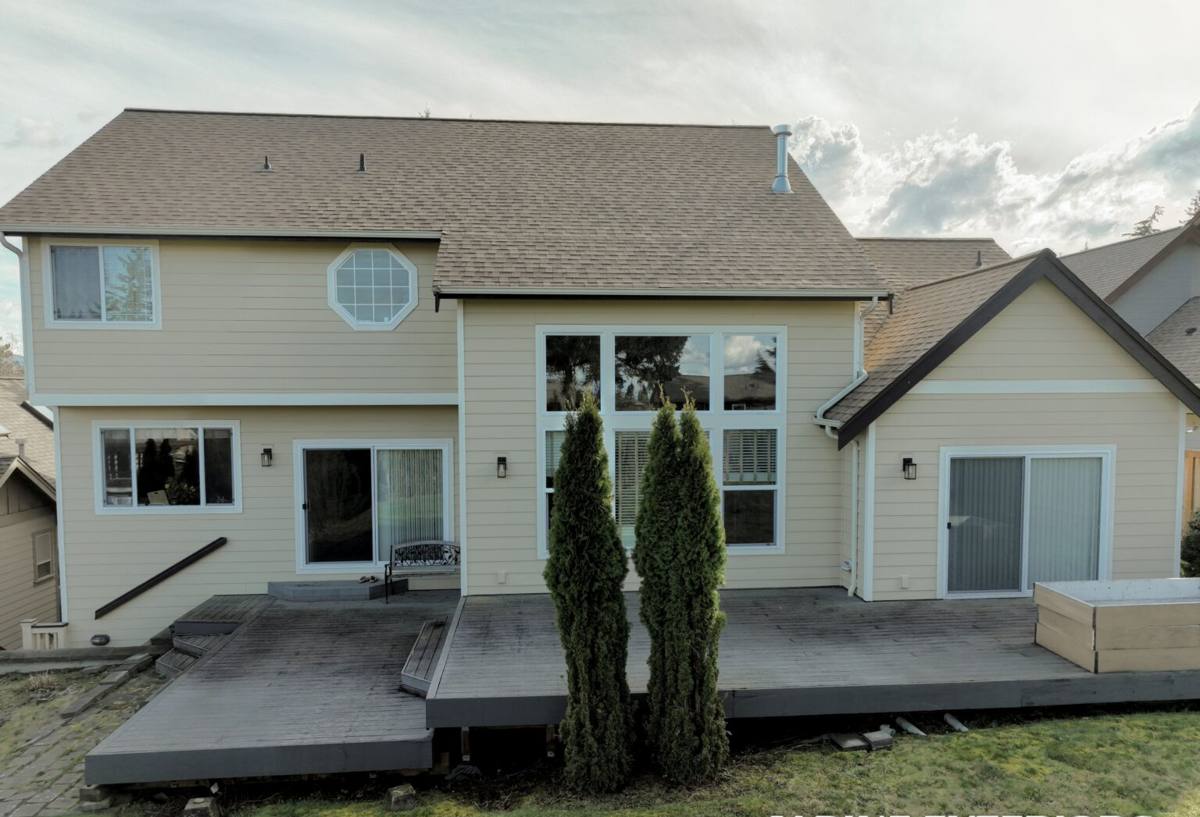
Why Local Climate Is Hard on Decks Specifically
Moisture That Doesn't Just Run Off
Siding and roofing are built to shed water fast. A deck surface is flatter, and gaps between boards, ledger connections, and framing joints all give water places to sit and slowly work its way in. In a neighborhood with as much tree cover as Columbia, wet leaves and needles collect between boards and hold moisture against the wood far longer than open rain alone would.
Moss and Organic Growth
Shaded decks under mature trees are prime territory for moss and algae. Beyond making boards slick and unsafe underfoot, moss holds moisture directly against the wood surface, which speeds up rot in exactly the spots where people are least likely to notice it until a board finally gives.
Salt Air and Metal Fasteners
Bellingham's proximity to the bay means a steady low level of salt exposure in the air, even away from the immediate waterfront. Over years, that accelerates corrosion in nails, screws, joist hangers, and other fasteners — often well before the wood itself looks like it's failing. Rusted or weakened fasteners are one of the more dangerous deck problems because they're invisible from the top of the deck.
Warning Signs a Deck Needs Repair
Most deck failures don't happen suddenly — they show warning signs for months or years first. Homeowners in Columbia should watch for:
- Soft, spongy, or discolored decking boards, especially near the house or in shaded corners
- Visible moss or algae buildup, particularly on the north side or under tree canopy
- Rust streaks below fasteners or hardware
- Gaps or movement where the deck ledger board meets the house
- Wobbly or loose guardrails and stair railings
- Stairs that feel spongy, uneven, or have visibly split stringers
- Standing water that doesn't drain within a few hours after rain
- Cracked, splintering, or checking wood on structural posts and beams, not just surface boards
Any one of these on its own might just mean routine maintenance. Several at once, especially involving the ledger board, posts, or stair stringers, usually means it's time for a proper structural look before anyone spends much more time on the deck.
What a Correct Deck Repair Actually Involves
Deck repair gets treated as a cosmetic job more often than it should be. Swapping out a rotten board is easy to see and easy to sell, but it doesn't mean much if the framing underneath, the ledger connection, or the fasteners holding it all together are also compromised. A repair that's done right addresses the structure first and the surface second.
Structural Elements We Check
That means inspecting the ledger board attachment to the house (a common failure point and a safety issue if it's pulling away or wasn't flashed correctly to begin with), the condition of posts and beams, joist spacing and condition, and the hardware tying it all together. In a climate like ours, galvanized or stainless fasteners and hangers matter — standard steel hardware corrodes faster than most homeowners expect given the salt air and near-constant moisture cycling.
Surface and Guardrail Work
Once the structure is sound, surface repairs — replacing damaged boards, resetting fasteners, addressing moss staining, and re-securing or rebuilding guardrails and stairs — actually hold up. Guardrails and stair railings get particular attention, since they're both a safety item and one of the first things to loosen as wood moves with seasonal wet-dry cycles.
Common Deck Materials We Work On, and What Repair Looks Like for Each
Columbia has a mix of housing ages and past renovations, so we see a range of decking materials. Each one fails differently and needs a different repair approach.
| Material | How It Typically Fails Locally | Repair Considerations |
|---|---|---|
| Pressure-treated lumber | Rot at ground contact and fastener points, moss buildup in shade, splitting as it dries and re-wets | Usually repairable board-by-board if framing is sound; framing itself often needs closer inspection since it's the same material |
| Cedar | Graying and surface checking is normal, but shaded/wet areas can develop soft rot faster than expected | Sistering or replacing affected boards while preserving the rest is often possible; matching weathered cedar takes experience |
| Composite decking | Surface holds up well, but moisture trapped underneath can still rot the wood framing beneath it | Composite boards themselves rarely need "repair," but the framing below needs the same scrutiny as any wood deck |
| Older or mixed-material decks | Combination of the above, plus outdated or undersized hardware from past repairs | Often the most involved repairs, since prior fixes weren't always done to current structural standards |
How Our Repair Process Works
1. On-Site Inspection
We walk the full deck — surface, framing, ledger, posts, stairs, and guardrails — and probe suspect areas rather than just looking at them. Soft wood and hidden rot don't always show on the surface.
2. Honest Scope Assessment
We tell you plainly what's cosmetic, what's structural, and what's a safety issue that shouldn't wait. If a repair genuinely covers what's needed, we say so. If the deck is past the point where repair makes sense, we'll say that too instead of patching around a bigger problem.
3. Repair Work
Structural issues get addressed first — framing, ledger connection, fasteners and hardware — followed by board replacement, moss and staining treatment, and guardrail or stair work as needed. We use fasteners and hardware suited to our marine climate, not just whatever matches on the shelf.
4. Walkthrough
We go over what was done, what to keep an eye on, and simple maintenance steps that will extend the life of the repair given Columbia's shade and moisture conditions.
Repair or Replace? How to Think About It
This is the question that matters most, and it depends on where the damage actually is, not just how the deck looks.
| Factor | Leans Toward Repair | Leans Toward Replacement |
|---|---|---|
| Framing and posts | Sound, no significant soft spots when probed | Widespread soft or rotted framing, especially at posts and beams |
| Ledger board | Securely attached, properly flashed | Pulling away from the house, poor original flashing, or water damage behind it |
| Extent of damage | Isolated boards, localized moss/rot in a shaded section | Damage spread across most of the deck surface and structure |
| Age of the deck | Newer construction with an isolated issue | Decades old with multiple compounding problems |
| Code compliance | Guardrails, stairs, and spacing already meet current standards | Guardrail height, baluster spacing, or footings fall well short of current code |
A deck with sound framing and an isolated problem area is almost always a repair candidate. A deck with rot at the ledger, multiple failing posts, or guardrails that don't meet current safety standards is often better rebuilt than patched — patch repairs on a structurally compromised deck can end up costing more over time than doing it right once.
Maintenance That Extends a Repair's Life in Columbia's Climate
A repair holds up a lot longer with a little seasonal attention, especially in a shaded, tree-heavy neighborhood like Columbia:
- Clear leaves and debris from between boards regularly, especially in fall
- Sweep or gently pressure-wash moss and algae off the surface before it builds up
- Keep gutters and downspouts near the deck clear so runoff isn't draining onto it
- Check and re-tighten loose guardrail or stair hardware once a year
- Reseal or refinish wood decking on the manufacturer's recommended schedule, not just when it looks faded
- Trim back branches or landscaping that keep the deck in constant shade and slow drying
- Watch the ledger board area after heavy rain for any signs of standing water or staining
Why It Matters to Hire a Crew That Already Works in Columbia
Deck repair looks straightforward from the outside, but the right approach in Whatcom County isn't identical to what works in a drier climate. A crew that's used to working on Columbia's older housing stock, shaded lots, and salt-air exposure already knows where problems tend to hide — the ledger connection, the fasteners, the shaded north corner — instead of learning it on your deck. That familiarity means a faster, more accurate inspection and a repair scoped to what your deck actually needs, not a generic checklist.
If you're seeing soft boards, moss buildup, rusted hardware, or a wobbly rail on a Columbia-area deck, it's worth getting a straight assessment before it turns into a bigger job. We offer free, no-pressure estimates — use the form below to get one scheduled.