 Bellingham
 Why Edgemoor's Setting Is Tougher on Siding Than It Looks
Edgemoor sits close to Bellingham Bay, tucked into mature tree cover that gives the neighborhood its shaded, established character. That same setting is hard on exterior siding. Homes near the water take on salt-laden air and wind-driven rain that pushes moisture into every seam, joint, and fastener hole on the weather side of a house. Homes further under the tree canopy get less direct sun and wind to dry things out, which means moisture sits longer on the siding surface after every storm.
Combine that with Whatcom County's long, wet stretch of fall-through-spring weather, and you get a siding environment that punishes anything that isn't dimensionally stable, properly sealed, and resistant to sustained dampness. Shaded, humid conditions are exactly what moss, algae, and mildew need to take hold, and once a siding product starts holding moisture at the surface or behind it, the clock starts ticking on rot, paint failure, and structural repairs that cost far more than the siding itself.
This is the reality we design every Edgemoor project around: not just what looks good on install day, but what will still be performing correctly after a decade of salt air, driving rain, and moss season.
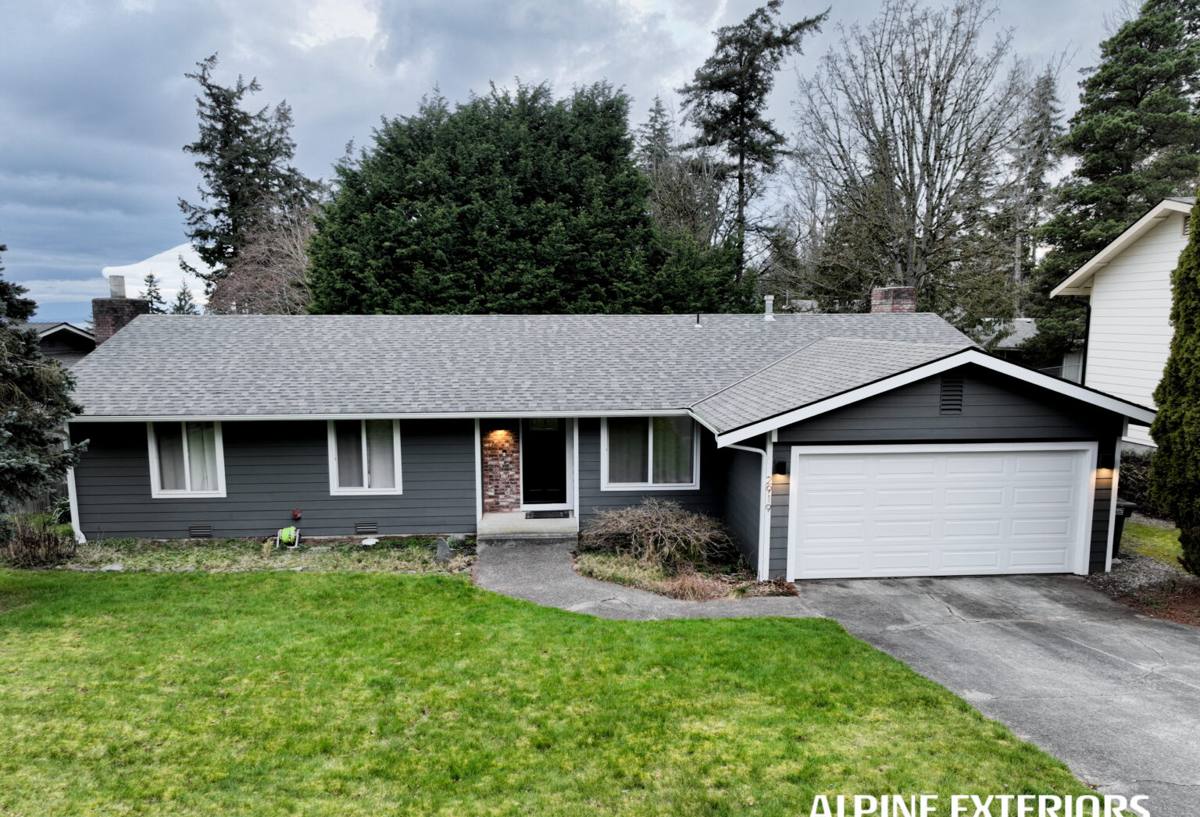
Why James Hardie Fiber Cement Fits This Climate
We install James Hardie fiber cement siding exclusively, and Edgemoor is a good example of why. Fiber cement is made from cement, sand, and cellulose fibers, which makes it dimensionally stable in a way that wood-based and vinyl products aren't. It doesn't swell when it absorbs moisture, it doesn't warp in sustained damp conditions, and it holds its shape through repeated wet-dry cycles that come with a coastal, tree-shaded lot.
What HZ5 Climate Engineering Actually Means
James Hardie engineers its products by climate zone, and the Pacific Northwest falls under the HZ5 product line. That's not a marketing label — it reflects a formulation and testing standard built around sustained moisture exposure, moderate temperatures, and the kind of prolonged damp weather Whatcom County sees for a good part of the year. Installing the correct HZ5-rated Hardie products, rather than a generic version of the same material, is one of the first places corners get cut on cheaper siding jobs.
ColorPlus Finish and Salt Air
Bellingham Bay's proximity means airborne salt is a real factor for Edgemoor exteriors, and it's harder on field-applied paint than most homeowners expect. James Hardie's ColorPlus finish is baked on in a factory-controlled process, which gives it stronger adhesion and better fade and moisture resistance than paint applied on-site after installation. For a home exposed to salt air and driving rain, that factory finish is doing real work, not just saving a repaint down the road.
What a Correct Installation Actually Involves
Fiber cement siding performs exactly as well as its installation. Hardie's own warranty and technical bulletins are specific about clearances, fastening, and flashing details, and skipping them is the single biggest reason a siding job fails early — not the material itself.
The Details That Get Skipped on Rushed Jobs
- Correct starter strip and clearance from grade, decks, patios, and roof lines so water sheds away from the wall assembly instead of wicking into the bottom edge of the siding
- Proper flashing and integrated weather-resistant barrier at every window, door, and penetration — the points where wind-driven rain actually gets pushed into a wall
- Correct fastener type, spacing, and depth so panels aren't over-driven or under-driven, which affects both appearance and long-term water resistance
- Manufacturer-specified gaps and sealant at butt joints and trim, since improper caulking is one of the most common causes of early moisture intrusion
- Field-cut edges primed or sealed per Hardie's instructions before installation, not left raw
None of these details are visible once the job is finished and the site is cleaned up. They only show up years later, either as a wall performing the way it should, or as trapped moisture and rot behind a wall that looked fine on installation day.
Why We Don't Install Vinyl, LP SmartSide, or Cedar
We get asked regularly why we standardized on James Hardie instead of offering the full range of siding options. The honest answer is that we looked at how each product actually performs over time in a climate like ours, and we didn't want to keep installing products we knew would create maintenance headaches or premature replacement for Edgemoor homeowners.
| Material | How It Handles Sustained Moisture | Fire Performance | Long-Term Maintenance |
|---|---|---|---|
| James Hardie fiber cement | Dimensionally stable; engineered for climate zone; doesn't swell or warp | Non-combustible core material | Factory ColorPlus finish; periodic cleaning |
| Vinyl siding | Can warp or buckle with temperature swings; seams are a moisture entry point | Combustible; can melt or deform under heat | Fades over time; brittle with age |
| LP SmartSide (engineered wood) | Wood-based core is more moisture-sensitive at cut edges and damaged areas | Combustible | Field-applied or shorter-cycle finishes; edge sealing is critical |
| Cedar / primed spruce | Natural wood movement; higher moisture absorption without diligent upkeep | Combustible | Regular refinishing, staining, or painting required |
Vinyl and engineered wood products aren't inherently defective, and plenty of homes carry them without issue in drier climates. But in a setting like Edgemoor, with salt air, driving rain, and shade-driven moss season all working against a wall assembly, we'd rather put a product on the house that's built to handle exactly those conditions than manage callbacks and premature failures down the road.
Our Process for an Edgemoor Siding Project
Every job starts with a walk of the exterior, not a sales pitch. We look at existing siding condition, trim and window flashing, roofline transitions, grade clearance, and any spots where tree cover keeps the wall damp longer than the rest of the house. That assessment shapes the scope before we ever talk product.
- Tear-off and inspection: Removing old siding exposes the sheathing and framing underneath, which is the only real way to check for hidden rot or moisture damage before new siding goes on.
- Sheathing and moisture barrier repair: Any compromised sheathing gets replaced and the weather-resistant barrier is corrected or renewed — covering this over is how small problems become big ones.
- Flashing and detail work: Windows, doors, and penetrations get flashed to spec before a single piece of Hardie siding goes up.
- Installation to manufacturer spec: Correct clearances, fastening, and joint treatment, following James Hardie's published installation requirements rather than shortcuts.
- Trim, caulking, and final detail: The finish details that determine both curb appeal and how well the assembly sheds water going forward.
- Site cleanup and walkthrough: A final review with the homeowner before we consider the job done.
Living With Hardie Siding Through Bellingham's Moss Season
No siding product is maintenance-free in a climate this wet and shaded, and we'd rather set realistic expectations than oversell it. James Hardie siding resists moisture damage far better than wood-based alternatives, but surface growth like moss and algae can still develop on any exterior surface that stays damp and shaded for long stretches, which describes a lot of Edgemoor lots under mature tree cover.
The good news is that Hardie's factory finish and stable substrate mean this is a cosmetic maintenance issue, not a structural one, as long as the installation was done correctly underneath.
- Rinse siding periodically with a garden hose and soft brush — avoid high-pressure washing, which can force water behind joints and trim
- Trim back tree branches and shrubs that keep siding shaded and damp against the wall
- Check gutters and downspouts each fall so overflow isn't running down the siding face
- Inspect caulking at trim and joints every couple of years and have gaps resealed before winter rains set in
- Address any soft spots, staining, or paint failure early — small issues are cheap to fix, hidden moisture problems are not
What Drives Cost on an Edgemoor Siding Job
We don't quote sight-unseen, but homeowners planning ahead should understand the factors that move a project up or down in scope and cost.
| Factor | Why It Matters | Typical Cost Impact |
|---|---|---|
| Lap vs. panel siding profile | Different material quantities and labor for cutting and fitting | Moderate |
| Trim and architectural detail | More corners, dormers, and trim boards mean more cutting and finish labor | Moderate to High |
| Existing sheathing or moisture damage | Hidden repairs found during tear-off add scope beyond the original estimate | Variable |
| Site access and tree cover | Tight, wooded, or sloped lots common in Edgemoor can slow staging and material handling | Low to Moderate |
| Color and finish selection | Standard ColorPlus colors vs. premium or custom options | Low |
| Home size and story count | More square footage and higher walls mean more material and labor | High |
The only way to get real numbers is a walk of your specific home, which is exactly what a free estimate is for.
Why Hiring a Crew That Already Works Edgemoor Matters
Siding installation quality comes down to the people doing the work, not just the product on the truck. A crew that regularly works Edgemoor and the surrounding Bellingham area already understands the practical realities of these lots — mature tree canopies that limit staging space, homes close enough to the bay to need real attention to flashing and moisture detail, and the permitting and inspection expectations that come with Whatcom County jurisdiction.
That local familiarity shows up in small but important ways: knowing how to stage material and dumpsters on a wooded lot without damaging landscaping, understanding which details matter most for a home exposed to salt air off the bay, and being available for a follow-up visit if a question comes up after the job is done. It's the difference between a crew that installs siding and a crew that installs siding on homes like yours, in this exact setting, on a regular basis.
Get a Straight Answer for Your Home
If you're weighing a siding replacement for a home in Edgemoor, we're glad to take a look and give you a straightforward assessment — what condition your current siding is really in, what a correct Hardie installation would involve for your specific house, and a free, no-pressure estimate. Use the form below to get started.