 Bellingham
 Siding That Has to Work in Barkley's Climate, Not Just Look Good on Install Day
Barkley sits close enough to Bellingham Bay and the surrounding wetlands that homes here deal with a specific combination of punishment: salt-laden air drifting in off the water, wind-driven rain that gets pushed sideways into wall assemblies, and a long, damp shoulder season where moss and algae get every opportunity to take hold on north- and west-facing walls. None of that is unusual for Whatcom County, but it matters a lot when you're choosing a siding product and an installer. Siding that's rated for a drier climate, or installed without real attention to water management, tends to show its weaknesses here faster than it would somewhere inland.
This page is about one thing specifically: fiber cement siding installation for homes in the Barkley area, what the local climate demands from that siding, and how we approach the job so it actually holds up.
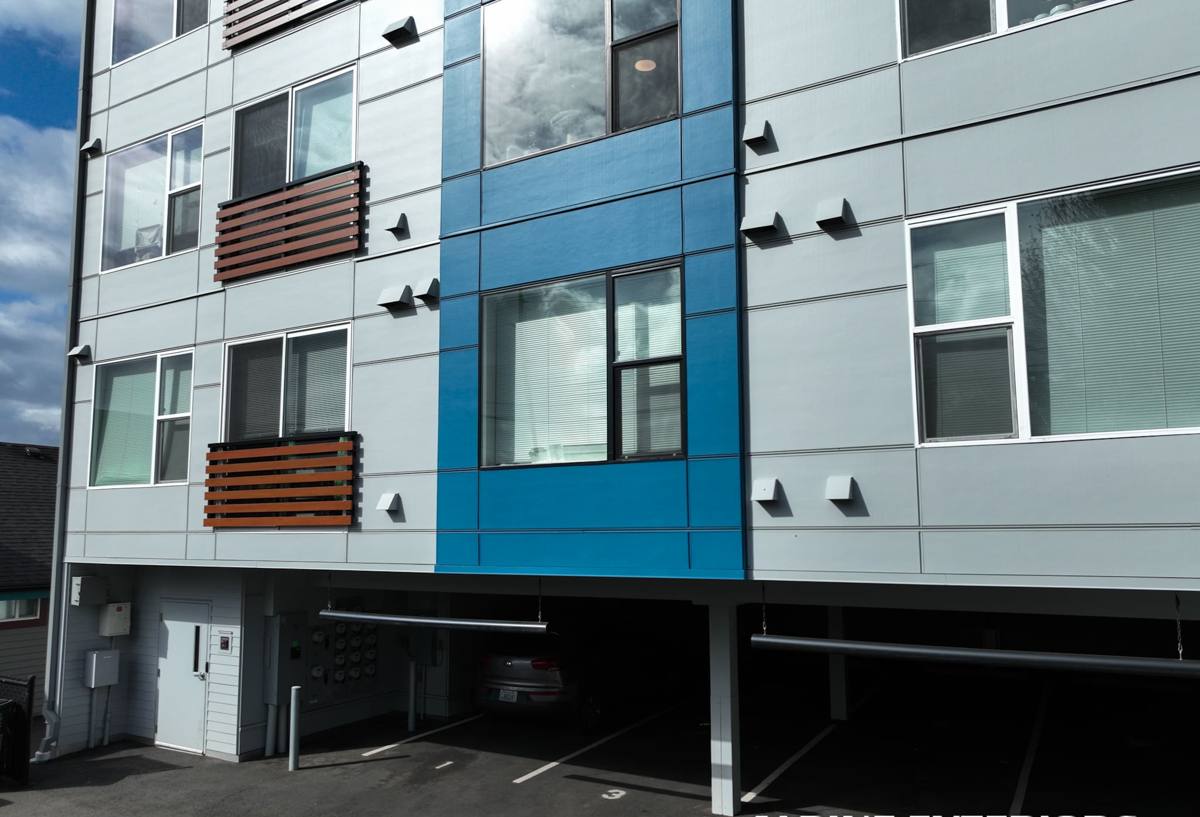
What Salt Air, Driving Rain, and Moss Season Do to the Wrong Siding
Each of these conditions attacks siding differently, and a correct installation has to account for all three at once.
Salt Air
Airborne salt is corrosive to exposed metal fasteners, flashing, and trim, and it accelerates the breakdown of finishes that aren't engineered to resist it. Over years, homes closer to the water can see fastener corrosion and finish fading well ahead of what a manufacturer's general warranty language might suggest, especially if the wrong fastener material or an unrated paint finish was used to begin with.
Driving Rain
Bellingham's rain doesn't just fall straight down — wind off the Sound and the Strait pushes it into wall surfaces, seams, and any gap in the water-resistive barrier. Siding that relies on face-sealing (caulk and paint alone, rather than a properly lapped, drained assembly) is more likely to let moisture behind the cladding, where it can sit against sheathing and framing.
Moss and Algae Season
Shaded, damp walls in Barkley's tree-covered lots can stay wet for extended stretches through fall, winter, and spring. Porous or absorptive siding materials hold that moisture longer, which feeds moss and algae growth and keeps the substrate wet — a slow but steady path to rot on materials that aren't moisture-stable.
What a Correct Fiber Cement Siding Job Actually Involves
Fiber cement itself is a strong material choice for this climate — it's dimensionally stable, doesn't absorb water the way wood-based products do, and resists the freeze-damp-thaw cycle Whatcom County winters put walls through. But the material is only half the equation. A correct installation is what actually keeps water out over 20-plus years, and it includes:
- A continuous, properly lapped water-resistive barrier behind the siding, not just wrap stapled up quickly
- Rainscreen or drainage gap detailing where the wall assembly calls for it, so any moisture that does get behind the cladding can drain and dry
- Correct flashing at every window, door, deck ledger, and roof-to-wall intersection — these are the spots where most real-world leaks start
- Manufacturer-specified fastener type, spacing, and penetration depth (under- or over-driven fasteners are one of the most common causes of premature siding failure)
- Proper clearance at grade, decks, and patios so siding never sits in standing water or constant splash-back
- Correctly caulked and sealed joints using products rated for the exposure, not general-purpose caulk
Skipping any one of these doesn't show up on day one. It shows up in year five or ten, as a callback nobody wants — the homeowner least of all.
James Hardie: The Only Siding We Install
We install James Hardie fiber cement exclusively. We don't install LP SmartSide, vinyl, Cemplank, Allura, primed spruce, or cedar, and we're upfront about why: we've standardized our crews, our detailing, and our warranty backing around one system so we can install it correctly every time, rather than switching techniques and specs from job to job.
A few specifics that matter for a climate like Barkley's:
- Non-combustible core — fiber cement doesn't feed a fire the way wood-based siding can, which matters given the extended wildfire smoke seasons the Pacific Northwest now sees most summers
- ColorPlus factory finish — baked-on, multi-coat finish that's more consistent and more fade- and chip-resistant than field-applied paint, which reduces one of the maintenance burdens salt air creates
- HZ5 / climate-engineered product lines — James Hardie engineers specific formulations for different moisture and freeze exposure, and Whatcom County's marine climate is exactly the kind of condition those lines are built for
- A strong, transferable warranty — meaningful if you ever sell the home, and backed by a manufacturer with a long track record in wet Pacific Northwest and coastal markets specifically
Hardie isn't the cheapest siding option on the market, and we won't pretend otherwise. What it buys is a moisture-stable, non-combustible product with a finish that's engineered rather than applied on-site — and when it's installed to spec, it's built to go the distance in exactly the conditions Barkley homes deal with.
Our Process on Barkley Projects
1. On-Site Assessment
We walk the exterior, check current siding condition, look at grading and drainage around the foundation, and note trouble spots — deck ledgers, window flashing, areas with heavy shade or moss growth.
2. Tear-Off and Sheathing Check
Once old siding is off, we inspect the sheathing underneath. This is often the first real look anyone's had at the wall assembly in years, and it's where hidden water damage from a prior installation shows up, if it exists.
3. Water Management Layer
We install a continuous water-resistive barrier and drainage detailing appropriate to the wall assembly before any siding goes up. This layer does more long-term work than the siding itself.
4. Flashing and Trim
Every penetration — windows, doors, vents, ledgers, roof lines — gets flashed correctly before the Hardie boards or panels go on around it.
5. Hardie Installation
Installed to James Hardie's fastening, clearance, and joint-treatment specifications, which is also what keeps the manufacturer's warranty intact.
6. Final Walkthrough
We review the finished work with the homeowner and go over basic care so the siding performs the way it's designed to.
Cost Factors on a Barkley Fiber Cement Project
| Factor | Why It Affects Cost |
|---|---|
| Current siding removal | Multiple old layers or hidden rot add labor and possible sheathing repair |
| Wall complexity | Dormers, multiple stories, and cut-up rooflines increase flashing and trim work |
| Siding profile | Lap siding, shingle-style panels, and board-and-batten carry different material and labor costs |
| Trim and accessory scope | Corner boards, fascia, and soffit work done alongside siding affects total price |
| Access and site conditions | Tree cover, sloped lots, and tight setbacks common in Barkley can affect staging and labor time |
We give a firm quote after the on-site assessment, not a phone estimate — wall condition varies too much house to house to price accurately any other way.
Signs Your Current Siding Is Already Losing the Fight
- Persistent moss, algae, or dark staining on north- or shaded-side walls that returns quickly after cleaning
- Soft spots, bubbling, or visible warping, especially near the bottom courses or around windows
- Paint that's peeling or failing faster than a normal repaint cycle would suggest
- Visible gaps or separated caulk joints at trim and corners
- Rust streaking from fasteners, a common issue with salt air exposure on unsuitable fastener types
- Musty smell or visible staining on interior walls that share an exterior wall with problem siding
Any of these on their own isn't necessarily an emergency, but they're worth having looked at before the underlying sheathing gets involved.
Why Working With a Crew That Already Knows Barkley Matters
Barkley's mix of tree cover, proximity to water, and lot layouts isn't identical to every neighborhood in Bellingham, and a crew that's worked the area already has a feel for where moss builds up fastest, which wall orientations take the worst of the driving rain, and how local grading tends to run. That familiarity doesn't replace a proper on-site assessment, but it does mean fewer surprises and a more accurate read on what a given house actually needs.
It also means a crew that's installed Hardie to spec repeatedly in this exact climate, not one applying general siding knowledge to a coastal Whatcom County wall assembly for the first time.
Get a Free, No-Pressure Estimate
If your Barkley home's siding is aging, showing moss or moisture issues, or you're planning ahead for a replacement, we're happy to come take a look and give you a straight assessment — no pressure, no upsell. Use the form below to request a free estimate.