 Bellingham
 Why Sudden Valley's Setting Is Hard on Siding
Sudden Valley sits back in the trees along Lake Whatcom, southeast of Bellingham, and that setting cuts both ways. The tree canopy and lake views are why people live there, but the same second-growth timber that shades these lots also keeps siding damp longer than it would be out in the open. Shaded north and east-facing walls in Sudden Valley can stay wet for days after a storm passes, and that lingering moisture is exactly what moss, algae, and mildew need to take hold on exterior walls, trim, and fascia.
Zoom out to the wider Whatcom County picture and you get the marine climate that defines this whole corner of Washington: driving rain off the Sound, damp air for most of the year, and a moss season that can run from fall through spring. Homes closer to Bellingham Bay deal more directly with salt-laden air working on fasteners and finishes; homes tucked into Sudden Valley's timber deal more with shade, humidity, and organic growth. Either way, the siding on the house is the first line of defense, and it needs to be a material and an installation that's built for sustained moisture exposure, not just rain now and then.
What Fiber Cement Brings That Matters Here
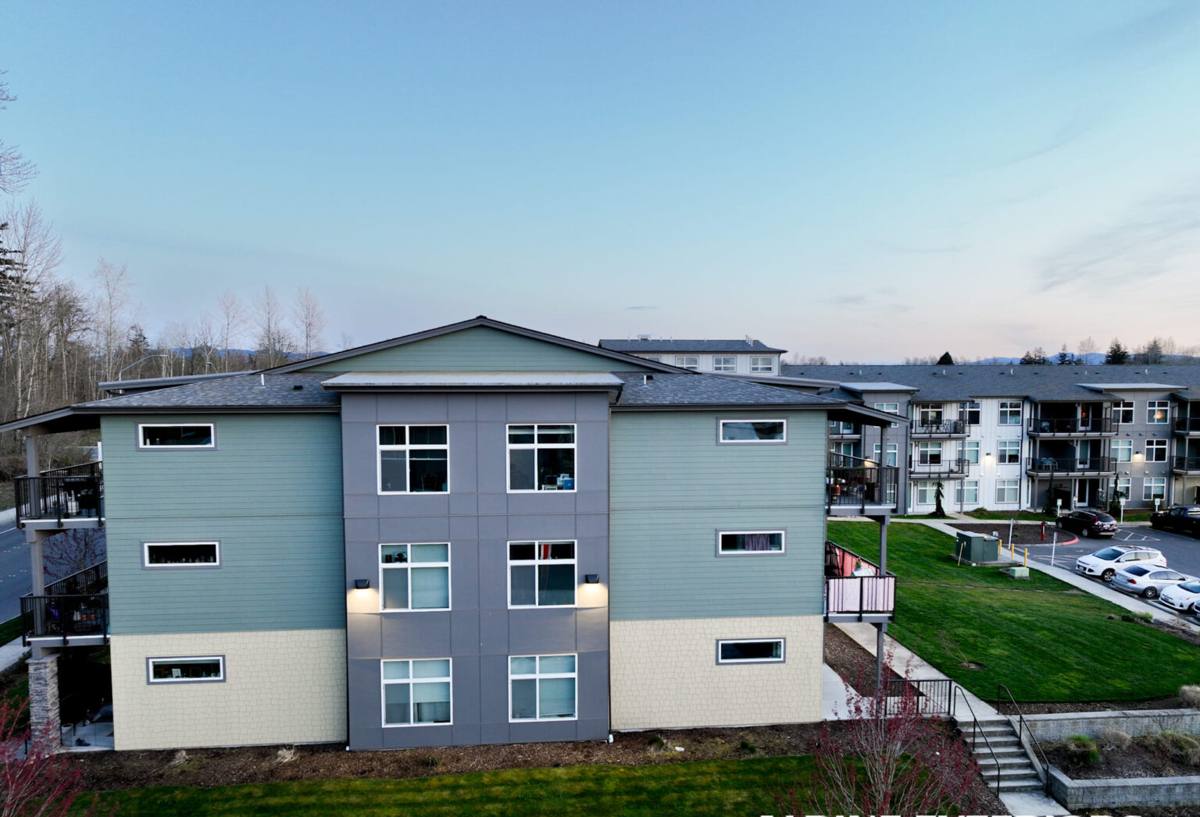
Fiber cement siding is made from cellulose fiber, sand, and Portland cement pressed and cured into dense, stable boards. Unlike wood, it doesn't feed rot fungus. Unlike vinyl, it doesn't soften, warp, or crack under UV and temperature swings. That combination is a big part of why we standardized on it — and specifically on James Hardie's product line rather than any of the other fiber cement or composite options on the market.
Climate-Engineered for the Pacific Northwest
James Hardie manufactures siding in different formulations for different regions, and the products we install in Whatcom County come from their HZ5 engineered-for-climate line, built specifically to handle high-moisture, freeze-prone Pacific Northwest weather. That matters more in a spot like Sudden Valley, where shaded walls can hold moisture for extended stretches, than it does on a wide-open lot in full sun.
ColorPlus Factory Finish
Most Hardie boards we install carry the ColorPlus finish — a baked-on, multi-coat finish applied at the factory under controlled conditions, not brushed or sprayed on-site. It resists fading and chipping far longer than field-applied paint, which matters in a shaded, humid environment where repainting isn't a job anyone wants to do more than necessary.
What a Correct Installation Actually Involves
Fiber cement performs exactly as well as it's installed — no better. A lot of the moisture and warranty problems that get blamed on the material are actually installation errors: wrong fasteners, missing clearances, or caulk used where it should never have been relied on in the first place. On a Sudden Valley home, where the walls already run damper than average, there's less room for those shortcuts.
- Proper clearances: siding held off decks, patios, and grade by the manufacturer's minimum gap so water has somewhere to go besides up into the board.
- Correct flashing and house wrap: a water-resistive barrier and flashing detail at every window, door, and penetration, installed before the first board goes up — not caulk substituting for flashing.
- Fastener placement and depth: corrosion-resistant fasteners driven to Hardie's exact spec, not overdriven or underdriven, in the right location on the plank.
- Joint treatment: butt joints backed and sealed per manufacturer detail so board ends — the most vulnerable point on any lap siding — aren't left to absorb water.
- Ventilation behind the cladding: a rainscreen gap or drainage plane so any moisture that does get behind the siding can drain and dry instead of sitting against the wall sheathing.
Every one of those details is more forgiving on a dry, sunny wall than on a shaded wall in a wooded community like Sudden Valley. That's the honest reason installation quality matters more here than it does on some job sites.
Signs Your Siding Needs Attention
Because Sudden Valley homes run shadier and damper than the Bellingham average, problems tend to show up as surface symptoms before they become structural ones — which is good news if you catch them early.
- Persistent green or black staining on north- or east-facing walls that pressure washing doesn't fully clear
- Soft or spongy spots when you press on wood trim, fascia, or old wood siding boards
- Paint that's peeling, bubbling, or chalking faster on some walls than others
- Visible gaps, cracks, or separation at butt joints and corners
- Caulk that's cracked, shrunk, or pulling away from trim and window edges
- Musty smell or interior moisture signs on walls that back up to shaded exterior siding
Our Process for Sudden Valley Projects
We treat every Sudden Valley estimate as its own project, because tree cover, lot slope, and sun exposure vary a lot from one street to the next in that community.
1. On-Site Assessment
We walk the exterior, check current siding and trim condition wall by wall, note which sides get the least sun and airflow, and look at drainage around the foundation and any decks or patios that butt up against the house.
2. Scope and Product Selection
We measure, identify trim and flashing details that need attention, and go over Hardie plank profiles, textures, and ColorPlus color options that fit the home and its setting.
3. Prep and Tear-Off
Old siding, damaged sheathing, and compromised flashing get removed and assessed — not covered over. Any rot found underneath gets repaired before a single new board goes up.
4. Installation to Spec
Water-resistive barrier, flashing, and drainage detailing go in first, then Hardie boards are fastened, jointed, and finished to manufacturer specification.
5. Final Walkthrough
We walk the finished job with you, check every elevation, and go over basic care so you know what normal weathering looks like versus something that needs a call.
Comparing Your Options
| Material | Moisture & Moss Resistance | Maintenance Load | Typical Lifespan |
|---|---|---|---|
| Fiber Cement (Hardie) | High — doesn't rot; ColorPlus finish resists staining and fade | Occasional wash; no repainting for many years with factory finish | Multiple decades with correct install and upkeep |
| Wood Siding/Trim | Low to moderate — absorbs moisture, feeds rot and moss in shade | Regular repainting, caulking, and rot inspection | Shorter, especially on shaded walls |
| Vinyl Siding | Moderate — sheds water but can trap moisture behind panels | Low, but cracks and fades over time in sun and cold | Moderate, with visible aging |
Cost Factors Worth Understanding
We don't quote prices sight-unseen because the factors below genuinely change the scope of the work. Every Sudden Valley estimate accounts for these before we give you a number.
| Factor | Why It Matters |
|---|---|
| Existing wall condition | Rot or damaged sheathing found during tear-off adds repair work before new siding can go on |
| Home size and wall complexity | More corners, dormers, and trim detail mean more cutting, fitting, and flashing work |
| Site access | Tree cover, slope, and tight driveways common in Sudden Valley can affect staging and scaffolding needs |
| Product line and finish | Plank profile, texture, and ColorPlus color selection affect material cost |
| Trim and accessory scope | Replacing trim, fascia, and soffit alongside siding changes the total scope of a job |
Why Local Experience in Sudden Valley Matters
Sudden Valley is a private community with its own access points and its own driving and staging considerations, and homes here often sit on sloped, wooded lots that aren't the same as a flat in-town lot in Bellingham. A crew that's already worked in the community knows what to expect for staging materials, working around septic systems and drain fields that are common in Sudden Valley, and protecting landscaping on tighter, tree-lined lots. That familiarity shows up in fewer surprises and a cleaner job site, not just faster work.
It also matters for the long game. Fiber cement siding is a decades-long investment, and a crew that understands how Whatcom County's damp, low-sun-exposure pockets behave is going to flash, vent, and detail your home differently than a crew installing the same product on a dry lot in a different climate. That's the difference between siding that looks right on install day and siding that still looks right ten years in.
Keeping It Looking Right After Install
Fiber cement is low-maintenance, not no-maintenance. A few habits go a long way, especially on shaded Sudden Valley walls:
- Rinse shaded, moss-prone walls with a garden hose once or twice a year — skip the pressure washer, which can force water behind joints
- Keep gutters clear and downspouts directed away from the foundation so splash-back doesn't keep the lower courses wet
- Trim back branches and brush that hold moisture against the siding or block airflow along a wall
- Check caulking at trim, window edges, and penetrations every couple of years and have any cracked sections redone
- Address any staining or discoloration early rather than waiting for it to spread
If you're weighing a siding project for a Sudden Valley home, we're happy to walk the property with you, look at what your walls are actually dealing with, and lay out a straightforward, no-pressure estimate — just fill out the form below to get started.