 Bellingham
 Why Happy Valley Siding Takes Extra Punishment
Happy Valley sits close enough to Bellingham Bay that salt-laden air is a constant, low-grade stress on every exterior surface in the neighborhood. Add in the driving rain that comes off the water during fall and winter storms, and siding here is doing more work than siding in a drier inland town. Whatcom County's wet season runs long, and homes tucked under mature tree canopy — common throughout this part of Bellingham — stay damp and shaded for extended stretches even after the rain stops.
That combination of salt exposure, wind-driven rain, and shade is exactly what produces the moss and algae staining so many Happy Valley homeowners deal with year after year. Moss isn't just cosmetic. It holds moisture against the siding surface, works into seams and fastener holes, and accelerates whatever damage is already starting underneath. A siding repair in this neighborhood has to account for all of that, not just patch what's visibly broken.
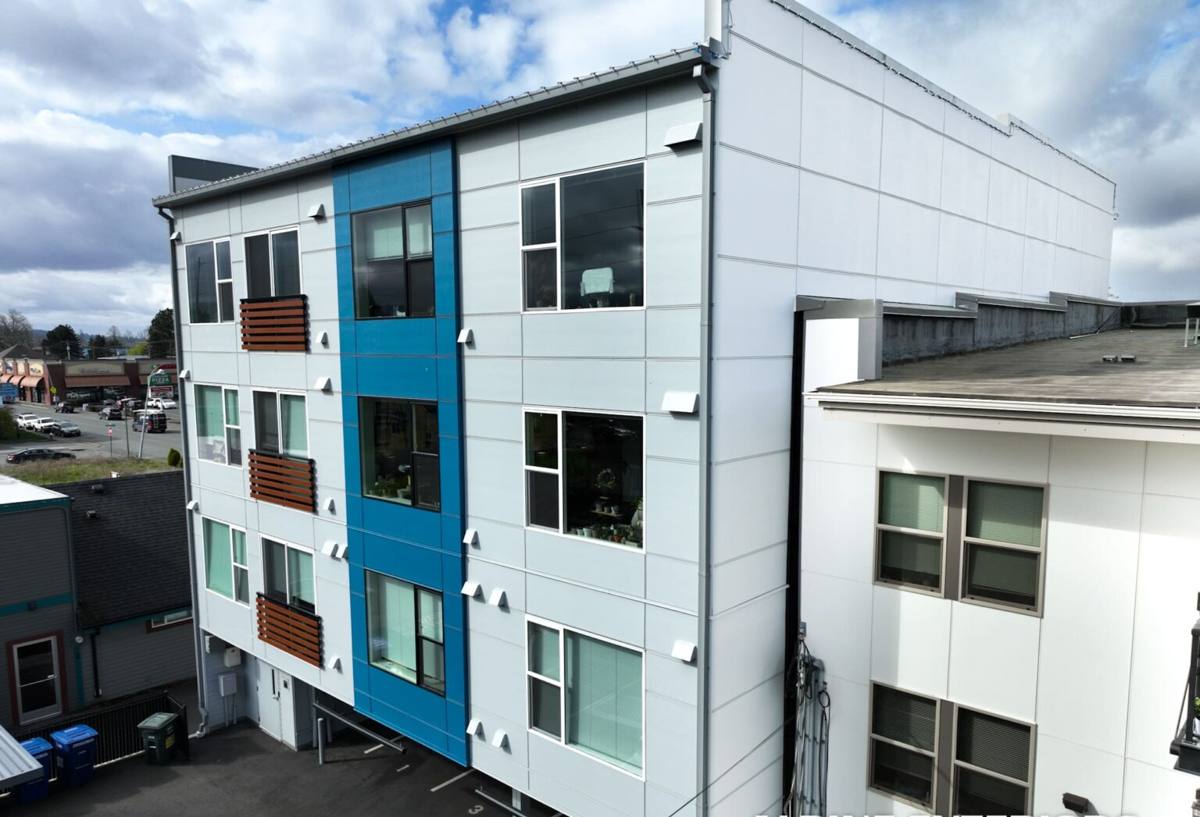
Signs Your Siding Needs Repair, Not Just a Cleaning
A pressure wash or a coat of paint can make tired siding look better temporarily without addressing what's actually wrong. Before you spend money on cosmetic fixes, check for these signs that point to a real repair need:
- Soft or spongy spots when you press on the siding, especially near the bottom courses or under windows
- Paint that's peeling, bubbling, or flaking in a localized area rather than evenly across the whole wall
- Visible cracks, splits, or chipped edges on individual boards or panels
- Dark staining or streaking below seams, joints, or nail heads
- Heavy moss or algae buildup that keeps coming back within weeks of cleaning
- Gaps opening up at trim boards, corner boards, or window and door casings
- Boards that look warped, bowed, or slightly separated from the wall
Any one of these can be isolated and minor. Several showing up in the same area, or on the same wall face that takes the brunt of our weather, usually means moisture has been getting behind the siding for a while.
What a Correct Repair Actually Involves
A siding repair done right is not just about matching the outside surface. It starts with figuring out why the damage happened in the first place — otherwise you're patching a symptom and the same problem shows up again in a year or two. That means checking the condition of the weather-resistive barrier behind the siding, confirming flashing is properly lapped at windows, doors, and butt joints, and looking for any gaps that let wind-driven rain track inward instead of shedding off the wall.
Once the cause is addressed, the repair itself needs to match the existing material's dimensions, reveal, and fastening pattern so it doesn't stand out or create a new weak point. Caulking gets used sparingly and only where it belongs — sealed joints where they should be, and open drainage paths left alone where the system is designed to let water out. Rushed repairs skip the diagnostic step and just cover the damaged section, which is why the same spot often fails again.
Common Root Causes We Look For
In this neighborhood specifically, we most often trace siding failure back to a handful of causes: clogged or undersized gutters dumping water down the wall face, missing or poorly lapped flashing above windows, caulk that's failed at a butt joint, or trim that was never properly back-primed before install. Moss and algae accelerate all of these once they're underway, which is why cleaning alone rarely solves the underlying issue.
Repair or Replace? How We Decide
Not every damaged section needs full replacement, and not every repair is worth doing instead of replacing a larger area. We look at the extent of the damage, how much of the wall is affected, and what's happening behind the siding before recommending either path.
| Situation | Repair Usually Makes Sense | Replacement Is the Better Call |
|---|---|---|
| Damage size | One or a few isolated boards or panels | Damage spans a large section or multiple walls |
| Underlying moisture barrier | Intact, no signs of rot behind the siding | Compromised, with soft sheathing or framing found underneath |
| Age and condition of surrounding siding | Rest of the wall is sound and holding up well | Surrounding siding is also failing or near end of service life |
| Cause of damage | Isolated event — impact, one bad joint, localized flashing failure | Systemic issue — original material or install method failing broadly |
We'll tell you honestly which category your situation falls into. If a targeted repair will hold up, that's what we recommend — there's no reason to sell a homeowner a bigger job than they need.
Why We Repair and Rebuild with James Hardie Fiber Cement
We install James Hardie fiber cement exclusively, and that standard carries through to repair work. When we're patching or replacing a damaged section, we use Hardie product engineered for our climate zone, factory-finished with ColorPlus coating rather than field-painted trim boards that fade or peel unevenly next to the original material. Fiber cement doesn't absorb water the way wood-based products can, and it isn't vulnerable to the swelling and softening that shows up in oriented-strand-board siding products after years of coastal moisture exposure.
Matching an existing Hardie installation is straightforward — the profiles, reveals, and factory colors are consistent and sourceable, so a repaired section blends in rather than becoming a visible patch. That consistency, combined with a non-combustible material that holds paint and color far longer than wood-based alternatives, is a big part of why we standardized on Hardie for every job we do, repairs included.
If Your Current Siding Isn't Hardie
Plenty of Happy Valley homes were sided years ago with vinyl, engineered wood, or cedar, and we're not going to pretend those homeowners don't need honest repair options. We can absolutely assess and repair existing siding of other materials — patching a cracked vinyl panel or replacing a rotted cedar board is straightforward work.
Where we draw an honest line is recommending more of that same material for a larger repair or a future full replacement. If a repair turns out to be a band-aid on a system that's failing broadly — say, a vinyl installation with widespread warping, or engineered wood siding with rot spreading beyond one section — we'll tell you that plainly and explain why we'd steer you toward Hardie fiber cement for the replacement work rather than matching what's already struggling. That's a conversation about trade-offs, not a sales pitch, and we'll walk through the reasoning with you rather than just handing you a quote.
Our Process for a Happy Valley Repair Job
- Inspection. We look at the damaged area and the surrounding wall, checking for moisture intrusion, flashing condition, and the extent of the problem before we ever quote a fix.
- Moisture and structural check. If there's any indication water has gotten behind the siding, we check the sheathing and framing condition in that area before closing it back up.
- Material sourcing and matching. For Hardie repairs, we match profile, reveal, and factory finish so the patch doesn't stand out. For other materials, we source the closest available match and explain any limitations upfront.
- Repair execution. Proper flashing and drainage detailing goes in first, then the siding repair itself, fastened and finished to the same standard as new installation.
- Cleanup and walkthrough. We clear debris, walk the repair with you, and point out anything else on the exterior worth keeping an eye on.
Why Hiring a Crew That Already Works This Neighborhood Matters
Bellingham's neighborhoods vary more than people expect from one hillside to the next — drainage patterns, exposure to weather off the bay, and tree cover all change block by block. A crew that's worked in Happy Valley before has a feel for where moisture problems tend to originate and what kind of flashing and drainage details actually hold up here, instead of applying a generic approach that ignores local conditions.
Local experience also means fewer surprises with permitting and scheduling around Whatcom County's wet stretches, since repair work depends on getting a clean weather window to open up a wall section safely. A contractor who's done this work in your neighborhood before isn't guessing at any of that.
Keeping Repaired Siding Protected Going Forward
A good repair buys you time, but a few habits keep it — and the rest of your siding — from needing attention again too soon:
- Trim back tree limbs and shrubs that keep siding shaded and damp longer than necessary
- Clean gutters at least twice a year so overflow doesn't run straight down the wall face
- Rinse moss and algae off siding gently, without a pressure washer aimed directly at seams or fasteners
- Walk the exterior once or twice a year and look for the early warning signs listed earlier in this page
- Address small caulk failures or loose trim promptly, before wind-driven rain finds the gap
If you're noticing damage, staining, or persistent moss on your Happy Valley home's siding, we're happy to take a look and give you an honest assessment — no pressure, no inflated scope. Request a free estimate below and we'll walk the exterior with you and explain exactly what we find.