 Bellingham
 Windows Built for Happy Valley's Weather, Not Just the Showroom Floor
Happy Valley sits close enough to Bellingham Bay that salt-laden air is a fact of life, and far enough into the Pacific Northwest's wet-side weather pattern that driving rain off the water is a regular winter visitor. Add in the long stretch of gray, damp months every year when moss and algae get a running start on anything that holds moisture, and you have a neighborhood where windows work harder than the national average install was ever designed for. A window that performs fine in a dry climate can fail here in five years instead of twenty, not because the glass is bad, but because the flashing, sealants, and frame material weren't chosen or installed for this kind of exposure.
This page is about one job, done right, in one neighborhood: replacing windows on homes in and around Happy Valley. We're not going to give you a generic national write-up on window styles. We're going to walk through what actually matters when the house in question sits under Bellingham's marine layer for half the year.
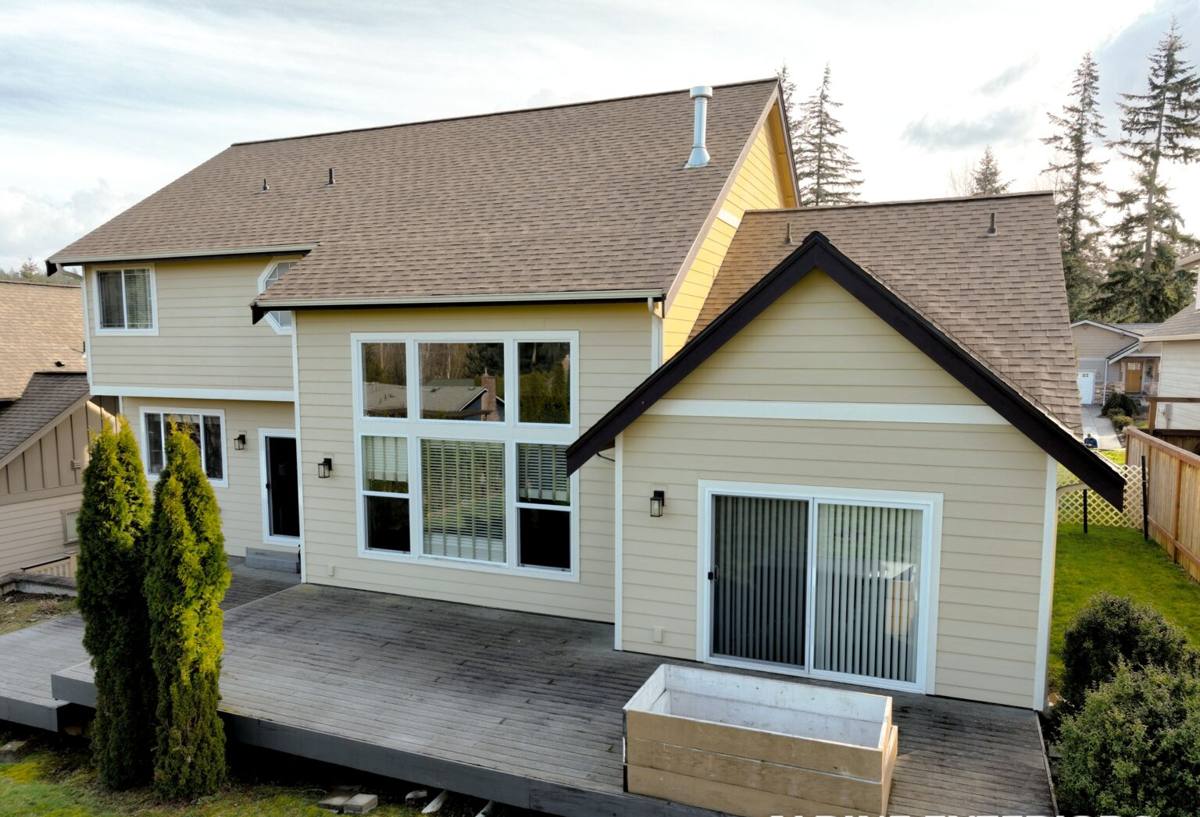
What Whatcom County's Climate Does to Ordinary Windows
Salt Air and Corrosion
Proximity to saltwater accelerates corrosion on metal window components — hinges, balance systems, screen frames, and especially lower-quality aluminum cladding. Salt-laden moisture finds its way into seams and fasteners over time, and once corrosion starts on a window's moving parts, it rarely reverses. Homes closer to the bay see this show up faster than homes further inland, even within the same neighborhood.
Driving Rain and Wind-Driven Moisture
Bellingham doesn't just get rain — it gets rain pushed sideways by wind coming off the water, which stresses window assemblies differently than a straight vertical downpour. Wind-driven rain finds any gap in flashing or any degraded sealant bead and pushes water past it, rather than letting gravity do the work. This is why a window that looks fine from the outside can still be rotting the framing behind it.
Moss, Algae, and the Long Wet Season
Whatcom County's extended damp season gives moss and algae months to colonize any surface that stays wet — window sills, exterior trim, and the gaps around older frames. Beyond the cosmetic issue, sustained moisture retention around a window opening softens wood trim and sheathing, and it's often the first visible sign that water is getting somewhere it shouldn't.
What "Correct" Window Replacement Actually Involves
Swapping the visible sash for a new one and caulking around the edges is not a window replacement — it's a patch. A correct replacement addresses the whole opening, not just the glass unit. That means:
- Removing down to the rough opening when the existing frame, sill, or surrounding sheathing shows any sign of water damage, rather than reusing a compromised frame.
- Installing a proper sill pan flashing so any water that does get past the window sheds outward instead of soaking into the wall cavity — this single detail matters more in Bellingham's climate than almost any brand or feature upgrade.
- Integrating flashing with the existing weather-resistive barrier in the correct shingle-lap order (top over sides over bottom) so water is directed out, not trapped behind the cladding.
- Using the right sealant in the right place — some joints should be sealed, and some (like the bottom of the window unit) should be left open as a weep path. Sealing everything shut is a common mistake that traps water instead of releasing it.
- Insulating the gap between the new frame and rough opening properly, without over-packing it, which can bow the frame and cause operational problems.
Skip any one of these steps and you can end up with a brand-new window that still leaks, still fogs, or still lets rot start behind the trim within a few wet seasons.
Choosing a Window Type for This Climate
There's no single "best" window material — there's a best fit for a given home, budget, and exposure. Here's how the common options actually compare once you factor in salt air, rain exposure, and Bellingham's humidity:
| Frame Material | Moisture & Salt Air Behavior | Maintenance | Typical Lifespan Here |
|---|---|---|---|
| Vinyl | Won't corrode or rot; performs consistently in salt air and rain exposure | Low — occasional cleaning | 20-30 years with quality installation |
| Fiberglass | Very stable dimensionally in temperature and humidity swings; resists corrosion | Low | 30+ years, generally the most durable option in wet coastal climates |
| Wood (unclad) | Handsome, but requires diligent upkeep to prevent moisture absorption and rot in this climate | High — regular repainting/sealing | Highly dependent on maintenance; can fail early if neglected |
| Aluminum-clad wood | Cladding protects wood from direct weather, but seams are a corrosion point near salt air | Moderate | Varies; cladding quality and seam sealing matter a great deal |
Our default recommendation for most Happy Valley homes is vinyl or fiberglass, specifically because they don't give salt air or standing moisture anything to work on. That's a maintenance-and-longevity call, not a knock on wood-frame windows as a category — if a homeowner wants the look of a wood interior with better weather resistance, wood-interior/fiberglass or vinyl-exterior composite units are worth discussing, and we'll walk through the honest tradeoffs for your specific home rather than push one product line.
Signs Your Windows Are Telling You Something
Most homeowners don't replace windows on a schedule — they replace them when something starts going wrong. In this climate, watch for:
- Fogging or a visible film between the panes of a double-pane unit (a failed seal letting moisture into the gas fill)
- Soft or discolored wood trim around the window, especially at the bottom corners
- Persistent moss or dark staining on the sill that returns shortly after cleaning
- Drafts you can feel on a windy, rainy day even with the window fully latched
- Difficulty opening, closing, or locking — often a sign the frame has shifted or swollen
- Visible corrosion on hinges, cranks, or metal hardware
- A noticeable jump in heating costs without any other explanation
One or two of these might just mean a repair. Several at once, especially on a home more than 20-25 years old, usually means the windows are past the point where patching makes sense.
Our Window Replacement Process
Every home is different, but the sequence stays consistent because it's the sequence that actually keeps water out:
- On-site assessment. We look at the existing windows, the condition of the surrounding trim and sheathing, and how exposed the home is to prevailing wind and rain direction.
- Honest scoping. We tell you upfront if we expect to find rot or damage once a window comes out, rather than surprising you mid-project with an inflated change order.
- Removal. Old units come out carefully to avoid unnecessary damage to surrounding siding or interior finishes.
- Opening inspection and repair. Any soft sheathing, compromised framing, or failed prior flashing gets addressed before a new window ever goes in — this is the step that gets skipped by installers just chasing speed.
- Flashing and sill pan installation. Done in the correct order to direct water out and away from the wall assembly.
- Window installation and shimming. Set level, plumb, and square, with insulation and sealant applied where they belong — and left open where a weep path is needed.
- Interior and exterior finish work. Trim, caulking, and paint or stain matched to the home.
- Final walkthrough. We test operation, locking, and check the exterior detailing with you before we call the job done.
What Drives Cost on a Happy Valley Job
We won't quote a number here that doesn't mean anything without seeing your home, but the honest cost factors are these:
| Factor | Why It Matters |
|---|---|
| Number and size of openings | The most direct driver of total project cost |
| Hidden rot or sheathing damage | Common in older homes here once a window is opened up; adds labor and material |
| Frame material chosen | Vinyl, fiberglass, and wood-clad options carry different material costs |
| Glass package | Double-pane vs. triple-pane, and low-E coatings, affect both price and performance |
| Access and story height | Second-story and hillside-lot windows can require more setup and labor |
| Exterior finish work | Matching existing siding, trim, or paint adds time beyond the window itself |
The single biggest unknown on older homes in this area is hidden moisture damage behind the existing window. We build the inspection step into the process specifically so that isn't a surprise you find out about after the fact.
Why Local Experience in This Neighborhood Matters
A crew that's worked Happy Valley homes before already knows which prevailing wind and rain directions to plan flashing around, what kind of sheathing and framing older homes in this part of Bellingham tend to have behind their siding, and how a hillside lot changes access and drainage planning around an opening. That's not something you can fully substitute with a general national playbook — it's built from doing the work in this specific climate, on this specific terrain, repeatedly. It also means we're not learning on your house whether a given flashing detail actually holds up through a real Whatcom County winter.
Keeping New Windows Performing Through the Wet Season
New windows still need a little seasonal attention here:
- Clean sills and tracks periodically to keep moss and algae from taking hold
- Check exterior caulking annually, especially after a hard winter, since even good sealant has a service life
- Keep gutters and downspouts clear so roof runoff isn't sheeting directly across upper windows
- Operate locking hardware a few times through the year so mechanisms don't seize between uses
None of this is heavy maintenance — it's the kind of five-minutes-twice-a-year attention that keeps a correctly installed window performing for its full lifespan instead of quietly failing behind the trim.
Let's Look at Your Windows
If your Happy Valley home has windows that fog, stick, draft, or show water staining, it's worth a straightforward look before another wet season sets in. We'll give you an honest read on what's actually going on and a free, no-pressure estimate — use the form below to get started.