 Bellingham
 Fairhaven's Climate Puts Real Stress on Siding
Fairhaven sits close to Bellingham Bay, and that proximity to open water shapes everything about how siding ages here. Salt-laden air moves through the neighborhood off the water, driving rain comes in sideways during fall and winter storms, and the shaded, tree-lined streets that give Fairhaven its character also trap moisture at ground level for weeks at a time. That combination — salt exposure, wind-driven rain, and a long moss season — is harder on exterior materials than what you'd see in a drier inland part of Whatcom County.
Siding in Fairhaven isn't just a cosmetic layer. It's the first line of defense against moisture intrusion, and in a marine climate like this, the margin for error is smaller. A product that performs fine in a dry climate can fail here in a fraction of the time if it isn't matched to the exposure or installed with the right details.
Why This Matters for Fairhaven's Older and Newer Homes Alike
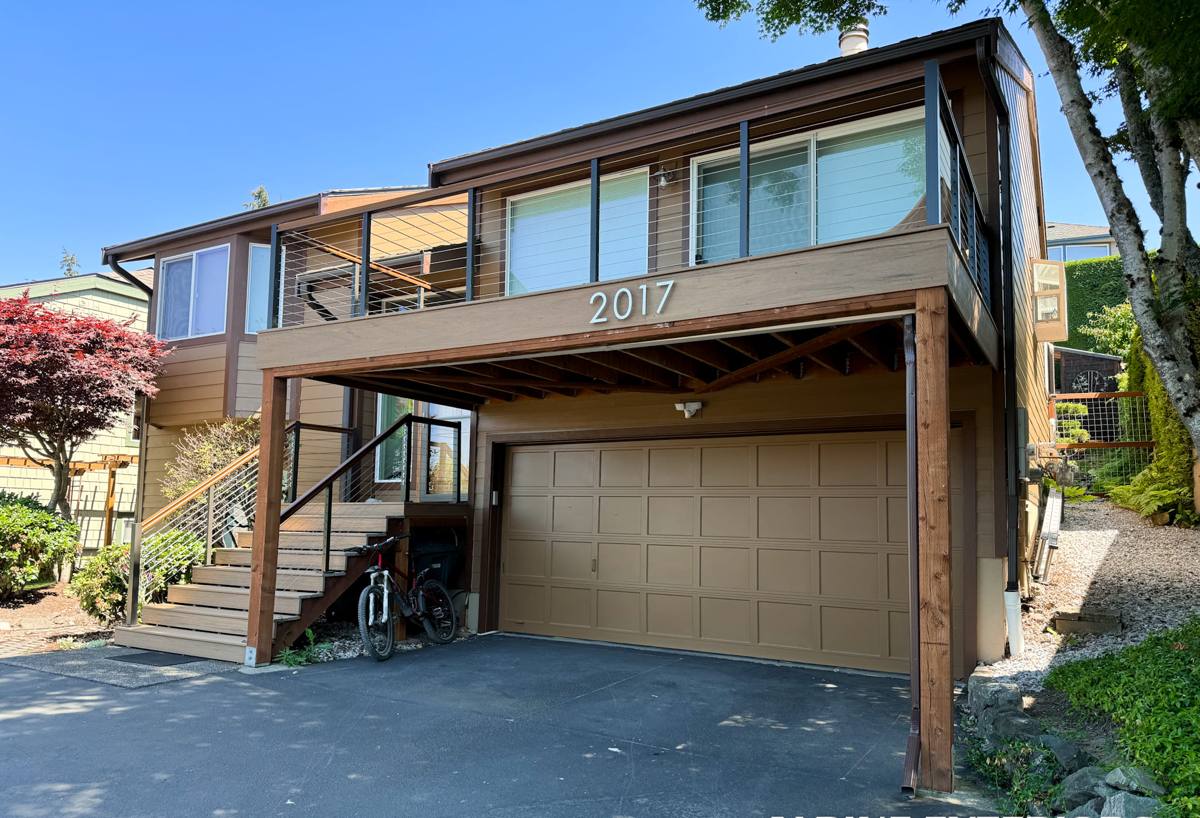
Fairhaven has a mix of older character homes and newer construction, and both face the same environmental pressures even though they age differently. Older homes often have layers of past repairs, inconsistent flashing details, and wood trim that's been repainted many times — all of which can hide moisture problems until a re-side project uncovers them. Newer homes may have better underlying construction but were sometimes sided with lower-cost materials that weren't chosen with this specific coastal exposure in mind.
Either way, when it's time to replace siding in Fairhaven, the goal isn't just to make the house look better. It's to install something that will actually hold up to salt air, driving rain, and moss for decades — and to fix the water-management details underneath so the new siding doesn't fail early for reasons that had nothing to do with the material itself.
What "Holding Up" Actually Means Here
In practical terms, siding that holds up in Fairhaven needs to resist moisture absorption at the butt joints and lap edges, resist algae and moss growth on north-facing and shaded walls, and keep its factory finish without chalking or fading from salt exposure and UV. Very few siding materials check all three boxes without significant maintenance.
Why We Install Only James Hardie Fiber Cement
We made a decision as a company to install James Hardie fiber cement siding exclusively — not vinyl, not LP SmartSide, not Cemplank or Allura, not primed spruce or cedar. That's not a marketing position; it's a standard we hold because of what we've seen happen to other materials in exactly this kind of coastal, high-moisture climate.
Vinyl siding can warp and become brittle with temperature swings, and its seams give wind-driven rain more opportunities to find a way behind the cladding. Wood and primed spruce products need consistent repainting and caulking to keep moisture out, and in a moss-prone environment like Fairhaven, that maintenance burden only grows. Engineered wood products use resin-treated wood fiber that performs well in many climates but is still an organic material at its core, which matters in a place where damp shade is the norm for months at a time.
James Hardie fiber cement is a cement-and-cellulose composite. It doesn't rot, it isn't attractive to pests, and it's non-combustible. It holds its factory-applied ColorPlus finish far longer than field-applied paint holds up on wood, and it was engineered specifically with regional climate exposure in mind through Hardie's HZ product lines. That's why it's the only siding we put on homes.
The Right Hardie Product for a Marine Exposure
James Hardie engineers its siding in two main climate zones: HZ10 for hot, humid climates and HZ5 for cooler, wetter regions — which includes Western Washington and Whatcom County. HZ5 products are formulated for greater moisture resistance and better performance through freeze-thaw cycles and sustained damp conditions, which is exactly what Fairhaven's bay-adjacent, moss-heavy environment demands.
For most Fairhaven homes, that means lap siding or panel siding in the HZ5 formulation, finished with ColorPlus Technology — a factory-baked finish that resists fading and chipping far better than field-applied paint, and that carries its own finish warranty separate from the substrate warranty on the siding itself.
What a Correct Installation Actually Involves
James Hardie siding is only as good as the installation behind it. Most of the failures we see with fiber cement siding — anywhere, not just in Fairhaven — trace back to installation shortcuts, not the product itself. In a climate with this much wind-driven rain, the details matter even more.
- Correct water-resistive barrier and flashing integration at every window, door, and penetration before the first piece of siding goes up
- Proper clearance between siding and grade, decks, and roof lines to keep the bottom edge from sitting in standing moisture
- Manufacturer-specified fastener type, spacing, and placement — not "close enough" nailing patterns
- Correctly sized gaps at butt joints and trim, caulked or flashed per Hardie's published details, not just butted tight
- Field-cut edges primed or sealed so raw fiber cement edges aren't left exposed to moisture
- Rainscreen or drainage plane consideration where wall assemblies and exposure warrant it
Skipping any one of these doesn't show up as a problem on install day. It shows up two, five, or ten years later as staining, trim rot, or moisture intrusion at the sheathing — the exact failures a good installation is supposed to prevent.
Siding Options Compared for Fairhaven's Coastal Conditions
| Material | Salt Air / Moisture Resistance | Moss & Algae Resistance | Maintenance Burden | Typical Warranty Structure |
|---|---|---|---|---|
| James Hardie HZ5 Fiber Cement | Engineered for wet marine climates | Factory finish resists growth better than porous surfaces | Low — occasional wash | Long, transferable, factory-backed |
| Vinyl Siding | Can warp with temperature swings; seams allow water paths | Moderate; growth still occurs in shaded areas | Low, but limited repair options once damaged | Prorated, often not fully transferable |
| LP SmartSide / Engineered Wood | Treated wood fiber; still organic at core | Requires diligence in damp, shaded exposures | Moderate — edge sealing and inspection matter | Manufacturer-specific, condition-dependent |
| Cedar / Primed Spruce | Absorbs moisture; needs consistent sealing | Prone to moss and algae without regular treatment | High — repainting, caulking, staining cycles | Largely dependent on ongoing maintenance |
Our Process, Start to Finish
Assessment
We start by walking the home and looking specifically at the conditions Fairhaven creates: shaded north and west walls where moss builds up, areas exposed to prevailing wind and rain off the water, and any existing trim or sheathing damage from past moisture intrusion. This tells us where extra attention to flashing and drainage is needed, not just where the old siding is cosmetically worn.
Preparation
Old siding comes off, and we inspect the sheathing underneath for rot or moisture damage before anything new goes up. Any water-resistive barrier and flashing repairs happen at this stage — covering them up without fixing them just locks a problem behind new siding.
Installation
We install James Hardie HZ5 siding to manufacturer specification: correct fastening, clearances, joint treatment, and trim integration. This isn't a step we shortcut to save time, because in this climate the installation details are what determine whether the siding performs for its full expected lifespan.
Final Walkthrough
Once installation is complete, we walk the exterior with the homeowner, review the finish and details, and go over basic care so the siding starts its life properly maintained.
Living With Hardie Siding in a Moss-Prone Environment
James Hardie siding needs far less upkeep than wood or engineered wood, but "low maintenance" isn't "no maintenance," especially in Fairhaven's shaded, damp microclimates. An occasional gentle wash removes surface grime and organic buildup before it has a chance to take hold, and keeping nearby vegetation trimmed back improves airflow and sun exposure on shaded walls, which naturally slows moss growth. Because ColorPlus finishes are factory-cured, they hold up to this kind of routine cleaning without the finish degrading the way field-applied paint can.
Why Hiring a Crew That Already Works Fairhaven Matters
Siding installation isn't identical everywhere in Whatcom County. A crew that regularly works in Fairhaven understands which walls take the brunt of wind-driven rain, how much moss pressure to expect on shaded elevations, and how the neighborhood's mix of older and newer homes tends to have different underlying conditions once the old siding comes off. That local pattern recognition shows up in fewer surprises mid-project and a finished install that's actually built for the exposure it's going to face, not a generic installation copied from a drier climate.
It also matters for something less visible: knowing how to sequence a project around Fairhaven's wetter stretches of the year, and building in the flashing and drainage details this specific exposure calls for, before the siding ever goes on the wall.
If you're considering new siding for a home in Fairhaven, we're happy to walk the exterior with you, look at your specific exposure, and put together a straightforward, no-pressure estimate for a James Hardie installation built for this climate. There's a short form below — reach out and we'll set up a time to take a look.