 Bellingham
 New-Construction Windows in Lynden: What the Job Actually Involves
Putting windows into a new build is a different job than swapping out old ones. There's no existing frame to work around, no old caulk lines to clean up, no compromises made to fit an opening that's already there. That's the advantage of new construction — you get to do the water management, the flashing, and the energy detailing right from the start, before drywall, siding, or trim cover any of it up. It's also the point in the build where mistakes are cheapest to catch and most expensive to ignore once the walls are closed in.
For homes going up in and around Lynden, that first-pass installation has to account for Whatcom County's weather from day one — not as an afterthought, but as part of the plan. Windows that go in clean and dry on installation day but aren't properly flashed and integrated with the building wrap can still leak two winters later, once the wall assembly has had time to move, settle, and take on moisture.
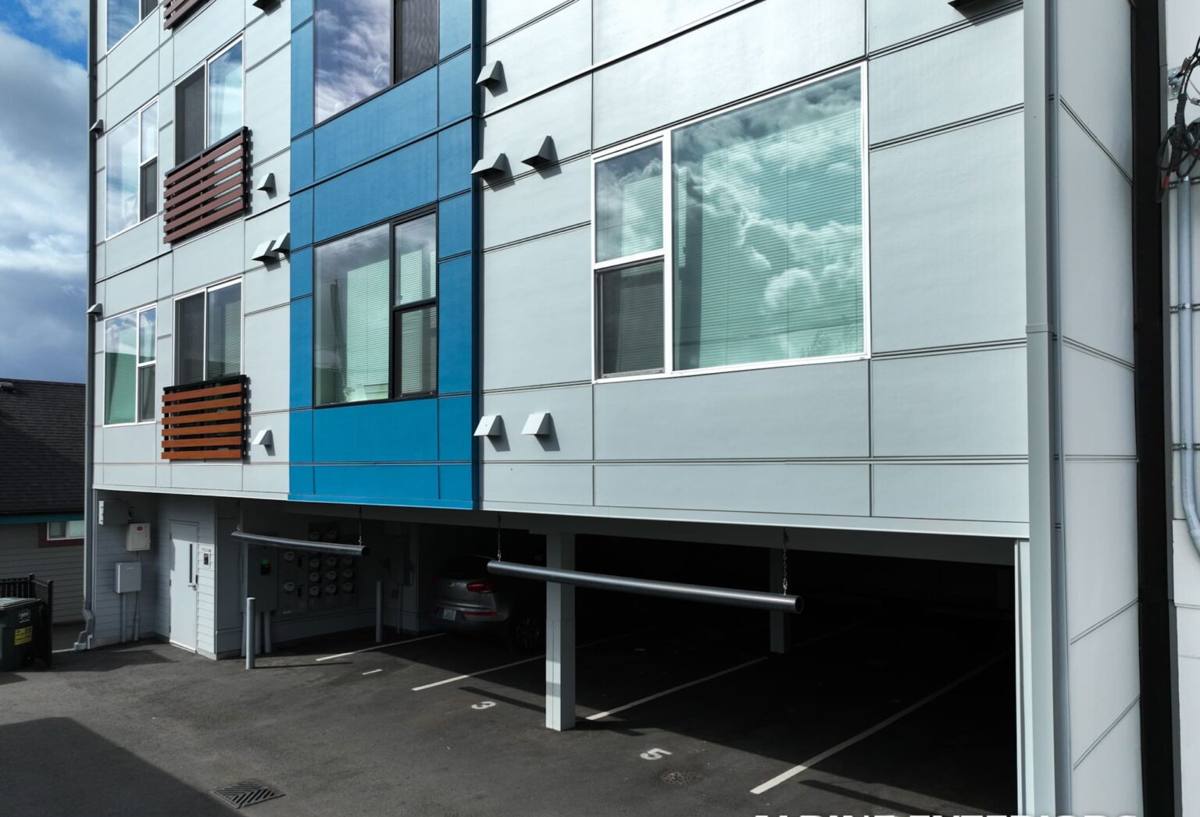
Why the Rough Opening Is Where This Job Is Won or Lost
A window is only as good as the opening it sits in. Before a single unit goes in, we're checking that rough openings are square, level, and sized correctly to the manufacturer's tolerances — too tight and the frame can bow under fastening; too loose and you're relying on shims and sealant to do work they shouldn't have to do alone.
We also look at how the opening ties into the rest of the wall assembly: sheathing condition, house wrap laps, and how water is meant to shed past that opening on its way down the wall. On a new build, this is the one chance to get that sequencing right before it's buried behind siding.
What we check before install day
- Rough opening dimensions against the specific window model's installation instructions
- Square and level of the framed opening, not just the header
- Sheathing and house wrap condition — no tears, gaps, or improperly lapped seams near the opening
- Sill condition and slope, so water has somewhere to go if it ever gets past the glass
Whatcom County Weather and What a New Window Install Has to Handle
Bellingham and the surrounding Whatcom County towns, Lynden included, deal with long stretches of driving rain, wind-driven moisture, and a moss season that seems to run most of the year on north-facing surfaces. That combination is hard on any exterior opening, but it's especially unforgiving of shortcuts made during rough-in. A window that isn't properly flashed doesn't usually fail on day one — it fails quietly, over a few wet seasons, as water finds its way behind the trim or down into the wall cavity.
The marine air that moves through this part of Western Washington also means materials stay damp longer than they would in a drier climate. Wood trim, sealants, and even the house wrap itself need time to dry between rain events, which is part of why sequencing matters as much as the products themselves — installing over damp sheathing or rushing sealant in wet conditions sets a new-construction window up to underperform no matter how good the unit is.
None of this is unique to any one lot in Lynden — it's the reality of building anywhere in this corner of the state. The point isn't to treat it as a special problem, just to plan for it the way any experienced crew working this region already does.
New Construction vs. Replacement Windows
These are two different products and two different installation methods, and it matters that a crew treats them differently rather than defaulting to whatever's more familiar.
| Factor | New-Construction Windows | Replacement Windows |
|---|---|---|
| Frame type | Nail-fin frame, fastened directly to sheathing | Insert frame, fits inside existing window frame |
| Flashing access | Full access to house wrap and sheathing before siding | Limited — existing frame and siding stay in place |
| Best used for | New builds, additions, full wall openings | Existing homes with sound original frames |
| Water management | Built from the wall assembly out — sill pan, flashing tape, WRB integration | Relies more heavily on sealant at the existing frame |
| Typical cost driver | Framing accuracy, flashing labor, trim/siding coordination | Unit size and existing frame condition |
Trying to install a nail-fin window as if it were a replacement, or vice versa, is one of the more common corner-cutting mistakes we see. It usually shows up later as a leak that's hard to trace back to its source.
Flashing and Water Management: The Non-Negotiable Steps
Sill pan first
Every new-construction opening should get a sloped sill pan before the window ever sits in it. If water does get past the window in a heavy wind-driven rain — which happens even with a well-built window — the sill pan gives it a way out instead of a way into the wall.
Flashing tape in the right order
Flashing tape has to be applied in a shingle-style sequence — sill, then jambs, then head — so that water draining down the wall always laps over the layer below it rather than behind it. Get this order backwards and you've built a funnel instead of a barrier.
Integrating with the house wrap
The window flashing has to tie into the house wrap correctly, with the wrap lapping over the top flashing at the head of the window. This is the step that's easiest to rush on a busy job site and the one most likely to cause a slow leak years down the road if it's done wrong.
Meeting Washington's Energy Code Without Guessing
New-construction windows in Washington have to meet current state energy code requirements for performance — U-factor and air infiltration standards that apply to the whole building envelope, not just the windows in isolation. On a new build, the window selection often has to work together with wall insulation, air sealing, and the rest of the envelope to hit the numbers the project's energy path requires.
We coordinate window specifications with what the local building department in Whatcom County expects to see at inspection, so there aren't surprises partway through the build. If you're working from a set of plans that already specifies window performance ratings, we install to that spec. If you need help sorting out what will actually meet code for your project, that's part of the conversation before ordering anything.
Our Process for New-Construction Window Installs in Lynden
Pre-drywall walkthrough
Before install day, we walk the openings with the builder or homeowner, confirm rough opening sizes against the window order, and flag anything that needs to be corrected before windows arrive on site.
Install day
Sill pans, flashing tape, and window placement happen in sequence, with each opening checked for square and plumb before it's fastened off. Shimming is done to the manufacturer's spec, not just eyeballed.
Final tie-in and inspection-ready detail
Once windows are set, we confirm the house wrap laps correctly over the flashing and that the opening is ready for siding and trim without any exposed gaps. We leave the site in a state that's straightforward for a building inspector to sign off on.
Choosing a Window Installer Who Actually Works in Lynden
New-construction window work rewards a crew that's done it repeatedly in this specific climate, not just occasionally. That familiarity shows up in small decisions — how long to let sealant cure before the next rain, how to sequence flashing around a header that's slightly out of level, when to hold off a step because conditions on site aren't right that day. None of that is exotic knowledge, but it's the kind of judgment that only comes from doing this work regularly in Whatcom County conditions rather than treating every job the same regardless of region.
It's also worth asking any installer directly how they handle sill pans, flashing sequencing, and WRB integration — the answers tell you quickly whether water management is a real part of their process or an afterthought.
Before Windows Go In: A Homeowner's Checklist
- Confirm window performance ratings match what your energy code path requires
- Ask how sill pans and flashing tape will be sequenced at each opening
- Check that rough openings will be verified against manufacturer specs before install, not after
- Confirm how the installer coordinates timing with your siding and trim crews
- Ask what happens if a rough opening is found out of square or level once framing is done
- Get a clear answer on warranty coverage for both the window unit and the installation labor
If you're framing a new build or addition in Lynden and want windows installed the way this climate actually requires, we're glad to walk the site and put together a straightforward, no-pressure estimate. Fill out the form below and we'll get back to you.