 Bellingham
 Composite Decking Built for Puget's Weather, Not Just Its View
Puget sits close enough to the water that salt air, wind-driven rain, and long stretches of overcast, damp weather are just part of owning a deck here. Whatcom County doesn't get the dry summers that make decking easy in other parts of the country — instead, homeowners deal with moss creeping across boards from October through April, standing moisture that never fully evaporates between storms, and UV exposure in the summer months that still fades and dries out lower-grade materials. Composite decking, installed correctly for this specific climate, holds up to all of that far better than wood. Installed incorrectly, it fails in the same ways wood does — just more slowly and more expensively.
This page is about composite decking specifically for Puget properties: what the climate demands, what a correct installation actually involves, and why a crew that already works this area gets it right the first time.
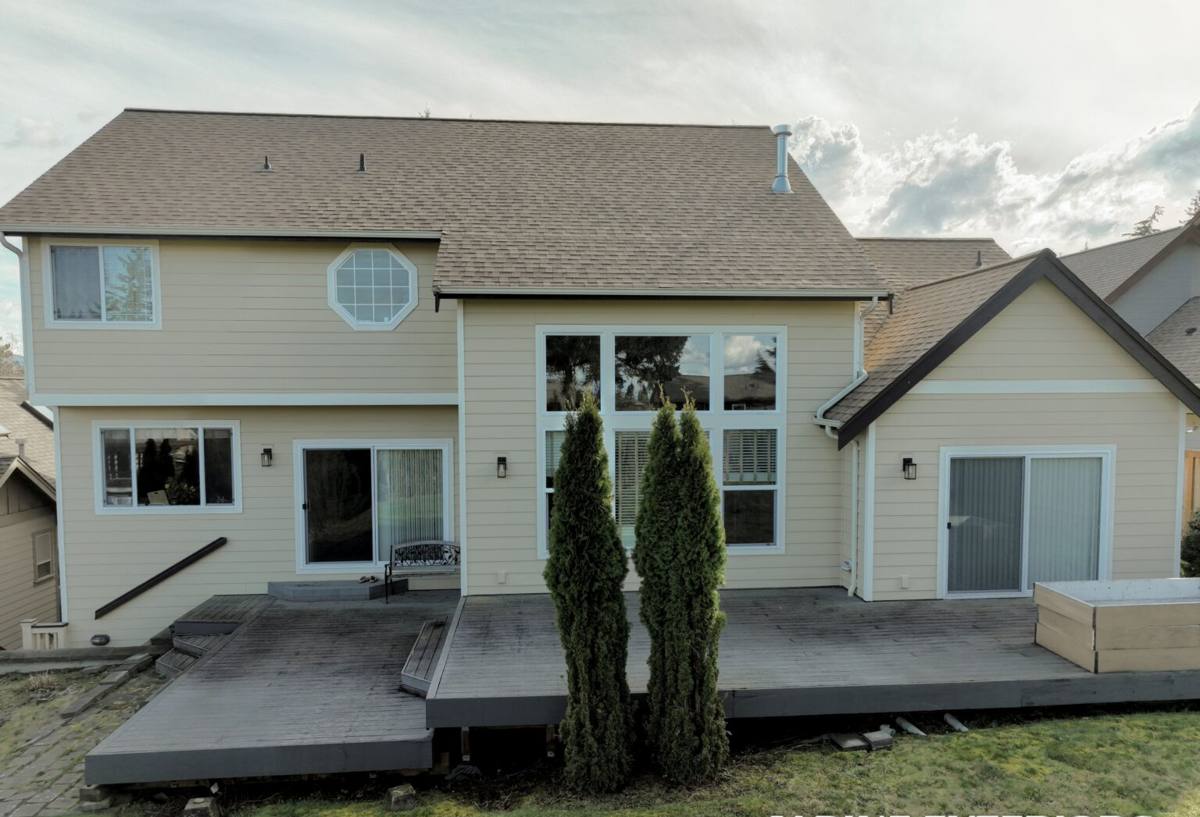
Why Puget's Climate Is Harder on Decks Than It Looks
Composite decking is often sold as "install it and forget it," and in a dry climate that's mostly true. Bellingham isn't a dry climate. A few things stack up against decks here specifically:
- Salt air corrosion: Proximity to the water means fasteners, brackets, and any exposed metal hardware are exposed to airborne salt that accelerates corrosion, even on stainless-rated hardware if it's the wrong grade.
- Driving rain intrusion: Wind-driven rain doesn't fall straight down — it gets pushed sideways into ledger connections, rim joists, and picture-frame board seams. Flashing details that would be optional in a calmer climate are not optional here.
- Long moss season: Shaded decks, north-facing decks, and decks under trees can stay damp for months at a time. Moss and algae take hold on any surface that doesn't shed water and dry between rains, and they're not just cosmetic — trapped moisture under moss accelerates substructure decay even when the deck boards themselves are composite.
- Freeze-thaw cycling: Whatcom County gets enough cold snaps that any water trapped in a joint, a fastener hole, or a poorly sealed cut edge can freeze, expand, and open up a failure point that gets worse every winter after.
None of this means composite decking is a bad choice for Puget homes — it's usually the right choice. It means the installation has to account for these conditions specifically, rather than following a generic manufacturer install sheet written for a drier region.
What a Correct Composite Deck Installation Involves Here
Substructure First
The composite boards are the part everyone sees, but the framing underneath is what determines whether the deck lasts 10 years or 30 in this climate. For Puget installs, that means pressure-treated or better-grade framing lumber, joist tape or a comparable moisture barrier on top of every joist, and hardware rated for coastal/salt-air exposure rather than standard interior-grade fasteners. Skipping joist tape is one of the most common corner-cuts in decking, and it's exactly the kind of shortcut that shows up as rot five to eight years later — after the composite boards themselves have long outlasted the framing holding them up.
Ledger and Flashing Details
Where the deck attaches to the house is the single most common point of water intrusion on any deck, anywhere. In a climate with driving rain off the water, ledger flashing has to be installed as a system — flashing tape, proper step flashing where siding meets the ledger board, and a drainage gap that lets any water that does get behind the ledger escape instead of pooling against the house framing.
Drainage and Slope
Composite boards don't rot, but they also don't dry as fast as some homeowners expect, and standing water on the surface promotes moss and algae growth regardless of material. A correct install includes a slight slope away from the house (generally around 1/8" per foot) so water sheets off instead of sitting in low spots.
Board Spacing and Ventilation
Composite boards expand and contract with temperature and moisture more than most homeowners expect. Gapping has to be set correctly at install — too tight and boards can buckle when they swell in wet weather; too loose and you get an uneven surface and debris collection between boards. Underneath, the substructure needs enough airflow that the space between grade (or a lower roof) and the deck framing can actually dry out between rain events, which in Bellingham can mean weeks apart in winter.
Hardware and Fasteners
Given the salt air exposure, we use fasteners and brackets rated for coastal exposure, not just "exterior-rated" hardware that's really specified for inland use. This is a small cost difference at install time and a significant difference in how the deck's connections hold up after a decade of salt air and rain.
Our Installation Process
- On-site assessment: We look at the existing structure (if replacing a deck), the site's drainage, sun/shade exposure, and proximity to moisture sources like sprinklers, downspouts, or low-lying grade.
- Design and material selection: We help you choose board style, color, and railing options that fit the home and hold up to this climate specifically — some composite lines handle moss and mildew resistance better than others.
- Permitting: Deck work in Whatcom County and the City of Bellingham typically requires a permit, especially for anything attached to the house or above a certain height. We handle that process rather than leaving it to the homeowner.
- Demolition (if applicable): Old decking and, where needed, compromised framing is removed and hauled off.
- Framing and flashing: Substructure is built or repaired to current code, with joist tape, coastal-rated hardware, and full ledger flashing as described above.
- Composite installation: Boards, fascia, and railing are installed to manufacturer spec with gapping and fastening adjusted for our climate conditions.
- Final walkthrough: We go over care and cleaning expectations, particularly around moss season, before calling the job done.
Composite vs. Other Decking Materials for This Climate
| Material | Moss/Algae Resistance | Salt Air Durability | Maintenance |
|---|---|---|---|
| Composite decking | Good to very good, depending on line | Very good with correct hardware | Periodic wash-down; no staining or sealing |
| Pressure-treated wood | Poor without regular treatment | Fair; fasteners corrode faster | Annual cleaning, staining/sealing |
| Cedar | Fair; naturally rot-resistant but still needs upkeep | Fair | Regular oiling or sealing to maintain appearance |
| Aluminum/PVC | Very good | Very good | Low; different look and higher material cost |
Composite lands in a good middle ground for Puget: it doesn't need the yearly staining or sealing that wood does, and with the right hardware it handles salt air well. It's not maintenance-free — moss and surface grime still need periodic washing regardless of material — but it removes the rot risk that makes wood decks a recurring expense in this climate.
What Drives Cost on a Puget Composite Deck
Every deck is priced on its own specifics, but a few factors consistently move the number for local jobs:
- Height and access: A ground-level deck is simpler and cheaper than one requiring stairs, railings, and code-required guarding.
- Substructure condition: Replacing rotted framing on an existing deck adds cost beyond what a straightforward re-decking would run.
- Board tier: Composite lines range from entry-level to premium, with differences in fade resistance, moss/mildew resistance, and warranty length.
- Railing style: Composite or aluminum railing systems cost more than basic options but hold up better to the same salt air and rain that affects the decking.
- Permitting and site access: Slope, tree cover, and how easily materials can reach the build site all affect labor time.
Rather than quote a number that won't reflect your actual property, we'd rather walk the site and give you a real range based on what's there.
Living With a Composite Deck Through Moss Season
Even a well-installed composite deck benefits from a few habits specific to this region:
- Sweep leaves and debris off the surface regularly in fall — trapped organic matter is what moss and algae feed on.
- Wash the deck surface with a composite-safe cleaner once or twice a year, more often on shaded or north-facing sections.
- Keep gutters and downspouts clear so runoff isn't dumping extra water directly onto or near the deck.
- Check railing and stair connections annually for any looseness — a sign hardware may need attention before it becomes a bigger repair.
Why Hire a Crew That Already Works Puget
Manufacturer install guides are written for a general audience, not for a specific neighborhood dealing with salt air, driving rain, and a five-to-six-month moss season. A crew that works Bellingham and the surrounding Whatcom County area regularly already knows which hardware grade holds up here, how much slope drainage actually needs on a shaded lot, and where flashing details tend to get skipped by installers who don't build here every week. That local repetition is what keeps a deck's substructure — the part you don't see — lasting as long as the composite boards on top of it.
If you're weighing composite decking for a Puget property, we're happy to walk the site, talk through material options, and give you a straightforward, no-pressure estimate — just fill out the form below.