 Bellingham
 Roof Repair in Birch Bay: Built for a Marine Climate
Birch Bay sits right on the water, and that changes what a roof has to deal with compared to homes even a few miles inland in Whatcom County. Salt-laden air moves off the bay and settles on shingles, flashing, and fasteners. Wind off the water drives rain sideways into places a roof was never designed to shed water from that angle. And the mild, wet winters that make this area pleasant to live in also make it one of the best moss-growing climates on the West Coast. Roof repair here isn't just about patching a leak — it's about understanding why that leak started in the first place, and that almost always traces back to one of these three conditions.
We work on roofs throughout Bellingham and Whatcom County, but Birch Bay roofs get a different kind of wear than roofs a few miles inland. A repair that holds up in a sheltered neighborhood can fail fast on a roof exposed to open water and prevailing wind. That's the context every repair on this page assumes.
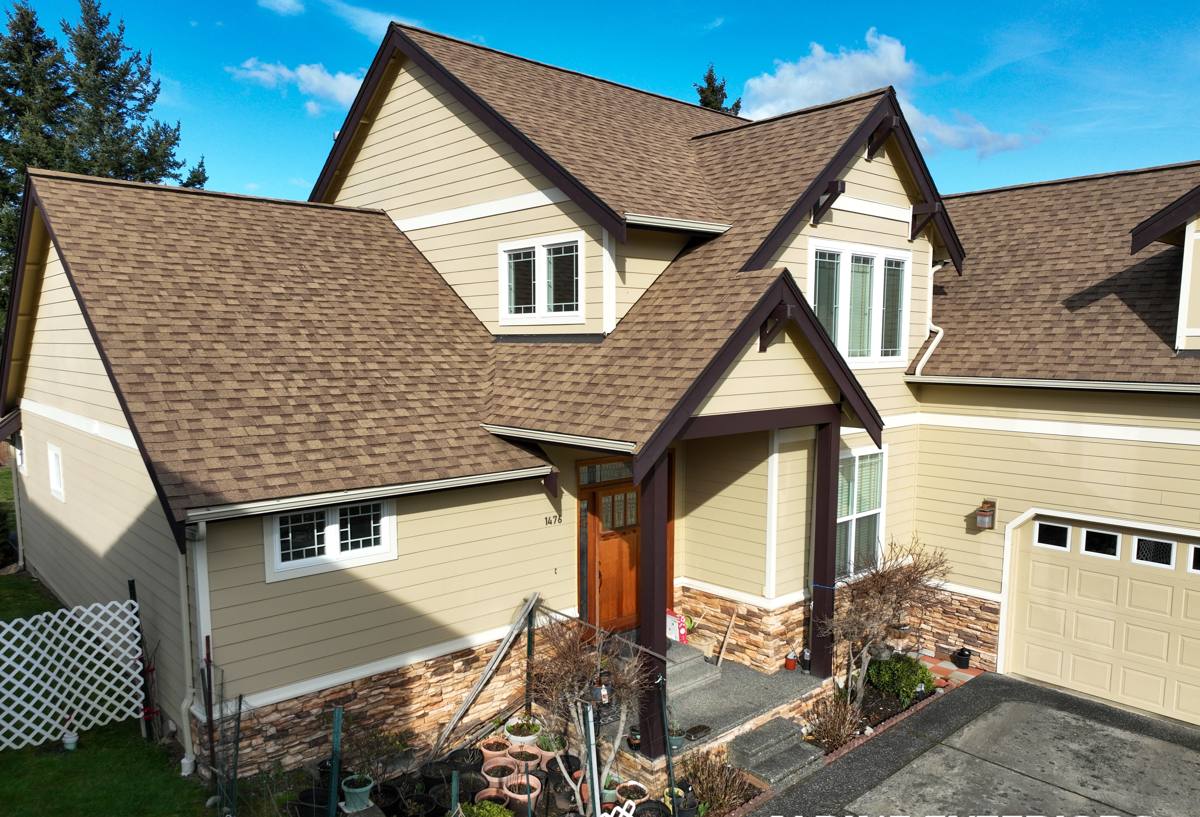
Common Roof Repair Needs We See in Birch Bay Homes
Moss and Organic Growth
Moss doesn't just look bad — it holds moisture directly against the roofing material for weeks at a time, which is exactly the opposite of what a roof needs. On asphalt shingles, moss lifts the tabs and accelerates granule loss. On wood shakes and shingles, it traps rot-causing moisture in the wood itself. Once moss establishes on a north-facing slope or a shaded valley, it spreads, and by the time it's visible from the ground, it's often already working its way under the shingle edges.
Wind-Driven Rain and Flashing Failures
Most roof leaks in this area don't come from a hole in the field of the roof — they come from flashing. Flashing around chimneys, skylights, dormers, and roof-to-wall transitions is designed to shed water moving straight down. Add sustained wind off the bay pushing rain sideways and upward under laps, and marginal flashing work that would hold up elsewhere starts to fail here. Nail pops, dried-out sealant, and undersized step flashing are the usual suspects.
Salt Air and Metal Corrosion
Metal components — flashing, drip edge, fasteners, gutters, and any exposed hardware — corrode faster near the water than they do a few miles inland. Galvanized fasteners can rust and back out over time, and once a fastener loses its grip, the shingle or panel around it loses its wind resistance. This is one of the reasons material choice on a Birch Bay repair matters as much as the workmanship.
What a Correct Repair Actually Involves
Diagnosis Before Patching
A leak stain on a ceiling rarely sits directly below the actual entry point — water travels along rafters, sheathing, and underlayment before it shows up inside. A correct repair starts on the roof, not the ceiling: checking the suspect area, but also everything upslope of it, including flashing, penetrations, and any prior repair work. Patching only the spot where water appeared indoors is the single most common reason a "fixed" leak comes back.
Matching Materials and Technique
Repairs need to match the existing roofing system in material, weight, and installation method — not just color. Mixing incompatible sealants, using the wrong fastener type in salt air, or tying new shingles into old ones without proper weaving and lap technique creates a new weak point even if it looks fine the day it's finished. We also check that any replaced underlayment and flashing meet or exceed what code requires now, since older homes were often built to older standards.
Signs a Birch Bay Roof Needs Repair Now
- Granules collecting in gutters or at downspout outlets, especially after a windstorm
- Moss visible on north-facing slopes, valleys, or anywhere shade keeps a section damp longer
- Curling, cupping, or lifted shingle edges, particularly on slopes facing prevailing wind
- Rust streaks below metal flashing or fasteners
- Soft spots or discoloration on ceilings or in the attic, even if faint
- Daylight visible through the roof deck from inside the attic
- Sealant around chimneys, vents, or skylights that's cracked, shrunk, or pulling away
- Shingles missing or visibly displaced after a wind event off the bay
Our Roof Repair Process
We keep the process straightforward and give you real information at each step, not a sales pitch.
1. On-Roof Inspection
We walk the roof (weather permitting) and check the suspect area plus everything upslope of it — flashing, penetrations, valleys, and the general condition of the roofing material. We also check the attic where accessible, since interior signs often confirm what we see from outside.
2. Honest Scope and Estimate
You get a clear explanation of what's actually causing the problem and what it will take to fix it correctly, along with a written estimate before any work starts. If a repair isn't the right long-term answer, we'll tell you that directly rather than patching something that needs more.
3. The Repair Itself
We remove and replace only the affected materials, tie new work into the existing roof using proper technique, and rebuild flashing and sealant details to handle wind-driven rain, not just straight-down rain. Fasteners and flashing metal are chosen with the marine environment in mind.
4. Cleanup and Walkthrough
We clear debris and nails from the yard and roof, and walk you through what was done and what to watch for going forward.
Repair vs. Replacement: How We Help You Decide
Not every roof problem needs a full replacement, and not every leak should be patched indefinitely. These are the factors we actually weigh:
| Factor | Favors Repair | Favors Replacement |
|---|---|---|
| Roof age | Well within expected material lifespan | At or beyond typical service life for the material |
| Extent of damage | Isolated to one area or component | Spread across multiple slopes or recurring in different spots |
| Underlying deck condition | Solid, dry sheathing | Soft, delaminated, or repeatedly wet decking |
| Moss/organic history | First occurrence, caught early | Long-term, repeated growth with granule loss |
| Repair history | First repair in this area | Same area patched more than once already |
If a repair is the right call, we'll do the repair. If the roof is telling us it's past that point, we'll explain why in plain terms so you can make the decision with real information, not pressure.
Why Hire a Crew That Already Works in Birch Bay
A roofer who mostly works inland doesn't always account for what open-water exposure does to fastener choice, flashing detail, and moss cycles. Crews that regularly work Birch Bay and the surrounding Whatcom County shoreline know which slopes on a given home orientation take the worst of the wind-driven rain, how fast moss reestablishes in the shaded areas typical of this area's tree cover, and which flashing details tend to fail first in salt air. That local pattern recognition shortens the diagnosis and reduces the chance of a repair that only addresses the symptom.
It also matters for follow-up. A repair is more likely to hold when the crew that installed it is realistically available to come back and check it, not working three counties away.
What Roof Repair Costs Depend On
We don't post fixed prices because every repair is different, but the honest range for most roof repairs runs from a few hundred dollars for a small, isolated flashing or shingle fix up to several thousand for larger sections with deck damage. The real cost drivers are:
- Roofing material — asphalt shingle, wood shake, metal, and tile all have different repair techniques and material costs
- Access and roof pitch — steeper roofs and multi-story homes take more time and safety setup
- Deck condition — if the sheathing underneath is soft or rotted, that adds carpentry work beyond the surface repair
- Extent of hidden damage — water that traveled before showing up inside often means a larger repair area than the visible symptom suggested
- Flashing complexity — chimneys, skylights, and multiple roof planes take more time to detail correctly than open field repairs
We won't know the real number until we've actually looked at your roof, which is why the estimate is free and comes after an on-site inspection, not a phone-call guess.
Keeping Your Roof Between Repairs
A few habits go a long way in this climate. Keep gutters clear so water isn't backing up under the roof edge, especially during the heavier fall and winter rains. Have moss addressed before it spreads rather than after — early removal and treatment is a much smaller job than dealing with established growth. And after any major windstorm off the bay, a quick visual check from the ground for missing or lifted shingles can catch a small problem before it becomes a ceiling stain.
If you're dealing with a leak, visible moss, or just want a second opinion on a roof's condition before it becomes an emergency, we're glad to take a look. Fill out the form below for a free, no-pressure estimate — we'll tell you honestly what we find and what your options are.